Quick Answer: Is the 2026 Ford Explorer EV Worth It?
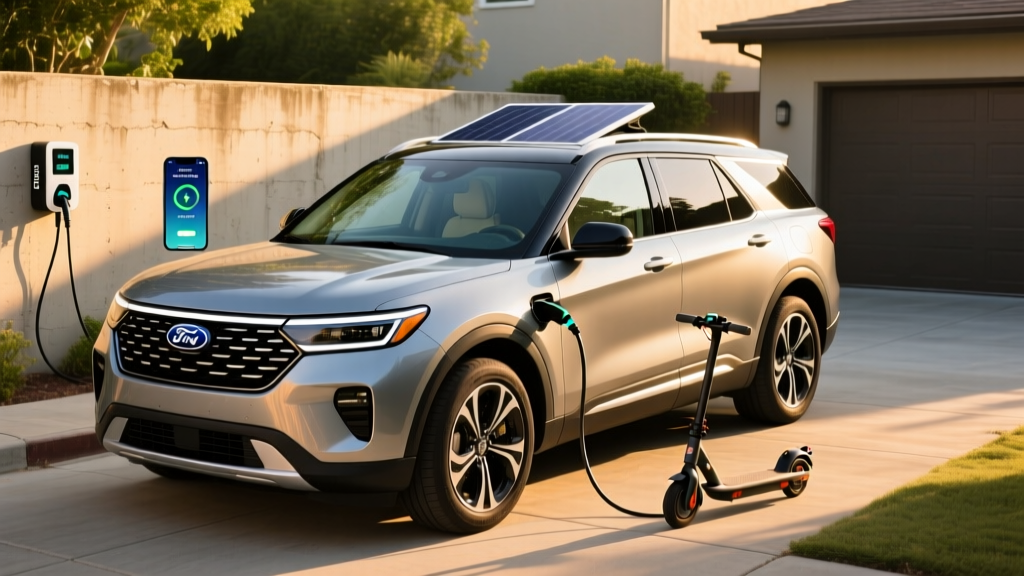
The 2026 Ford Explorer EV is a three-row electric SUV built on Volkswagen's MEB platform, offering an EPA-estimated 310 miles of range (RWD), up to 335 hp, and DC fast charging up to 170 kW. Starting around $48,000 before incentives, it targets families who want electric commuting with road-trip capability. It qualifies for the full $7,500 federal tax credit under current §30D rules, bringing the effective starting price near $40,500. Compared to the gas Explorer (24 MPG combined), the EV saves roughly $1,200–$1,800 annually in fuel at 12,000 miles/year, depending on local electricity rates. The main trade-offs: no frunk, third-row space is tighter than the gas model, and public charging reliability remains uneven outside major corridors.
Range and Efficiency: What the EPA Number Doesn't Tell You
The 2026 Explorer EV comes in two battery configurations. The Standard Range model uses a 77 kWh usable battery (RWD only), while the Extended Range packs an 84 kWh usable pack available in RWD or AWD. Ford publishes the following EPA estimates:
| Trim / Drivetrain | Usable Battery | EPA Range | Efficiency (MPGe) | kWh/100mi |
|---|---|---|---|---|
| Select RWD (Std Range) | 77 kWh (NMC) | 270 mi | 101 MPGe | 33 |
| Premium RWD (Ext Range) | 84 kWh (NMC) | 310 mi | 98 MPGe | 34 |
| Premium AWD (Ext Range) | 84 kWh (NMC) | 290 mi | 93 MPGe | 36 |
Real-World Range Expectations
EPA Sticker: 310 miles (Premium RWD Extended Range)
Highway driving (70–75 mph, 68°F): Expect ~260–275 miles. The Explorer EV's boxy SUV profile creates more aerodynamic drag at speed than a sedan-shaped EV.
Cold weather (20°F, cabin heat on): Expect ~210–235 miles. The MEB platform uses a resistive PTC heater rather than a heat pump on base trims, which draws significant battery energy in sub-freezing conditions. The Premium trim adds a heat pump for 2026, reducing cold-weather loss to roughly 20–25% instead of 30–35%.
Mixed driving (city + suburban, moderate climate): 285–305 miles is achievable.
The battery chemistry is NMC (nickel manganese cobalt), which offers higher energy density than LFP but requires more careful state-of-charge management. Ford recommends daily charging to 80% and only charging to 100% before long trips — a practice that extends long-term battery health. The 8-year/100,000-mile battery warranty covers capacity retention below 70% of original capacity, per Ford's official specifications.
Charging Speed: Home Setup and DC Fast Charging
Understanding the difference between kW (power, or how fast energy flows) and kWh (energy, or how much the battery holds) is critical for planning your charging routine.
| Charging Level | Power (kW) | Speed (miles added per hour) | Typical Use Case |
|---|---|---|---|
| Level 1 (120V household outlet) | 1.4 kW | ~4 mi/hr | Emergency/top-up only |
| Level 2 (240V home charger) | 11 kW (max onboard) | ~32 mi/hr | Daily home charging |
| DC Fast Charging (CCS) | 170 kW peak | ~150+ mi/hr (10–80%) | Road trips |
DC Fast Charging reality check: The Explorer EV peaks at 170 kW under ideal conditions (battery preconditioned, low state of charge, moderate ambient temperature). In practice, expect a 10–80% charge in approximately 25–28 minutes at a capable station. The charge curve tapers significantly above 80% — going from 80–100% can add another 20+ minutes, so plan to leave at 80% on road trips unless you absolutely need the last 20%.
Home charging setup: The Explorer EV's 11 kW onboard charger means you'll want a 48-amp hardwired Level 2 station (like a ChargePoint Home Flex or Ford Connected Charge Station) on a 60-amp circuit. A full charge from 10% takes roughly 7.5–8 hours on Level 2 — easily an overnight job.
Typical Home Level 2 Installation Costs
| Level 2 charger (48A hardwired) | $500–$700 |
| Electrician labor (standard install, panel adjacent) | $600–$1,200 |
| Electrical panel upgrade (if needed: 200A service) | $1,500–$3,000 |
| Permit and inspection | $100–$300 |
| Total (no panel upgrade) | $1,200–$2,200 |
| Total (with panel upgrade) | $2,700–$5,200 |
Get a quote from a licensed electrician before purchasing. Older homes with 100-amp panels almost always need an upgrade.
Performance and Driving Experience
The Explorer EV isn't positioned as a performance SUV, but the electric powertrain delivers smooth, immediate torque that the gas Explorer's turbocharged four-cylinder can't match off the line.
| Spec | Select RWD | Premium RWD | Premium AWD |
|---|---|---|---|
| Horsepower | 282 hp | 282 hp | 335 hp |
| 0–60 mph | ~6.4 sec | ~6.4 sec | ~5.3 sec |
| Towing capacity | — | — | 2,000 lbs (est.) |
| Cargo (behind 2nd row) | ~33 cu ft | ||
| Cargo (max, seats folded) | ~72 cu ft | ||
The AWD model uses a dual-motor setup with an asynchronous front motor for efficiency — it disconnects during light-load cruising to reduce drag. Ride quality is composed, with the heavy battery pack giving a low center of gravity. However, the Explorer EV is roughly 500 lbs lighter than the gas Explorer, and that translates to slightly less planted feel in crosswinds compared to some heavy EV SUVs. Regenerative braking is adjustable via paddle shifters, and one-pedal driving mode is available but not as aggressive as Tesla or Hyundai implementations.
Pricing, Tax Credits, and Total Cost of Ownership
The 2026 Explorer EV is positioned as a mainstream family electric SUV, competing with the Hyundai Ioniq 5 (no third row), Kia EV9 (larger, pricier), and Volkswagen ID.4 (smaller). Here's the MSRP breakdown before incentives:
| Trim | MSRP | After $7,500 Credit* |
|---|---|---|
| Select RWD (Std Range) | $48,000 | $40,500 |
| Premium RWD (Ext Range) | $53,500 | $46,000 |
| Premium AWD (Ext Range) | $56,500 | $49,000 |
*Federal §30D credit eligibility requires meeting income caps ($150K single / $300K joint), MSRP caps ($80K for SUVs), and battery critical-mineral/sourcing rules. The credit can now be transferred at point of sale as an instant discount. Verify your eligibility on IRS.gov before purchasing, as sourcing requirements tighten annually.
5-Year Ownership Cost: Explorer EV vs Gas Explorer (12,000 mi/yr)
| Cost Category | Explorer EV Premium AWD | Gas Explorer XLT AWD |
|---|---|---|
| Purchase price (after credit) | $49,000 | $46,500 |
| Fuel / Electricity (5 yrs) | $4,200 (avg $0.14/kWh) | $10,800 (avg $3.60/gal, 24 MPG) |
| Maintenance (5 yrs) | $1,800 | $4,200 |
| Insurance (5 yrs, avg) | $9,500 | $7,800 |
| Estimated depreciation | -$18,000 | -$16,500 |
| Total 5-year cost | $46,500 | $52,800 |
The EV saves roughly $6,300 over five years, primarily from fuel and maintenance. Insurance is typically 15–25% higher for EVs due to repair costs and parts pricing. Depreciation estimates are based on current EV market trends; consult fueleconomy.gov for personalized fuel-cost comparisons using your local electricity and gas prices.
Common Misconceptions About the Electric Explorer
| Myth | Fact |
|---|---|
| "The battery will need replacing in 5 years and cost $20K" | NMC batteries in modern thermal-managed packs like the MEB platform typically lose 8–12% capacity over 8 years. Ford warrants the battery at 70% capacity for 8 years/100K miles. Full replacement is rarely needed — module-level repairs run $2,000–$5,000. |
| "I can't road-trip in an EV" | The 290-mile AWD range plus 170 kW DC charging means a 10–80% stop adds ~25 minutes every 2.5–3 hours of driving. Apps like A Better Routeplanner optimize stops. Electrify America and Tesla Supercharger (via adapter) provide broad coverage on major interstates. |
| "It's a Tesla competitor with Autopilot" | The Explorer EV uses Ford Co-Pilot360, which is an SAE Level 2 driver-assist system — not self-driving. You must keep hands on the wheel and eyes on the road at all times. BlueCruise (hands-free on pre-mapped highways) is available on Premium trims. |
| "Charging at home is free" | Home charging costs $0.10–$0.25/kWh depending on your utility and time-of-use plan. A full 84 kWh charge costs $8.40–$21.00. Still 50–70% cheaper per mile than gasoline, but not free. |
| "EVs don't work in cold weather" | Cold reduces range 20–35% depending on severity and whether you have a heat pump. The Explorer EV Premium includes a heat pump for 2026. Preconditioning while plugged in (using grid power to warm the battery and cabin) mitigates most range loss for daily commutes. |
Decision Framework: Is the Explorer EV Right for You?
Choose the Explorer EV if:
- You have access to home Level 2 charging (garage or driveway with 240V circuit access)
- Your daily commute is under 80 miles round-trip, and you road-trip 2–4 times per year
- You want a three-row electric SUV under $55,000 after incentives
- You value smooth, quiet acceleration and low running costs over maximum towing or off-road capability
- You qualify for the §30D federal tax credit (income under $150K single / $300K joint)
Consider a different vehicle if:
- You regularly tow over 2,000 lbs (look at the F-150 Lightning or Rivian R1S)
- You live in an apartment with no charging access and your area has sparse public DC charging (a PHEV like the Toyota Grand Highlander Hybrid may suit better)
- You need maximum third-row space for adults — the gas Explorer and Kia EV9 offer more room back there
- You drive in extreme cold (below 0°F regularly) without garage parking — range loss will be significant
- You want a frunk for extra cargo — the MEB platform's front end houses HVAC components, so there's no front trunk
A Note on Ford BlueCruise
BlueCruise is an SAE Level 2 system that allows hands-free driving on approximately 130,000 miles of pre-mapped divided highways. A driver-facing camera monitors your attention. This is not autonomous driving — you remain legally responsible for the vehicle. Only Level 4 services like Waymo operate without a human driver, and those are limited to specific geofenced urban areas.
Frequently Asked Questions
Does the 2026 Ford Explorer EV qualify for the $7,500 federal tax credit?
As of current 2026 IRS rules, the Explorer EV qualifies for the full $7,500 §30D credit, which can be applied as a point-of-sale discount at the dealer. However, you must meet income thresholds (AGI under $150K single, $225K head of household, $300K joint), and the vehicle must meet battery critical-mineral and component sourcing requirements. These sourcing rules tighten each year — confirm eligibility at the point of purchase and check IRS.gov for the latest qualified vehicle list.
How does the Explorer EV compare to the gas Explorer on interior space?
Behind the third row, the EV offers roughly 18 cu ft vs the gas Explorer's 18.2 cu ft — nearly identical. Behind the second row, the EV gives about 33 cu ft vs 46 cu ft in the gas model, a notable loss due to the sloping roofline and MEB platform packaging. If you routinely haul large cargo with the third row folded, the gas Explorer still wins on utility.
Can I use Tesla Superchargers with the Explorer EV?
The Explorer EV ships with a CCS1 connector. Ford provides a NACS adapter (or has begun integrating the NACS port on 2026 models — confirm with your dealer) that grants access to Tesla's Supercharger network, which adds over 17,000 additional DC fast-charging stalls nationwide. Charging speed at Superchargers will be limited to the Explorer EV's 170 kW max, even at 250 kW V3 stalls.
What is the maintenance schedule for the Explorer EV?
EVs eliminate oil changes, spark plugs, transmission fluid, and exhaust system maintenance. Expect cabin air filter replacement every 15,000–20,000 miles, tire rotation every 5,000–7,500 miles (EVs wear tires faster due to instant torque and heavier weight), brake fluid checks every 2 years, and coolant service at longer intervals. Ford estimates 40–50% lower maintenance costs over the vehicle's life compared to the gas Explorer.
How long will the battery last?
Based on MEB platform data from Volkswagen ID.4 and related models, expect 8–12% capacity loss over 8 years and 100,000 miles under normal use. The battery warranty guarantees at least 70% capacity retention for 8 years/100,000 miles. Many MEB-platform vehicles are tracking toward 85–90% capacity at 100K miles. Charging to 80% daily and avoiding frequent DC fast charging in extreme heat extends longevity.