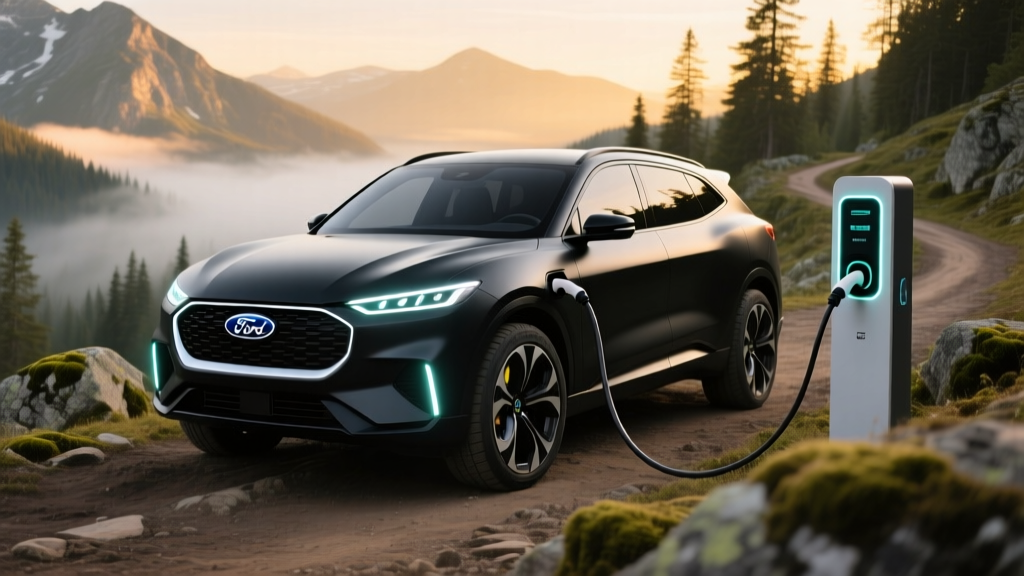
As of early 2026, there is no Ford Expedition Electric on sale. Ford has not officially announced an all-electric Expedition, though the company has confirmed that its next-generation full-size SUVs will ride on a new flexible architecture capable of supporting both hybrid and battery-electric powertrains. If you need a three-row electric SUV today, your realistic options are the Rivian R1S (EPA range up to 410 miles, starting ~$79,900), the Kia EV9 (EPA range up to 304 miles, starting ~$54,900), or the upcoming Chevrolet Tahoe EV expected for the 2027 model year.
Why an Electric Expedition Matters to Ford
The Expedition is Ford's highest-margin passenger vehicle, competing directly with the Chevrolet Tahoe, GMC Yukon, and Toyota Sequoia. The current fourth-generation Expedition (introduced for 2025) offers a 3.5L PowerBoost hybrid V6 producing 430 hp and 570 lb-ft of torque, with an EPA-estimated 22 MPG combined. That's a strong powertrain, but the full-size SUV segment is where electrification could deliver the biggest ownership-cost advantages — these vehicles are driven long distances, tow heavy loads, and burn fuel at rates that make even modest efficiency gains financially significant.
Ford's stated strategy, per CEO Jim Farley, is to pursue a "flexible architecture" for its body-on-frame vehicles, meaning a single platform that can accommodate ICE, hybrid, and battery-electric configurations. This is the same approach GM is taking with the Chevrolet Silverado EV and the upcoming Tahoe EV on the BT1 platform. The implication for Expedition buyers: an EV variant is technically feasible and likely in the product plan, but Ford has not committed to a public timeline.
The Three-Row Electric SUV Market in 2026
If Ford does build an Expedition Electric, it will enter a segment that is still thin but growing. Here's how the current field stacks up:
| Vehicle | EPA Range | Battery (kWh) | Peak DC Charge (kW) | 10–80% Time | 0–60 mph | Base MSRP |
|---|---|---|---|---|---|---|
| Rivian R1S (Dual-Motor, Max Pack) | 410 mi | 149 kWh (NMC) | 220 kW | ~30 min | 4.5 sec | $79,900 |
| Kia EV9 (GT-Line AWD) | 270 mi | 100 kWh (NMC) | 210 kW | ~24 min | 5.0 sec | $54,900 |
| Tesla Model X (Long Range) | 326 mi | 100 kWh (est.) | 250 kW | ~20 min | 3.8 sec | $77,990 |
| Ford Expedition (2025 PowerBoost Hybrid) | ~440 mi (gas tank) | N/A (1.5 kWh hybrid) | N/A | N/A | 6.2 sec | $62,325 |
Sources: fueleconomy.gov, Rivian specs, Kia EV9.
Notice the price gap: the current gas/hybrid Expedition starts around $62,000, while the most comparable electric rival (Rivian R1S) starts nearly $18,000 higher. An Expedition Electric, if it arrives, would need to close that gap to be competitive — likely targeting a starting MSRP in the $65,000–$75,000 range to leverage its brand loyalty and dealer network.
Real Costs: Electric Full-Size SUV vs. Gas Expedition
Full-size SUV buyers care about total cost of ownership, not just the sticker price. Here's a five-year comparison based on 15,000 miles per year, using national averages for electricity ($0.16/kWh) and gasoline ($3.40/gallon) as of early 2026:
| Cost Category (5 Years) | Ford Expedition Hybrid (22 MPG) | Rivian R1S Dual-Motor (2.0 kWh/mi) |
|---|---|---|
| Purchase Price (base MSRP) | $62,325 | $79,900 |
| Federal Tax Credit (§30D) | $0 | $0–$7,500* |
| Fuel / Energy (75,000 mi total) | $11,590 | $4,800 |
| Maintenance (oil, filters, brakes) | $3,200 | $1,100 |
| Insurance (avg. national) | $9,500 | $11,200 |
| Estimated 5-Year Total | $86,615 | $89,500–$97,000 |
*Rivian R1S §30D eligibility depends on battery-component and critical-mineral sourcing requirements under current IRS rules. MSRP cap for SUVs is $80,000; buyer income caps apply ($300K joint / $150K single). Always verify with a tax professional.
The EV saves roughly $6,790 on fuel and $2,100 on maintenance over five years — about $8,890 total. But the higher purchase price and insurance premiums offset most of that. The break-even point for an electric full-size SUV versus the Expedition Hybrid typically arrives around year 7–8, assuming home charging at residential electricity rates. If you rely exclusively on public DC fast charging (at $0.35–$0.50/kWh), the fuel savings shrink substantially, and the gas hybrid may remain cheaper overall.
What an Expedition Electric Would Need to Succeed
Based on the current market and buyer expectations in the full-size SUV segment, a credible Expedition Electric would need to hit these targets:
- Range: At least 320 miles EPA. Full-size SUV buyers regularly drive 300+ miles between stops on road trips, and towing can reduce EV range by 30–50%. A 350+ mile EPA rating would be ideal.
- Charging speed: Peak 250+ kW DC fast charging with a 10–80% time under 25 minutes. The EPA and real-world testers consistently show that sustained charge rate matters more than peak rate — the vehicle needs to hold above 150 kW through at least 60% SoC.
- Towing: Minimum 8,000 lbs rated. The current Expedition Hybrid tows up to 9,300 lbs. Electric full-size SUVs face a fundamental physics challenge here: towing at highway speeds can push consumption above 3.0 kWh/mile, cutting range in half.
- Price: Under $75,000 starting MSRP to stay within the §30D SUV cap and remain competitive with the hybrid Expedition and Tahoe.
- NACS connector: Ford has already committed to the North American Charging Standard (NACS) for all future EVs, which means access to Tesla Superchargers — a major advantage for road-trip-capable SUVs.
Real-World Ownership: What First-Time EV Buyers Must Know
If you're considering any electric full-size SUV — whether now or when an Expedition Electric arrives — these ownership realities will define your experience:
Home Charging Is Non-Negotiable for Most Owners
A full-size EV with a 100+ kWh battery needs Level 2 home charging to be practical. On a standard 120V outlet (Level 1), you'd add roughly 3–4 miles of range per hour — meaning a full recharge from 10% could take over 30 hours. A 48-amp Level 2 charger on a 240V/60A circuit adds approximately 25–30 miles per hour, allowing a full overnight recharge. Installation costs typically range from $800 to $2,500 depending on panel capacity and wiring distance, and some homes need a $2,000–$4,000 electrical panel upgrade to support a 60A circuit.
If you cannot install home charging (apartment living, street parking, landlord restrictions), an electric full-size SUV becomes significantly less convenient than a hybrid. Public DC fast charging works, but at $0.35–$0.50/kWh nationally, the per-mile cost approaches that of a 22-MPG hybrid on gasoline.
Cold Weather Cuts Range 20–35%
This is physics, not a defect. Lithium-ion batteries lose efficiency below freezing, and cabin heating in an EV draws directly from the traction battery (unlike a gas car, which uses waste engine heat). In sustained sub-30°F conditions, expect a 350-mile EPA-rated electric SUV to deliver 230–280 real-world miles. A heat pump (standard on the Rivian R1S, available on the Kia EV9) reduces this penalty to roughly 15–20%, but it does not eliminate it. If you live in the northern tier and regularly drive 200+ miles in winter, this range loss is a material planning factor.
Towing With an EV: The Uncomfortable Math
Every electric SUV tested while towing a 5,000–7,000 lb trailer has shown energy consumption between 2.5 and 3.5 kWh/mile. At 3.0 kWh/mile, a 149 kWh battery (like the R1S Max Pack) delivers roughly 50 miles of real-world towing range before needing a charge. This makes EVs viable for short towing trips (boat to lake, camper to a nearby campground) but impractical for long-distance towing without meticulous route planning around DC fast chargers — and not all chargers can accommodate a truck-and-trailer configuration.
Common Misconceptions About Electric Full-Size SUVs
| Myth | Fact |
|---|---|
| "EVs can't tow anything serious." | The Rivian R1S is rated for 7,700 lbs and the F-150 Lightning for 10,000 lbs. The capability exists — the limitation is range while towing, not torque or structural capacity. |
| "The battery will need replacing in 5 years." | Federal law mandates a minimum 8-year/100,000-mile battery warranty. Real-world data from Tesla and Nissan shows typical degradation of 10–15% over 150,000 miles for NMC chemistry. LFP batteries (used in some Tesla and Ford models) show even less degradation. |
| "EVs are always cheaper to own." | Not always. Higher purchase prices, higher insurance premiums (10–20% above comparable gas vehicles), and public charging costs can erase fuel savings. The math works best with home charging and high annual mileage. |
| "Charging takes too long for road trips." | At a 250 kW DC fast charger, a modern EV adds 150–200 miles in 15–20 minutes. Combined with rest stops and meals, this is manageable — but it does add 20–40 minutes to a 500-mile trip compared to gas. |
| "The §30D credit is $7,500 for everyone." | Eligibility depends on MSRP caps ($80K for SUVs), buyer income limits, and battery sourcing requirements that change annually. Many EVs qualify for $0 or $3,750 depending on the model year and manufacturing date. Always check the IRS Clean Vehicle Credit page before purchasing. |
Decision Framework: Should You Wait for an Expedition Electric?
Buy a Rivian R1S or Kia EV9 now if:
- You need a three-row electric SUV within the next 6 months
- You have home Level 2 charging access (or can install it)
- Your typical daily driving is under 200 miles and you road-trip fewer than 6 times per year
- You value instant torque, low running costs, and zero tailpipe emissions
Buy the current Ford Expedition Hybrid if:
- You regularly tow more than 5,000 lbs over distances greater than 100 miles
- You live in a region with limited DC fast-charging infrastructure
- You cannot install home charging and would rely on public infrastructure
- You want to stay under $65,000 MSRP and avoid EV insurance premiums
- You drive in sustained sub-zero winter conditions and need maximum range certainty
Wait for a potential Expedition Electric (2027–2028) if:
- Your current vehicle has 2+ years of useful life remaining
- Ford brand loyalty and dealer-service convenience are important to you
- You want NACS/Supercharger access in a Ford-badged full-size SUV
- You expect prices to moderate as battery costs continue declining (industry analysts project a 20–30% reduction in pack-level costs between 2024 and 2028)
Frequently Asked Questions
Has Ford officially announced an electric Expedition?
No. As of early 2026, Ford has not announced a specific electric Expedition model. The company has stated that its next-generation body-on-frame vehicles will use a flexible architecture supporting hybrid and EV powertrains, but no product timeline has been confirmed for an Expedition EV.
What is the closest alternative to an electric Expedition available today?
The Rivian R1S is the closest match in size, capability, and three-row seating. It offers up to 410 miles of EPA range (Max Pack), 7,700-lb towing capacity, and NACS charging. The Kia EV9 is a more affordable unibody alternative at $54,900 starting, though with less range (304 miles max) and no serious towing capability. The upcoming Chevrolet Tahoe EV (expected 2027 model year) will be the most direct body-on-frame competitor.
How much would an electric Expedition likely cost?
Based on Ford's current pricing strategy and the competitive landscape, an Expedition Electric would likely start between $65,000 and $75,000 to stay under the §30D MSRP cap for SUVs ($80,000) and remain competitive with the hybrid Expedition ($62,325) and Rivian R1S ($79,900). Higher trims with extended-range batteries could push above $85,000.
Would an electric Expedition qualify for the $7,500 federal tax credit?
It would depend on the final MSRP (must be ≤$80,000 for SUVs), the buyer's adjusted gross income (≤$300,000 joint / $150,000 single), and whether the battery meets critical-mineral and component sourcing requirements under current IRS §30D rules. These sourcing requirements tighten annually, so eligibility in 2027–2028 cannot be predicted with certainty today. The credit can be applied as a point-of-sale rebate, reducing the effective purchase price at the dealer.
Is it practical to tow with an electric full-size SUV?
For short trips (under 100 miles one-way), yes — electric SUVs deliver exceptional low-end torque and stable towing dynamics. For long-distance towing, range is the limiting factor. Expect real-world range to drop to 50–80 miles per charge when towing a 5,000+ lb trailer at highway speeds. This requires careful route planning around DC fast chargers that can accommodate truck-and-trailer configurations, which remain limited in most regions.