What Is Ford EV Pickup Unicasting?
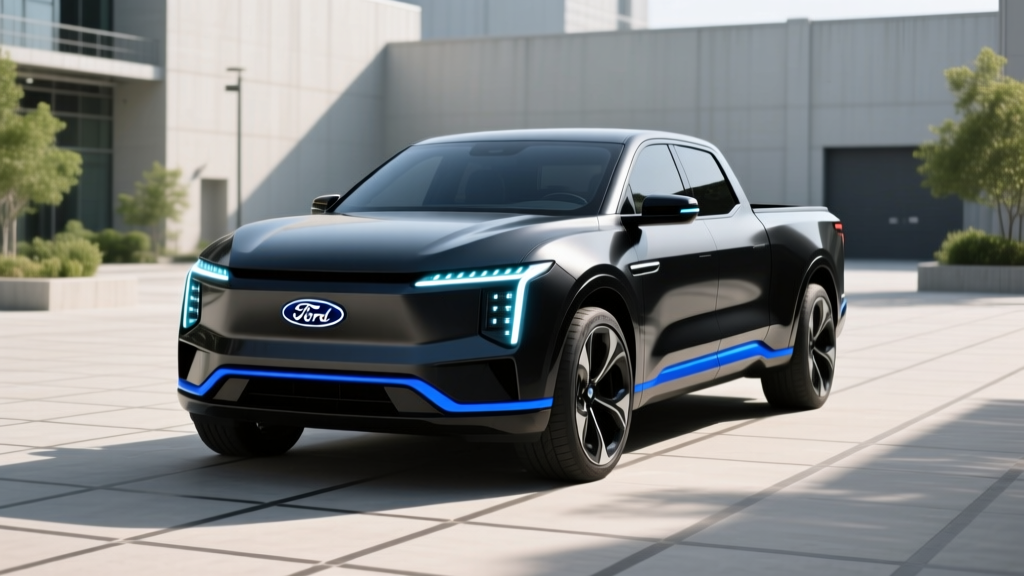
Ford's unicasting (also called gigacasting or mega-casting) is a manufacturing process that uses enormous high-pressure die-casting machines to produce large single-piece aluminum underbody sections for electric vehicles, replacing dozens of individually stamped and welded steel parts. For Ford's next-generation EV pickup — the successor to the current F-150 Lightning — unicasting is expected to reduce vehicle weight by roughly 100–200 lbs, cut production costs by an estimated 20–30% on the underbody, and improve structural rigidity. The practical result for buyers: a lighter, potentially longer-range, and more affordable electric pickup when Ford's next-gen EV truck platform arrives. Ford has confirmed investment in mega-casting capabilities at its Oakville, Ontario plant retooling, with production targeted for the 2025–2026 timeframe on its next-gen electric truck platform.
How Unicasting Changes the F-150 Lightning's Underbody
Traditional truck manufacturing stamps, bends, and welds together 70 to 100+ individual steel components to form a vehicle's underbody structure. Each joint is a potential failure point, each part adds weight, and the assembly process requires hundreds of robots and significant floor space.
Unicasting collapses that complexity. A single aluminum injection — using machines with clamping forces exceeding 6,000–9,000 tons — produces a near-net-shape underbody piece in roughly 60–90 seconds. Tesla pioneered this approach with the Model Y's front and rear castings, and Ford has been developing its own version for EV pickups since at least 2022.
For the F-150 Lightning platform specifically, the implications are significant:
- Weight reduction: Aluminum mega-castings can replace 50–80 lbs of steel per casting section. With front and rear underbody castings, total savings of 100–200 lbs are realistic.
- Range impact: Every 100 lbs removed from a full-size electric pickup translates to approximately 1–2% range improvement. On a truck with a 320-mile EPA target, that's roughly 3–6 additional miles — modest on its own, but it compounds with other efficiency gains.
- Cost reduction: Ford's internal estimates and industry analysis suggest underbody casting reduces manufacturing cost by $200–$500 per vehicle at scale, savings that can be passed to buyers or reinvested in larger battery packs.
- Structural rigidity: A single-piece casting eliminates weld-seam flex, improving torsional stiffness by an estimated 10–15%, which benefits ride quality and crash performance.
Current F-150 Lightning Specs vs. Next-Gen Unicasting Platform
To understand what unicasting might deliver, here's where the current-generation F-150 Lightning stands alongside projected next-gen improvements:
| Specification | 2025 F-150 Lightning (Current) | Next-Gen Unicasting Platform (Projected) |
|---|---|---|
| EPA Range (max battery) | 320 miles (Extended Range) | 340–360 miles (estimated) |
| Battery Capacity | 131 kWh usable (Extended Range, NMC) | 135–150 kWh (estimated, potential LFP option) |
| Peak DC Fast Charge | 150 kW (10–80% in ~41 min) | 200–250 kW (10–80% in ~25–30 min, estimated) |
| Level 2 Charge Rate | 19.2 kW (80A) | 19.2 kW (expected carryover) |
| 0–60 mph | 3.8 seconds (Extended Range, 580 hp) | Sub-4.0 seconds (estimated) |
| Horsepower | 580 hp (Extended Range) | 580–650 hp (estimated) |
| Towing Capacity | 10,000 lbs (max) | 10,000–12,000 lbs (estimated) |
| Curb Weight | ~6,500–6,800 lbs | ~6,300–6,600 lbs (estimated) |
| Starting MSRP | ~$55,000 (base Pro trim) | ~$48,000–$52,000 (target, pre-incentive) |
Note: Next-gen figures are preliminary estimates based on Ford's public statements and industry analysis. Final specs will be confirmed at vehicle launch.
Real-World Range Reality Check
The current F-150 Lightning Extended Range carries a 320-mile EPA rating. In real-world highway driving at 70 mph, expect approximately 260–280 miles. In cold weather (below 30°F), range drops to roughly 220–250 miles due to battery chemistry limitations and cabin heating demand. Towing a 5,000-lb trailer can cut range to 150–180 miles. The next-gen platform's weight savings and potential efficiency improvements may narrow these gaps, but physics remains physics — a full-size truck pushing air at highway speeds consumes significant energy regardless of manufacturing method.
Cost of Ownership: F-150 Lightning vs. Gas F-150
Unicasting's cost savings could make the next-gen electric F-150 more competitive against its gas counterpart from day one. Here's how the current F-150 Lightning compares to the gas F-150 over five years of ownership:
| Cost Category (5-Year) | F-150 Lightning (Extended Range, ~$65K MSRP) | F-150 Gas (XLT SuperCrew, ~$50K MSRP) |
|---|---|---|
| Purchase Price (after §30D credit) | $57,500 (if eligible for $7,500 credit) | $50,000 |
| Fuel / Electricity (75,000 miles) | $4,500–$6,000 (home charging at $0.14/kWh) | $9,400–$11,000 (at $3.50/gal, 20 MPG combined) |
| Maintenance | $1,200–$1,800 (no oil changes, fewer moving parts) | $3,500–$4,500 (oil, filters, transmission, exhaust) |
| Insurance (avg) | $10,500–$13,000 (EV premium ~15–20%) | $8,500–$10,500 |
| Depreciation (est.) | $22,000–$28,000 | $18,000–$22,000 |
| Total 5-Year Cost | $95,700–$106,300 | $89,400–$98,000 |
The Lightning's higher insurance premiums and steeper depreciation currently offset much of the fuel and maintenance savings. However, if unicasting brings the next-gen starting price down to the $48,000–$52,000 range while maintaining the §30D federal tax credit eligibility, the total cost of ownership equation shifts meaningfully in the EV's favor. According to fueleconomy.gov, the F-150 Lightning achieves 70 MPGe combined, versus the gas F-150's 20–22 MPG combined — a 3x efficiency advantage that translates directly to per-mile cost savings.
Federal Tax Credit Eligibility for Ford's Electric Pickup
The IRS §30D clean vehicle credit remains a critical factor in EV pickup affordability. For 2026, the rules are:
- MSRP cap: Trucks and SUVs must have an MSRP at or below $80,000 to qualify. All F-150 Lightning trims currently meet this threshold.
- Income limits: Modified adjusted gross income (MAGI) must not exceed $300,000 (joint filers), $225,000 (head of household), or $150,000 (single filers).
- Battery sourcing: A percentage of critical minerals and battery components must be sourced from the U.S. or FTA partners. These thresholds increase annually. Ford has worked to qualify the Lightning for the full $7,500, but eligibility can shift with annual sourcing requirement changes.
- Point-of-sale transfer: Buyers can transfer the credit to the dealer at purchase, reducing the out-of-pocket price immediately rather than waiting for tax filing.
Important: Tax credit eligibility changes annually based on battery sourcing rules. Always verify current-year eligibility on the IRS website and consult a tax professional before purchasing.
Common Misconceptions About Unicasting and EV Pickups
| Myth | Fact | ||
|---|---|---|---|
| "Unicasting makes the truck less repairable after a crash." | While a damaged mega-casting is more complex to replace than individual stamped parts, Ford's body shops are being trained on sectioning and replacement procedures. Insurance companies are already adjusting assessments. The trade-off is a stiffer, lighter, safer structure. | "A lighter electric truck means significantly more range." | Weight reduction helps, but aerodynamics and speed dominate highway energy consumption. A 150-lb weight savings adds roughly 3–5 miles of EPA range — helpful, but not transformative on its own. |
| "Aluminum castings are weaker than welded steel." | High-pressure die-cast aluminum alloys used in automotive mega-castings meet or exceed the structural performance of equivalent welded steel assemblies in crash testing. Tesla's Model Y, which uses mega-castings, earned an IIHS Top Safety Pick+ rating. | ||
| "The next-gen F-150 Lightning will be drastically cheaper." | Unicasting saves $200–$500 per vehicle in manufacturing. Combined with battery cost declines and platform optimization, a $3,000–$7,000 price reduction is realistic — not a $15,000 drop. | ||
| "EV pickups can't tow long distances." | The Lightning tows up to 10,000 lbs, but range while towing drops to 150–180 miles. This is a real limitation for long-haul towing. For frequent heavy towing over 200+ miles, a diesel or hybrid remains more practical until DC fast-charging infrastructure expands along trucking corridors. |
Real-World Ownership: What First-Time EV Pickup Buyers Must Know
Home Charging Is Non-Negotiable for Most Owners
The F-150 Lightning's 131 kWh Extended Range battery takes roughly 55–60 hours on a standard 120V Level 1 outlet (1.4 kW). A Level 2 home charger at 19.2 kW (80A) refills the pack in about 8–9 hours — ideal for overnight charging. Home Level 2 installation typically costs $1,500–$3,500 including equipment, electrician labor, and permits. If your home electrical panel needs a 200A upgrade, add $1,500–$3,000. Without reliable home charging, daily EV truck ownership becomes significantly less convenient.
Climate Matters More Than You Think
If you live in regions with sustained sub-freezing winters, expect 20–30% range reduction. The Lightning's battery thermal management system mitigates this, but cold chemistry is unavoidable. The available heat pump (standard on higher trims) helps preserve range during cabin heating. Preconditioning the battery while plugged in — warming it before departure — is essential for both range preservation and DC fast-charge speed in cold weather.
DC Fast Charging: The Road Trip Reality
The current Lightning peaks at 150 kW on DC fast chargers, meaning a 10–80% charge takes approximately 41 minutes. That's slower than competitors like the Rivian R1T (peak 220 kW) or the Hyundai Ioniq 5 (peak 240 kW). Ford's next-gen platform is expected to support 200–250 kW, which would bring 10–80% charging to roughly 25–30 minutes. The charging curve tapers significantly above 80% — charging from 80–100% can take as long as 10–80%, so plan to charge to 80% and go on road trips.
Insurance Costs More
EV pickups carry a 15–25% insurance premium over gas equivalents due to higher repair costs, specialized parts, and elevated vehicle prices. Budget an extra $400–$700 annually. Shop quotes from multiple insurers — some now offer specific EV discounts.
Decision Framework: Should You Buy Now or Wait for the Unicasting Platform?
Choose the Current F-150 Lightning If:
- You need an electric truck now for work or daily driving
- Your typical daily driving is under 200 miles round-trip
- You have or can install Level 2 home charging
- You qualify for the §30D credit and want to lock in current pricing
- You value Pro Power Onboard (up to 9.6 kW V2L) for job-site or camping use
Wait for the Next-Gen Unicasting Platform If:
- You're 12–24 months out from purchasing and can wait for the new platform
- Price sensitivity is a major factor — the next-gen may start $3,000–$7,000 lower
- You need maximum range and want the projected 340–360 mile EPA rating
- Faster DC charging (200+ kW) is important for your road-trip patterns
- You want potential LFP battery chemistry for longer cycle life and lower degradation
Consider a Gas or Hybrid F-150 Instead If:
- You frequently tow heavy loads over 200+ miles without charging stops
- You live in an apartment or lack home charging access with no reliable public options nearby
- Your budget is strictly under $45,000 and you don't qualify for used-EV credits
- You drive in extreme cold (below 0°F regularly) where range loss compounds with towing
Frequently Asked Questions
Is Ford's unicasting the same as Tesla's gigacasting?
Yes, in principle. Both use high-pressure die-casting machines to produce large single-piece aluminum vehicle structures. Tesla calls its process "gigacasting" (after the Giga Press machines by IDRA). Ford uses the term "mega-casting" or "unicasting" internally. The physics and manufacturing advantages are the same — fewer parts, less weight, lower assembly cost.
Will unicasting make F-150 Lightning repairs more expensive after an accident?
Potentially, yes — if a mega-cast section is damaged, it may require full replacement rather than localized repair. However, Ford is developing sectioning procedures for body shops, and the improved structural rigidity may actually reduce damage in some crash scenarios. Insurance industry adjustments are ongoing. This is a legitimate consideration for buyers in high-accident-risk areas.
Does the F-150 Lightning qualify for the $7,500 federal tax credit in 2026?
Eligibility depends on current-year battery sourcing requirements under IRS §30D, which tighten annually. As of early 2025, the Lightning qualified for the full credit, but this can change. Always check the IRS clean vehicle credit page for the most current eligibility list before purchasing. The MSRP must be under $80,000 and buyer income must fall under the caps ($300K joint / $150K single).
How much does it cost to charge an F-150 Lightning at home?
At the U.S. average residential electricity rate of ~$0.16/kWh, a full 131 kWh charge costs approximately $21 and provides about 320 EPA miles. That works out to roughly $0.065–$0.07 per mile. Compare that to a gas F-150 at 20 MPG and $3.50/gallon: $0.175 per mile. Home charging saves approximately $0.10–$0.11 per mile, or about $7,500–$8,250 over 75,000 miles.
Can the F-150 Lightning power my home during an outage?
Yes, with Ford's available Intelligent Backup Power system and the Ford Charge Station Pro (an additional ~$1,300–$1,800 for equipment plus installation), the Lightning can supply up to 9.6 kW to your home via V2H (vehicle-to-home). A fully charged Extended Range battery can power an average home for approximately 3 days during an outage. This is a genuine advantage over gas trucks, which cannot feed power back to a home without a separate generator.
What's the battery warranty on the F-150 Lightning?
Ford covers the Lightning's high-voltage battery for 8 years or 100,000 miles, whichever comes first, with a capacity retention threshold of 70%. If the battery degrades below 70% of original capacity within the warranty period, Ford will repair or replace it. Real-world data from early Lightning owners suggests typical degradation of 5–8% over the first 50,000 miles — well within warranty margins.