Ford EV Offers: The Quick Answer for Buyers
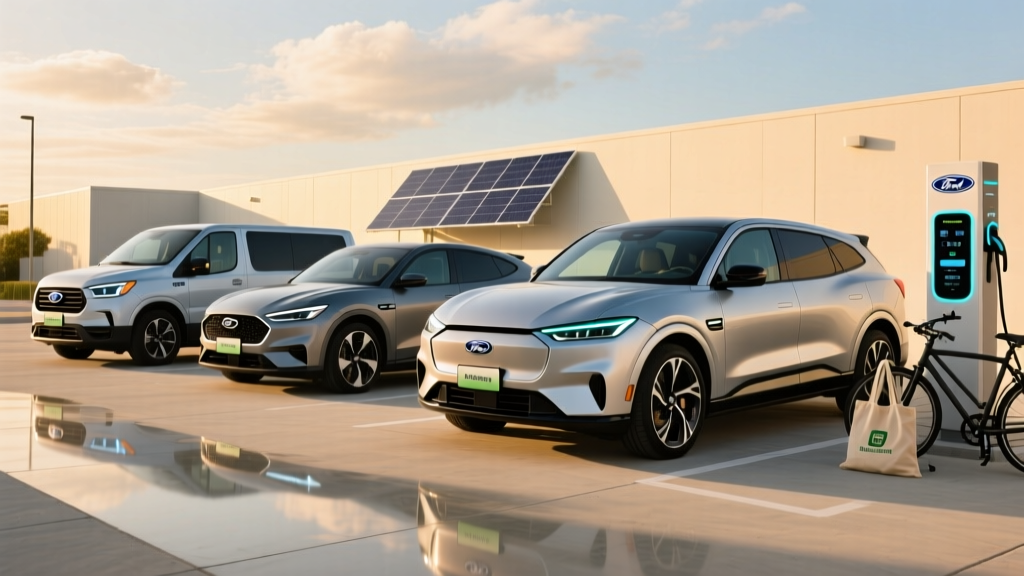
Ford's 2026 EV lineup centers on two consumer models: the Mustang Mach-E (starting ~$37,995, EPA range up to 320 miles) and the F-150 Lightning (starting ~$54,995, EPA range up to 320 miles). Both qualify for partial or full federal tax credits under IRS §30D depending on trim, battery sourcing, and buyer income. The best Ford EV offer for most households is the Mach-E Select with the Standard Range battery — it delivers 250 miles of EPA range, peaks at 150 kW DC fast charging, and undercuts most rivals on price after incentives. If you need truck capability, the Lightning remains the only full-size electric pickup from a legacy automaker, though real-world range drops significantly when towing.
The 2026 Ford EV Lineup at a Glance
Ford has streamlined its electric portfolio after discontinuing several low-volume programs. For consumer buyers, two models carry the Blue Oval's EV ambitions into 2026. Here's how they stack up on the numbers that matter:
| Specification | Mustang Mach-E Select SR | Mustang Mach-E Premium ER | F-150 Lightning XLT SR | F-150 Lightning Lariat ER |
|---|---|---|---|---|
| Base MSRP | $37,995 | $46,995 | $54,995 | $69,995 |
| EPA Range | 250 mi | 320 mi | 240 mi | 320 mi |
| Battery (usable) | 72 kWh (LFP) | 91 kWh (NMC) | 98 kWh (NMC) | 131 kWh (NMC) |
| Peak DC Charge Rate | 150 kW | 150 kW | 150 kW | 150 kW |
| 10-80% DCFC Time | ~32 min | ~38 min | ~36 min | ~44 min |
| Level 2 Charge Rate | 10.5 kW | 10.5 kW | 11.3 kW (single) / 19.2 kW (dual) | 19.2 kW |
| Horsepower | 266 hp | 346 hp | 452 hp | 452 hp |
| 0-60 mph | 6.3 sec | 5.1 sec | 4.5 sec | 4.5 sec |
| MPGe (combined) | 101 MPGe | 98 MPGe | 78 MPGe | 70 MPGe |
| Battery Warranty | 8 yr / 100,000 mi | 8 yr / 100,000 mi | 8 yr / 100,000 mi | 8 yr / 100,000 mi |
Sources: fueleconomy.gov, Ford Motor Company official specifications.
Real-World Range: What the EPA Sticker Doesn't Tell You
Mach-E Premium ER: EPA 320 miles. Expect 260–280 miles on sustained highway driving at 70 mph, and as low as 220–240 miles in sub-freezing temperatures with cabin heat active.
F-150 Lightning Lariat ER: EPA 320 miles. Expect 250–270 miles highway unloaded. When towing a 5,000-lb trailer, range drops to 120–160 miles depending on speed and terrain.
The Mach-E's extended-range pack uses NMC (nickel manganese cobalt) chemistry, which offers higher energy density but degrades slightly faster than the LFP (lithium iron phosphate) cells in the Standard Range model. LFP batteries tolerate daily 100% charging without accelerated wear — a meaningful ownership advantage if your commute eats most of your range. Ford recommends charging LFP packs to 100% at least once weekly for accurate state-of-charge calibration.
The Lightning's massive 131 kWh pack (Lariat/Platinum) is the largest in any consumer EV sold in North America. That capacity enables impressive range for a 6,000-lb truck, but it also means longer charging sessions. At a 150 kW DC fast charger, you'll spend roughly 44 minutes going from 10% to 80%. Plan road trips around that reality.
Ford EV Offers vs. Gas and Hybrid Alternatives
The purchase decision usually comes down to this: does the higher upfront cost of an EV offset fuel and maintenance savings over your ownership horizon? Let's compare the Mach-E against its closest internal-combustion rival, the Ford Bronco Sport (2.0L EcoBoost AWD, EPA 25 combined MPG), and the Ford Escape Hybrid (EPA 39 combined MPG).
| Cost Factor (5-Year / 75,000 mi) | Mach-E Select SR | Bronco Sport 2.0T AWD | Escape Hybrid AWD |
|---|---|---|---|
| Base MSRP | $37,995 | $33,500 | $34,500 |
| Est. Federal Tax Credit (§30D) | $3,750–$7,500* | $0 | $0 |
| Effective Purchase Price | ~$30,495–$34,245 | $33,500 | $34,500 |
| Fuel / Charging Cost (national avg) | $4,125 (home L2) | $9,375 (gas $3.50/gal) | $6,000 (gas $3.50/gal) |
| Maintenance (5 yr) | ~$1,800 | ~$3,600 | ~$3,200 |
| Est. Insurance (5 yr) | ~$9,500 | ~$7,500 | ~$7,800 |
| 5-Year Total Cost of Ownership | ~$45,920–$49,670 | ~$53,975 | ~$51,500 |
*Tax credit eligibility depends on battery sourcing, buyer AGI, and MSRP caps under IRS §30D rules. Consult a tax professional.
The Mach-E wins on total cost over five years primarily through fuel savings and lower maintenance (no oil changes, fewer brake replacements thanks to regenerative braking, no transmission fluid). However, EV insurance premiums run 15–25% higher on average due to repair cost structures and battery replacement risk. If you drive fewer than 10,000 miles annually, the fuel savings shrink and the gas or hybrid option may break even.
Tax Credits, Incentives, and the Real Cost of Ford EV Offers
Federal tax credits for Ford EVs in 2026 are not a guaranteed $7,500. Here's what actually determines your eligibility:
- MSRP Cap: SUVs, pickups, and vans must have an MSRP ≤ $80,000; sedans ≤ $55,000. All current Mach-E and Lightning trims fall under the SUV/truck cap.
- Buyer Income Cap: Modified AGI must not exceed $150,000 (single), $225,000 (head of household), or $300,000 (joint).
- Battery Sourcing: The credit splits into two halves — $3,750 for critical-minerals sourcing and $3,750 for battery-component assembly. Ford's LFP packs (Mach-E Select SR) source cells from CATL-licensed technology, which may affect the critical-minerals half depending on current-year Treasury guidance.
- Point-of-Sale Transfer: You can transfer the credit to the dealer at purchase, reducing your out-of-pocket cost immediately rather than waiting for a tax refund.
Several states layer additional incentives on top — Colorado offers up to $5,000, for example, and various utility companies provide $500–$1,500 rebates for home charger installation. Check your state energy office and local utility for current programs.
Charging at Home and on the Road: What Ford EV Owners Actually Experience
Ford has adopted the NACS (North American Charging Standard) connector for its newer production, meaning Mach-E and Lightning models now ship with native Tesla Supercharger compatibility — no adapter required for 2025+ models. This is a significant advantage over CCS-only vehicles, as the Supercharger network remains the most reliable DC fast-charging infrastructure in North America.
| Charging Level | Power | Mach-E (mi/hr added) | Lightning (mi/hr added) |
|---|---|---|---|
| Level 1 (120V standard outlet) | ~1.4 kW | ~3–4 mi/hr | ~2–3 mi/hr |
| Level 2 (240V, 48A home charger) | 10.5–11.5 kW | ~28–32 mi/hr | ~25–30 mi/hr |
| Level 2 (80A Ford Charge Station Pro) | 19.2 kW | N/A (vehicle-limited) | ~48–52 mi/hr |
| DC Fast Charge (150 kW peak) | 150 kW | ~140 mi in 10 min (peak) | ~120 mi in 10 min (peak) |
Home charging reality check: A Level 2 home installation on a 240V/48A circuit typically costs $800–$2,500 for the charger hardware plus $1,200–$3,500 for electrician labor and permitting, depending on panel proximity and whether your electrical panel needs an upgrade to 200A service. Most Mach-E owners wake up to a full battery every morning with a standard Level 2 setup — a full 0–100% charge takes roughly 7.5 hours on the SR model and 9.5 hours on the ER.
Public charging cost: DC fast charging on networks like Electrify America or Tesla Superchargers averages $0.35–$0.55 per kWh depending on location and time-of-use pricing. A 10–80% session on the Mach-E ER (~64 kWh added) costs roughly $22–$35. That's more expensive than home charging but still cheaper per mile than gasoline in most markets.
Common Misconceptions About Ford's EVs
| Myth | Fact |
|---|---|
| "The Lightning can't tow anything useful." | The Lightning has a max towing capacity of 7,700–10,000 lbs (trim-dependent). It can tow a boat or camper — but range drops 40–60% while towing. Plan charging stops accordingly. |
| "Ford EV batteries won't last." | Ford warranties its EV batteries for 8 years / 100,000 miles with a capacity retention threshold of 70%. Real-world data from 2021–2024 model-year Mach-Es shows average degradation of 5–8% over 60,000 miles — well within warranty. |
| "You can't drive a Ford EV in winter." | Cold weather reduces range by 20–35% due to battery chemistry and cabin heating demand. The Mach-E's available heat pump (standard on ER trims) recovers some efficiency. Preconditioning the battery while plugged in mitigates charging-speed loss in cold temperatures. |
| "BlueCruise drives the car for you." | BlueCruise is a SAE Level 2 driver-assistance system. It handles steering, acceleration, and braking on pre-mapped divided highways, but you must remain attentive. An in-cabin camera monitors your eyes. It is not self-driving. |
SAE Automation Level Reminder: Ford BlueCruise operates at SAE Level 2 — the driver must continuously supervise the system and be prepared to take over instantly. Only Level 4 services like Waymo operate without a human driver, and those are limited to geo-fenced urban areas. No Ford consumer vehicle is "self-driving."
Decision Framework: Which Ford EV Offer Is Right for You?
Choose the Mach-E Select SR if: You commute under 60 miles round-trip, have home charging access, want the lowest entry price, and don't regularly take road trips over 200 miles without stopping.
Choose the Mach-E Premium ER if: You want 320 miles of EPA range for longer road trips, need all-wheel drive for snow-belt climates, and value the heat pump for winter efficiency. The NMC battery trades some longevity for energy density.
Choose the F-150 Lightning if: You need a full-size truck for work or towing, have a garage or driveway for Level 2 charging, and your daily driving is under 200 miles. The Lightning excels as a daily driver that occasionally hauls — but if you tow long distances daily, a diesel or PowerBoost hybrid F-150 may be more practical.
Look elsewhere if: You live in an apartment without charging access and your area lacks reliable public DC fast chargers, you regularly drive more than 300 miles in a single day, or you need a third-row seat (Ford does not currently offer a 3-row EV — consider the Kia EV9 or Rivian R1S).
Frequently Asked Questions
Do Ford EVs qualify for the full $7,500 federal tax credit in 2026?
It depends on the specific trim and current battery-sourcing rules. The Mach-E and Lightning may qualify for $3,750 or the full $7,500 depending on whether their battery components and critical minerals meet IRS §30D thresholds for the current tax year. Income limits and MSRP caps also apply. Always verify eligibility at the point of sale and consult a tax professional.
How much does it cost to charge a Mach-E at home per month?
At the US average residential electricity rate of ~$0.16/kWh (EIA data), fully recharging the Mach-E Select SR's 72 kWh battery costs roughly $11.50. If you drive 1,200 miles per month (about 3.5 full charges), expect to add $40–$45 to your monthly electric bill — compared to $140–$160 in gasoline for a comparable gas-powered crossover.
Can I use Tesla Superchargers with a Ford EV?
Yes. 2025 and later Mach-E and Lightning models ship with the NACS charge port natively, granting direct access to Tesla's Supercharger network (now branded as open to NACS-compatible vehicles on Tesla's app). Older CCS-equipped Ford EVs can use a Ford-approved NACS adapter.
What happens if my Ford EV battery degrades past 70%?
If your battery's state of health drops below 70% of original capacity within the 8-year/100,000-mile warranty period, Ford will repair or replace it at no cost. Out-of-warranty replacement costs range from $12,000–$20,000 depending on the pack size, though most EV batteries outlast this window with minimal degradation based on current fleet data.
Is the F-150 Lightning good for off-road use?
The Lightning has 8.9 inches of ground clearance and available all-wheel drive, making it capable on fire roads and light trails. However, its 6,000+ lb curb weight and low-slung battery pack make it less suited for serious rock crawling than a gas F-150 with a lift. Think of it as a competent overlander, not a dedicated off-roader.