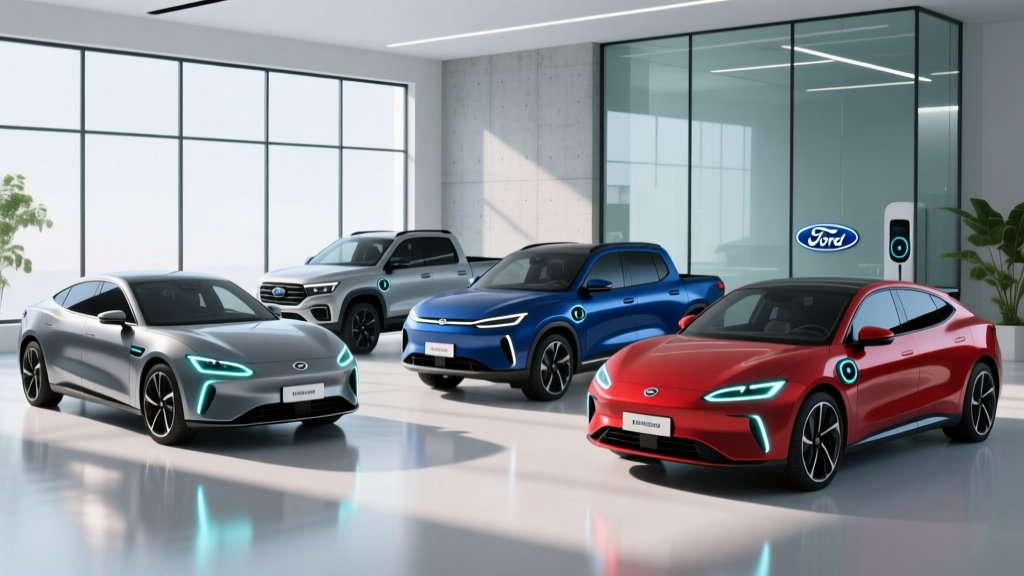
Ford's electric vehicle lineup in 2026 centers on two core models: the Mustang Mach-E crossover and the F-150 Lightning pickup. Both offer competitive EPA range (230–320 miles depending on trim and battery), DC fast charging up to 150–210 kW, and access to the Tesla Supercharger network via Ford's NACS adapter. If you're evaluating Ford EV's for your next purchase, the Mach-E starts around $39,995 and the Lightning around $54,995 before incentives, with real-world operating costs typically 40–60% lower than their gas counterparts — provided you have reliable home charging access.
Quick Answer: Are Ford EV's Worth It in 2026?
Yes, if: You have Level 2 home charging, drive under 250 miles daily, and value lower fuel/maintenance costs over 5+ years of ownership.
Reconsider if: You lack home charging, regularly tow heavy loads in cold weather, or need 400+ mile single-charge road trips without planning stops.
Current Ford EV Models: Specs & Real-World Range
Ford's 2026 EV portfolio focuses on proven platforms rather than chasing every segment. Here's what's actually available:
| Model | Battery (kWh) | EPA Range | Real-World Range* | Peak DC Charge | 10-80% Time | 0-60 mph | Base MSRP |
|---|---|---|---|---|---|---|---|
| Mustang Mach-E Select (RWD) | 75.7 (LFP) | 250 mi | 210-230 mi | 150 kW | ~32 min | 6.1 sec | $39,995 |
| Mustang Mach-E Premium (AWD, Ext Range) | 91.0 (NMC) | 312 mi | 260-285 mi | 150 kW | ~38 min | 5.1 sec | $48,595 |
| F-150 Lightning Pro (Std Range) | 98.0 (NMC) | 230 mi | 185-210 mi | 150 kW | ~41 min | 5.8 sec | $54,995 |
| F-150 Lightning Lariat (Ext Range) | 131.0 (NMC) | 320 mi | 265-290 mi | 210 kW | ~36 min | 4.5 sec | $69,995 |
*Real-world range accounts for highway driving (70-80 mph), moderate climate use, and typical payload. Expect 20-30% reduction in sub-freezing temperatures or when towing.
Cold Weather & Towing Reality Check
The F-150 Lightning's 320-mile EPA rating drops to ~180-220 miles when towing a 5,000-lb trailer in 40°F weather. The Mach-E Extended Range loses ~50-70 miles in sustained 20°F highway driving. If you live in the Upper Midwest or Northeast and lack a heated garage, budget for this loss or opt for the larger battery pack.
Ford EV's vs Gas Equivalents: 5-Year Cost Breakdown
The upfront price of Ford EV's is higher than gas counterparts, but total cost of ownership (TCO) flips when you factor in fuel, maintenance, and available tax credits. Here's a realistic 5-year/75,000-mile comparison:
| Cost Category | Mustang Mach-E Premium AWD | Ford Bronco Sport (Gas) | F-150 Lightning Lariat | Ford F-150 Lariat Gas |
|---|---|---|---|---|
| Purchase Price (MSRP) | $48,595 | $38,500 | $69,995 | $58,500 |
| Federal Tax Credit (§30D)* | -$3,750 to $7,500 | $0 | -$3,750 to $7,500 | $0 |
| Fuel/Energy (75k miles) | $3,200 (home L2) | $8,900 (25 MPG, $3.50/gal) | $4,100 (home L2) | $12,500 (18 MPG, $3.50/gal) |
| Maintenance | $1,200 | $3,800 | $1,500 | $4,200 |
| Insurance (avg) | $7,800 | $6,200 | $9,500 | $7,800 |
| 5-Year Total | $56,795-$60,295 | $57,400 | $79,095-$82,095 | $83,000 |
*§30D credit eligibility depends on MSRP caps ($55k for cars, $80k for trucks/SUVs), buyer income limits ($150k single/$300k joint AGI), and battery component/critical mineral sourcing. The Mach-E and Lightning may qualify for partial or full credits — check current IRS guidance and verify VIN eligibility at fueleconomy.gov before purchase.
Home Charging Cost Reality
At the U.S. average electricity rate of $0.16/kWh:
- Mach-E Extended Range (91 kWh): ~$14.50 for a full charge, ~$0.046/mile
- Lightning Extended Range (131 kWh): ~$21.00 for a full charge, ~$0.065/mile
- Gas F-150 (18 MPG): ~$0.194/mile at $3.50/gallon
Public DC fast charging costs 2-3x more ($0.35-$0.50/kWh), eroding savings if you can't charge at home.
Charging Infrastructure: What Ford EV Owners Actually Experience
Ford EV's use the NACS (Tesla) connector as of 2025, giving you native access to 15,000+ Tesla Superchargers plus Ford's BlueOval Charge Network (Electrify America, EVgo, ChargePoint). But access doesn't equal reliability:
Home Charging Setup
The included Ford Mobile Power Cord delivers 30 amps (7.2 kW) on a 240V NEMA 14-50 outlet, adding ~25 miles/hour for the Mach-E. For faster Level 2 charging:
- Ford Charge Station Pro (48A, 11.5 kW): $1,300 equipment + $800-$2,500 installation (depends on panel capacity and run length)
- Full charge time: 8-10 hours (Mach-E), 11-13 hours (Lightning Ext Range)
- Electrical panel upgrade: Add $2,000-$4,000 if you need a 200A service upgrade
Without home charging, you're relying on public infrastructure. Plan routes using PlugShare or A Better Route Planner, and expect 15-25% of non-Tesla chargers to be out-of-service or slower than advertised.
DC Fast Charging: Peak vs Sustained
The Lightning Extended Range peaks at 210 kW but sustains ~150 kW from 20-60% SoC, then tapers to 80 kW above 70%. Real-world 10-80% sessions take 36-40 minutes, not the "15-minute charge" marketing sometimes implies. The Mach-E's 150 kW peak is more consistent but slower overall.
Ford EV Battery Technology & Longevity
Ford uses two battery chemistries across its 2026 lineup:
| Chemistry | Models | Energy Density | Cycle Life | Cold Performance | Cost |
|---|---|---|---|---|---|
| LFP (Lithium Iron Phosphate) | Mach-E Select (Std Range) | Lower (heavier pack) | 3,000+ cycles | Poor below 32°F | Lower |
| NMC (Nickel Manganese Cobalt) | Mach-E Ext Range, Lightning | Higher (lighter, more range) | 1,000-2,000 cycles | Better cold-weather | Higher |
Warranty: Ford covers the battery for 8 years/100,000 miles against defects and capacity loss below 70% of original. Real-world degradation data from 2021-2023 Mach-E owners shows ~8-12% loss at 60,000 miles, with most packs retaining 85-90% capacity at 100,000 miles.
Replacement cost: Out-of-warranty battery replacement runs $15,000-$22,000 depending on pack size, though most owners will never need this within typical ownership periods.
Common Misconceptions About Ford EV's
| Myth | Fact |
|---|---|
| "EVs are worse for the environment due to battery mining" | Even on coal-heavy grids, Ford EV's produce 50-60% fewer lifetime emissions than gas equivalents (EPA data). On renewable-heavy grids, it's 70-80%. |
| "The F-150 Lightning can't tow" | Rated for 7,700-10,000 lbs towing, but range drops 40-50% under load. Fine for boat/ATV trailers, not cross-country 5th-wheel hauling. |
| "EVs need expensive battery replacements every 5 years" | Ford's 8-year/100k-mile warranty covers premature failure. Most packs outlast the vehicle's economic life. |
| "You can't drive EVs in winter" | Range drops 20-30% in sub-freezing temps, but preconditioning and seat/steering wheel heaters mitigate this. Norway is 80%+ EV and averages 28°F winters. |
| "EVs are slow to charge on road trips" | 10-80% in 35-40 minutes is realistic. Plan 20-minute breaks every 2-3 hours and you'll barely notice. |
Decision Framework: Which Ford EV Fits Your Life?
Choose the Mustang Mach-E If:
- You commute 30-80 miles daily and want car-like handling
- You have Level 2 home charging and rarely tow
- You want the lowest operating cost in Ford's EV lineup
- You prioritize range over cargo space (312-mile Ext Range available)
Choose the F-150 Lightning If:
- You need truck utility (towing, payload, Pro Power Onboard for job sites)
- You have a garage or driveway for Level 2 installation
- You value instant torque and 0-60 in 4.5 seconds (Ext Range)
- You can accept 230-260 real-world miles when not towing
Reconsider Ford EV's Entirely If:
- You live in an apartment without charging access and your workplace lacks chargers
- You regularly drive 300+ miles in rural areas with sparse charging (e.g., parts of Montana, West Texas)
- You need to tow 8,000+ lbs over long distances in winter
- Your budget is under $35,000 and you can't wait for used-market depreciation
First-Time EV Buyer Checklist
If you're new to electric vehicles, verify these before signing:
- Home charging feasibility: Get an electrician quote for Level 2 installation. If it's over $3,000 or impossible, reconsider.
- Electrical panel capacity: Most EV chargers need a 200A panel. Older homes with 100A service may need a $2,000-$4,000 upgrade.
- Tax credit eligibility: Check your AGI, the vehicle's MSRP cap compliance, and battery sourcing at irs.gov. Credits can be applied at point-of-sale in 2026.
- Insurance quotes: EV insurance runs 15-25% higher than gas equivalents. Get quotes before purchase.
- Charging apps: Download PlugShare, A Better Route Planner, and FordPass. Test your local charging options.
- Winter prep: If you live in cold climates, install a garage heater or plan to precondition while plugged in.
Frequently Asked Questions
Do Ford EV's qualify for the $7,500 federal tax credit?
Partially or fully, depending on trim and your income. The Mach-E Select (under $55k MSRP) may qualify for the full $7,500 if your AGI is under $150k (single) or $300k (joint) and the battery meets critical mineral/component sourcing rules. The Lightning Lariat Extended Range ($69,995) qualifies under the $80k truck/SUV cap. Verify current eligibility at fueleconomy.gov — rules change frequently.
How long does it take to charge a Ford EV at home?
With a 48A Level 2 charger (11.5 kW), the Mach-E Extended Range charges from 0-100% in ~8 hours. The Lightning Extended Range takes ~11-13 hours. Most owners plug in overnight and wake up with a full battery. On a standard 120V outlet (Level 1), expect 3-5 miles/hour — only practical for low-mileage drivers or emergency top-ups.
Can I use Tesla Superchargers with my Ford EV?
Yes. All 2025+ Ford EV's have the NACS charge port natively. For 2021-2024 models, Ford provides a CCS-to-NACS adapter (included or ~$230 aftermarket). You'll need the FordPass app to activate Supercharger access and billing.
What's the real-world range of the F-150 Lightning when towing?
Expect 180-220 miles with a 5,000-lb trailer in moderate weather, dropping to 150-180 miles in cold conditions or with heavier loads. The Lightning's range calculator adjusts in real-time based on payload and driving style — trust it over the EPA sticker when towing.
Are Ford EV's reliable compared to gas cars?
Early data (2021-2024 models) shows fewer powertrain issues than gas equivalents (no transmission, fewer moving parts), but some software glitches and build-quality inconsistencies. Consumer Reports gives the Mach-E average reliability; the Lightning rates slightly below average due to early-production issues. Most problems are addressed via OTA updates or warranty service.
What happens if the battery fails out of warranty?
Replacement costs $15,000-$22,000 depending on pack size. However, real-world data shows most EV batteries retain 80-90% capacity at 150,000 miles. Complete failure is rare; gradual degradation is the norm. Many owners sell or trade before reaching this point.
Bottom Line: Ford EV's in 2026
Ford's EV lineup is pragmatic, not revolutionary. The Mach-E and Lightning deliver competitive range, usable charging speeds, and access to the best DC fast-charging network (Tesla Superchargers). They're strong choices for buyers with home charging access and realistic expectations about cold-weather range loss and towing limitations.
The economics favor EV ownership over 5+ years if you drive 12,000+ miles annually and can charge at home. Without home charging, the cost advantage evaporates and you'll spend significant time hunting for public chargers.
Test drive both models with your typical cargo/passengers, get a home charging quote, and run your specific numbers before deciding. The data — not the marketing — should drive your choice.