Quick Verdict: The Urban Delivery Workhorse
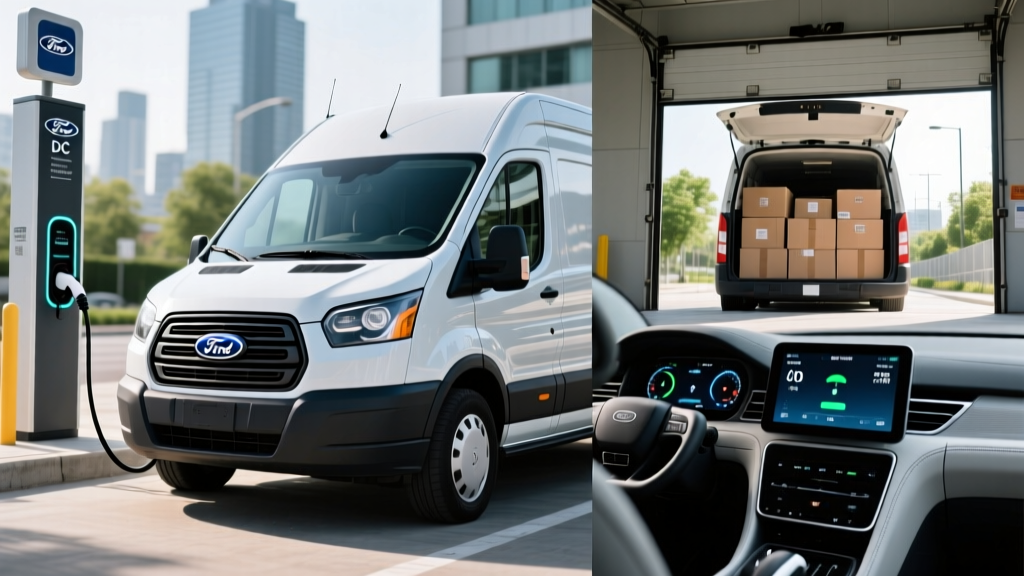
The Ford E-Transit isn't trying to win drag races or break range records. It's a purpose-built electric commercial van designed for a specific job: last-mile delivery, urban service routes, and fleet duty where daily mileage stays under 100 miles and depot charging is available. For that mission, the 2026 E-Transit executes well — offering familiar Transit ergonomics, Ford Pro's connected fleet ecosystem, and operating costs that undercut diesel Sprinters significantly on a per-mile basis.
But buyers expecting the 200+ mile range of a passenger EV need to recalibrate. The E-Transit's 68 kWh usable battery delivers an EPA-estimated 126 miles in the low-roof cargo van configuration — enough for most urban routes, but a hard ceiling that demands honest route planning. This review breaks down every spec that matters to fleet managers and owner-operators, from real-world range degradation to DC fast-charge tapering, payload penalties, and §30D tax credit eligibility.
Range & Efficiency: 126 EPA Miles, But Read the Fine Print
Real-World Expectation: 90–110 miles loaded, city delivery routes; 75–95 miles highway or cold-weather operation
Efficiency: ~2.0 kWh/mile (varies by roof height, wheelbase, and payload)
The 126-mile EPA figure applies specifically to the low-roof, 130-inch wheelbase cargo van — the lightest and most aerodynamic E-Transit configuration. Choose a high-roof or extended wheelbase variant and that number drops due to increased weight and frontal area. The cutaway and chassis-cab models, which carry heavier upfit equipment, can see EPA estimates closer to 108–115 miles depending on final vehicle weight.
In real-world fleet operations, range depends heavily on three factors:
- Payload: A fully loaded E-Transit (approaching its ~3,880 lb max payload) will consume noticeably more energy per mile than an empty van. Expect a 15–25% range reduction at max payload on stop-and-go routes.
- Route profile: City delivery with frequent stops actually favors EVs thanks to regenerative braking recapturing energy. Highway driving at 65–70 mph is where the E-Transit's boxy aerodynamics hurt most — sustained highway use can drop range to 75–90 miles.
- Temperature: Cold weather (below 32°F) typically reduces lithium-ion battery output and increases cabin heating demand. Fleet operators in northern climates should plan for 20–35% range loss in winter, making a 126-mile van effectively an 80–100 mile van on frigid days.
The E-Transit uses an NMC (nickel manganese cobalt) lithium-ion battery pack with 68 kWh of usable capacity. Ford does not currently offer an LFP option. The pack is mounted under the floor, preserving the Transit's flat load floor and upfit compatibility. According to fueleconomy.gov, the combined MPGe rating sits around 67 MPGe, though commercial operators should think in terms of kWh per mile (roughly 2.0) for cost calculations.
Charging Speed: DC Fast, Level 2, and Depot Planning
Charging infrastructure is the make-or-break factor for E-Transit adoption. Here's exactly what you're working with:
| Charge Level | Max Power | Speed / Time | Notes |
|---|---|---|---|
| Level 1 (120V) | ~1.4 kW | ~3 miles per hour | Emergency only; 45+ hours for full charge |
| Level 2 (240V AC) | 10.5 kW (48A) | ~22 miles per hour; full charge in ~6 hours | Standard depot/warehouse charging; Ford Pro AC charger available |
| DC Fast Charge | 115 kW peak | 15–80% in ~45 minutes | CCS connector; charge curve tapers significantly above 80% |
The E-Transit's 115 kW peak DC fast-charge rate is modest compared to passenger EVs like the Hyundai Ioniq 5 (240 kW) or Tesla's 250 kW Superchargers. That's intentional: commercial vans typically charge overnight at the depot on Level 2, and DC fast charging serves as a midday top-up for double-shift operations.
Charging curve reality: The 115 kW peak is only sustained at low states of charge (roughly 15–40% SoC). Above 60%, the rate begins tapering, and above 80% it drops to roughly 30–40 kW. Fleet managers planning midday fast-charge sessions should target the 20–80% window for the best time efficiency — a 15–80% session takes approximately 45 minutes at a capable 150+ kW CCS station.
For depot charging, Ford Pro offers the Ford Pro AC Charger (up to 80A / 19.2 kW on compatible vehicles, though the E-Transit's onboard charger maxes at 10.5 kW). A standard 48A / 240V circuit delivers a full overnight charge in roughly 6 hours — sufficient for daily top-up from a 30–40% remaining state of charge.
Installation of depot Level 2 chargers typically runs $2,000–$6,000 per unit (equipment plus electrical work), though commercial installations with multiple chargers, panel upgrades, and conduit runs can exceed $10,000 per stall. Always consult a licensed commercial electrician for site-specific quotes.
Performance & Drivetrain
| Drivetrain | Rear-wheel drive (RWD) |
| Motor | Single permanent-magnet synchronous motor, rear axle |
| Horsepower | 266 hp (198 kW) |
| Torque | 317 lb-ft |
| 0–60 mph | ~8.0 seconds (unloaded cargo van) |
| Top Speed | Electronically limited to ~75 mph |
| Battery | 68 kWh usable, NMC chemistry |
| EPA Range | 126 miles (low-roof cargo van) |
| Max Payload | ~3,880 lbs (cargo van, varies by config) |
| Cargo Volume | 246.7 cu ft (low-roof, 130" WB) to 487.3 cu ft (high-roof, 148" WB extended) |
| Towing | Not rated for towing |
The E-Transit's 266 hp and 317 lb-ft of torque deliver confident acceleration from stops — a meaningful advantage over diesel competitors in urban delivery where you're merging and pulling away from curbs dozens of times per shift. The 0–60 mph time of roughly 8 seconds (unloaded) is irrelevant for commercial use but illustrates that the van doesn't feel sluggish.
The single-speed transmission and instant electric torque eliminate the shift lag of automatic diesel vans, and regenerative braking (with selectable levels) reduces brake wear — a genuine maintenance cost saver in stop-and-go delivery. Ford limits top speed to approximately 75 mph, which aligns with the van's intended urban/suburban duty cycle.
One notable limitation: the E-Transit is RWD only. There is no AWD or dual-motor option. For fleets operating in regions with heavy snow or unpaved job sites, this may be a constraint compared to the available AWD configurations on the gas-powered Transit.
Cargo, Configurations & Upfit Compatibility
The E-Transit's greatest strategic advantage is that it shares the Transit platform's body dimensions, mounting points, and upfit ecosystem. If your fleet already uses Transit cargo vans, cutaways, or chassis cabs, the E-Transit slots in without re-engineering shelving, ladder racks, or specialty bodies.
Available configurations include:
- Cargo Van: Three roof heights (low, medium, high), two wheelbases (130", 148"), and a 148" extended. Cargo volume ranges from 246.7 cu ft (low roof, short WB) to 487.3 cu ft (high roof, extended).
- Cutaway: For box-truck and specialty upfits; flat floor behind the cab for third-party body installation.
- Chassis Cab: Stripped-down rear frame for custom commercial bodies (utility beds, dump bodies, etc.).
- Passenger Wagon: Available in limited configurations for shuttle/crew transport; seating for 7–15 depending on layout.
The floor-mounted battery pack preserves the Transit's flat, low load floor — a critical detail for upfitters. Interior cargo dimensions (length, width between wheel wells, height) match the equivalent gas Transit, so existing shelving systems from manufacturers like Adrian Steel, Knapheide, and Sortimo carry over.
Maximum payload varies by configuration but peaks around 3,880 lbs for the low-roof cargo van. High-roof and extended models trade some payload capacity for additional volume. Gross Vehicle Weight Rating (GVWR) ranges from approximately 9,500 to 10,360 lbs depending on configuration.
Pricing, Trims & Federal Tax Credit Eligibility
| Configuration | Base MSRP | Est. After §30D Credit* | Commercial Clean Vehicle Credit (§45W) |
|---|---|---|---|
| Cargo Van, Low Roof, 130" WB | ~$46,895 | ~$39,395 | Up to $7,500 |
| Cargo Van, Med Roof, 148" WB | ~$49,395 | ~$41,895 | Up to $7,500 |
| Cargo Van, High Roof, 148" WB Ext. | ~$53,395 | ~$45,895 | Up to $7,500 |
| Cutaway / Chassis Cab | ~$44,000–$47,000 | ~$36,500–$39,500 | Up to $7,500 |
*Tax credit estimates assume full eligibility. Actual credit varies based on tax liability, battery sourcing requirements, and entity type. Consult a tax professional.
The E-Transit's pricing has remained relatively stable since launch, with the base low-roof cargo van starting around $46,895 before destination. That positions it at a significant premium over the gas-powered Transit (~$38,000 base), but the equation shifts when you factor in fuel savings, reduced maintenance, and available incentives.
Federal tax credit — two paths:
- §30D Clean Vehicle Credit (individual buyers): Up to $7,500, but subject to income caps ($150K single / $300K joint), MSRP caps ($80,000 for vans/trucks — the E-Transit clears this easily), and battery critical-mineral and component sourcing requirements. Per IRS guidelines, sourcing rules tighten annually — verify current-year eligibility on the IRS qualified vehicle list before purchasing.
- §45W Commercial Clean Vehicle Credit (businesses/fleets): Up to $7,500 for vehicles under 14,000 lbs GVWR (the E-Transit qualifies). This credit is not subject to the same income or sourcing restrictions as §30D, making it the more reliable path for fleet buyers. However, it is a business credit against tax liability — not a point-of-sale rebate — and cannot exceed the vehicle's incremental cost over a comparable gas model.
Fleet buyers should also investigate state-level incentives (California's HVIP, New York's Truck Voucher Incentive Program, etc.) and utility demand-charge management programs, which can stack with federal credits to dramatically reduce effective cost.
Tech, Driver Assists & Ford Pro Ecosystem
The E-Transit's cabin tech mirrors the gas Transit, anchored by Ford's SYNC 4 infotainment system on a 12-inch touchscreen. Key technology highlights:
- Ford Pro Telematics: Fleet managers get real-time vehicle location, state-of-charge monitoring, geofencing alerts, driver behavior scoring, and predictive maintenance notifications — all via the Ford Pro platform. This is where the E-Transit's connected architecture delivers genuine operational value.
- Ford Co-Pilot360: Standard driver-assist suite includes Pre-Collision Assist with Automatic Emergency Braking, Lane-Keeping System, Blind Spot Information System (BLIS) with trailer coverage (where equipped), and a rearview camera. Available features include Adaptive Cruise Control and a 360-degree camera.
- Pro Power Onboard: Available 2.0 kW or 7.2 kW onboard power export — turning the E-Transit's battery into a mobile generator for job-site tools, lighting, or equipment. This is a genuine differentiator for service trades.
- Over-the-Air Updates: Ford Power-Up software delivers feature improvements and bug fixes remotely, reducing dealer visits.
Warranty & Long-Term Ownership
Commercial vehicles live or die by their warranty coverage and uptime. Ford backs the E-Transit with:
- Battery Warranty: 8 years / 100,000 miles, whichever comes first. Ford guarantees the battery will retain at least 70% of original capacity during the warranty period. If degradation drops below this threshold, Ford will repair or replace the pack.
- Electric Powertrain Warranty: 5 years / 60,000 miles, covering the motor, inverter, and related components.
- Bumper-to-Bumper: 3 years / 36,000 miles.
- Roadside Assistance: 5 years / 60,000 miles.
The 8-year/100,000-mile battery warranty aligns with industry norms for commercial EVs and provides reasonable protection for fleet duty cycles averaging 15,000–25,000 miles per year. Battery replacement cost, should it be needed out of warranty, is estimated at $15,000–$22,000 depending on configuration and labor — a figure fleet managers should model into long-term total cost of ownership.
On the maintenance side, the E-Transit eliminates oil changes, transmission fluid service, and diesel emissions system upkeep (DEF, DPF regeneration). Ford estimates 40% lower scheduled maintenance costs versus the gas Transit over 5 years — a meaningful line item for high-mileage fleets.
Pros
- Transit-platform compatibility preserves existing upfits, shelving, and body-shop familiarity
- Ford Pro telematics and fleet management ecosystem is best-in-class for connected operations
- Pro Power Onboard (up to 7.2 kW) turns the van into a mobile power station
- Significantly lower per-mile energy and maintenance cost vs. diesel/gas competitors
- Regenerative braking reduces brake wear in stop-and-go delivery
- Eligible for both §30D (individual) and §45W (commercial) federal tax credits
Cons
- 126-mile EPA range limits use to short/medium urban routes; not viable for regional haul
- 115 kW peak DC fast charge is slow compared to modern passenger EVs
- RWD only — no AWD option for snow or rough job sites
- Significant MSRP premium over gas Transit ($8,000–$10,000 more before credits)
- Range drops 20–35% in cold weather, further limiting winter utility
- No towing capacity
Who Should Buy the Ford E-Transit?
- Your daily routes are under 100 miles with predictable stops
- You have depot or warehouse access for overnight Level 2 charging
- You already operate gas Transit vans and want to electrify without changing upfits
- Fuel cost reduction and maintenance savings are primary purchase drivers
- Your municipality or client requires zero-tailpipe-emission vehicles for contract compliance
- Pro Power Onboard adds job-site value for your trade (electricians, HVAC, telecom)
- Your routes regularly exceed 120 miles or include sustained highway segments
- You operate in extreme cold climates without heated depot storage
- You need AWD for snow, mud, or unpaved job-site access
- You require towing capability
- You lack charging infrastructure and cannot install it
The E-Transit competes primarily with the Mercedes-Benz eSprinter (200-mile EPA range with the larger 113 kWh battery, but starting above $70,000) and the BrightDrop Zevo 600 (GM's commercial van, ~250-mile range, but limited dealer/service network). Against the eSprinter, the E-Transit trades range for a significantly lower entry price and Ford Pro's mature dealer and telematics infrastructure. Against the Zevo, the E-Transit offers broader configuration options and an established service network.
Frequently Asked Questions
What is the real-world range of the Ford E-Transit?
The EPA rates the low-roof E-Transit cargo van at 126 miles. In real-world delivery use with moderate payload, expect 90–110 miles on city routes. Highway driving, heavy loads, and cold weather can reduce this to 75–95 miles. Route planning should use the lower figure for reliability.
How fast does the E-Transit charge?
On DC fast charge, the E-Transit peaks at 115 kW and can reach 15–80% in approximately 45 minutes at a capable CCS station. On Level 2 (240V, 48A), it charges at up to 10.5 kW, adding roughly 22 miles of range per hour and reaching a full charge in about 6 hours — ideal for overnight depot charging.
Does the Ford E-Transit qualify for the federal EV tax credit?
Yes, but the path depends on buyer type. Individual buyers may qualify for up to $7,500 under IRS §30D, subject to income caps, MSRP caps (the E-Transit is under the $80,000 van limit), and battery sourcing requirements. Business and fleet buyers may qualify for up to $7,500 under §45W (Commercial Clean Vehicle Credit), which has fewer sourcing restrictions. Always verify current-year eligibility on the IRS website and consult a tax professional.
Is the E-Transit worth buying vs. the Mercedes-Benz eSprinter?
It depends on your priority. The eSprinter (with the 113 kWh battery) offers roughly 200 miles of EPA range — significantly more than the E-Transit's 126 miles — but starts above $70,000. The E-Transit starts around $46,895, offers broader configuration choices, Ford Pro's telematics ecosystem, and Pro Power Onboard. If your routes fit within 100 miles, the E-Transit delivers better value. If you need 150+ miles daily, the eSprinter or BrightDrop Zevo may be necessary.
Can the E-Transit tow a trailer?
No. The E-Transit is not rated for towing. If your operation requires towing, you'll need to remain with a gas or diesel Transit or explore other platforms.
How long will the E-Transit battery last?
Ford warrants the battery for 8 years / 100,000 miles with a minimum 70% capacity retention guarantee. Based on NMC chemistry degradation curves and fleet data from early E-Transit adopters, most operators can expect 80–85% capacity at 100,000 miles under normal use. Extreme heat, frequent DC fast charging to 100%, and consistently operating at very low states of charge accelerate degradation.
What body configurations are available?
The E-Transit is available as a cargo van (3 roof heights, 2 wheelbases, 1 extended), cutaway, chassis cab, and passenger wagon. Cargo volume ranges from 246.7 to 487.3 cubic feet depending on configuration. All configurations share the Transit platform's upfit compatibility.