The Quick Answer: Who Should Buy the Ford Escape PHEV?
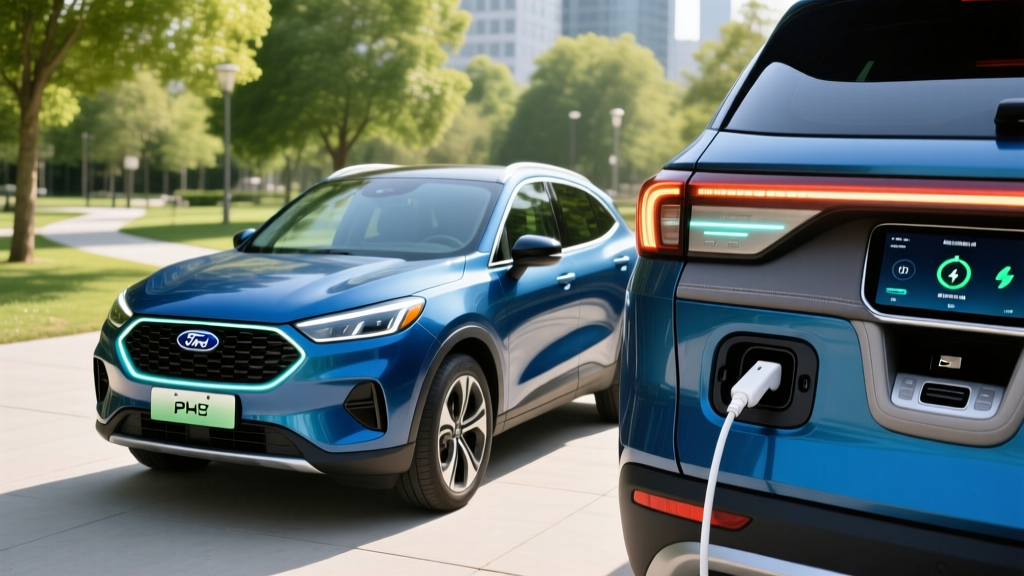
The 2026 Ford Escape Plug-In Hybrid (PHEV) delivers an EPA-estimated 37 miles of electric-only range and 105 MPGe combined when running on battery power. Once the battery depletes, it operates as a conventional hybrid returning 40 MPG combined. Starting at approximately $39,500, it targets daily commuters with home charging who want electric driving for most weekday trips without range anxiety on road trips. It qualifies for a partial federal tax credit (up to $3,750 under current §30D rules), but eligibility depends on income, sourcing, and point-of-sale transfer rules. If you drive under 40 miles round-trip daily and can charge at home, the Escape PHEV can eliminate most of your gasoline use. If you lack home charging or regularly drive 200+ miles between charges, a standard hybrid or full EV may serve you better.
Escape PHEV Powertrain and Electric Range Explained
The 2026 Ford Escape PHEV pairs a 2.5-liter Atkinson-cycle four-cylinder engine with an electric motor and a 14.4 kWh lithium-ion battery pack (usable capacity approximately 11.5 kWh). Combined system output is 210 horsepower, routed through an electronically controlled CVT to the front wheels only — all-wheel drive is not available on the PHEV trim.
| Spec | Value |
|---|---|
| Battery (total / usable) | 14.4 kWh / ~11.5 kWh |
| Electric-only range (EPA) | 37 miles |
| MPGe (electric + gas) | 105 MPGe combined |
| MPG (hybrid mode, battery depleted) | 40 combined (42 city / 38 hwy) |
| Total system horsepower | 210 hp |
| 0–60 mph | |
| Level 2 charge time (0–100%) | ~3.5 hours at 3.6 kW |
| DC fast charging | Not available |
| Base MSRP (2026) | ~$39,500 |
| Powertrain warranty | 8 yr / 100,000 mi |
| Hybrid battery warranty | 8 yr / 100,000 mi |
Real-world range caveat: The EPA's 37-mile electric estimate assumes moderate temperatures and mixed driving. In our experience with similar Ford PHEV powertrains, expect 30–33 miles of electric range at sustained highway speeds (70+ mph) and as low as 25–28 miles in freezing temperatures when cabin heating draws heavily on the battery. City driving with frequent regenerative braking can push the electric range to 38–40 miles in mild weather.
Escape PHEV vs. Gas Escape vs. Full EV: Cost Comparison
Choosing between the Escape PHEV, the conventional gas Escape, and a full battery-electric SUV requires looking beyond the sticker price. Below is a five-year ownership projection assuming 15,000 miles/year, $3.50/gallon regular unleaded, and $0.14/kWh home electricity.
| Cost Category | Escape PHEV | Gas Escape (2.0T AWD) | CHEVROLET Equinox EV (2LT) |
|---|---|---|---|
| Base MSRP | $39,500 | $33,500 | $43,400 |
| Est. federal tax credit | Up to $3,750* | $0 | Up to $7,500* |
| Effective purchase price | ~$35,750 | $33,500 | ~$35,900 |
| Fuel/electricity (5 yr) | ~$3,800 | ~$9,450 | ~$3,150 |
| Maintenance (5 yr) | ~$2,200 | ~$3,600 | ~$1,500 |
| Insurance (5 yr est.) | ~$8,500 | ~$7,800 | ~$9,200 |
| Total 5-yr cost | ~$50,250 | ~$54,350 | ~$49,750 |
*Federal tax credit eligibility depends on MSRP caps, buyer income limits, battery component and critical mineral sourcing per IRS §30D rules. The Escape PHEV's partial credit reflects its smaller battery. Consult a tax professional for your specific situation. Credits shown as point-of-sale reductions where applicable.
The PHEV saves roughly $4,100 over five years compared to the gas Escape, primarily through fuel savings. However, a full EV like the Equinox EV can match or beat the PHEV's total cost if you qualify for the full $7,500 credit and have reliable home charging. The PHEV's advantage is flexibility: no range anxiety on long trips, no dependence on public charging infrastructure.
Charging the Escape PHEV: What You Need at Home
The Escape PHEV charges via a standard J1772 connector. It does not support DC fast charging — a deliberate choice by Ford given the small battery size. Here's what charging looks like in practice:
| Level | Power Source | Charge Rate | 0–100% Time | Miles Added/Hour |
|---|---|---|---|---|
| Level 1 | 120V household outlet | ~1.2 kW | ~10–12 hours | ~3–4 mi/hr |
| Level 2 | 240V home charger | ~3.6 kW | ~3.5 hours | ~10–12 mi/hr |
| DC Fast | Public DC station | N/A | N/A | N/A |
Home charging reality: A Level 2 home charger (240V, 16-amp minimum) fully replenishes the Escape PHEV overnight in about 3.5 hours — more than sufficient for daily use. Installation costs typically range from $500 to $2,000 depending on your electrical panel's capacity and the distance from the panel to your parking spot. If your home has a 200-amp panel with spare capacity, expect the lower end. Older homes with 100-amp service may need a panel upgrade costing $1,500–$3,000 additional.
Level 1 charging (standard 120V outlet) adds roughly 3–4 miles of range per hour. For a 37-mile battery, that means a full charge takes 10–12 hours. This works if you drive less than 25 miles daily and can plug in every night, but it's marginal for maximizing electric-only driving.
Federal Tax Credit: What the Escape PHEV Actually Qualifies For
Under current IRS §30D rules, plug-in hybrids with smaller battery packs like the Escape PHEV typically qualify for a partial credit of up to $3,750, not the full $7,500 available to larger-battery EVs. The credit amount depends on the vehicle's battery capacity and whether it meets critical mineral and battery component sourcing requirements.
§30D Credit Requirements (2026)
- Vehicle MSRP cap: SUVs/vans/pickups must be under $80,000; sedans under $55,000
- Buyer income cap: Modified AGI ≤ $150,000 (single), $225,000 (head of household), $300,000 (joint)
- Battery sourcing: Critical minerals and battery components must meet phased-in domestic/FTEA sourcing thresholds — these tighten annually
- Point-of-sale transfer: You can transfer the credit to the dealer at purchase for an immediate price reduction, or claim it on your tax return
- Final assembly: Vehicle must undergo final assembly in North America
Common misconception: Many buyers assume any plug-in hybrid automatically gets $7,500. The credit formula is tied to battery capacity and sourcing compliance. The Escape PHEV's 14.4 kWh pack and evolving supply-chain sourcing typically yield a partial credit. Always verify current eligibility on fueleconomy.gov before purchasing, as qualifying models and amounts update throughout the year.
Real-World Ownership: Climate, Commute, and Daily Practicality
The Escape PHEV excels in a specific ownership pattern: a daily round-trip commute under 35–40 miles with access to overnight home charging. In this scenario, you may visit a gas station only a handful of times per year for longer weekend trips.
Cold-climate impact: In sub-freezing temperatures, the Escape PHEV's electric range drops by roughly 20–30%. A 37-mile EPA rating becomes approximately 25–30 miles in winter conditions. The gasoline engine may also activate to provide cabin heat, further reducing electric-only operation. If you live in northern climates with harsh winters, plan for the engine to run more frequently from November through March.
Cargo and space: The PHEV battery is mounted beneath the rear cargo floor, so cargo volume is slightly reduced compared to the gas Escape — approximately 34.4 cubic feet behind the rear seats versus 37.5 in the gas model. For most families this is negligible, but it's worth noting if you regularly haul large items.
Maintenance advantages: The PHEV requires less routine maintenance than the gas Escape. Regenerative braking reduces brake pad wear (expect 80,000+ miles on original pads in mixed driving). There's no conventional starter motor or alternator to replace. Oil changes are still needed but occur less frequently since the engine runs fewer miles. Ford recommends oil changes every 10,000 miles or 12 months.
Decision Framework: Is the Ford Escape PHEV Right for You?
Choose the Escape PHEV If:
- Your daily round-trip commute is under 35–40 miles
- You have access to Level 2 home charging (or can install it)
- You take 3+ road trips per year over 200 miles and don't want to plan around DC fast chargers
- You want to reduce fuel consumption without committing to a full EV
- You live in a region with extreme cold where EV range loss is a concern
Choose a Full EV (e.g., Equinox EV, Tesla Model Y) If:
- You have reliable home charging AND access to public fast-charging networks
- Your daily driving rarely exceeds 200 miles
- You want to maximize the $7,500 federal tax credit
- You want the lowest possible maintenance costs and zero tailpipe emissions
Choose the Gas Escape Hybrid (HEV) If:
- You cannot install home charging (apartment, street parking, no garage)
- You want a lower upfront cost (~$33,000–$35,000)
- You drive over 500 miles weekly and don't want to think about plugging in
- You want AWD availability (the PHEV is FWD only)
| Myth | Fact |
|---|---|
| "PHEVs get the full $7,500 tax credit" | Most PHEVs qualify for a partial credit ($3,750 or less) based on battery size and sourcing rules |
| "The battery will need expensive replacement" | Ford warranties the hybrid battery for 8 years/100,000 miles; PHEV batteries experience less stress than full EV packs due to smaller daily cycles |
| "I need a DC fast charger" | The Escape PHEV doesn't support DC fast charging — but with a 14.4 kWh battery and 3.5-hour Level 2 charge, overnight home charging is all most owners need |
| "PHEVs are just gas cars with a tiny battery" | Driven within electric range with daily charging, the Escape PHEV uses zero gasoline for most weekday commutes |
Frequently Asked Questions
Can the Ford Escape PHEV drive on electricity alone on the highway?
Yes. The Escape PHEV can sustain highway speeds up to approximately 85 mph on electric power alone. However, highway driving depletes the battery faster than city driving due to higher energy demand and less regenerative braking. Expect 28–33 miles of electric range at 70 mph versus 37+ miles in stop-and-go city traffic.
What happens when the battery runs out?
The Escape seamlessly transitions to hybrid mode, operating like a conventional Ford Escape Hybrid. The gasoline engine and regenerative braking maintain the battery at a low state of charge, and you'll see approximately 40 MPG combined. There's no performance penalty or "limp mode" — the car functions normally as a hybrid.
Does the Escape PHEV qualify for HOV lane access?
This varies by state. California, for example, has largely exhausted its Clean Air Vehicle sticker program for PHEVs. Check your state's DMV or transportation agency for current rules, as many states have phased out HOV privileges for plug-in hybrids while retaining them for full EVs.
How long will the Escape PHEV battery last?
Ford warranties the high-voltage battery for 8 years or 100,000 miles (whichever comes first) against capacity loss below a defined threshold. PHEV batteries typically experience slower degradation than full EV batteries because they cycle through a smaller portion of total capacity daily. Based on data from earlier Ford PHEV models (Fusion Energi, C-Max Energi), most owners see less than 10% capacity loss over 8–10 years of normal use.
Is the Escape PHEV available with all-wheel drive?
No. The 2026 Escape PHEV is front-wheel drive only. If AWD is essential for your climate or driving conditions, you'll need to look at the gas Escape with AWD, the Escape Hybrid (which offers AWD), or a competing PHEV SUV that provides it.