Quick Answer: Is There a Ford Escape EV?
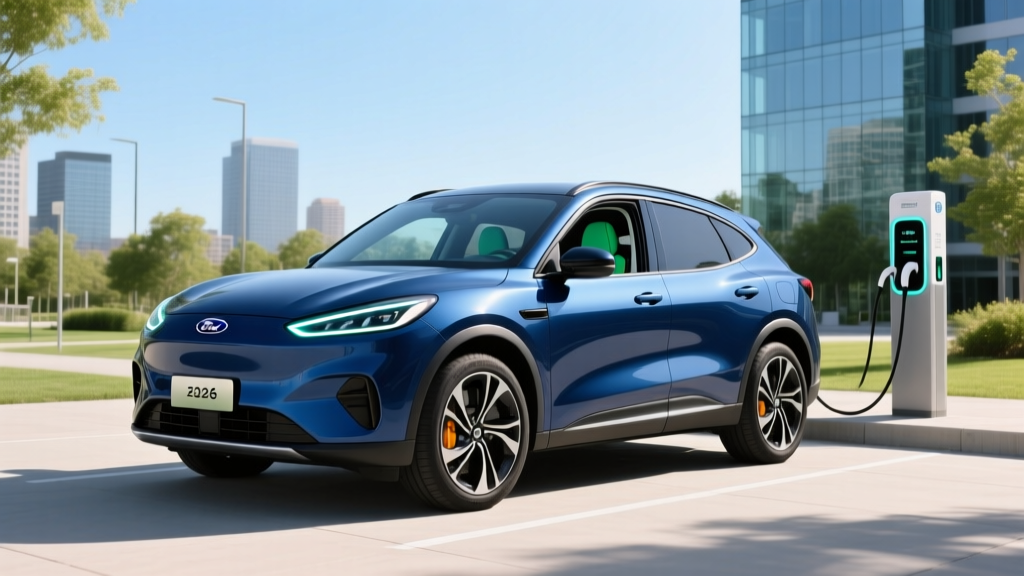
As of the 2026 model year, Ford does not sell a fully electric Ford Escape EV in the United States. The Escape lineup currently offers a conventional gas powertrain and a hybrid (HEV) variant, but no battery-electric (BEV) or plug-in hybrid (PHEV) option. Ford discontinued the Escape PHEV after the 2023 model year and has not announced an all-electric Escape successor. Buyers seeking a Ford electric SUV in a similar size should look at the Ford Mustang Mach-E (starting around $42,995 for 2026) or wait for future announcements from Ford's EV roadmap.
What Happened to the Ford Escape Electrified Lineup?
The Ford Escape was once one of the most accessible plug-in hybrids on the market. The Escape PHEV, available through 2023, offered an EPA-estimated 37 miles of electric-only range and a combined 105 MPGe, powered by a 14.4 kWh battery paired with a 2.5-liter Atkinson-cycle engine. It qualified for a partial federal tax credit and was popular among suburban commuters who wanted electric daily driving with gas backup for road trips.
Ford streamlined the Escape lineup for 2024 and beyond, dropping the PHEV variant to consolidate investment in its dedicated EV platforms. The current 2026 Escape is available as:
- Gas (ICE): 1.5L EcoBoost three-cylinder, 180 hp, EPA ~28 city / 34 highway mpg
- Hybrid (HEV): 2.5L Atkinson-cycle + electric motor, 210 hp combined, EPA ~42 city / 36 highway mpg
Neither variant can be plugged in. The hybrid recharges its small battery through regenerative braking and engine power, delivering excellent fuel economy but zero electric-only miles.
Ford Escape Hybrid vs. What an Escape EV Would Offer
Since a Ford Escape EV doesn't exist yet, the most useful comparison for shoppers is between the current Escape Hybrid and what a hypothetical compact Ford electric SUV (like the Mach-E at its most affordable trim) delivers in real-world ownership.
| Attribute | Escape Hybrid (HEV) | Mustang Mach-E (Select RWD) |
|---|---|---|
| Powertrain | 2.5L I4 + electric motor | Single motor BEV |
| Horsepower | 210 hp combined | ~266 hp |
| EPA Range / Economy | ~42 city / 36 hwy mpg | ~250 miles EPA range |
| Battery Capacity | ~1.1 kWh (not plug-in) | ~75.7 kWh usable (LFP) |
| Fuel / Energy Cost per Mile | ~$0.10/mi (at $3.50/gal) | ~$0.04/mi (at $0.14/kWh home) |
| DC Fast Charging | N/A | Peak ~150 kW, 10-80% in ~38 min |
| Cargo Volume | ~34.4 cu ft (behind rear seats) | ~29.7 cu ft + 4.7 cu ft frunk |
| Starting MSRP (2026) | ~$33,000 | ~$42,995 |
| Federal Tax Credit (§30D) | Not eligible | Up to $7,500 if eligible (see IRS rules) |
| Drivetrain Warranty | 5 yr / 60,000 mi | 8 yr / 100,000 mi (battery & electric components) |
Sources: fueleconomy.gov, Ford Motor Company press specifications. Tax credit eligibility depends on buyer income, vehicle MSRP caps, and battery component/critical mineral sourcing per IRS §30D rules. Consult a tax professional.
Real Cost Breakdown: Escape Hybrid vs. a Comparable Ford EV
The purchase price gap between the Escape Hybrid and the Mach-E is significant — roughly $10,000 before any incentives. But the total cost of ownership over five years tells a more nuanced story when you factor in fuel, maintenance, and potential tax credits.
| Cost Category | Escape Hybrid | Mustang Mach-E (Select RWD) |
|---|---|---|
| Purchase Price (MSRP) | $33,000 | $42,995 |
| Federal Tax Credit | $0 | Up to $7,500 (eligibility varies) |
| Effective Purchase | $33,000 | ~$35,495 (if full credit applies) |
| Fuel / Electricity (5 yr) | ~$7,500 (gas at ~$3.50/gal, 39 mpg avg) | ~$3,150 (home charging at ~$0.14/kWh) |
| Maintenance (5 yr) | ~$3,200 (oil changes, filters, brakes) | ~$1,400 (cabin filter, tire rotation, wipers) |
| Estimated Insurance (5 yr) | ~$7,500 | ~$9,200 (EV premiums typically 15-25% higher) |
| Total Estimated 5-Yr Cost | ~$51,200 | ~$49,245 |
Assumptions: 15,000 miles/year, national average gas price ~$3.50/gal, home electricity ~$0.14/kWh. Public DC fast charging costs significantly more (~$0.35-$0.50/kWh). Insurance estimates vary widely by driver profile, state, and carrier. These figures are illustrative — run your own numbers with local fuel and electricity rates.
The takeaway: the Mach-E's fuel and maintenance savings of roughly $6,150 over five years nearly close the effective price gap — but only if you qualify for the full tax credit and charge primarily at home. If you rely on public fast charging, your per-mile energy cost could double or triple, erasing much of the advantage.
Real-World Ownership Considerations Before You Choose
Home Charging Access Is the Deciding Factor
EV ownership economics depend overwhelmingly on home charging. A Level 2 home charger (240V, typically 32-48 amps / 7.7-11.5 kW) adds roughly 25-35 miles of range per hour and costs $500-$2,500 to install depending on whether your electrical panel needs an upgrade. If you can charge at home overnight at residential electricity rates, an EV like the Mach-E delivers its promised cost savings. If you live in an apartment without charging access or must rely solely on public infrastructure, the Escape Hybrid's no-plug-needed convenience becomes far more practical.
Cold Climate Range Loss
Battery chemistry and thermal management matter. The Mach-E's LFP (lithium iron phosphate) battery in the Select trim is durable and long-lasting but more susceptible to cold-weather range reduction than NMC chemistry. In sub-freezing temperatures, expect a 20-35% range loss on an LFP pack — meaning a 250-mile EPA rating could deliver 165-200 real-world miles in a Minnesota January. The Escape Hybrid suffers no such range penalty in cold weather; its engine waste heat warms the cabin essentially for free.
Driving Patterns
If your daily commute is under 40 miles round-trip and you take road trips a few times a year, either vehicle works well. The Mach-E requires route planning for trips beyond ~200 miles (accounting for charging stops and buffer), while the Escape Hybrid refuels in five minutes anywhere. If you regularly drive 300+ miles between stops or live in a charging desert, the hybrid's flexibility is a genuine advantage, not a compromise.
Common Misconceptions About Ford's Escape and EV Options
| Myth | Fact |
|---|---|
| "The Ford Escape comes in a fully electric version." | No 2026 Escape BEV exists. Ford offers the Mach-E as its electric SUV in a similar footprint. |
| "The Escape Hybrid can be plugged in." | The current Escape HEV cannot plug in. The PHEV variant was discontinued after 2023. |
| "EVs always cost less to own than hybrids." | Only if you charge at home at low electricity rates and qualify for tax credits. Public charging and higher insurance can erase savings. |
| "Hybrid batteries need expensive replacement." | Ford's hybrid battery warranty covers 8 years/100,000 miles. Most hybrid batteries last 150,000+ miles with minimal degradation due to shallow cycling. |
| "I'll save $7,500 on any Ford EV." | The §30D credit has income caps ($150K single / $300K joint), MSRP caps ($80K SUVs), and battery sourcing requirements. Eligibility changes — always check current IRS guidance. |
Decision Framework: Which Ford Should You Actually Buy?
Choose the Ford Escape Hybrid if:
- You lack reliable home charging access (apartment, street parking, no 240V outlet)
- Your budget is firm around $30,000-$37,000 and you can't absorb a $10K premium
- You live in a cold climate where EV range loss would be painful
- You frequently drive long distances in areas with sparse DC fast charging
- You want a proven, low-complexity powertrain with no charging logistics
Choose the Ford Mustang Mach-E if:
- You have home Level 2 charging or can install it
- Your daily driving is under 150 miles and you can charge overnight
- You qualify for the federal §30D tax credit (check income, MSRP, and sourcing rules)
- You want lower per-mile energy costs and reduced maintenance
- You value instant torque, quiet operation, and over-the-air updates
Wait if:
- You specifically want a compact Ford electric SUV smaller than the Mach-E — Ford has hinted at future smaller EVs on new platforms, but nothing has been formally announced for the Escape nameplate as of early 2026
- You're hoping for an Escape PHEV return — Ford has not confirmed this, and industry signals point toward dedicated BEV platforms rather than retrofitting existing models
What a Future Ford Escape EV Would Need to Compete
If Ford eventually introduces a battery-electric Escape, it would need to hit specific benchmarks to succeed in the compact electric SUV segment:
- EPA range: 270+ miles to match competitors like the Hyundai Ioniq 5 (303 mi) and Chevrolet Equinox EV (319 mi)
- Starting price: Under $38,000 before incentives to undercut the Mach-E and attract Escape Hybrid upgraders
- DC fast charging: Peak 175+ kW with a 10-80% time under 25 minutes — the current Mach-E's ~38-minute charge time is a known weakness
- NACS connector: Ford has committed to the Tesla NACS standard for all future EVs, so a future Escape EV would use NACS natively and access the Supercharger network
- LFP battery option: For base trims to keep costs down and maximize cycle life, with NMC available for extended-range variants
Until such a vehicle is announced, the Escape Hybrid remains Ford's most efficient non-plug-in compact SUV, and the Mach-E fills the electric role.
Frequently Asked Questions
Is Ford making an all-electric Escape?
Not as of early 2026. Ford has not announced a battery-electric Escape. The company's current electric SUV lineup consists of the Mustang Mach-E and the larger F-150 Lightning. Ford has discussed future affordable EVs on next-generation platforms, but no Escape-branded BEV has been confirmed.
Can I still buy a Ford Escape PHEV?
The Escape PHEV was discontinued after the 2023 model year. You may find remaining new-old-stock or certified pre-owned examples at dealerships, but it is no longer in production. The 2023 Escape PHEV offered 37 miles of electric-only range and 105 MPGe combined — a compelling package if you can find one on the used market.
How does the Escape Hybrid's fuel cost compare to charging an EV at home?
At 39 mpg combined and $3.50/gallon gas, the Escape Hybrid costs roughly $0.09 per mile in fuel. A Mach-E charged at home at $0.14/kWh and averaging 3.0 miles/kWh costs about $0.047 per mile — roughly half. However, public DC fast charging at $0.40/kWh pushes that to ~$0.13/mile, which is more expensive than the hybrid.
Does the Ford Escape Hybrid qualify for any tax credits?
No. The federal §30D clean vehicle credit applies only to plug-in electric vehicles (BEVs and PHEVs) that meet battery sourcing, MSRP, and buyer income requirements. Conventional hybrids like the Escape HEV are not eligible for the federal credit. Some states offer hybrid incentives — check your local energy agency or AFDC state law database.
What's the closest electric alternative to a Ford Escape?
The Mustang Mach-E is Ford's closest electric equivalent, though it's slightly larger and more expensive. Outside the Ford brand, the Hyundai Ioniq 5 (303 mi range, ~$42,500), Chevrolet Equinox EV (319 mi range, ~$33,000), and Kia EV6 (310 mi range, ~$42,900) are strong compact electric SUV competitors with varying price points.
Should I wait for a future Escape EV or buy now?
Waiting only makes sense if you don't need a vehicle soon and are specifically committed to the Escape nameplate. Ford has not given a timeline for an electric Escape, and it may never arrive under that name. If you're ready to go electric now, the Mach-E or competitors like the Equinox EV are available today with known specs, pricing, and tax credit eligibility. If you need a car now and can't charge at home, the Escape Hybrid is an excellent, proven choice with no wait required.