The Quick Answer: Is There a Ford Escape Electric Car?
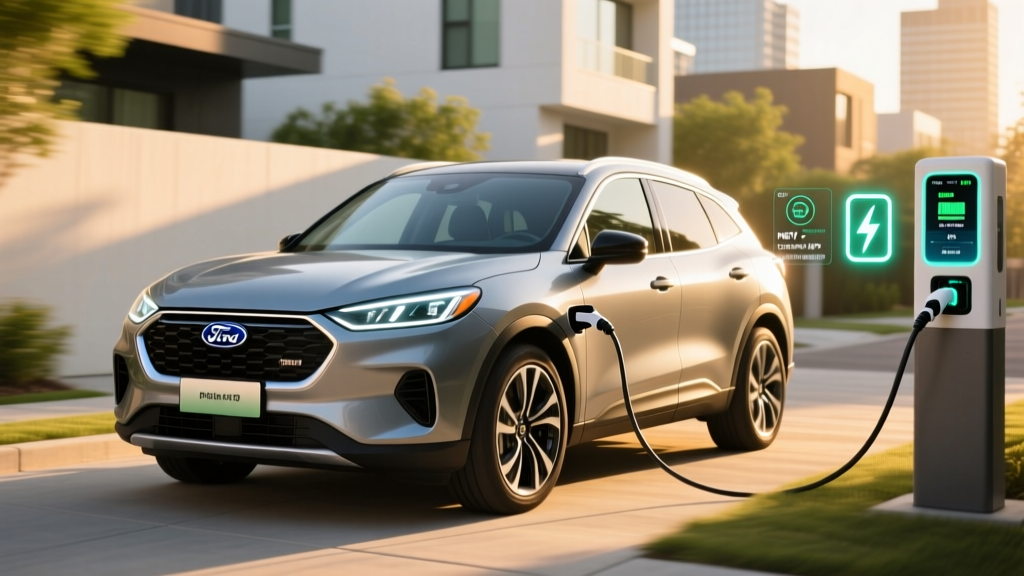
There is no fully electric (BEV) Ford Escape as of the 2026 model year. The closest thing to a Ford Escape electric car is the 2026 Ford Escape Plug-In Hybrid (PHEV), which pairs a 2.5-liter four-cylinder engine with an electric motor and a 14.4 kWh battery. It delivers 37 miles of electric-only range (EPA), 105 MPGe combined, and 40 MPG combined once the battery depletes. Starting at roughly $39,000 MSRP, it can qualify for a partial or full $7,500 federal tax credit under IRS §30D rules — bringing effective pricing close to the gas-only Escape in many scenarios.
Escape PHEV vs. Gas Escape vs. Fully Electric: Which Fits Your Life?
The Escape lineup spans three powertrains. Understanding which version matches your driving pattern is the single most important decision you'll make.
| Spec | 2026 Escape PHEV | 2026 Escape Gas (2.0L EcoBoost AWD) | Comparable BEV: Tesla Model Y LR |
|---|---|---|---|
| Powertrain | 2.5L I4 + electric motor (PHEV) | 2.0L Turbo I4 (gas only) | Dual motor AWD (BEV) |
| Horsepower | 210 hp combined | 250 hp | 384 hp |
| EPA Electric Range | 37 mi (EV-only) | N/A | 320 mi |
| EPA Combined Efficiency | 105 MPGe (EV) / 40 MPG (gas) | 26 MPG combined | 120 MPGe |
| Battery / Fuel | 14.4 kWh usable + 11.1 gal tank | 15.7 gal tank | 75 kWh usable |
| Total Driving Range | ~480 mi combined | ~408 mi | ~320 mi |
| DC Fast Charging | Not available (Level 2 only) | N/A | 250 kW peak (NACS) |
| Level 2 Charge Time (0-100%) | ~3.5 hours at 3.3 kW | N/A | ~8 hours at 11.5 kW |
| 0-60 mph | ~7.8 sec | ~6.5 sec | ~4.8 sec |
| Starting MSRP | ~$39,000 | ~$32,000 | ~$44,990 |
| Federal Tax Credit (§30D) | Up to $7,500 (eligibility varies) | $0 | Up to $7,500 (eligibility varies) |
Key insight: The Escape PHEV gives you electric commuting without range anxiety on road trips. If your daily round-trip commute is under 35 miles and you have Level 2 home charging, you may drive months without buying gas — while retaining the gas engine for 400+ mile highway trips with zero charging-desert stress.
Real-World Range: What 37 Miles EV-Only Actually Means
The EPA rates the 2026 Escape PHEV at 37 miles of electric-only driving. In practice, your results will vary based on conditions:
Real-World EV-Only Range Expectations
- Mild weather, city driving (under 45 mph): 35–40 miles — regen braking extends range in stop-and-go traffic
- Highway (70+ mph): 28–32 miles — aerodynamic drag and higher speeds drain the 14.4 kWh battery faster
- Cold weather (below 32°F): 22–28 miles — cabin heating and battery thermal losses reduce usable capacity by 20–35%
- Hot weather with A/C (above 95°F): 30–34 miles — climate load is less punishing than cold, but still impactful
Once the battery depletes, the Escape PHEV operates as a conventional hybrid, returning an EPA-rated 40 MPG combined. This is a critical advantage over a pure BEV: if you forget to plug in or take an unplanned long trip, you simply refuel at any gas station. According to fueleconomy.gov, the Escape PHEV's combined gas-electric operation makes it one of the more efficient compact crossovers available.
The Real Cost of Ownership: PHEV vs. Gas vs. BEV
Purchase price tells only part of the story. Here's a 5-year total cost of ownership (TCO) comparison assuming 15,000 miles/year, $3.50/gallon gas, $0.14/kWh home electricity, and 70% of PHEV miles driven on electricity.
| Cost Category (5 Years / 75,000 mi) | Escape PHEV | Escape Gas (2.0T AWD) | Tesla Model Y LR |
|---|---|---|---|
| Purchase Price (MSRP) | $39,000 | $32,000 | $44,990 |
| Est. Federal Tax Credit | –$7,500* | $0 | –$7,500* |
| Effective Purchase | $31,500 | $32,000 | $37,490 |
| Fuel / Electricity (5 yr) | ~$3,800 | ~$10,100 | ~$3,940 |
| Maintenance (5 yr) | ~$2,800 | ~$4,200 | ~$1,800 |
| Insurance (5 yr est.) | ~$8,500 | ~$7,800 | ~$9,800 |
| Home Charger Install (Level 2) | ~$1,200 | $0 | ~$1,200 |
| Estimated 5-Year TCO | ~$47,800 | ~$54,100 | ~$54,230 |
*Tax credit eligibility depends on MSRP caps, buyer income limits, and battery-sourcing requirements under IRS §30D. Verify current rules at irs.gov before purchasing. Point-of-sale transfer is available at participating dealers.
Where the PHEV wins financially: Fuel savings of roughly $6,300 over 5 years compared to the gas Escape, plus lower maintenance (fewer brake replacements due to regen, no transmission fluid changes). The PHEV's effective purchase price after the tax credit drops below the gas model — but only if you qualify for the full $7,500.
Where the PHEV loses: Insurance premiums tend to run 5–10% higher than gas-only equivalents. If you don't qualify for the tax credit (income above $150K single / $300K joint, or the vehicle fails battery-sourcing rules), the PHEV's $7,000 premium over the gas Escape takes much longer to recoup.
Charging the Escape PHEV: What First-Time Plug-In Buyers Need to Know
The Escape PHEV uses a standard J1772 connector for Level 1 and Level 2 AC charging. It does not support DC fast charging — a limitation worth understanding before you buy.
| Charging Level | Power (kW) | Time to Full (14.4 kWh) | Practical Use Case |
|---|---|---|---|
| Level 1 (120V outlet) | ~1.4 kW | ~10–11 hours | Overnight top-up; works if you drive under 30 mi/day |
| Level 2 (240V, 16A) | ~3.3 kW | ~3.5–4 hours | Recommended home setup; full charge during workday or overnight |
| DC Fast Charge | Not supported | N/A | N/A — PHEV battery too small to benefit |
Home charging setup: A dedicated 240V Level 2 circuit (NEMA 14-50 or hardwired) is ideal. Expect to pay $800–$1,500 for a professional installation including a quality EVSE (like a ChargePoint Home Flex or Emporia Level 2), permit, and electrician labor — assuming your electrical panel has capacity. If your panel needs an upgrade to 200A, add $1,500–$3,000.
kW vs. kWh — the critical distinction: The Escape PHEV has a 14.4 kWh battery (energy capacity — think of it as the "tank size"). It charges at up to 3.3 kW (power — the "flow rate"). Dividing 14.4 kWh ÷ 3.3 kW ≈ 4.4 hours for a theoretical full charge; real-world charging adds some overhead for battery management, so expect ~3.5–4 hours from near-empty.
Federal Tax Credit Eligibility: Can You Actually Get $7,500?
The federal §30D Clean Vehicle Credit can apply up to $7,500 toward the Escape PHEV, but eligibility is not automatic. As of 2026, the following requirements apply:
- Buyer income cap: Adjusted gross income must not exceed $150,000 (single), $225,000 (head of household), or $300,000 (married filing jointly)
- MSRP cap: The vehicle's MSRP must not exceed $80,000 for SUVs — the Escape PHEV clears this easily at ~$39,000
- Battery sourcing: A percentage of critical minerals and battery components must be sourced from the U.S. or free-trade-agreement countries. These thresholds increase annually — check the latest on fueleconomy.gov's credit lookup
- Point-of-sale transfer: You can transfer the credit to the dealer at purchase, reducing your out-of-pocket cost immediately — or claim it on your tax return
- New vehicle only: Must be purchased new; used PHEVs qualify under a separate §25E credit (up to $4,000)
Critical caveat: Battery-sourcing requirements have tightened significantly since 2024. Some PHEVs that previously qualified for the full $7,500 now qualify for only $3,750 (critical minerals met but not component sourcing) or nothing at all. Always confirm the specific VIN's eligibility at the point of sale. Consult a tax professional for your personal situation.
Common Misconceptions About the Escape PHEV — Fact-Checked
| Myth | Fact |
|---|---|
| "The Escape has a fully electric version" | No BEV Escape exists. Ford's electric SUV lineup includes the Mustang Mach-E and the Explorer EV (Europe). The Escape is available as gas, hybrid, or PHEV only. |
| "37 miles of EV range is useless" | The average American drives ~37 miles per day (FHWA data). If you charge at home nightly, most daily driving can be electric — with the gas engine as backup for longer trips. |
| "PHEV batteries need expensive replacement" | Ford covers the Escape PHEV's high-voltage battery for 8 years / 100,000 miles (10 years / 150,000 miles in CARB states). PHEV batteries experience less degradation than BEV batteries because they cycle through a smaller portion of total capacity daily. |
| "I need a special charger at home" | You can use a standard 120V outlet (Level 1) for overnight charging. A 240V Level 2 setup is recommended for faster, more efficient charging but is not mandatory. |
| "PHEVs are more expensive to maintain than gas cars" | PHEVs typically cost less to maintain: regenerative braking extends pad life, the electric motor has no maintenance, and the gas engine runs fewer hours, reducing oil degradation. |
Decision Framework: Should You Buy the Escape PHEV?
Choose the 2026 Escape PHEV If:
- Your daily round-trip commute is 20–40 miles and you can charge at home (Level 1 or Level 2)
- You take road trips 3+ times per year and don't want to plan around DC fast-charging stations
- You qualify for the §30D tax credit (check income and sourcing requirements)
- You want EV-like daily driving without the higher upfront cost of a long-range BEV
- You live in a region with harsh winters where BEV range loss is a concern — the gas engine eliminates cold-weather range anxiety
Choose the Gas-Only Escape If:
- You cannot install home charging (apartment, no garage, no 240V access)
- You drive fewer than 10,000 miles per year — fuel savings won't offset the PHEV price premium
- You don't qualify for the federal tax credit and your state offers no additional PHEV incentives
Choose a Full BEV (like the Mach-E or Model Y) If:
- Your daily commute exceeds 40 miles and you want maximum electric driving
- You have reliable home Level 2 charging and access to DC fast-charging networks for road trips
- You want zero tailpipe emissions and the lowest per-mile energy cost
- You plan to keep the vehicle 8+ years and want to eliminate gas-engine maintenance entirely
Frequently Asked Questions
Will Ford make a fully electric Escape?
Ford has not announced a battery-electric Escape as of early 2026. The company's EV strategy focuses on the Mustang Mach-E, F-150 Lightning, and upcoming next-generation electric platforms. If you need a fully electric compact crossover from Ford, the Mach-E is the current option, starting around $42,995 with up to 320 miles of EPA range.
How long does the Escape PHEV battery last?
Ford warranties the high-voltage battery for 8 years/100,000 miles (10 years/150,000 miles in California and states adopting CARB emissions standards), guaranteeing it retains a minimum capacity threshold (typically 60–70% of original). Real-world data from earlier Escape PHEV models (2020–2023) suggests the battery holds up well, as PHEV batteries undergo shallower charge-discharge cycles than BEV batteries, reducing stress on the cells.
Can I drive the Escape PHEV on electricity alone on the highway?
Yes, but the EV-only range drops to approximately 28–32 miles at highway speeds due to increased aerodynamic drag. The system will automatically engage the gas engine under hard acceleration or when the battery is depleted. You can select EV-only mode manually for short highway segments, but the system manages the blend automatically in normal driving.
What happens if I never plug in the Escape PHEV?
It operates as a conventional hybrid, returning an EPA-rated 40 MPG combined. You won't damage anything by never charging — but you'll miss out on the fuel savings and reduced emissions that justify the PHEV's higher purchase price. If you can't commit to regular plugging in, the gas-only Escape or a standard HEV (non-plug-in hybrid) is a better financial choice.
Does the Escape PHEV qualify for HOV lane access?
In many states, PHEVs with sufficient electric range qualify for HOV/carpool lane stickers even with a single occupant. California's Clean Air Vehicle decal program, for example, has historically included the Escape PHEV. Rules and availability vary by state and change frequently — check your state's DMV or air resources board for current eligibility.