The Short Answer: No Fully Electric Ford Escape Exists Yet
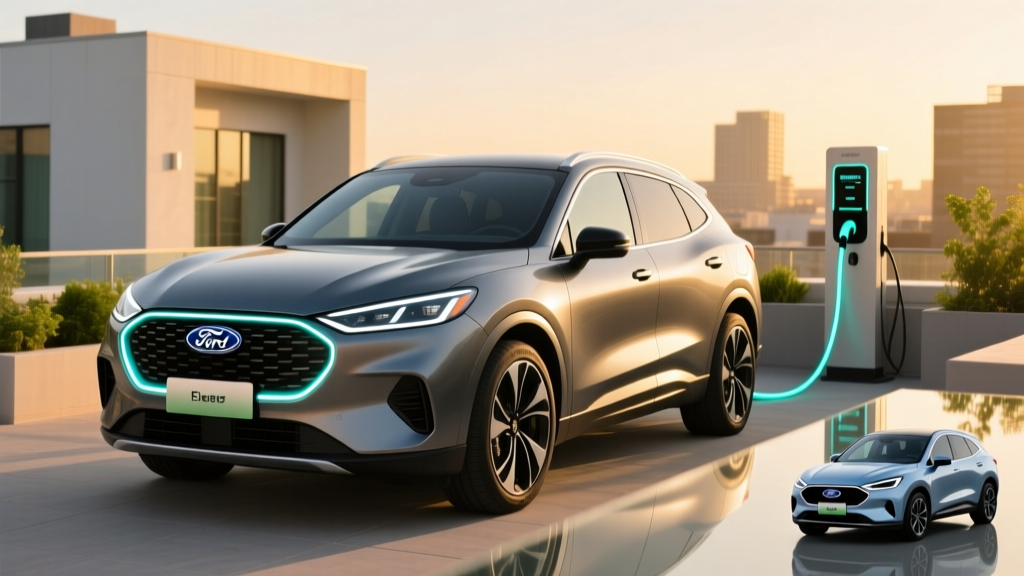
If you're searching for a Ford Escape electric SUV, here's what you need to know right now: as of the 2026 model year, Ford does not sell a fully electric (BEV) Escape. The closest electrified option is the Ford Escape Plug-In Hybrid (PHEV), which offers an EPA-estimated 37 miles of electric-only driving before the gas engine engages. Ford has signaled future electrification across its lineup, but a battery-electric Escape has not been officially announced with a release date or pricing.
For buyers set on a fully electric Ford SUV, the current alternatives are the Ford Mustang Mach-E (EPA range up to 320 miles) or the larger Ford F-150 Lightning. If a plug-in hybrid fits your routine, the Escape PHEV is a practical bridge — especially if you have home charging and a commute under 40 miles.
2026 Ford Escape PHEV: Specs, Range, and Pricing
The 2026 Ford Escape PHEV pairs a 2.5-liter Atkinson-cycle four-cylinder engine with an electric motor and a 14.4 kWh lithium-ion battery pack. Here's how the numbers stack up:
| Spec | 2026 Escape PHEV |
|---|---|
| Electric-only range (EPA) | 37 miles |
| Combined MPGe (electric mode) | 105 MPGe |
| Combined MPG (gas-only) | 40 MPG |
| Battery capacity | 14.4 kWh (NMC chemistry) |
| Level 2 charge time (0–100%) | ~3.5 hours at 3.3 kW |
| DC fast charging | Not available |
| Total system horsepower | 210 hp |
| 0–60 mph | ~8.5 seconds |
| Base MSRP | ~$40,500 |
| Federal tax credit (§30D) | Up to $3,750 (see eligibility below) |
| Battery warranty | 8 years / 100,000 miles |
Real-world range note: The EPA's 37-mile electric estimate assumes moderate temperatures and mixed driving. In cold weather (below 30°F), expect that electric-only range to drop by 20–30%, landing closer to 25–28 miles. Highway driving at 75+ mph also reduces electric range due to aerodynamic drag.
Escape PHEV vs. Gas Escape vs. Mustang Mach-E: Cost Comparison
The decision between a plug-in hybrid, a conventional gas model, and a full EV comes down to your driving habits, charging access, and budget. Here's a five-year cost breakdown assuming 15,000 miles/year, $3.50/gallon gas, and $0.14/kWh electricity:
| Category | Escape PHEV | Escape Gas (FWD) | Mustang Mach-E (RWD) |
|---|---|---|---|
| Base MSRP | $40,500 | $31,500 | $42,995 |
| Est. federal tax credit | $3,750* | $0 | $0–$7,500* |
| Effective purchase price | $36,750 | $31,500 | $35,495–$42,995 |
| Annual fuel/energy cost | ~$950 | ~$1,750 | ~$630 |
| 5-year fuel/energy cost | $4,750 | $8,750 | $3,150 |
| Est. 5-year maintenance | $2,200 | $3,000 | $1,500 |
| 5-year total cost of ownership | ~$43,700 | ~$43,250 | ~$40,145–$47,645 |
*Tax credit eligibility depends on buyer income, vehicle MSRP caps, battery sourcing, and point-of-sale transfer rules under IRS §30D. The Mach-E's credit availability varies by battery component sourcing — verify current eligibility before purchase. Consult a tax professional.
The PHEV and gas Escape end up surprisingly close in five-year cost, with the PHEV's fuel savings offset by its higher sticker price. The Mach-E pulls ahead on running costs but requires a higher upfront investment and access to charging infrastructure.
Real-World Ownership: What a First-Time Buyer Needs to Know
Before committing to the Escape PHEV — or any electrified vehicle — honestly assess these four factors:
1. Home Charging Access
The Escape PHEV charges at a maximum of 3.3 kW on Level 2 (240V), adding roughly 12–14 miles of electric range per hour. A full charge takes about 3.5 hours. On a standard 120V outlet (Level 1), expect roughly 3 miles of range per hour — meaning a full charge takes overnight (10–12 hours). If you can install a Level 2 charger at home (typically $500–$1,500 for equipment and electrician, assuming no panel upgrade), the PHEV is a seamless fit. Without home charging, the electric-only benefit drops dramatically since public Level 2 charging is impractical for a 14.4 kWh battery with no DC fast-charge capability.
2. Daily Driving Pattern
If your round-trip commute is under 35 miles and you charge nightly, you'll drive almost entirely on electricity. Drivers with longer commutes or frequent road trips will spend more time on the gas engine — where the Escape PHEV still delivers a respectable 40 MPG combined, but the electric advantage shrinks.
3. Climate Considerations
Cold weather impacts all electrified vehicles. In sub-freezing temperatures, the Escape PHEV's battery delivers less usable capacity, and the gas engine may start sooner to provide cabin heat. Owners in northern climates should expect 25–28 miles of electric range in winter versus the EPA-rated 37 in mild conditions.
4. Maintenance Differences
The PHEV still has an internal combustion engine, meaning oil changes, spark plugs, and transmission fluid remain part of your maintenance schedule. However, regenerative braking extends brake pad life, and the electric motor has far fewer moving parts than a standalone gas powertrain. Budget roughly $400–$500/year for maintenance — less than the gas Escape but more than a full EV like the Mach-E.
Common Misconceptions About the Ford Escape Electric
| Myth | Fact |
|---|---|
| "There's a fully electric Ford Escape available now." | No BEV Escape exists for 2026. The electrified option is the PHEV only. |
| "The Escape PHEV qualifies for the full $7,500 tax credit." | The PHEV qualifies for up to $3,750, subject to income caps ($150K single / $300K joint), MSRP limits ($80K for SUVs), and battery sourcing rules per IRS §30D. |
| "I don't need to plug it in — it charges itself." | The battery charges via regenerative braking and the gas engine, but you'll only access the full 37-mile electric range by plugging in. Without plugging in, it operates as a conventional hybrid (~40 MPG). |
| "PHEV batteries degrade quickly and cost $10K+ to replace." | Ford warranties the PHEV battery for 8 years/100,000 miles against capacity loss below a set threshold. Real-world data from similar Ford PHEV platforms shows 10–15% degradation over 8 years. Out-of-warranty replacement runs $4,000–$6,000 — not the $10K+ sometimes cited. |
| "The Escape PHEV has DC fast charging for road trips." | It does not. The PHEV maxes out at 3.3 kW Level 2 AC charging. DC fast charging is only available on full BEVs like the Mach-E. |
Will Ford Release a Fully Electric Escape?
Ford has committed to expanding its EV lineup, and the Escape segment (compact crossover) is one of the highest-volume categories in the US market. However, as of early 2026, Ford has not officially announced a battery-electric Escape with confirmed specs, pricing, or a release date. Industry analysts have speculated that a next-generation Escape could ride on Ford's flexible EV architecture, potentially arriving in the 2027–2028 timeframe, but this remains unconfirmed.
If a fully electric compact Ford SUV is a priority, the Mustang Mach-E is the closest current alternative. It offers significantly more range (EPA 250–320 miles depending on trim and battery), DC fast charging up to 150 kW (10–80% in approximately 34 minutes on extended-range models), and access to the Tesla Supercharger network via Ford's NACS adapter.
Decision Framework: Which Electrified Ford Is Right for You?
Choose the Escape PHEV if:
- You have home charging (Level 1 or Level 2) and a commute under 35 miles round-trip
- You want electric daily driving without range anxiety on road trips
- Your budget is under $42,000 and you want a compact SUV form factor
- You're not ready to commit to a full EV due to apartment living, unreliable charging access, or frequent long-distance driving
Choose the Mustang Mach-E if:
- You want a fully electric SUV with 250+ miles of EPA range
- You have reliable home Level 2 charging or access to DC fast chargers
- You drive more than 40 miles daily and want zero gasoline dependency
- You can budget $43,000+ (before potential tax credits)
Stick with the gas Escape if:
- You have no access to any form of charging at home or work
- Your budget is strictly under $33,000
- You drive fewer than 8,000 miles per year (fuel savings won't offset the PHEV/EV premium)
Frequently Asked Questions
Does the Ford Escape PHEV charge while driving?
Yes, partially. Regenerative braking and the gas engine can replenish the battery during driving, but at a slow rate. To consistently access the full 37-mile electric range, you need to plug in overnight. Think of driving-based charging as a supplement, not a replacement for plugging in.
How much does it cost to charge the Escape PHEV at home?
A full charge of the 14.4 kWh battery at the national average of $0.14/kWh costs roughly $2.00. If you drive the full 37 electric miles daily and charge nightly, your monthly electricity cost for commuting is approximately $45–$55 — compared to $130–$150 in gasoline for the same distance in the gas Escape.
Can I install a Level 2 charger myself?
The charge unit itself is plug-in, but a 240V outlet (NEMA 14-50) or hardwired connection requires a licensed electrician. Installation typically costs $500–$1,500 if your electrical panel has sufficient capacity. Older homes may need a panel upgrade ($1,500–$3,000+). Always get a professional assessment before purchasing equipment. Per fueleconomy.gov, proper Level 2 installation is critical for safety and warranty compliance.
What happens when the Escape PHEV battery runs out of electric range?
The gas engine starts seamlessly and the vehicle operates as a conventional hybrid, delivering approximately 40 MPG combined. There is no range cliff or loss of functionality — the transition is automatic and typically imperceptible to the driver.
Is the Escape PHEV eligible for the federal tax credit in 2026?
The Escape PHEV may qualify for up to $3,750 under §30D, but eligibility depends on multiple factors: your adjusted gross income must be below $150,000 (single) or $300,000 (joint filing), the vehicle MSRP must be under $80,000 (it is), and the battery must meet critical-mineral and component-sourcing thresholds that change annually. Credits can now be transferred to the dealer at point of sale, reducing your out-of-pocket cost. Always verify current eligibility at irs.gov before purchasing.