Ford Motor Electric Vehicles: The Quick Answer
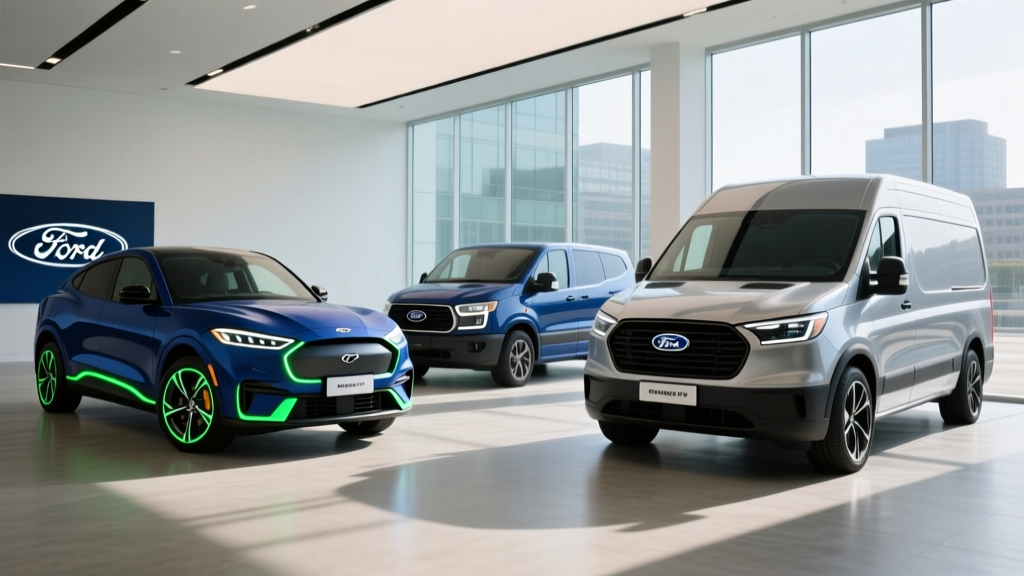
Ford's 2026 EV lineup centers on two vehicles: the Mustang Mach-E (a crossover SUV with up to 320 miles EPA range, starting near $39,995) and the F-150 Lightning (a full-size electric truck with up to 320 miles EPA range, starting around $54,995). Both use NMC battery chemistry, support DC fast charging up to 150–150+ kW (10–80% in roughly 38–44 minutes), and qualify for partial or full federal tax credits under IRS §30D rules depending on battery-sourcing compliance, your income, and the vehicle's MSRP. Real-world highway range typically drops 12–18% below EPA stickers, and cold-weather driving can cut range by 20–30%. Home Level 2 charging is strongly recommended; without it, public-charging costs can erase much of the fuel savings advantage.
Current Ford EV Lineup: Specs at a Glance
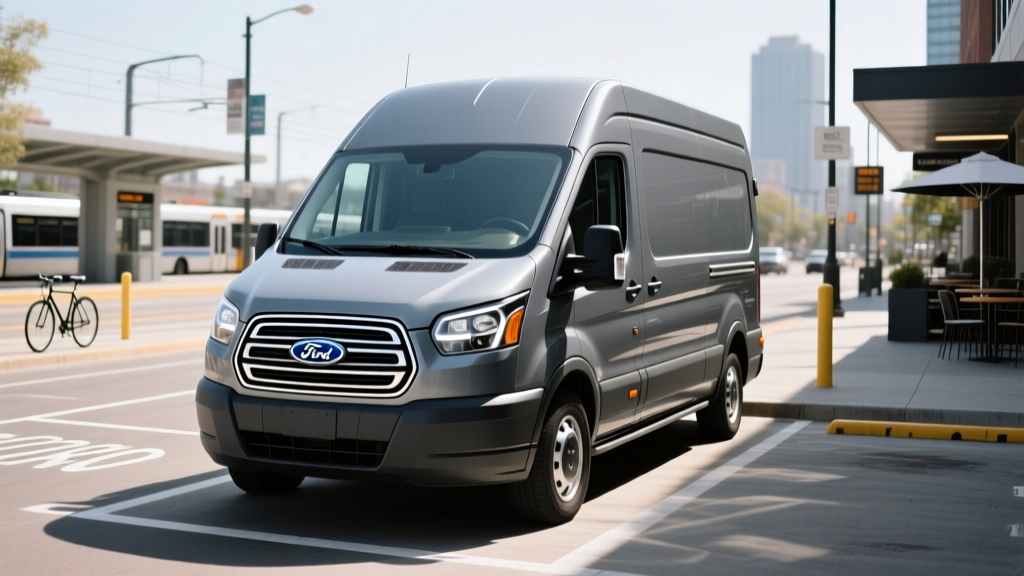
For 2026, Ford sells two battery-electric models in the US. The E-Transit commercial van exists but targets fleet buyers, so we're focusing on the consumer vehicles. Here's how they stack up with exact figures.
| Spec | 2026 Mustang Mach-E (Extended Range RWD) | 2026 F-150 Lightning (Extended Range) |
|---|---|---|
| EPA Range | ~320 mi | ~320 mi |
| Battery (usable) | ~91 kWh (NMC) | ~131 kWh (NMC) |
| Efficiency | ~101 MPGe combined | ~70 MPGe combined |
| Peak DC Fast Charge | ~150 kW | ~150 kW |
| 10–80% DCFC Time | ~38 min | ~44 min |
| Level 2 (240V) Rate | ~10.5 kW (~32 mi/hr) | ~11.3 kW (~23 mi/hr) |
| 0–60 mph | ~5.1 sec (RWD) / ~3.5 sec (GT AWD) | ~3.8 sec (Extended Range 4WD) |
| Horsepower | 290 hp (RWD) / 480 hp (GT) | 580 hp |
| Cargo Volume | 29.7 cu ft (rear) + 4.7 cu ft frunk | 52.8 cu ft bed + 14.1 cu ft Mega Power Frunk |
| Towing Capacity | ~2,700 lbs (AWD) | ~10,000 lbs (Max Tow Pkg) |
| Base MSRP | ~$39,995 | ~$54,995 |
| Battery/Powertrain Warranty | 8 yr / 100,000 mi | 8 yr / 100,000 mi |
Real-world range reality check: EPA estimates assume mixed driving at moderate temperatures. On sustained highway trips at 75 mph, expect the Mach-E to deliver roughly 260–280 miles and the Lightning around 250–270 miles before you need to stop. In sub-freezing weather, subtract another 20–30%. Source: fueleconomy.gov.
Ford EVs vs. Gas Equivalents: Cost & Efficiency Comparison
The most common question from buyers: does going electric with Ford actually save money? Let's compare the Mach-E against its closest gas sibling, the Ford Edge (or the similarly sized Escape AWD), and the F-150 Lightning against the gas F-150 with the 3.5L V6.
| Metric | Mach-E (ER RWD) | Ford Escape AWD (Gas) | F-150 Lightning (ER) | F-150 3.5L V6 (Gas) |
|---|---|---|---|---|
| MSRP (base) | ~$39,995 | ~$30,000 | ~$54,995 | ~$38,000 |
| After max §30D credit | ~$32,495 | N/A | ~$47,495 | N/A |
| Fuel/Energy Cost per Mile | ~$0.04 (home) / ~$0.14 (public DCFC) | ~$0.13 (28 MPG, $3.60/gal) | ~$0.06 (home) / ~$0.18 (public DCFC) | ~$0.18 (20 MPG, $3.60/gal) |
| Annual Fuel/Energy (15k mi) | ~$600 home / ~$2,100 public | ~$1,930 | ~$900 home / ~$2,700 public | ~$2,700 |
| Annual Maintenance (est.) | ~$300 | ~$700 | ~$350 | ~$900 |
| 5-Year Fuel + Maint. | ~$4,500 (home) | ~$13,150 | ~$6,250 (home) | ~$18,000 |
The takeaway: If you charge at home with residential electricity rates (~$0.14/kWh national average), both Ford EVs save substantially on operating costs. The Mach-E saves roughly $8,650 over five years in fuel and maintenance alone — more than enough to close the MSRP gap with a gas Escape, especially after the tax credit. The Lightning saves around $11,750 over five years vs. a gas F-150. But if you rely entirely on public DC fast charging at $0.48–$0.60/kWh, the Mach-E's savings nearly vanish and the Lightning actually costs more to "fuel" than its gas counterpart.
The Real Cost of Owning a Ford EV
Purchase price and fuel are only part of the picture. Here's a full five-year cost-of-ownership breakdown assuming 15,000 miles/year, 80% home charging, and 20% public charging.
| Cost Category | Mustang Mach-E ER | F-150 Lightning ER |
|---|---|---|
| Purchase (MSRP, base) | $39,995 | $54,995 |
| Federal §30D Credit (if eligible) | −$3,750 to −$7,500 | −$3,750 to −$7,500 |
| Home Level 2 Charger Install | $500–$2,000 | $500–$2,000 |
| 5-Year Energy (80/20 home/public) | ~$5,200 | ~$8,100 |
| 5-Year Maintenance | ~$1,500 | ~$1,750 |
| 5-Year Insurance (est.) | ~$9,500–$12,000 | ~$10,000–$13,500 |
| Estimated Depreciation (5 yr) | ~$15,000–$20,000 | ~$22,000–$28,000 |
| Approx. 5-Year Total | $48,000–$59,000 | $68,000–$80,000 |
Insurance note: EV insurance premiums run 10–20% higher than comparable gas vehicles, driven by costlier collision repairs and specialized high-voltage components. Get quotes from your insurer before purchasing — the difference can be $200–$500/year.
Depreciation reality: Ford EVs have faced steeper depreciation than Tesla models and some competitors, partly due to aggressive price cuts on new units and a still-maturing used-EV market. The Lightning, in particular, saw rapid depreciation in 2024–2025 after Ford cut MSRPs and production ramped. Budget accordingly if you plan to sell within five years.
Charging a Ford EV: Home, Public, and What You Actually Need
Ford EVs use the CCS1 connector for DC fast charging, though Ford has announced adoption of the NACS (Tesla) connector for future models. As of 2026, Mach-E and Lightning owners can access Tesla Superchargers using a Ford-provided adapter — significantly expanding the available fast-charging network.
| Charging Level | Power | Mach-E Miles/Hour | Lightning Miles/Hour | Best For |
|---|---|---|---|---|
| Level 1 (120V outlet) | ~1.4 kW | ~3–4 mi/hr | ~2–3 mi/hr | Overnight top-up, low daily mileage |
| Level 2 (240V, 48A) | ~11.5 kW | ~32 mi/hr | ~23 mi/hr | Home daily charging, full overnight fill |
| DC Fast Charge | Up to ~150 kW | ~180 mi in 30 min | ~150 mi in 30 min | Road trips, highway travel |
Home charging is non-negotiable for most buyers. A Level 2 home charger (240V, 48-amp circuit) fully replenishes the Mach-E overnight in about 9 hours and the Lightning in roughly 12 hours. Installation costs vary widely:
| Component | Typical Cost Range |
|---|---|
| Level 2 Charger (hardware) | $300–$700 |
| Electrician labor (240V run, 50A circuit) | $400–$1,500 |
| Permit / inspection | $50–$250 |
| Electrical panel upgrade (if needed) | $1,000–$3,000 |
| Total (no panel upgrade) | $750–$2,450 |
| Total (with panel upgrade) | $1,750–$5,450 |
Always hire a licensed electrician for a site assessment. Older homes with 100-amp panels may need a $1,500–$3,000 upgrade to 200 amps before adding a 48-amp EV circuit. This is the single most overlooked cost for first-time EV buyers.
Charging curve reality: Ford's "150 kW peak" DC fast-charge rate only applies at low state-of-charge (typically 10–40%). Above 80%, charging slows dramatically to protect the NMC battery — you might see 30–40 kW. Plan road-trip stops to charge from 10% to 80%, then drive on. Charging from 80% to 100% on DCFC can take as long as the first 70%.
Federal Tax Credit: What Ford EV Buyers Actually Qualify For
The IRS §30D Clean Vehicle Credit can reduce your federal tax bill by up to $7,500 — but eligibility for Ford EVs is nuanced and depends on several factors that change periodically based on battery sourcing rules.
§30D Eligibility Checklist for Ford EVs
- Vehicle MSRP cap: SUVs/pickups (Mach-E, Lightning) must have an MSRP ≤ $80,000. Sedans ≤ $55,000.
- Buyer income cap: AGI ≤ $150,000 (single), $225,000 (head of household), $300,000 (married filing jointly).
- Battery component sourcing: A percentage of battery components must be manufactured or assembled in North America. This threshold increases annually.
- Critical minerals requirement: A percentage of critical minerals must be sourced from the US or free-trade-agreement partners.
- Point-of-sale transfer: You can transfer the credit to the dealer at purchase, reducing your out-of-pocket cost immediately — even if you owe less than $7,500 in taxes.
- New vehicle only: Must be purchased new from a licensed dealer; used EVs qualify under a separate §25E credit (up to $4,000).
As of 2026, the Mach-E and Lightning have faced partial credit reductions due to evolving critical-mineral sourcing rules. Some trims qualify for the full $7,500; others may only receive $3,750 or none at all, depending on the specific battery pack and production date. Always verify current eligibility on fueleconomy.gov or consult a tax professional before relying on the credit in your budget. Rules referenced from IRS.gov.
Common Misconceptions About Ford EVs — Fact-Checked
| Myth | Fact |
|---|---|
| "The battery will need replacing in 5 years and cost $20,000." | Ford warranties the battery for 8 years/100,000 miles against dropping below 70% capacity. Real-world degradation for NMC packs averages 10–15% over 8 years. Full replacement is rare and typically covered under warranty during the term. |
| "Ford EVs can't handle cold weather." | Both the Mach-E and Lightning use active liquid thermal management. Range loss of 20–30% in sub-freezing temps is real, but preconditioning the battery while plugged in mitigates this significantly. A heat pump (standard on Mach-E) reduces cabin-heating energy draw. |
| "Public charging is always unreliable." | Reliability varies by network. Tesla Superchargers (now accessible to Ford EVs via adapter) consistently report 95%+ uptime. Electrify America and ChargePoint stations are improving but still show 80–90% uptime in many areas. Plan routes around high-reliability networks. |
| "I'll save money even if I only use public chargers." | At $0.48–$0.60/kWh (common DCFC pricing), the Mach-E costs roughly $0.14/mile in energy — comparable to a gas car getting 26 MPG. The Lightning at public rates costs more per mile than a gas F-150. Home charging is where the savings live. |
| "The F-150 Lightning can't tow seriously." | The Lightning tows up to 10,000 lbs with the Max Tow package. However, towing at max capacity cuts range by 40–50%. A 320-mile Lightning may deliver only 160–190 miles while towing near its limit. Plan accordingly. |
Decision Framework: Which Ford EV (If Any) Is Right for You?
Choose the Mustang Mach-E if:
- You drive under 80 miles round-trip daily and want a comfortable, efficient crossover
- You have access to home Level 2 charging (or can install it)
- You prioritize efficiency — 101 MPGe combined keeps energy costs minimal
- You don't need to tow more than ~2,700 lbs
- You want the most affordable entry point into Ford's EV lineup
Choose the F-150 Lightning if:
- You need truck utility — towing, hauling, or the Mega Power Frunk for job-site or gear storage
- You value the Pro Power Onboard feature (up to 9.6 kW of vehicle-to-load power for tools, appliances, or backup home power)
- You can accommodate higher energy costs (the 131 kWh battery costs ~$18 to fill at home, ~$65+ at public DCFC)
- You accept a real-world range of 200–250 miles under mixed highway/towing conditions
Consider a Ford Hybrid or Gas Vehicle Instead if:
- You cannot install a Level 2 home charger and lack reliable workplace charging
- You regularly drive 300+ miles between stops in rural areas with sparse DCFC coverage
- You frequently tow heavy loads over long distances (a gas or hybrid F-150 is more practical)
- Your budget is strictly under $35,000 and you don't qualify for the used-EV credit
Frequently Asked Questions
Does the Ford Mustang Mach-E qualify for the $7,500 federal tax credit in 2026?
It depends on the specific trim, battery pack, and your income. The Mach-E's MSRP falls under the $80,000 SUV cap, but the credit amount ($3,750 or $7,500) hinges on battery-component and critical-mineral sourcing compliance at the time of manufacture. Check the VIN-specific eligibility on fueleconomy.gov before purchasing.
How long does it take to charge the F-150 Lightning at home?
On a Level 2 charger (240V, ~11.3 kW), a fully depleted Extended Range Lightning (131 kWh) takes approximately 11–12 hours. Most owners charge nightly from 30–40% remaining, which takes 7–8 hours — easily overnight. Level 1 (120V) adds only 2–3 miles per hour and is impractical as a primary charging method for the Lightning's large battery.
Can I use Tesla Superchargers with a Ford Mach-E or Lightning?
Yes. Ford provides a NACS adapter that allows CCS-equipped Ford EVs to charge at Tesla Supercharger stations (V3 and V4 stalls). This adds roughly 15,000+ additional fast-charging locations to your network. Activation requires linking your FordPass account to the Tesla app or using Ford's integrated navigation routing.
What is the real-world highway range of the Mach-E?
The EPA rates the Extended Range RWD Mach-E at approximately 320 miles. In real-world highway testing at 70–75 mph in moderate temperatures, expect 260–280 miles. In freezing weather with cabin heat, that drops to 210–240 miles. These figures assume no roof cargo box and standard tire pressure.
How much does it cost to replace a Ford EV battery out of warranty?
Out-of-warranty replacement for the Mach-E's ~91 kWh pack is estimated at $12,000–$18,000; the Lightning's 131 kWh pack could cost $18,000–$25,000+. However, battery failures are statistically rare, and most degradation-related replacements occur within the 8-year/100,000-mile warranty window. Ford covers batteries that fall below 70% state-of-health during the warranty period.
Is Ford's BlueCruise the same as self-driving?
No. BlueCruise is an SAE Level 2 driver-assistance system — it handles steering, acceleration, and braking on pre-mapped divided highways, but the driver must remain attentive and ready to take over at all times. An in-cabin camera monitors your eyes. This is fundamentally different from Level 4 robotaxi services like Waymo, which operate without a human driver. BlueCruise is a convenience feature, not autonomous driving.
Should I buy a Ford EV or wait for future models?
Ford has announced additional EVs including next-generation models built on a new universal EV platform, but firm specs, pricing, and availability for those vehicles remain preliminary. If you need a vehicle now and the Mach-E or Lightning fits your use case, current models are mature products with established service networks. If you want a smaller, more affordable Ford EV, waiting 1–2 years may yield new options — but don't delay a needed purchase for an unannounced vehicle.