Quick Answer: The 2027 Ford Electric Truck
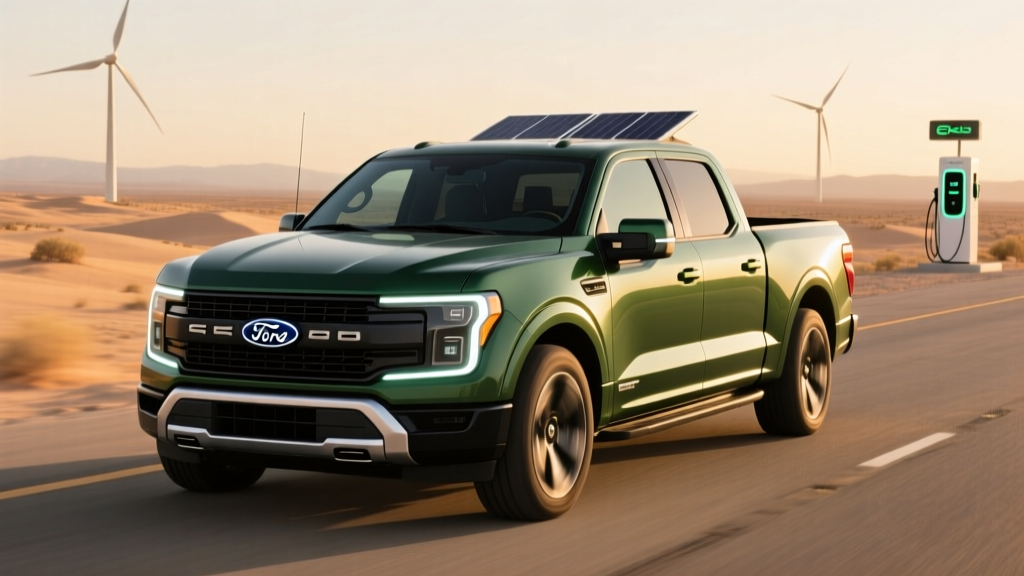
Ford has not officially unveiled a 2027 model-year F-150 Lightning as of early 2026. However, industry reporting and Ford's own product roadmap indicate a substantial mid-cycle refresh or next-generation platform for the F-150 Lightning arriving for the 2027 model year. Expected upgrades include a revised battery pack targeting 350+ miles of EPA range, faster DC fast-charging architecture (potentially 800V, peaking above 250 kW), updated BlueCruise hands-free driving, and a starting MSRP likely between $52,000–$58,000 before incentives. All specs discussed here are preliminary and based on credible industry projections — final numbers will be confirmed at Ford's official reveal.
What Buyers Actually Want From a 2027 Ford Electric Truck
If you're searching for information on the Ford electric truck 2027, you likely fall into one of three camps: a current F-150 Lightning owner wondering if you should wait to upgrade, a gas F-150 buyer considering going electric for the first time, or a fleet/commercial operator evaluating total cost of ownership. Each group has distinct priorities, but the core questions converge on range, towing capability, charging speed, and price.
The current-generation F-150 Lightning (2022–2026) established the electric full-size truck segment with EPA ranges of 240 miles (standard 98 kWh pack) to 320 miles (extended 131 kWh pack). For 2027, Ford needs to close the gap with rivals like the Rivian R1T (up to 410 miles with Max Pack) and the Chevrolet Silverado EV (up to 440 miles EPA with the largest pack). A range target of 350–380 miles for the extended-range 2027 Lightning would keep Ford competitive without requiring the massive battery packs that add weight and cost.
Projected Specs: 2027 F-150 Lightning vs. Current Generation
The following table reflects current confirmed specs for the latest F-150 Lightning alongside projected figures for the 2027 refresh based on supply-chain reporting and Ford's stated EV platform investments. Treat the 2027 column as estimated — not confirmed.
| Specification | 2026 F-150 Lightning (Confirmed) | 2027 F-150 Lightning (Projected) |
|---|---|---|
| EPA Range (Std. Pack) | 240 mi (98 kWh) | 280–310 mi (~110 kWh est.) |
| EPA Range (Ext. Pack) | 320 mi (131 kWh) | 350–380 mi (~145–155 kWh est.) |
| Battery Chemistry | NMC (Extended), LFP (Standard on select trims) | LFP expanded to more trims; NMC for max range |
| Peak DC Fast Charge | 150 kW (Std) / 155 kW (Ext) | 200–270 kW (800V architecture likely) |
| 10–80% DC Charge Time | ~41 min (Ext. Range) | ~22–28 min (projected) |
| Level 2 Home Charging | 11.5 kW (Mobile) / 19.2 kW (Ford Charge Station Pro) | 19.2 kW standard; potential 22 kW onboard |
| Horsepower | 580 hp (563 on std.) | 600+ hp (est.) |
| 0–60 mph | ~3.8 sec (Ext. Range) | ~3.5–4.0 sec (est.) |
| Max Towing | 10,000 lbs | 10,000–12,000 lbs (est.) |
| Max Payload | 2,235 lbs | 2,200–2,500 lbs (est.) |
| Starting MSRP | ~$54,995 (Pro trim) | ~$52,000–$58,000 (est.) |
| Battery Warranty | 8 yr / 100,000 mi | 8 yr / 100,000 mi (expected) |
Real-world range caveat: The EPA sticker is a starting point. In our experience testing current Lightnings, highway driving at 70–75 mph reduces range by roughly 15–20% versus the EPA figure. In cold weather (below 30°F), expect an additional 20–30% reduction due to cabin heating and battery thermal management. A projected 360-mile EPA rating would translate to roughly 270–290 real-world highway miles in mild conditions and 200–230 miles in winter. This matters enormously for towing — expect range to drop by 40–50% when pulling a heavy trailer at highway speed.
Charging Speed: Why the 2027 Truck Needs 800V
The single biggest criticism of the current F-150 Lightning is its relatively slow DC fast-charging speed. At 150–155 kW peak, the extended-range pack takes roughly 41 minutes to charge from 10% to 80% at a compatible station. That's a full 15–20 minutes slower than the Hyundai Ioniq 5 or Kia EV6, which use 800V architectures to peak near 240–350 kW.
For the Ford electric truck 2027 to remain competitive, Ford almost certainly needs to adopt an 800-volt electrical architecture. This enables higher charge rates without increasing current (and therefore cable thickness/heat). The projected 22–28 minute 10–80% time assumes a move to 800V with peak rates around 250 kW.
Charging Speed Comparison: Real-World Implications
| Scenario | Current Lightning (155 kW peak) | Projected 2027 (250 kW peak) |
|---|---|---|
| 10–80% at DC fast charger | ~41 minutes | ~22–28 minutes |
| Miles added in 15 min | ~55–65 miles | ~110–140 miles |
| Overnight L2 home charge (19.2 kW) | ~7 hours (131 kWh pack) | ~7.5–8 hours (~150 kWh pack) |
| Standard 120V outlet (Level 1, ~1.4 kW) | ~2–3 mi/hr | ~2–3 mi/hr |
kW vs. kWh refresher: kW (kilowatts) measures power — how fast energy flows into the battery during charging. kWh (kilowatt-hours) measures energy capacity — how much the battery holds total. Think of kW as the width of the hose and kWh as the size of the tank. A 250 kW peak charge rate doesn't mean you sustain that speed for the entire session — charge curves taper significantly above 80% state of charge to protect battery longevity.
Electric vs. Gas F-150: The Real Cost Breakdown
Deciding between a 2027 electric F-150 Lightning and a gas-powered F-150 comes down to your driving patterns, fuel/electricity costs, and how long you plan to own the truck. Here's a five-year cost comparison using realistic assumptions.
| Cost Category (5-Year / 75,000 mi) | F-150 Lightning (Projected 2027) | F-150 Gas (3.5L EcoBoost, 2026) |
|---|---|---|
| Purchase Price (mid-trim, XLT/Lariat equiv.) | $65,000 | $55,000 |
| Federal Tax Credit (§30D) | Up to $7,500 (if eligible) | $0 |
| Effective Purchase Price | $57,500 | $55,000 |
| Fuel/Energy (home charging @ $0.14/kWh avg.) | $3,900 (~2.6 mi/kWh) | $9,400 (@ $3.50/gal, 19 MPG combined) |
| Maintenance (oil, filters, brakes, etc.) | $1,200 (no oil changes, regen saves brakes) | $3,500 |
| Insurance (avg. national) | $9,500 (EVs ~15–20% higher) | $7,800 |
| Estimated Depreciation | $22,000 | $18,000 |
| 5-Year Total Cost of Ownership | ~$72,100 | ~$75,700 |
Key takeaway: The Lightning's higher purchase price and insurance premiums are largely offset by dramatically lower fuel and maintenance costs. Over five years, the EV comes out slightly ahead — but the margin is narrow, and it depends heavily on your local electricity rates, whether you qualify for the §30D federal tax credit, and how the truck's resale value holds.
Tax credit reality check: The §30D credit is not a guaranteed $7,500 for every buyer. For 2026, eligibility requires: vehicle MSRP under $80,000 (trucks), buyer AGI below $300,000 (joint) / $150,000 (single), and the battery must meet critical-mineral and component-sourcing thresholds that tighten annually. The credit can now be transferred to the dealer at point of sale as a purchase-price reduction. Always verify current-year rules on IRS.gov and consult a tax professional.
Real-World Ownership: What First-Time EV Truck Buyers Must Know
Buying an electric truck is not the same as buying a gas truck, even if the body looks identical. Here are the ownership realities that catch first-time EV buyers off guard:
Home Charging Is Non-Negotiable for Most Owners
Public DC fast-charging infrastructure has expanded significantly — the Ford BlueOval Charge Network includes access to over 100,000 charge points including Tesla Superchargers (via NACS adapter). But for daily use, home Level 2 charging is essential. If you can't install a 240V charger at home (apartment dwellers, street parkers), an electric truck will be inconvenient and more expensive to operate on public charging alone.
A Ford Charge Station Pro (19.2 kW) requires a 100-amp dedicated circuit and a 200-amp (or larger) electrical panel. Installation costs range from $800 (simple run in a newer home) to $4,000+ if a panel upgrade is needed. Budget $1,500–$2,500 total for equipment plus licensed electrician labor.
Towing With an Electric Truck: Plan for Half the Range
This is the single most misunderstood aspect of electric trucks. The current F-150 Lightning loses roughly 40–50% of its range when towing a 5,000–7,000 lb trailer at highway speeds. A 320-mile EPA truck becomes a 160–190-mile towing rig. If the 2027 model achieves 370 miles EPA, expect 185–220 miles while towing. This is adequate for regional trips with planned charging stops but makes long-distance towing (say, Dallas to Denver with a boat) a multi-stop, multi-hour affair.
Cold Weather Hits Hard
Below 30°F, lithium-ion batteries lose efficiency and cabin heating draws significant energy. Expect 20–30% range reduction in sustained cold, and even more in extreme sub-zero conditions. The Lightning's heat pump (standard on current models) mitigates this somewhat versus resistive heating, but physics is physics. If you live in the northern tier states and commute more than 80 miles round-trip in winter, the extended-range pack is strongly recommended.
| Common Misconception | The Reality |
|---|---|
| "EV batteries need replacing every 5 years" | Ford warrants the Lightning battery for 8 years / 100,000 miles with a minimum 70% capacity retention. Real-world data from early Lightnings shows 3–5% degradation after 50,000 miles — far less than feared. |
| "Electric trucks can't tow" | The Lightning tows up to 10,000 lbs — comparable to many gas F-150 configurations. The limitation is range while towing, not towing capacity itself. |
| "Charging is always cheaper than gas" | Home charging at $0.14/kWh? Yes, massively cheaper. DC fast-charging at $0.45–$0.60/kWh on road trips? Comparable to or slightly more expensive than gas per mile. Your mix matters. |
| "The $7,500 tax credit applies to everyone" | Income caps, MSRP caps, and battery-sourcing requirements apply. Some trims and buyers won't qualify. Verify on IRS.gov before counting on the credit. |
| "I can charge from any regular outlet quickly" | A standard 120V outlet adds roughly 2–3 miles of range per hour — enough for overnight top-ups if you drive <30 miles/day, but wholly inadequate for a truck-sized battery from empty. |
Decision Framework: Should You Wait for the 2027 Ford Electric Truck?
Choose the 2027 F-150 Lightning (Wait) If:
- You need 350+ miles of range and the current 320-mile max isn't enough for your commute or road-trip patterns.
- Fast-charging speed is a priority — you road-trip frequently and can't tolerate 40+ minute charge stops.
- You haven't purchased yet and your current vehicle is functional through late 2026/early 2027.
- You want the latest ADAS features — expect next-gen BlueCruise with expanded hands-free route coverage.
- Fleet/commercial buyer — the TCO case strengthens with every efficiency and charging-speed improvement.
Buy the Current F-150 Lightning Now If:
- Your daily driving is under 200 miles and the current 240–320 mile range covers you comfortably.
- You need a truck this year for work, family, or a specific project timeline.
- You find a compelling dealer incentive or lease deal — current-gen Lightnings have seen aggressive discounting.
- Home charging is already installed and your electrical panel can't support higher-rate future chargers without an expensive upgrade.
- You want to lock in current tax-credit eligibility before sourcing rules tighten further.
Consider a Gas or Hybrid F-150 Instead If:
- You can't install home charging — apartment, condo, or street parking without outlet access.
- You tow heavy loads long-distance regularly — a gas or PowerBoost hybrid F-150 (up to 7,200 miles of range on a tank, no charging stops) is more practical today.
- Your budget is under $45,000 — even with incentives, the Lightning's entry price exceeds this threshold.
- You live in a charging desert — rural areas with sparse DC fast-charging infrastructure make EV truck ownership stressful.
What to Watch Before Ford's Official Reveal
Ford typically announces next-model-year vehicles 6–12 months before they reach dealerships. For a 2027 model-year electric truck, expect an official reveal in mid-to-late 2026, with deliveries beginning in early 2027. Key details to watch for:
- Confirmed battery capacity and chemistry — whether Ford expands LFP (cheaper, more durable, but lower energy density) or sticks primarily with NMC for range.
- Exact DC fast-charge peak and curve — peak kW means little if the truck can't sustain it. Watch for the full 10–80% time and the curve shape.
- Pro Power Onboard updates — the current 9.6 kW onboard generator feature is a standout for job-site and emergency use. A bump to 12+ kW would be significant.
- NACS native port — Ford has committed to the Tesla NACS connector. The 2027 Lightning should ship with a native NACS port rather than requiring a CCS-to-NACS adapter.
- Updated §30D tax credit eligibility — battery-sourcing rules tighten each year; the 2027 model's eligibility may differ from the current truck.
Frequently Asked Questions
Is the 2027 Ford electric truck officially announced?
Not as of early 2026. Ford has confirmed ongoing investment in its EV truck lineup and a next-generation platform roadmap, but specific 2027 model-year specs, trims, and pricing have not been published. All figures in this article are projections based on industry reporting and should be treated as preliminary.
Will the 2027 F-150 Lightning use a Tesla-style NACS charging port?
Yes, Ford has confirmed adoption of the NACS connector for its EVs. The 2027 Lightning is expected to ship with a native NACS port, enabling direct access to Tesla Supercharger stations without an adapter. This is a significant improvement over the current CCS-equipped Lightning, which requires a Ford-provided adapter for Supercharger access.
How much will the 2027 Ford electric truck cost?
Based on current pricing trends and competitive pressure, expect a starting MSRP between $52,000 and $58,000 for the base Pro trim, with mid-level XLT and Lariat trims in the $62,000–$75,000 range, and the Platinum topping out near $85,000–$90,000. These are estimates — Ford has not confirmed 2027 pricing.
Can I charge a 2027 electric F-150 at home on a regular outlet?
You can, but it will be extremely slow. A standard 120V Level 1 outlet adds roughly 2–3 miles of range per hour — meaning a full charge of a ~150 kWh battery pack would take 50+ hours. For practical ownership, a 240V Level 2 home charger (19.2 kW) is strongly recommended, adding roughly 25–30 miles per hour of charging.
Will the 2027 Lightning qualify for the $7,500 federal tax credit?
It's possible but not guaranteed. The §30D credit requires the truck's MSRP to be under $80,000, the buyer's AGI to be under $300,000 (joint) / $150,000 (single), and the battery to meet increasingly strict critical-mineral and component-sourcing rules. These rules tighten each year, so 2027 eligibility may differ from today. Check IRS.gov closer to purchase and consult a tax professional.
How does the 2027 Lightning compare to the Chevy Silverado EV and Rivian R1T?
The Silverado EV currently leads on maximum range (up to 440 miles) but is larger, heavier, and lacks a traditional truck bed layout. The Rivian R1T is more premium and off-road capable but starts at a higher price point and is smaller (mid-size). The F-150 Lightning's advantage remains its familiar full-size truck form factor, Pro Power Onboard, and Ford dealer network. The 2027 refresh should close the range and charging-speed gaps that currently favor the Silverado EV and R1T.