The Short Answer: How Does Ford Stack Up on Electric Features?
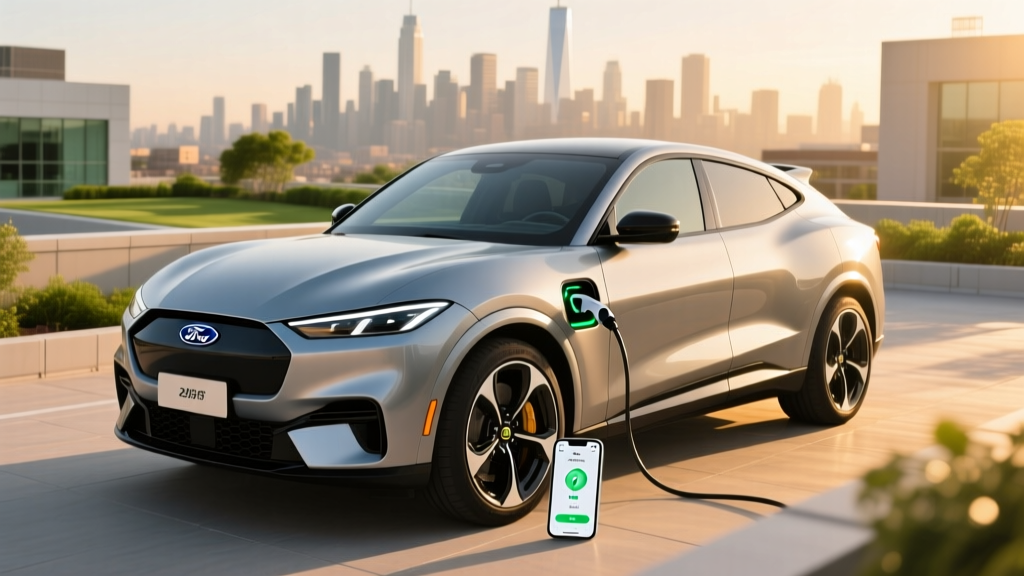
Ford's current EV lineup—anchored by the 2026 Mustang Mach-E (up to 320 miles EPA, peak 150 kW DC fast charging) and the 2026 F-150 Lightning (up to 320 miles EPA, peak 155 kW DC)—delivers competitive but not class-leading electric car features. Ford's strengths are practical: standard BlueCruise Level 2 driver-assist, over-the-air updates, the Ford Pro commercial ecosystem, and a growing NACS (Tesla Supercharger) adapter program. Weaknesses include charging speeds that lag behind Hyundai/Kia's 800V architecture (which hits 10–80% in ~18 minutes versus Ford's ~35–40 minutes) and real-world highway range that falls 10–15% below EPA stickers. If you want a proven, mainstream EV with strong dealer support and don't need the fastest charging on the market, Ford is a solid pick. If 15-minute DC charging or 350+ miles of range are non-negotiable, look at Tesla, Hyundai, or Lucid.
Ford's 2026 Electric Lineup: The Numbers That Matter
To properly evaluate the auto company Ford on electric car features, you need to look past marketing and focus on the specifications that affect daily ownership: usable battery capacity, real efficiency, charge curves, and pricing after incentives.
| Spec | Mustang Mach-E Select RWD | Mustang Mach-E GT AWD | F-150 Lightning XLT Std Range | F-150 Lightning Lariat Ext Range |
|---|---|---|---|---|
| EPA Range | 250 mi | 280 mi | 240 mi | 320 mi |
| Battery (usable) | 72 kWh (LFP) | 91 kWh (NMC) | 98 kWh (NMC) | 131 kWh (NMC) |
| Peak DC Charge | 150 kW | 150 kW | 150 kW | 155 kW |
| 10–80% DCFC Time | ~38 min | ~40 min | ~41 min | ~44 min |
| Level 2 Rate (kW) | 10.5 kW | 10.5 kW | 11.3 kW (single) / 19.2 kW (dual) | 19.2 kW |
| 0–60 mph | 6.3 sec | 3.5 sec | ~5.5 sec | ~4.5 sec |
| Horsepower | 266 hp | 480 hp | 580 hp | 580 hp |
| MSRP (before credit) | $42,995 | $59,995 | $54,995 | $69,995 |
| EPA Efficiency (MPGe) | 103 MPGe | 86 MPGe | 78 MPGe | 70 MPGe |
| Battery Warranty | 8 yr / 100,000 mi | 8 yr / 100,000 mi | 8 yr / 100,000 mi | 8 yr / 100,000 mi |
Real-World Range vs. EPA Sticker
EPA range is a laboratory estimate. On real highway drives at 70–75 mph, expect the Mach-E Extended Range to deliver ~260–275 miles instead of its 320-mile sticker. In cold weather (below 30°F), reduce that further by 15–25%, putting a Mach-E Select RWD at roughly 190–210 miles of usable range on winter highway trips. The F-150 Lightning Extended Range, with its truck aerodynamics, loses even more at highway speed—plan for ~250 miles real-world in mild conditions, dropping to ~200 miles in winter. Always plan fast-charging stops at ~20% SoC remaining for battery health and buffer.
Charging Architecture: Where Ford Stands (and Falls Short)
Charging speed is the single biggest differentiator between Ford and its top competitors. Ford uses a 400-volt architecture across its EV lineup. Hyundai, Kia, and Genesis use an 800V platform that sustains higher charge rates longer. Here's what that means in practice:
| Vehicle | Architecture | Peak DC kW | 10–80% Time | Miles Added in 15 Min |
|---|---|---|---|---|
| Ford Mach-E (2026) | 400V | 150 kW | ~38 min | ~90 mi |
| Ford F-150 Lightning Ext. | 400V | 155 kW | ~44 min | ~85 mi |
| Hyundai Ioniq 5 (2026) | 800V | 240 kW | ~18 min | ~170 mi |
| Tesla Model Y LR (2026) | 400V (optimized) | 250 kW | ~25 min | ~155 mi |
| Kia EV6 GT-Line (2026) | 800V | 233 kW | ~18 min | ~160 mi |
Why the charge curve matters: Ford's 150 kW peak is only sustained between roughly 10–40% State of Charge (SoC). Above 60%, the rate tapers significantly—to ~70 kW by 80%. This is standard for 400V systems but means a 10–90% fill takes considerably longer than the 10–80% figure suggests. For road-trippers who regularly charge past 80%, budget an extra 20–25 minutes per stop versus the Hyundai Ioniq 5.
NACS adapter access: Ford was an early adopter of Tesla Supercharger network access via a NACS adapter (included with new vehicles starting in 2025). This gives Ford owners access to over 25,000 Supercharger stalls—a significant reliability advantage over CCS-only networks in many regions. As of 2026, newer Ford EVs ship with the native NACS port, eliminating the adapter entirely.
Ford BlueCruise: Level 2 Driver-Assist Evaluated
SAE Automation Level: Level 2
Ford BlueCruise is a Level 2 driver-assistance system, not self-driving. It provides hands-free operation on pre-mapped divided highways (over 130,000 miles of qualified roads as of 2026), but the driver must remain attentive and ready to take over at any moment. A driver-facing camera monitors eye gaze. This is fundamentally different from Level 4 robotaxi services like Waymo, which operate without a human driver in geofenced areas.
BlueCruise 1.4 (current for 2026 models) adds lane-change assist, predictive speed assist, and improved hands-free zone detection. In practice, it's one of the better Level 2 systems for interstate cruising—smoother than GM's Super Cruise on some surface transitions, though Super Cruise still covers more total mapped miles. Subscription pricing is $75/month or $750/year after the initial complimentary period (typically 2–4 years depending on trim and model year).
What BlueCruise Does NOT Do
- Does not navigate city streets, stoplights, or roundabouts autonomously
- Does not work on unmapped or non-divided roads
- Does not replace the driver — you are legally responsible for the vehicle at all times
- Does not handle construction zones or lane-merge scenarios without driver input
- Hands-free zones can end abruptly; the system will alert you, but reaction time is your responsibility
EV vs. Gas vs. Hybrid: Ford Ownership Cost Breakdown
When you evaluate the auto company Ford on electric car features, the financial comparison against Ford's own gas and hybrid models is where the decision crystallizes. Below is a 5-year total cost of ownership (TCO) comparison for a driver covering 12,000 miles/year with home Level 2 charging access, using the Mach-E Select RWD versus a comparably equipped Ford Escape PHEV and a gas-powered Ford Edge.
| Cost Category | 2026 Mach-E Select RWD | 2026 Escape PHEV | 2026 Edge AWD (Gas) |
|---|---|---|---|
| Purchase Price (MSRP) | $42,995 | $38,500 | $40,500 |
| Est. Federal Tax Credit (§30D)* | −$3,750 to $7,500 | −$3,750 (partial PHEV) | $0 |
| Net Purchase (mid credit) | ~$37,995 | ~$34,750 | $40,500 |
| Home Charger Install (L2) | $800–$1,500 | $800–$1,500 | $0 |
| Fuel/Energy (5 years) | $3,600 (electric @ $0.14/kWh) | $4,200 (gas + electric mix) | $8,400 (gas @ $3.50/gal, 24 MPG) |
| Maintenance (5 years) | $1,200 | $2,800 | $3,500 |
| Insurance (5 years, avg) | $9,500 | $7,800 | $7,200 |
| Estimated Depreciation | $18,000 | $15,500 | $16,800 |
| 5-Year Total | ~$71,095 | ~$66,550 | ~$76,400 |
*Federal §30D credit eligibility depends on MSRP caps ($55,000 for SUVs), buyer income limits ($150K single / $300K joint), battery critical-mineral and component sourcing rules, and point-of-sale transfer availability. Always verify current rules at irs.gov and consult a tax professional.
Key takeaways: The Mach-E saves roughly $5,300 over the gas Edge across 5 years, driven mostly by fuel and maintenance savings—but higher insurance premiums ($200–$400/year more, per industry data) and steeper depreciation partially offset those gains. The Escape PHEV is the cheapest to own if you can charge at home and most of your driving is under 37 miles (its electric-only range), making it the pragmatic pick for mixed-use drivers who road-trip frequently.
Battery Chemistry, Degradation, and Warranty
| Factor | LFP (Mach-E Select RWD) | NMC (Mach-E GT, Lightning Ext.) |
|---|---|---|
| Energy Density | Lower (heavier pack for same kWh) | Higher (lighter, more range per kg) |
| Charge to 100% Regularly? | Yes — Ford recommends periodic 100% charges | No — 80–90% daily recommended for longevity |
| Cold-Weather Performance | More range loss in freezing temps (~25–30%) | Moderate loss (~15–22%) |
| Cycle Life | 3,000+ cycles to 80% SoH | 1,500–2,000 cycles to 80% SoH |
| Cost | Lower (no cobalt/nickel) | Higher |
| Warranty | 8 yr / 100,000 mi (≥70% capacity retention) | 8 yr / 100,000 mi (≥70% capacity retention) |
Ford's battery warranty guarantees at least 70% capacity retention over 8 years or 100,000 miles, which is industry-standard but less generous than Hyundai's 10-year/100,000-mile coverage. Real-world degradation data from 2022–2024 Mach-E owners shows an average of 4–7% capacity loss at 60,000 miles, which tracks with expectations for liquid-cooled NMC packs. LFP packs in the Select trim are newer to market, so long-term fleet data is still accumulating.
Replacement cost context: Out-of-warranty battery replacement for the Mach-E Extended Range pack currently runs $15,000–$22,000 including labor at Ford dealers. For the F-150 Lightning's 131 kWh pack, expect $25,000–$35,000. These costs are declining as module-level repairs become more common and aftermarket suppliers scale up.
Common Misconceptions About Ford EVs
| Myth | Fact |
|---|---|
| "The Mach-E has 320 miles of range, so I'll get 320 miles." | EPA tests include low-speed and city driving. At sustained 70 mph highway speeds, expect 260–275 miles. In freezing weather, 220–240 miles. Always plan conservatively. |
| "Ford EVs charge just as fast as any other EV." | Ford's 400V architecture peaks at 150–155 kW. Hyundai/Kia's 800V platform charges at 230–240 kW, cutting 10–80% time nearly in half. For road-trippers, this matters. |
| "BlueCruise means the car drives itself." | BlueCruise is SAE Level 2. You must stay alert, eyes on the road (monitored by camera), and hands available. It is not autonomous driving. |
| "I can't use Tesla Superchargers with a Ford." | Since 2025, Ford EVs have NACS access via adapter or native port, unlocking 25,000+ Supercharger stalls for DC fast charging. |
| "EV maintenance is zero." | No oil changes, but you still have cabin filters, brake fluid checks, tire rotations (EVs wear tires 20–30% faster due to weight and torque), coolant service, and wiper/washer fluid. Budget ~$200–$300/year. |
Decision Framework: Should You Buy a Ford EV?
Choose a Ford EV If:
- You want mainstream dealer support: Ford has ~600 EV-certified dealers nationwide—far more than Rivian, Lucid, or direct-to-consumer brands.
- You need a truck: The F-150 Lightning remains one of only two mainstream electric pickups (alongside the Rivian R1T) with proven fleet and consumer availability.
- You value Supercharger access: NACS compatibility gives Ford owners the most reliable DC fast-charging network in North America.
- You drive mostly in-town with occasional road trips: 250–320 miles EPA covers most daily use, and 35–40 minute DCFC stops are manageable for 2–3 trips per year.
- You want hands-free highway cruising: BlueCruise is competitive with the best Level 2 systems on mapped interstates.
Look Elsewhere If:
- You road-trip frequently and hate waiting: Hyundai Ioniq 5/6 or Kia EV6 charge 10–80% in ~18 minutes versus Ford's ~38–44 minutes.
- You need 350+ real-world highway miles: Consider the Tesla Model S, Lucid Air, or upcoming next-gen platforms. Ford's current lineup tops out at ~270 real highway miles.
- You lack home charging and rely entirely on public DCFC: Ford's slower charge curve means more time at public chargers—prioritize 800V vehicles.
- You want the lowest entry price: The Chevy Equinox EV starts ~$33,000 and qualifies for more of the §30D credit; Ford's cheapest EV starts at ~$43,000.
First-Time EV Buyer Essentials
If this is your first electric vehicle, Ford's lineup is approachable but requires preparation:
- Home charging is critical. A Level 2 home charger (240V, 32–48 amp) adds ~25–35 miles of range per hour on the Mach-E. Without home charging, EV ownership becomes significantly less convenient. Budget $800–$2,000 for professional installation of a home Level 2 charger, and verify your electrical panel has capacity (a 200-amp panel is usually sufficient; older 100-amp panels may need a $2,000–$4,000 upgrade).
- Preconditioning matters. Use Ford's scheduled departure feature to warm the battery before DC fast charging in cold weather. This can improve charge speed by 30–50% in sub-40°F conditions.
- Tire costs are higher. EV-specific tires (like the Michelin Pilot Sport EV) cost $250–$400 per corner and may need replacement at 30,000–40,000 miles due to the vehicle's weight and instant torque.
- Insurance is 15–25% more. Get quotes before purchasing. EV repair costs and battery replacement risk drive higher premiums across all insurers.
- Verify tax credit eligibility before signing. The §30D credit has MSRP caps, income thresholds, battery-sourcing requirements that change yearly, and point-of-sale transfer options. Check IRS.gov clean vehicle credits and confirm with your tax advisor—not the dealer.
Frequently Asked Questions
Does Ford's electric car lineup qualify for the $7,500 federal tax credit?
Partially. Under current IRS §30D rules, the Mustang Mach-E (assembled in Mexico, then moved to Cuautitlán) and F-150 Lightning (assembled in Dearborn, MI) have varying eligibility depending on battery-sourcing and critical-mineral requirements that shift annually. The F-150 Lightning has historically qualified for more of the credit due to U.S. assembly, but critical-mineral sourcing rules may reduce the amount. The Mach-E's credit has fluctuated between $0 and $7,500 depending on the model year and rule changes. Always verify on fueleconomy.gov for the specific model year and trim you're buying.
How does Ford's EV reliability compare to Tesla or Hyundai?
Ford's EV reliability is mixed. Early 2021–2022 Mach-E models had battery contactor recalls and software issues. The F-150 Lightning has been more solid mechanically. Compared to Tesla's established Supercharger reliability and Hyundai's strong warranty coverage, Ford sits in the middle—decent build quality and improving software, but not yet best-in-class. Ford's dealer network is a major advantage for service access that Tesla owners in rural areas lack.
Can the F-150 Lightning power my home during an outage?
Yes, with Ford's Intelligent Backup Power system and the Home Integration System (an $3,895 wall-mounted inverter, professionally installed). The Lightning's 131 kWh extended-range battery can power an average home for approximately 3 days at moderate usage (~30 kWh/day). This is vehicle-to-home (V2H) capability—one of the Lightning's most compelling features versus competing trucks.
Is Ford discontinuing any EV models?
Ford canceled its planned three-row electric SUV in early 2025 and pivoted toward hybrid and next-generation EV platforms. The Mach-E and F-150 Lightning remain in production for 2026, and Ford has announced a next-generation midsize electric pickup (based on a new universal EV platform) expected for 2027. The Ford Explorer EV is available in Europe but not the U.S. market.
What's the real cost per mile to drive a Ford EV versus gas?
At the U.S. average residential electricity rate of ~$0.16/kWh (as of early 2026, per EIA data), the Mach-E Select RWD at ~34 kWh/100mi costs approximately $0.054 per mile to fuel at home. A comparable gas SUV at 25 MPG with $3.50/gallon fuel costs $0.14 per mile. That's roughly $5,160 in fuel savings over 60,000 miles—but this assumes consistent home charging. Public DC fast charging at $0.35–$0.50/kWh narrows the gap to ~$0.10–$0.17/mile, making it roughly cost-neutral with gas.