The Quick Answer
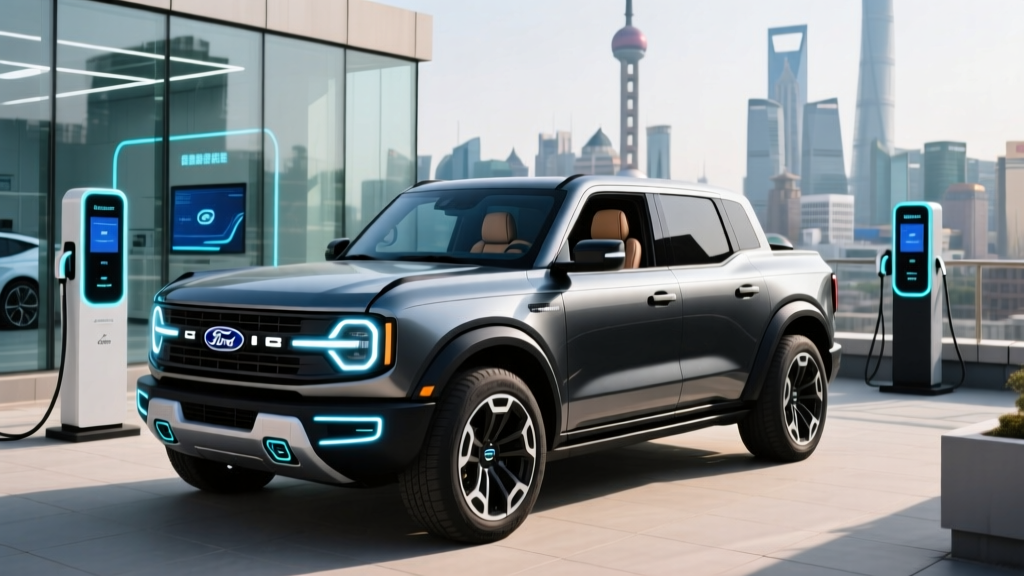
As of early 2026, Ford has not officially announced an electric Bronco for any market, including China. What has circulated in EV forums and social media are speculative renders, trademark filings, and reports that Ford's Chinese joint ventures (notably with JMC and Changan) are exploring rugged electric SUV concepts that borrow Bronco styling cues. None of these have been confirmed as a production "Electric Bronco." For US buyers, Ford's current electrified off-roader strategy centers on the F-150 Lightning and the upcoming next-generation electric platform vehicles expected in the 2027-2028 timeframe. If an electric Bronco does arrive, expect a starting MSRP near $55,000-$60,000, an EPA range around 280-320 miles, and DC fast charging at roughly 150-200 kW peak.
Where the "Ford Electric Bronco China" Rumors Come From
The search interest around "Ford electric Bronco China" traces back to a convergence of real industry developments and speculative hype. Here's what's actually happening:
Ford's China EV partnerships are expanding. Ford operates joint ventures in China — primarily with Changan Automobile and Jiangling Motors (JMC). JMC already produces the Bronco Sport for the Chinese domestic market under license. In 2025, multiple Chinese automotive outlets reported that Ford and its partners were evaluating an electric midsize off-roader for the Chinese market, where demand for rugged-styled EVs (think the BYD Yangwang U8 and Tank 500 Hi4-T) is surging.
Trademark filings fueled speculation. Ford filed several trademarks in China and the EU in late 2024 that included "Bronco-E" and related nomenclature. Trademark filings do not confirm production plans — automakers routinely file defensive trademarks to protect naming rights — but they sparked a wave of speculative renders from Chinese design studios.
No production confirmation exists. As of this writing, neither Ford's US pressroom nor Ford China has published a production timeline, spec sheet, or pricing for an electric Bronco in any market. Ford's official electric vehicle lineup page lists the Mustang Mach-E, F-150 Lightning, and E-Transit — no Bronco EV.
What an Electric Bronco Would Likely Look Like: Speculative Specs
While we lack confirmed numbers, we can build an informed projection based on Ford's existing EV architecture (the GE2 platform underpinning the F-150 Lightning and the upcoming next-gen platform) and the competitive landscape. The following table represents estimated specs based on engineering patterns from comparable vehicles — not confirmed data.
| Attribute | Projected Spec | Comparable Benchmark |
|---|---|---|
| Battery Capacity | ~100-120 kWh usable (NMC) | F-150 Lightning Extended: 131 kWh |
| EPA Range (est.) | 280-320 miles | Lightning Ext. Range: 320 mi EPA |
| Peak DC Fast Charge | 150-200 kW | Lightning: 150 kW peak |
| 10-80% Charge Time | ~30-40 minutes | Lightning: ~41 min (150 kW) |
| Level 2 Charge Rate | 11.5 kW (estimated) | Mach-E: 10.5 kW / Lightning: 19.2 kW |
| Horsepower | 350-500 hp (dual motor AWD) | Lightning: 580 hp |
| 0-60 mph | 4.5-5.5 seconds | Lightning: 3.8 sec |
| Towing Capacity | 5,000-7,500 lbs (est.) | Lightning: 7,700-10,000 lbs |
| Estimated Base MSRP | $55,000-$60,000 | Gas Bronco: $39,695-$90,000+ |
| Battery Warranty | 8 years / 100,000 miles (likely) | Current Ford EV: 8yr/100k mi |
Real-world range reality check: If the electric Bronco lands with an EPA rating of 300 miles, expect 230-260 miles in real-world highway driving at 70+ mph, and potentially 180-210 miles in sub-freezing winter conditions. Boxy aerodynamics — which the Bronco's iconic shape demands — impose a significant efficiency penalty at highway speeds. The F-150 Lightning, with a similarly blunt frontal area, sees roughly 20-25% range reduction on sustained highway trips versus its EPA figure.
Electric Bronco vs. Gas Bronco: Cost and Ownership Comparison
For buyers weighing whether to wait for an electric Bronco or buy the current gas-powered model, the economics depend heavily on your driving patterns, electricity rates, and how long you plan to own the vehicle.
| Cost Category | Electric Bronco (est.) | Gas Bronco 2.3L EcoBoost |
|---|---|---|
| Purchase Price (MSRP) | $57,000 | $42,000 |
| Federal Tax Credit (§30D) | $0-$7,500 (eligibility TBD) | $0 |
| Fuel/Energy (5 yrs, 60k mi) | $4,200 (home charging @ $0.14/kWh) | $10,800 (@ $3.60/gal, 20 MPG combined) |
| Maintenance (5 yrs) | $1,500 | $3,800 |
| Insurance (5 yrs avg) | $9,500 | $7,800 |
| Depreciation (est. 5 yr) | $22,800 (40%) | $18,900 (45%) |
| Total 5-Year Cost | ~$72,200 (before credit) / ~$64,700 (with credit) | ~$65,400 |
Key takeaways from this comparison:
- Without a tax credit, the electric Bronco costs roughly $7,000 more over five years, driven primarily by higher purchase price and insurance premiums (EVs typically cost 15-25% more to insure due to battery replacement exposure).
- With the full $7,500 §30D credit, the electric Bronco breaks even or slightly undercuts the gas version — but only if you qualify. The IRS §30D requirements include buyer income caps ($150K single / $300K joint), MSRP caps ($80K for SUVs), and battery critical-mineral sourcing rules that change annually.
- Home charging at typical residential rates ($0.12-$0.16/kWh) yields massive fuel savings — roughly $1,300/year versus gas. If you rely exclusively on DC fast charging at $0.40-$0.50/kWh, that advantage nearly disappears.
Real-World Ownership Considerations Before You Wait
If you're seriously considering holding out for an electric Bronco, these practical factors should shape your decision:
Home Charging Access Is Non-Negotiable
An electric Bronco with a ~100+ kWh battery would require 8-10 hours on a Level 2 (240V, 48A) home charger for a full charge. Without reliable home or workplace charging, ownership becomes a logistical burden. A Level 2 home installation typically costs $800-$2,500 for equipment and electrician labor, assuming your electrical panel has sufficient capacity (a 200-amp panel is recommended; upgrading from 100A adds $1,500-$3,500).
Off-Road Use Drains Batteries Fast
The Bronco's identity is built on off-road capability. Low-range crawling, sand running, and rock crawling demand sustained high-torque output that can cut effective range by 40-60% compared to highway driving. If your weekend plans involve extended trail running far from charging infrastructure, a gas Bronco (or a PHEV variant, should Ford offer one) remains the pragmatic choice.
Cold-Weather Range Loss
Lithium-ion batteries lose 20-35% of their range in sustained sub-freezing temperatures, and the Bronco's boxy shape compounds this with higher aerodynamic drag in dense cold air. Buyers in northern states should plan for a winter effective range of 180-220 miles from a projected 300-mile EPA rating. A heat pump (which Ford has included on recent EVs) mitigates cabin-heating energy draw but doesn't fully solve the battery chemistry limitation.
The China Market Version May Not Come to the US
Even if Ford launches an electric Bronco in China first, there is no guarantee it will reach American showrooms. Chinese-market EVs built through joint ventures often use different platforms, battery suppliers (CATL, BYD), and software ecosystems that require significant re-engineering for US safety standards (NHTSA), charging infrastructure (NACS/CCS connectors), and consumer expectations. The Ford Territory EV sold in China, for example, has never been offered in the US.
Common Misconceptions About the Electric Bronco
| Myth | Fact |
|---|---|
| "The electric Bronco is available to order now in China." | No production model exists. Only speculative renders and trademark filings have surfaced. Ford has not opened orders in any market. |
| "It will be a direct import from China to the US." | US tariffs on Chinese-built vehicles (currently 100% under Section 301 for EVs) make direct import economically impossible. A US-market electric Bronco would need to be built in North America to be price-competitive. |
| "An electric Bronco can't do real off-roading." | Electric motors deliver instant torque at zero RPM — ideal for rock crawling. The challenge is range depletion during sustained off-road use, not capability. The Rivian R1S and GMC Hummer EV have proven electric off-road viability. |
| "It will qualify for the full $7,500 tax credit." | Eligibility depends on battery sourcing, critical-mineral content, buyer income, and MSRP at time of purchase. Per IRS §30D rules, many EVs qualify for only $3,750 or $0 depending on supply-chain compliance. |
| "It will charge faster than any current Ford EV." | Unlikely without an 800V architecture. Ford's current EVs use 400V systems limited to ~150 kW peak. Unless Ford adopts 800V (as Hyundai/Kia have), expect similar charge speeds to the F-150 Lightning. |
Decision Framework: Should You Wait for an Electric Bronco?
Choose Your Path
WAIT for an electric Bronco if:
- You have reliable Level 2 home charging (or confirmed workplace charging)
- Your daily driving is under 80 miles round-trip with occasional longer road trips
- You don't need a vehicle in the next 18-24 months
- Off-road use is occasional (fire roads, light trails) rather than hardcore rock crawling or extended remote expeditions
- You qualify for the §30D tax credit (income under $150K single / $300K joint) and can benefit from the point-of-sale transfer
- You want lower per-mile energy costs and are willing to accept higher upfront and insurance costs
BUY the current gas Bronco (or a hybrid variant) if:
- You need a vehicle within the next 12 months
- You regularly drive in areas with sparse charging infrastructure (rural West, remote trails)
- Extended off-road excursions are a core use case
- You live in an apartment or lack home charging access with no workplace alternative
- Your annual mileage exceeds 20,000 miles and road-trip frequency is high
- You want proven reliability data and established resale values
CONSIDER a Rivian R1S or Jeep Wrangler 4xe instead if:
- You want an electric or plug-in-hybrid off-roader now, not in 2027+
- The Rivian R1S (EPA 321-410 miles, starting ~$75,000) offers confirmed specs, NACS charging, and proven off-road capability today
- The Wrangler 4xe (25 miles electric-only, 49 MPGe, starting ~$52,000) provides a bridge solution with electric commuting and gas-powered trail range
What First-Time EV Buyers Should Know
If the electric Bronco is your first EV, prepare for these ownership realities that differ from gas vehicles:
Charging speed is not linear. A "200 kW peak" charge rate applies only between roughly 10-40% state of charge. Above 80%, charging slows dramatically to protect battery chemistry — often dropping to 40-50 kW. A 10-80% session might take 30 minutes, but 80-100% could take another 30 minutes. Plan road-trip stops around the 10-80% window.
kW vs. kWh — know the difference. Kilowatts (kW) measure power — how fast energy flows into the battery. Kilowatt-hours (kWh) measure energy — the total capacity of the battery, like gallons in a gas tank. A 100 kWh battery charged at 150 kW won't fill in 40 minutes because the charge rate tapers. Understanding this prevents frustration at public chargers.
Battery degradation is real but manageable. Modern NMC batteries typically lose 8-15% capacity over the first 100,000 miles, then plateau. Ford's current EV battery warranty covers 8 years / 100,000 miles with a 70% capacity retention threshold. Avoid routinely charging to 100% or draining below 10% for daily use — the 20-80% window maximizes longevity.
Insurance costs more. EV insurance premiums run 15-25% higher than comparable gas vehicles, driven by expensive battery replacement costs ($15,000-$25,000 for a large pack) and specialized repair requirements. Get quotes before purchasing.
Frequently Asked Questions
Is the Ford electric Bronco confirmed for production?
No. As of early 2026, Ford has not officially announced an electric Bronco for any market. Trademark filings and speculative reports from Chinese automotive media suggest exploration, but no production timeline, specs, or pricing have been confirmed by Ford.
Will a China-market electric Bronco be sold in the United States?
Even if Ford launches an electric Bronco in China, US import is unlikely. Section 301 tariffs impose a 100% duty on Chinese-built EVs, making them economically unviable. A US-market version would need North American production, which Ford has not announced.
How much would an electric Bronco cost?
Based on comparable vehicles and Ford's pricing strategy, a reasonable estimate is $55,000-$60,000 for a base model and $70,000-$80,000+ for a fully loaded off-road variant. This is speculative and subject to change based on battery costs and competitive positioning at launch.
Would an electric Bronco qualify for the $7,500 federal tax credit?
Possibly, but it depends on multiple factors at time of purchase: buyer income (under $150K single / $300K joint AGI), MSRP (under $80K for SUVs), and battery sourcing compliance with critical-mineral and component manufacturing rules. Per the IRS clean vehicle credit guidelines, eligibility changes as supply chains evolve. Consult a tax professional before relying on credit availability.
What electric SUV can I buy now that's similar to the Bronco?
The closest current alternatives are the Rivian R1S (EPA 321-410 mi, starting ~$75,000, proven off-road capability with quad-motor AWD) and the Jeep Wrangler 4xe (PHEV with 25 mi electric range, 49 MPGe, starting ~$52,000). Both are available today with confirmed specs.
How long would it take to charge an electric Bronco at home?
Assuming a ~100 kWh battery and an 11.5 kW Level 2 home charger (48A, 240V), a full charge from empty would take approximately 8.5-10 hours — practical for overnight charging. On a standard 120V outlet (Level 1), expect 3-4 days for a full charge, which is impractical for daily use with a large battery.