Quick Verdict: The Urban Last-Mile Workhorse
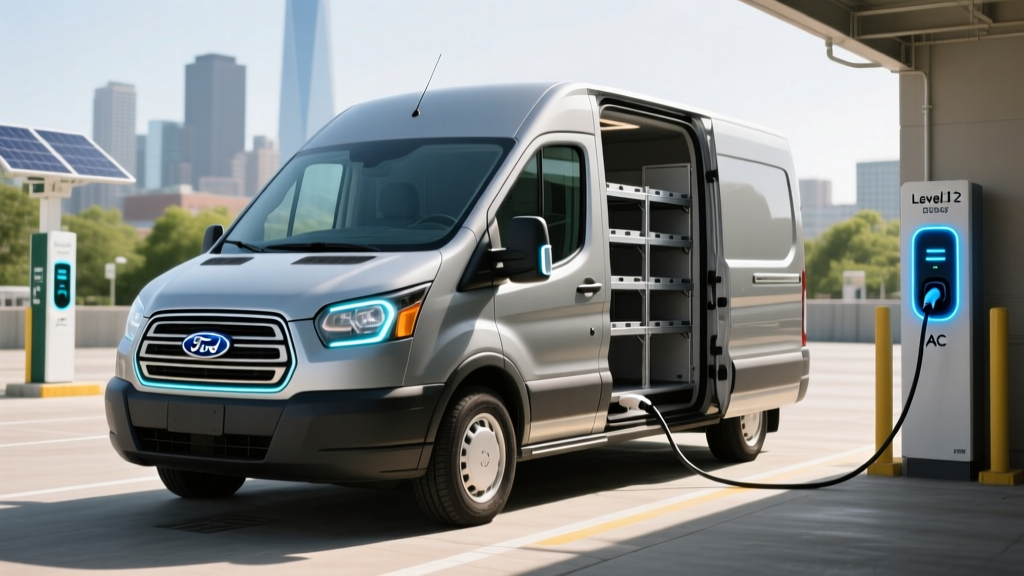
The 2026 Ford E-Transit van isn't trying to win drag races or cross the country on a single charge. It's engineered for a specific mission: predictable, short-route commercial delivery. With an EPA-estimated 126 miles of range, a 68 kWh usable battery pack, and a starting MSRP around $51,995, it targets fleet operators and small businesses running sub-100-mile daily loops. If your routes fit that profile, the E-Transit eliminates fuel costs, slashes maintenance, and qualifies for the full $7,500 federal commercial EV tax credit under IRC §45W. If you need 200+ miles of range or tow heavy, look at the Ram ProMaster EV or wait for next-generation platforms.
Range, Battery & Efficiency: What the Numbers Actually Mean
The E-Transit carries a 68 kWh usable lithium-ion nickel manganese cobalt (NMC) battery pack. Ford quotes a 126-mile EPA combined range for the low-roof, short-wheelbase cargo van. The high-roof and extended-wheelbase variants drop to approximately 108–118 miles due to increased weight and aerodynamic drag.
EPA Estimate: 126 miles (low-roof cargo)
City Delivery Route (stop-and-go, regen-heavy): ~110–120 miles
Highway (65–70 mph sustained): ~90–105 miles — the boxy aerodynamics punish efficiency at speed
Cold Weather (below 32°F): ~75–90 miles — expect 25–35% range loss due to cabin heating and reduced battery chemistry performance
Loaded (near GVWR 9,500 lbs): Subtract ~10–15% from any of the above
| Spec | Value |
|---|---|
| EPA Range (low-roof cargo) | 126 miles |
| Battery Usable Capacity | 68 kWh (NMC chemistry) |
| Motor | Single rear-mounted, 266 hp / 317 lb-ft torque |
| 0–60 mph | ~8.0 sec (unloaded) |
| Drivetrain | RWD |
| Efficiency | 2.0 kWh/mile (~50 MPGe combined) |
| Max Payload | 3,880 lbs (cargo van) |
| Cargo Volume (low-roof, short WB) | 246.7 cu ft |
| Cargo Volume (high-roof, long WB) | 487.3 cu ft |
| GVWR | 9,500 lbs |
| Base MSRP (cargo van) | $51,995 |
| Battery/Powertrain Warranty | 8 years / 100,000 miles |
Efficiency lands around 2.0 kWh per mile in mixed driving, which translates to roughly 50 MPGe — typical for a full-size commercial van with the aerodynamics of a brick. For context, fueleconomy.gov lists the E-Transit at 47 MPGe combined for the high-roof variant. That's not a flaw; it's physics. The value proposition isn't efficiency per mile — it's cost per mile versus diesel.
Charging Speed: DC Fast, Level 2, and Fleet Depot Setup
Charging speed is where commercial buyers need to pay close attention. The E-Transit supports DC fast charging at a peak rate of 115 kW via its CCS1 connector. That's modest by 2026 passenger-car standards (many hit 200–350 kW), but it's adequate for the van's battery size and duty cycle.
| Charging Level | Power (kW) | Rate / Time |
|---|---|---|
| Level 1 (120V household) | ~1.4 kW | ~3 miles/hr — impractical for fleet use |
| Level 2 (240V, 48A) | 11.5 kW | ~23 miles/hr; full charge in ~7 hours |
| Level 2 (240V, 32A mobile cord) | 7.7 kW | ~15 miles/hr; full charge in ~10 hours |
| DC Fast Charge (peak) | 115 kW | 15–80% in ~45 minutes |
| DC Fast Charge (sustained avg) | ~80 kW | Curve tapers significantly above 80% |
Charging curve reality: The E-Transit hits peak 115 kW only in a narrow SoC window (roughly 15–40%). From 40–60%, expect ~90 kW. Above 80%, the rate drops sharply to under 30 kW as the battery management system protects cell longevity. For fleet depot charging, this means overnight Level 2 at 11.5 kW is the primary strategy — a fully depleted van tops up in about 7 hours, easily covering next-morning departures.
For depot setup, Ford Pro offers integrated charging management through its Ford Pro Charging platform, which coordinates vehicle schedules, charger availability, and utility rate optimization. Most fleet operators install 240V/48A wall connectors at each bay. Expect $2,000–$5,000 per charger installation depending on electrical panel capacity and trenching — consult a licensed electrician for site-specific quotes.
Performance, Payload & Drivetrain
The E-Transit uses a single rear-mounted electric motor producing 266 horsepower and 317 lb-ft of torque, driving the rear wheels. That torque figure is the headline: it's available from 0 RPM, meaning the van pulls away from stops with authority even when loaded. Ford quotes a 0–60 mph time of approximately 8.0 seconds unloaded — brisk for a commercial van and quicker than the gasoline Transit's V6.
Max payload capacity is 3,880 lbs for the cargo van variant (cutaway and chassis-cab configurations vary). The GVWR is 9,500 lbs, keeping it under the 10,001-lb threshold that would trigger additional CDL requirements for most drivers. Towing is not offered — the E-Transit is a pure cargo and passenger hauler.
Ride quality is firm, as expected for a commercial platform, but the low center of gravity from the underfloor battery pack reduces body roll compared to the gas Transit. Regenerative braking is aggressive enough for near-one-pedal driving in city traffic, reducing brake wear — a significant TCO advantage for stop-and-go delivery routes.
Interior, Tech & Driver Assistance
The E-Transit cabin mirrors the gasoline Transit's layout, with a 12-inch touchscreen running Ford's SYNC 4 system. Wireless Apple CarPlay and Android Auto are standard, along with a Wi-Fi hotspot (FordPass Connect) — critical for fleet telematics integration. The digital instrument cluster includes an EV-specific power gauge, range estimator, and regen-braking indicator.
Standard driver-assist features (Ford Co-Pilot360):
- Pre-Collision Assist with Automatic Emergency Braking
- Lane-Keeping System
- Auto High-Beam Headlamps
- Rear View Camera
- Blind Spot Information System (BLIS) with Trailer Coverage (optional)
Adaptive cruise control with stop-and-go is available on higher trims. Note: this is SAE Level 2 driver assistance — the driver must remain fully engaged with hands on the wheel and eyes on the road. There is no hands-free driving feature comparable to Ford's BlueCruise on the E-Transit.
Pro Power Onboard is a standout feature for tradespeople: a 2.4 kW (optional 7.2 kW) onboard inverter that turns the E-Transit into a mobile generator. Run power tools, lighting, or job-site equipment directly from the van's battery without a separate generator. This alone can justify the EV switch for contractors who idle gas vans for hours to power equipment.
Pricing, Trims & Federal Tax Credit Eligibility
The 2026 E-Transit is offered in three main body styles (cargo van, cutaway, chassis cab) across low-, medium-, and high-roof heights, with two wheelbase lengths. Pricing starts around $51,995 for the low-roof cargo van and climbs to approximately $62,000+ for a high-roof, extended-wheelbase model with options.
| Item | Amount |
|---|---|
| Base MSRP (cargo van, low-roof) | $51,995 |
| As-tested (high-roof, long WB, options) | ~$62,000 |
| Federal Commercial Clean Vehicle Credit (§45W) | Up to $7,500 (GVWR under 14,000 lbs) |
| Effective price after federal credit | ~$44,495–$54,500 |
| State/local incentives | Varies — check DSIRE and local utility programs |
The E-Transit qualifies for the Commercial Clean Vehicle Credit (IRC §45W), not the consumer §30D credit, because it's typically purchased for business/fleet use. Under §45W, the credit equals the lesser of 15% of the vehicle's basis (or 30% if no depreciation deduction is claimed) or $7,500 for vehicles under 14,000 lbs GVWR. The E-Transit's battery sourcing and MSRP comfortably meet requirements. However, the credit is claimed on IRS Form 8936 and reduces your tax liability — it is not a point-of-sale rebate for commercial purchases. Consult a tax professional to confirm eligibility based on your business structure and tax situation. Rules are current for 2026; verify at irs.gov.
Ownership Costs & Who the E-Transit Suits Best
The E-Transit's 8-year/100,000-mile battery and powertrain warranty provides solid coverage for commercial duty cycles. Ford reports battery degradation testing to 70% capacity retention at the warranty threshold — consistent with industry norms. Replacement cost for the 68 kWh pack, if needed out of warranty, is estimated at $12,000–$18,000 based on current commercial EV battery pricing, though this figure will likely decline by the time most packs need replacement.
5-year TCO advantage vs. gas Transit: At 2.0 kWh/mile and a fleet electricity rate of $0.12/kWh, the E-Transit costs $0.24/mile to "fuel." A gasoline Transit at 14 MPG combined and $3.50/gallon costs $0.25/mile — a near wash on energy alone. But the E-Transit eliminates oil changes (~$150/visit × 3/year), reduces brake wear by 40–60% thanks to regen, and cuts transmission maintenance. Over 5 years and 75,000 miles, Argonne National Lab fleet data suggests $5,000–$8,000 in maintenance savings alone.
- Last-mile delivery fleets (Amazon DSPs, FedEx Ground contractors, local couriers) with predictable sub-100-mile routes
- Municipal and campus fleets — parks departments, university maintenance, airport ground operations
- Tradespeople and contractors who can leverage Pro Power Onboard and charge overnight at a home/shop depot
- Businesses in states with commercial EV rebates (California HVIP, New York Truck Voucher, etc.) that stack with the federal credit
- Your daily routes exceed 120 miles or lack overnight charging access
- You need AWD for snow/mud routes (the E-Transit is RWD only)
- You tow trailers — the E-Transit does not support towing
- You operate in extreme cold climates without heated depot parking (range loss is significant below freezing)
Pros, Cons & How It Stacks Up
- Low operating cost — ~$0.24/mile electricity + major maintenance savings
- Instant torque from 0 RPM — strong acceleration even loaded
- Pro Power Onboard eliminates job-site generators
- Ford Pro ecosystem — integrated telematics, charging management, service
- Quiet operation — ideal for early-morning residential deliveries
- Federal §45W credit + state incentives can cut effective price 20–30%
- 126-mile EPA range limits route flexibility — highway and cold weather cut it further
- 115 kW peak DC charging is slow by 2026 standards; 45 min for 15–80%
- RWD only — no AWD option for snow/ice belt fleets
- Base price ~$52K is $10–15K above comparable gas Transit
- No towing capability
- High-roof/long-WB variants lose meaningful range (down to ~108 mi)
Key competitors: The Ram ProMaster EV (162-mile EPA range, ~$58,000) offers more range but at higher cost and limited availability. The Mercedes-Benz eSprinter (200+ mile range with the larger battery, ~$72,000) is the range leader but commands a significant premium. The BrightDrop Zevo 600 (GM-backed, ~250-mile range) targets larger parcel delivery fleets. For most small-to-mid-size fleets running under 100 miles daily, the E-Transit offers the best balance of price, dealer support, and Ford Pro integration.
Frequently Asked Questions
What is the real-world range of the Ford E-Transit van?
The EPA rates the low-roof E-Transit cargo van at 126 miles combined. In real-world city delivery use with frequent stops and regenerative braking, expect 110–120 miles. Highway driving at 65–70 mph drops range to 90–105 miles due to the van's poor aerodynamics. In freezing temperatures, plan for 75–90 miles — battery chemistry and cabin heating both consume energy. If your routes consistently exceed 100 miles, the E-Transit isn't the right fit without mid-day charging.
How fast does the E-Transit charge at home and on DC fast chargers?
On a 240V/48A Level 2 charger (11.5 kW), the E-Transit adds roughly 23 miles of range per hour and fully charges from empty in about 7 hours — ideal for overnight depot charging. On DC fast chargers, it peaks at 115 kW but sustains an average of ~80 kW, reaching 15–80% in approximately 45 minutes. The charge curve tapers sharply above 80%, so DC fast charging is best used for opportunity top-ups rather than full charges.
Does the Ford E-Transit qualify for the federal EV tax credit?
Yes, but under the Commercial Clean Vehicle Credit (IRC §45W), not the consumer §30D credit. Because the E-Transit is purchased for business or fleet use, the credit is up to $7,500 for vehicles under 14,000 lbs GVWR. The credit is claimed on your tax return (Form 8936) and reduces tax liability — it's not a point-of-sale discount for commercial purchases. Eligibility depends on your business structure and tax situation; consult a tax professional. The E-Transit's battery components and critical minerals sourcing meet current requirements.
How much does the E-Transit cost after incentives?
The base MSRP starts at $51,995 for the cargo van. After the $7,500 federal commercial credit, the effective price drops to approximately $44,495. Many states offer additional incentives — California's HVIP can add $20,000–$45,000 for eligible fleets, and utilities like Con Edison and PG&E offer commercial EV rebates of $2,000–$10,000. A fully optioned high-roof model at ~$62,000 can land near $45,000–$50,000 after stacking incentives, making it competitive with the gas Transit on purchase price alone.
Is the E-Transit worth buying vs. the gas Transit or competitors?
For fleets with sub-100-mile daily routes, depot charging access, and high annual mileage, the E-Transit pays for itself within 3–5 years through fuel and maintenance savings. The Ford Pro ecosystem, dealer network, and Pro Power Onboard give it an edge over the Ram ProMaster EV (longer range but less support infrastructure) and Mercedes eSprinter (more range but $20K+ pricier). If your routes exceed 120 miles, you need AWD, or you operate in extreme cold without heated parking, the gas Transit or a PHEV alternative may be more practical.
What's the battery warranty and replacement cost?
Ford covers the E-Transit battery and electric powertrain for 8 years or 100,000 miles, whichever comes first. The warranty guarantees the battery will retain at least 70% of its original capacity during that period. Out-of-warranty replacement for the 68 kWh pack is estimated at $12,000–$18,000 in 2026, though battery costs continue to decline. Most commercial fleets report minimal degradation within the warranty period when using Level 2 overnight charging and avoiding repeated DC fast charging to 100%.