Quick Verdict: The Workhorse That Knows Its Route
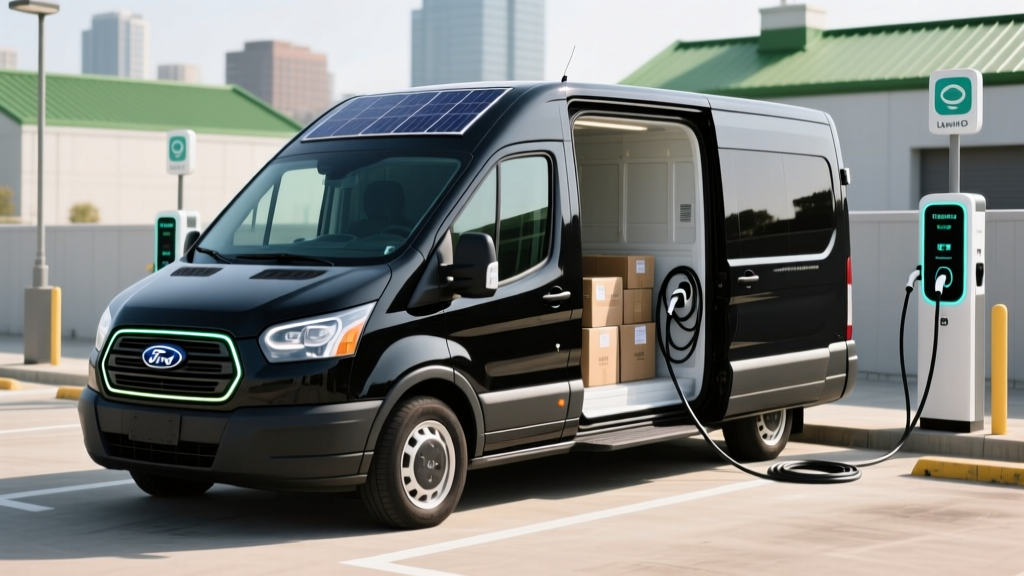
The 2026 Ford E-Transit is not trying to be a long-haul freight hauler or a lifestyle adventure van. It's a purpose-built, last-mile commercial delivery vehicle — and within that narrow lane, it executes with disciplined precision. With an EPA-estimated 126 miles of range in the low-roof cargo van configuration, a 68 kWh usable lithium-ion battery, and access to Ford Pro's commercial charging ecosystem, the E-Transit makes sense for fleet operators and small businesses running predictable urban and suburban routes. If your daily loop is under 100 miles with depot-based overnight charging, this van pencils out. If you need intercity range or heavy towing, look elsewhere.
| Spec | Value |
|---|---|
| EPA Range (Low-Roof Cargo) | 126 miles |
| Battery Usable Capacity | 68 kWh (NMC lithium-ion) |
| Peak DC Fast Charge | 115 kW |
| 10–80% DC Charge Time | ~45 minutes |
| Level 2 AC Charge Rate | 10.5 kW (~14 mi/hr) |
| Motor Output | 266 hp (198 kW) / 317 lb-ft torque |
| Drivetrain | Rear-wheel drive (single motor) |
| 0–60 mph | ~8.5 seconds (unloaded) |
| Efficiency | ~2.0 kWh/mi (cargo, mixed) |
| Max Payload | Up to 3,880 lbs (cutaway) |
| Max Cargo Volume | 487.3 cu ft (high-roof, 148" WB extended) |
| Base MSRP (Cargo Van) | $46,895 (before incentives) |
| Battery Warranty | 8 years / 100,000 miles |
Range and Efficiency: What the EPA Number Doesn't Tell You
The EPA rates the 2026 E-Transit low-roof cargo van at 126 miles on a full charge. The high-roof, extended-wheelbase variant drops to approximately 108–116 miles due to added weight and aerodynamic drag. These figures are sourced from fueleconomy.gov and Ford's official specifications.
Real-World Range Reality Check: The 126-mile EPA figure assumes mixed driving with moderate climate use. In practice, expect:
- Urban delivery routes (stop-and-go, regen-heavy): 110–130 miles achievable, as regenerative braking recovers energy in traffic.
- Sustained highway (65–70 mph): 85–100 miles. The E-Transit's boxy aerodynamics punish highway efficiency hard.
- Cold weather (below 32°F): 75–95 miles. Battery chemistry loses efficiency, and cabin/cargo heating draws significant power. The E-Transit does not offer a heat pump — it uses resistive heating, which is a notable energy penalty.
- Fully loaded (near max payload): Subtract 10–15% from any estimate. Heavier loads increase rolling resistance and energy consumption.
Bottom line: plan routes around 80–90 miles to maintain a safety buffer, especially in winter or with heavy cargo.
Efficiency lands around 2.0 kWh per mile in mixed cargo use, translating roughly to the equivalent of 1.7–2.0 miles per kWh. For fleet managers tracking cost per mile, at a national commercial electricity average of $0.12/kWh, that's approximately $0.24 per mile in energy cost — roughly one-third the fuel cost of a comparable gas-powered Transit at $3.50/gallon and 14 mpg combined.
Charging: Depot-Friendly, but Not Road-Trip Fast
The E-Transit supports three charging tiers, each serving a distinct operational use case:
| Level | Power | Charge Time | Use Case |
|---|---|---|---|
| Level 1 (120V) | ~1.4 kW | ~50+ hours (0–100%) | Emergency/trickle only |
| Level 2 (240V AC) | 10.5 kW | ~8 hours (0–100%) | Overnight depot charging |
| DC Fast Charge | 115 kW peak | ~45 min (10–80%) | Mid-shift top-ups |
Level 2 is the E-Transit's primary refueling method. Ford Pro offers the Ford Pro Power Manager and connected charge stations (via partners like ChargePoint) designed for fleet depot installation. A typical commercial Level 2 install runs $3,000–$7,000 per stall including the EVSE unit, electrical conduit, and permitting — though this varies heavily by site electrical capacity. Fleet operators should consult a licensed electrician for panel load calculations.
DC fast charging at 115 kW peak is adequate for a midday top-up but not class-leading. The charge curve tapers significantly above 80% state of charge (SoC) to protect the NMC battery cells, so charging from 80–100% on DC can add another 30–40 minutes. For operators needing a quick 40-mile boost during a lunch break, the 10–80% session delivers. But this is not a vehicle you'd rely on for en-route fast charging the way you would a passenger EV.
The E-Transit uses the CCS1 connector standard. As of 2026, Ford has not transitioned the E-Transit to NACS (Tesla's connector), though Ford's passenger EVs have adopted NACS access for Supercharger networks. Commercial fleets primarily charge at depot, so this is less of a concern than it is for consumer vehicles.
Performance and Drivetrain: Adequate for the Job
The single rear-mounted motor produces 266 horsepower and 317 lb-ft of torque. That torque is available instantly — a characteristic EV advantage that makes the E-Transit feel surprisingly responsive from a stoplight, even when partially loaded. The 0–60 mph time of approximately 8.5 seconds (unloaded) is not sports-car territory, but it's competitive with the gas-powered Transit's V6 and more than adequate for urban merging.
The rear-wheel-drive layout is a deliberate choice: it preserves cargo floor space (no driveshaft tunnel intrusion) and keeps mechanical complexity low. There is no AWD or dual-motor option, which limits the E-Transit's appeal in regions with heavy snow and ice. Operators in northern climates should spec winter tires and factor in the cold-weather range reduction noted above.
Regenerative braking is adjustable via steering-wheel-mounted controls, allowing drivers to dial in more aggressive regen for one-pedal-style driving in stop-and-go delivery routes. This is a meaningful efficiency and brake-wear benefit in urban use.
Cargo, Configurations, and Interior Tech
The E-Transit mirrors the gas Transit's body configurations, which is a major selling point: fleet operators can spec the same upfits, shelving systems, and body modifications they already use. Available configurations include:
- Cargo Van: Three roof heights (low, medium, high), three wheelbase lengths (130", 148", 148" extended)
- Cutaway: For box-truck and specialty upfits, up to 3,880 lbs payload
- Chassis Cab: For custom commercial bodies
Maximum cargo volume reaches 487.3 cubic feet in the high-roof, 148" extended wheelbase cargo van — identical to the gas Transit. The load floor height is slightly raised compared to the gas version due to the underfloor battery pack, but the difference is minor and doesn't affect standard pallet loading.
Interior tech is commercial-focused: a 12-inch touchscreen running SYNC 4 with cloud-connected navigation, over-the-air update capability, and Ford Pro Telematics integration. The telematics system provides fleet managers with real-time vehicle location, state of charge, driver behavior data, and geofencing alerts. Apple CarPlay and Android Auto are standard. A 360-degree camera system and reverse brake assist are available — practical features for a vehicle this size operating in tight urban loading docks.
Driver-assist features include Ford Co-Pilot360 with automatic emergency braking, lane-keeping assist, blind-spot monitoring, and adaptive cruise control. These are SAE Level 2 driver-assist systems — the driver must remain fully engaged at all times. This is not autonomous driving.
Pricing, Trims, and Federal Tax Credit Eligibility
The 2026 E-Transit starts at $46,895 for the low-roof, 130" wheelbase cargo van. Higher roof heights and longer wheelbases add $2,000–$5,000 depending on configuration. Cutaway and chassis cab variants are priced separately and typically run $45,000–$52,000 before upfit costs.
| Configuration | Base MSRP | Est. After Incentives |
|---|---|---|
| Cargo Van, Low Roof, 130" WB | $46,895 | ~$39,395 (with $7,500 credit) |
| Cargo Van, High Roof, 148" WB Ext. | $51,895 | ~$44,395 (with $7,500 credit) |
| Cutaway (base) | $47,500 | ~$40,000 (with $7,500 credit) |
Federal tax credit eligibility requires careful attention. Under IRS §30D rules for 2026, the E-Transit may qualify for up to $7,500 in federal tax credits, but eligibility depends on several factors:
- MSRP cap: Vans fall under the $80,000 MSRP cap for trucks/vans, so the E-Transit clears this easily.
- Buyer income limits: Adjusted gross income must not exceed $150,000 (single), $225,000 (head of household), or $300,000 (joint). For fleet purchases, the commercial clean vehicle credit (§45W) may apply instead — consult a tax professional.
- Battery sourcing requirements: A percentage of critical minerals must be sourced from the U.S. or free-trade-agreement partners, and battery components must meet domestic-content thresholds. These requirements tighten annually. Verify current-year compliance on IRS.gov.
- Point-of-sale transfer: Eligible buyers can transfer the credit to the dealer at purchase, reducing the out-of-pocket price immediately rather than waiting for a tax refund.
For fleet buyers operating as businesses, the Commercial Clean Vehicle Credit (§45W) may be more applicable than §30D, offering up to $7,500 for vehicles under 14,000 lbs GVWR. This credit has different eligibility rules and does not have the same income caps. Consult your tax advisor for fleet-specific guidance.
Warranty and Long-Term Ownership
Ford backs the E-Transit's battery and electric powertrain with an 8-year / 100,000-mile warranty, covering defects and excessive capacity loss. Ford defines excessive degradation as falling below 70% of original capacity within the warranty period. The bumper-to-bumper warranty covers 3 years / 36,000 miles, and the safety restraint system is covered for 5 years / 60,000 miles.
For fleet operators running high-mileage urban routes, the 100,000-mile battery warranty is a reasonable benchmark. Many commercial delivery vans accumulate 20,000–30,000 miles annually, meaning the battery warranty covers roughly 3–5 years of heavy use. Battery replacement cost out of warranty is not officially published by Ford for the E-Transit, but industry estimates for a 68 kWh NMC pack in a commercial vehicle range from $12,000–$18,000 including labor — a figure fleet managers should model into total cost of ownership projections.
The NMC (nickel manganese cobalt) chemistry in the E-Transit prioritizes energy density over the cycle-life longevity of LFP (lithium iron phosphate). For daily deep-cycle use (full charge to near-empty every day), NMC batteries typically show 10–15% capacity loss over 100,000 miles, depending on thermal management and charging habits. Ford's liquid-cooled battery thermal system helps mitigate degradation, but operators should avoid routinely DC fast charging to 100% and storing the vehicle at high SoC in hot climates.
Pros
- Identical cargo dimensions and upfit compatibility with gas Transit
- Low operating cost: ~$0.24/mi energy vs ~$0.70/mi fuel for gas equivalent
- Ford Pro telematics and fleet management ecosystem
- Strong low-end torque for urban stop-and-go delivery
- Qualifies for up to $7,500 federal credit (eligibility dependent)
- 8-yr/100,000-mi battery warranty
Cons
- 126-mile max EPA range — insufficient for long routes or highway-heavy use
- No AWD option — limits cold-climate and rural utility
- No heat pump — resistive heating significantly reduces winter range
- DC fast charge at 115 kW peak is slower than some passenger EVs
- Higher upfront cost vs gas Transit ($46,895 vs ~$38,000 gas base)
- Real-world cold-weather range can drop to 75–95 miles
Who Should Buy the E-Transit — And Who Shouldn't
Buy the E-Transit if:
- Your daily routes are under 90 miles round-trip with predictable stops
- You can install Level 2 charging at your depot or business location
- You operate in urban/suburban areas with mild-to-moderate winters
- You want to reduce per-mile operating costs and qualify for commercial EV incentives
- You already use Ford Transit upfits and want EV without changing body configurations
Look elsewhere if:
- Your routes regularly exceed 120 miles or include sustained highway driving
- You operate in extreme cold climates where winter range loss is unacceptable
- You need AWD for rural, unpaved, or snow-heavy routes
- You cannot install depot charging and must rely on public infrastructure
The E-Transit's closest competitor is the Mercedes-Benz eSprinter, which offers a larger battery (~113 kWh usable) and an EPA-estimated range of approximately 200+ miles in its latest generation, but at a significantly higher starting price (above $70,000). For fleets that need more range and can absorb the premium, the eSprinter is the alternative. For cost-conscious operators with shorter routes, the E-Transit's lower entry price and Ford Pro support network give it the edge.
The BrightDrop Zevo 600 (formerly backed by GM) targets a similar segment but with a larger cargo footprint and different upfit ecosystem. Availability and dealer support vary by region. The Rivian EDV (Electric Delivery Van) is built primarily for Amazon's fleet and is not broadly available to independent buyers.
Frequently Asked Questions
What is the real-world range of the 2026 Ford E-Transit?
The EPA rates the low-roof cargo van at 126 miles. In real-world urban delivery use, expect 110–130 miles. On the highway, that drops to 85–100 miles. In cold weather below freezing, plan for 75–95 miles. Always build a 15–20% buffer into route planning.
How fast does the E-Transit charge at home and on DC fast chargers?
On a Level 2 (240V) charger at 10.5 kW, a full charge takes approximately 8 hours — ideal for overnight depot charging. On a DC fast charger, the E-Transit peaks at 115 kW and charges from 10–80% in roughly 45 minutes. Charging slows significantly above 80% to protect battery health.
How much does the E-Transit cost after federal tax credits?
The base cargo van starts at $46,895. If you qualify for the full $7,500 federal credit under §30D or §45W, the effective price drops to approximately $39,395. Eligibility depends on buyer income, battery sourcing compliance, and whether you're purchasing as an individual or a business. Verify current rules at IRS.gov and consult a tax professional.
Does the E-Transit qualify for the federal EV tax credit?
It may qualify for up to $7,500 under §30D (individual buyers) or §45W (commercial/fleet buyers), subject to income caps, MSRP limits (the E-Transit is well under the $80,000 van cap), and battery critical-mineral sourcing requirements that tighten annually. Point-of-sale transfer is available for eligible individual buyers. Fleet buyers should investigate §45W with their tax advisor.
Is the E-Transit worth buying vs the gas-powered Transit?
If your routes are short, predictable, and depot-charging is available, the E-Transit saves substantially on per-mile energy costs (~$0.24/mi vs ~$0.70/mi for gas) and reduces maintenance (no oil changes, fewer brake replacements due to regen). The higher upfront cost is typically recovered in 3–5 years for high-mileage fleet use. For long routes, cold climates without range margin, or operations without charging access, the gas Transit remains the practical choice.
What is the E-Transit's battery warranty?
Ford covers the high-voltage battery and electric powertrain for 8 years or 100,000 miles, whichever comes first. The warranty guarantees the battery will retain at least 70% of its original capacity during that period.
Can I tow with the E-Transit?
The E-Transit is rated for up to 7,500 lbs of towing capacity (properly equipped, cutaway/chassis cab configurations). However, towing significantly reduces range — expect a 30–50% reduction depending on trailer weight and aerodynamics. Towing is feasible for short, low-speed moves but not for highway hauling if range is a concern.
Sources: EPA range and efficiency data via fueleconomy.gov; manufacturer specifications via Ford Commercial Vehicles; federal tax credit rules via IRS.gov §30D and §45W. Pricing and incentive rules reflect 2026 model year and are subject to change.