Quick Answer: Is the Ford E-Transit EV Van Worth It?
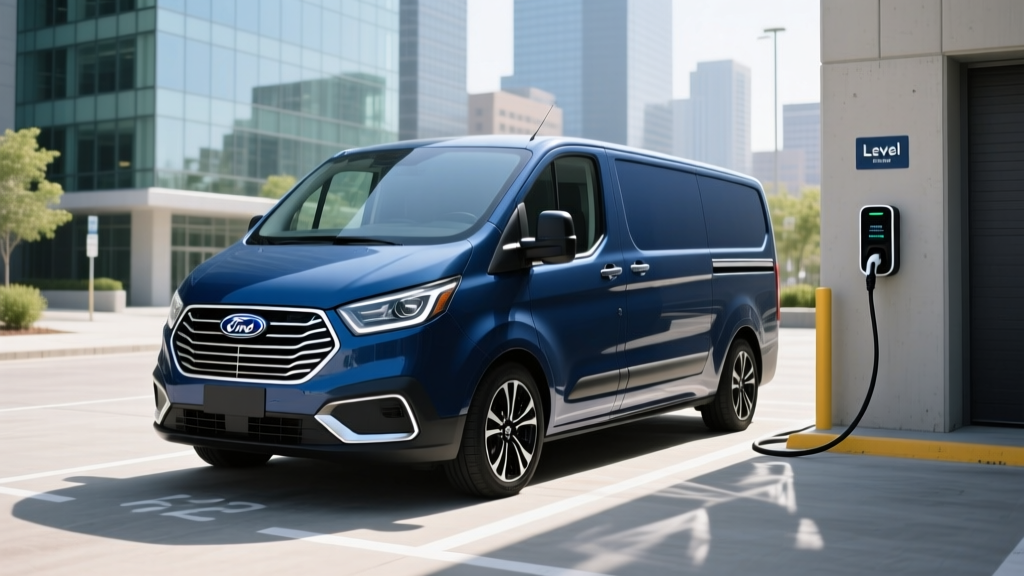
The 2026 Ford E-Transit is a purpose-built electric commercial van with a 126-mile EPA range, 115 kW DC fast charging (10–80% in ~45 minutes), and a starting MSRP of $51,995. It's best for last-mile delivery fleets, urban service trades, and campus logistics where daily routes stay under 100 miles and overnight depot charging is available. It is not a long-haul or rural-work vehicle. Compared to a gas Ford Transit, the E-Transit trades range and upfront cost for dramatically lower fuel and maintenance expenses — typically breaking even in 3–4 years for high-mileage urban fleets.
Ford E-Transit EV Van: Specs at a Glance
Before we get into ownership economics, here are the hard numbers for the 2026 model year. The E-Transit uses a 68 kWh usable lithium-ion NMC battery pack paired with a rear-mounted electric motor. Ford offers three body lengths and three roof heights, but the battery and motor are shared across all configurations.
| Specification | 2026 Ford E-Transit |
|---|---|
| EPA Range | 126 miles (low-roof, short wheelbase) |
| Real-World Range (urban delivery) | ~100–115 miles loaded |
| Battery (usable) | 68 kWh, NMC chemistry |
| Motor Output | 266 hp / 317 lb-ft torque |
| 0–60 mph | ~8.5 seconds (unloaded) |
| DC Fast Charge (peak) | 115 kW (CCS1) |
| 10–80% DC Charge Time | ~45 minutes |
| Level 2 AC Charge Rate | 10.5 kW (48A) |
| Level 2 Full Charge Time | ~8 hours |
| Max Payload | 3,880 lbs (cutaway) |
| Cargo Volume (max) | 487.3 cu ft (extended high-roof) |
| Base MSRP (T-150 low roof) | $51,995 |
| Battery Warranty | 8 years / 100,000 miles |
| MPGe (combined) | 2.0 kWh/mile (~105 MPGe) |
Source: Ford Commercial Vehicles and fueleconomy.gov.
Real-World Range Reality
The 126-mile EPA figure applies to the lightest configuration with minimal payload. In practice, a fully loaded E-Transit making frequent stops in city delivery duty will see 100–115 miles. Cold-weather operation (below 30°F) can reduce range by 20–30%, bringing effective range down to 75–90 miles. If your daily route exceeds 80 miles with payload, you need mid-day charging access or this van won't work for you.
E-Transit vs. Gas Transit: Cost Comparison
The core buying decision for a Ford EV van comes down to total cost of ownership. The E-Transit carries a significant upfront premium over a gas Transit, but operating costs are a fraction. Here's a 5-year fleet comparison assuming 25,000 miles/year in urban delivery duty.
| Cost Factor (5 years, 125k miles) | E-Transit (EV) | Transit 3.5L V6 (Gas) |
|---|---|---|
| Purchase Price (base) | $51,995 | $42,500 |
| Federal Tax Credit (§30D) | Up to $7,500* | $0 |
| Fuel / Electricity | $6,250 (at $0.13/kWh) | $21,875 (at $3.50/gal, 14 MPG) |
| Maintenance (oil, filters, brakes) | $2,500 | $7,500 |
| Insurance (est.) | $12,500 | $10,000 |
| 5-Year Total | $65,745 | $81,875 |
*The §30D commercial clean vehicle credit (§45W for fleet purchases) has specific battery-sourcing, MSRP, and business-entity requirements. Consult IRS.gov guidance and a tax professional before assuming eligibility. Fleet buyers may qualify under §45W instead of §30D, with different rules.
The EV van saves roughly $16,000 over five years in this scenario, with the breakeven point hitting around year 3. Higher electricity costs or lower annual mileage push that breakeven further out. Lower fuel costs (off-peak depot charging at $0.08/kWh) accelerate it.
Charging the E-Transit: What Fleet Buyers Need to Know
Charging infrastructure is the make-or-break factor for any commercial EV van deployment. The E-Transit supports three charging levels:
| Charging Level | Power (kW) | Miles Added/Hour | Use Case |
|---|---|---|---|
| Level 1 (120V) | 1.4 kW | ~3 mi/hr | Emergency only |
| Level 2 (240V, 48A) | 10.5 kW | ~22 mi/hr | Overnight depot charging |
| DC Fast (CCS1) | 115 kW peak | ~150 mi/hr (peak) | Mid-day opportunity charging |
Depot Charging Setup
Most E-Transit fleets charge overnight on Level 2. A full charge from 0–100% takes roughly 8 hours at 10.5 kW. For a 10-van depot, you'll need 10 dedicated 60A circuits — which likely means a panel upgrade or new transformer. Budget $3,000–$8,000 per stall for Level 2 hardware and electrician labor, plus $5,000–$25,000 for a panel upgrade if your facility's service is under 400A total.
DC Fast Charging Reality
The 115 kW peak rate is useful but not exceptional. The charge curve tapers significantly above 80% state of charge, which is why Ford quotes 10–80% times rather than 0–100%. Expect the E-Transit to pull peak power only between roughly 15–55% SoC, then taper to 60–70 kW, then drop further above 80%. On a public Electrify America or EVgo station, plan for 45–55 minutes for a meaningful mid-day top-up.
Who Should Buy the Ford E-Transit EV Van (and Who Shouldn't)
Decision Framework
- Buy the E-Transit if:
- Your daily routes are under 100 miles with predictable patterns
- You have depot or warehouse access for overnight Level 2 charging
- You operate in an urban or suburban area with frequent stops (regen braking maximizes efficiency)
- Your fleet qualifies for federal or state commercial EV incentives
- You want to reduce maintenance downtime (no oil changes, fewer brake replacements due to regen)
- Skip the E-Transit (stick with gas Transit) if:
- Daily routes exceed 120 miles or are unpredictable
- You operate in extreme cold (sustained sub-20°F) without heated depot parking
- You need to tow more than 5,000 lbs (the E-Transit isn't rated for heavy towing)
- You lack charging infrastructure and can't invest in it
- You need AWD (E-Transit is rear-wheel drive only)
Common Misconceptions About Electric Commercial Vans
| Myth | Fact |
|---|---|
| "The battery will need replacing in 5 years" | Ford warranties the battery for 8 years/100,000 miles with a minimum 70% capacity retention threshold. Real-world fleet data from early E-Transit adopters shows ~5–8% degradation at 60,000 miles. |
| "EV vans can't handle payload" | The E-Transit offers up to 3,880 lbs payload (cutaway model). The battery is mounted low, preserving cargo floor height and volume identically to the gas Transit. |
| "Charging takes too long for commercial use" | For depot-based fleets, overnight Level 2 charging requires zero driver time — vans charge while parked. Mid-day DC charging adds ~80 miles in 30 minutes. |
| "Electric vans cost more to insure" | Commercial EV insurance is typically 5–15% higher due to repair costs for battery enclosures, but this is often offset by lower claims frequency (fewer mechanical breakdowns). |
| "The E-Transit qualifies for the $7,500 credit automatically" | Eligibility depends on battery mineral sourcing, buyer income/tax liability, and MSRP caps. Commercial fleets may qualify under §45W instead. Always verify with a tax professional. |
First-Time EV Van Buyer Checklist
If this is your fleet's first electric vehicle, here's what you need to address before purchase:
- Route audit: GPS-log your current vans for 30 days. If 90%+ of daily routes are under 100 miles, the E-Transit works.
- Electrical assessment: Have a licensed electrician evaluate your depot's panel capacity. You need 60A per Level 2 charger — a 10-van fleet needs 600A of dedicated capacity.
- Utility rate negotiation: Many commercial utilities offer EV-specific time-of-use rates. Off-peak charging (10 PM–6 AM) can cut electricity costs by 40%.
- Charger procurement: Ford Pro offers integrated charging solutions through its partnership with Driivz and ChargePoint. Compare against standalone vendors like Blink or BTC Power for competitive bids.
- Driver training: Regen braking changes the driving feel. Budget 2–4 hours of orientation per driver to maximize efficiency and minimize brake wear.
- Telematics integration: The E-Transit includes Ford Pro Telematics with real-time SoC monitoring, geofencing, and charge scheduling — use it to optimize fleet operations.
Frequently Asked Questions
What is the real-world range of the Ford E-Transit EV van?
The EPA rates the E-Transit at 126 miles in its lightest configuration. In real-world urban delivery use with moderate payload, expect 100–115 miles. In cold weather (below 30°F) or with maximum payload, plan for 75–95 miles of usable range before needing to recharge.
How long does it take to charge the E-Transit?
On a Level 2 charger (240V, 48A), a full 0–100% charge takes approximately 8 hours — ideal for overnight depot charging. On a DC fast charger, 10–80% takes about 45 minutes at a peak rate of 115 kW, though the charge curve tapers significantly above 80%.
Does the Ford E-Transit qualify for the federal tax credit?
Potentially. The E-Transit may qualify for up to $7,500 under §30D for individual buyers or §45W for commercial fleet purchases, but eligibility depends on battery component sourcing, buyer tax liability, and MSRP limits. Rules change frequently — verify current-year requirements at IRS.gov and consult a tax professional.
How does the E-Transit compare to the gas Ford Transit in daily operating cost?
At 25,000 miles/year, the E-Transit costs roughly $1,250/year in electricity (at $0.13/kWh) versus $4,375/year in gasoline (at $3.50/gallon, 14 MPG combined). Add $1,000/year in maintenance savings (no oil changes, fewer brake jobs), and the E-Transit saves approximately $4,000/year in operating costs.
Can I use the E-Transit for long highway routes?
It's not recommended as a primary use case. Highway driving at 70+ mph reduces efficiency significantly (to roughly 2.5–2.8 kWh/mile), cutting effective range to 80–95 miles. The E-Transit is optimized for stop-and-go urban duty where regenerative braking recovers energy. For routes over 120 miles, a gas Transit or a mid-day DC charging stop is necessary.
What happens if the battery degrades over time?
Ford warrants the high-voltage battery for 8 years or 100,000 miles, guaranteeing at least 70% of original capacity. Early fleet data suggests NMC batteries in the E-Transit lose approximately 5–8% capacity over 60,000 miles of urban delivery use. A full battery replacement outside warranty would cost an estimated $15,000–$20,000, though this is rare within the first decade of use.
Final Verdict
The 2026 Ford E-Transit is the dominant electric commercial van in the US market for good reason: it shares the Transit's proven body structure, integrates with Ford Pro's fleet management ecosystem, and delivers genuine operating-cost savings for the right duty cycle. Its 126-mile EPA range is its most significant limitation — this is a last-mile and urban-service vehicle, not a long-haul workhorse. If your routes fit within that envelope and you can invest in depot charging, the math works. If your routes don't, the gas Transit remains the pragmatic choice until battery energy density and DC charging infrastructure catch up.