Quick Answer: Is the Ford E-Transit the Right Electric Van for Your Fleet?
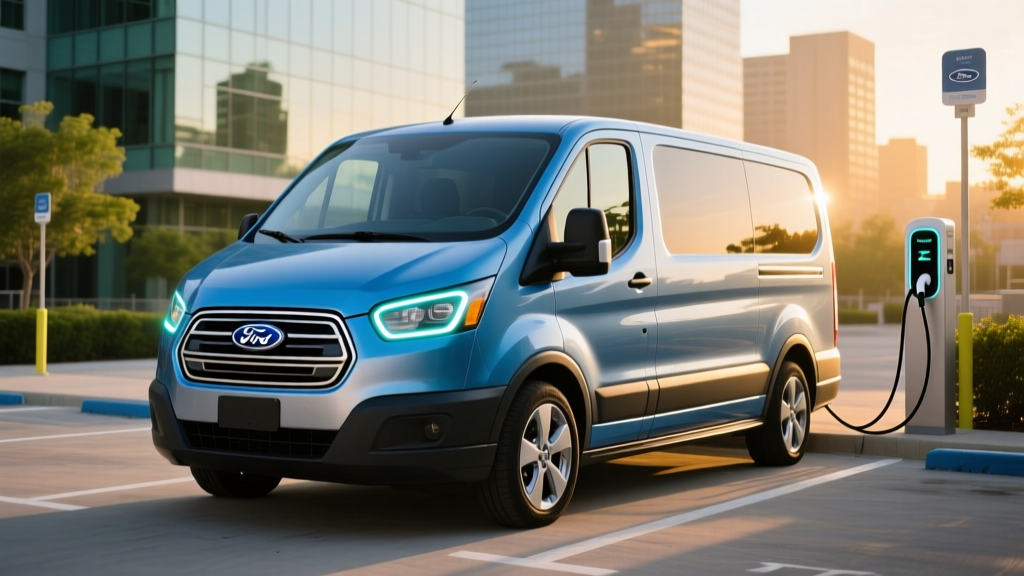
The Ford E-Transit is a purpose-built electric commercial van with an EPA-estimated range of 126 miles (low-roof cargo van), a 68 kWh usable LFP battery, and DC fast charging up to 115 kW (10–80% in roughly 45 minutes). Starting around $52,000 before incentives, it targets fleets with predictable daily routes under 100 miles. Compared to the gas-powered Transit, the E-Transit eliminates fuel and reduces maintenance costs but trades range and payload capacity. It works best for urban delivery, tradespeople with depot charging, and last-mile logistics — not long-haul or rural routes.
Ford E-Transit Specs: Range, Battery, and Charging at a Glance
Before evaluating whether the Ford Transit electric vehicle fits your operation, you need the hard numbers. Ford uses an LFP (lithium iron phosphate) battery pack in the E-Transit, which trades some energy density for longer cycle life, lower degradation, and reduced reliance on cobalt and nickel. For a commercial fleet vehicle expected to log heavy daily use over many years, this chemistry choice is deliberate.
| Spec | Value |
|---|---|
| Battery (usable) | 68 kWh, LFP chemistry |
| EPA Range (Low-Roof Cargo Van) | 126 miles |
| EPA Range (Medium/High-Roof) | 108–116 miles |
| Motor Output | 266 hp (198 kW), 317 lb-ft torque |
| DC Fast Charge (peak) | 115 kW |
| 10–80% DC Fast Charge | ~45 minutes |
| Level 2 Charge Rate | 10.5 kW (48A) |
| Level 2 Full Charge Time | ~8 hours (0–100%) |
| Payload Capacity (max) | ~3,300 lbs (varies by config) |
| Cargo Volume (max) | 487.3 cu ft (extended high-roof) |
| Base MSRP (Cargo Van, low roof) | ~$52,000 |
| Battery Warranty | 8 years / 100,000 miles |
| Pro Power Onboard | Available, up to 2.4 kW / 7.2 kW |
Real-World Range Reality
The EPA's 126-mile figure applies to the low-roof cargo van variant under standardized test cycles. In real-world fleet use, expect the following:
- Urban stop-and-go delivery routes: 110–125 miles (regenerative braking recovers energy in traffic)
- Highway-speed routes (65+ mph): 85–100 miles (aerodynamic drag dominates on a boxy van)
- Cold weather (below 32°F): 80–100 miles (cabin heating and battery thermal losses reduce usable capacity by 20–35%)
- Full payload + highway + cold: As low as 70–85 miles — plan routes conservatively
For fleets, the critical number isn't the EPA sticker — it's your worst-case daily mileage on the coldest, heaviest day of the year. If that number exceeds 80 miles with margin, the E-Transit may not fit without mid-day charging.
E-Transit vs. Gas Transit: Total Cost of Ownership Breakdown
The purchase price of the Ford Transit electric vehicle is significantly higher than its gas counterpart. A base gas Transit 250 cargo van starts around $47,000, while the E-Transit starts near $52,000 — and the gap can widen with the gas van's broader trim and powertrain options. But total cost of ownership (TCO) tells a different story, especially for high-mileage fleet use.
| Cost Category | Ford E-Transit | Gas Transit 250 (3.5L V6) |
|---|---|---|
| Base MSRP | $52,000 | $47,000 |
| Federal Commercial Clean Vehicle Credit (§45W) | Up to -$7,500 | $0 |
| Net Purchase Cost | $44,500 | $47,000 |
| Fuel / Energy (75,000 mi) | $4,500 (electricity at $0.14/kWh avg) | $15,750 (gas at $3.50/gal, 15 MPG avg) |
| Maintenance (5 years) | $2,000 (no oil, fewer brake jobs w/ regen) | $5,500 (oil changes, transmission, brakes, belts) |
| Insurance (est. avg) | $9,000 | $7,500 |
| Estimated 5-Year TCO | $60,000 | $75,750 |
| Cost Per Mile | $0.80 | $1.01 |
Key assumptions: electricity cost based on a blended depot/home charging rate of $0.14/kWh and an average efficiency of 2.0 kWh/mile; gas price at $3.50/gallon with 15 MPG combined (real-world loaded Transit fuel economy is often 13–16 MPG per fueleconomy.gov). Insurance premiums for EVs tend to run 10–20% higher due to repair costs and parts pricing — confirm with your fleet insurer.
The break-even point typically arrives between years 2 and 4, depending on daily mileage, local fuel and electricity rates, and whether you qualify for the §45W Commercial Clean Vehicle Credit. Note: this is the commercial equivalent of the §30D consumer credit, capped at $7,500 for vehicles under 14,000 lbs GVWR, and subject to battery sourcing requirements that evolve annually.
Charging the E-Transit: Depot, Home, and Public Options
Charging infrastructure is the single most important variable in E-Transit ownership. Unlike a passenger EV that charges opportunistically, a commercial van needs a charging plan.
Depot / Fleet Charging (Level 2)
Most E-Transit buyers will install Level 2 chargers at their business location. At 10.5 kW, a full 0–100% charge takes roughly 8 hours — ideal for overnight depot charging. Budget $1,500–$3,000 per dual-port commercial Level 2 station (hardware), plus $2,000–$8,000+ for electrician installation depending on your facility's electrical panel capacity. A 200-amp panel upgrade, if needed, can add $2,500–$5,000.
Home Charging (Level 2)
Owner-operators and tradespeople can charge at home using a 240V / 48A Level 2 setup. Expect to add roughly 25–30 miles of range per hour of charging. A full overnight session (8–10 hours) easily replenishes the 68 kWh pack.
DC Fast Charging (Public)
The E-Transit peaks at 115 kW on a DC fast charger, taking a 10–80% charge in approximately 45 minutes. This is slower than many passenger EVs (which now reach 200–350 kW), reflecting the van's moderate battery size and commercial use case. On networks like Electrify America or EVgo, a 45-minute top-up adds roughly 70–80 miles — enough for a second route if needed. However, the E-Transit uses the CCS1 connector; Ford has not yet migrated the E-Transit to NACS as of the current model year.
| Level | Power | Range Added | Time (0–100%) |
|---|---|---|---|
| Level 1 (120V) | ~1.4 kW | ~3 mi/hr | ~50+ hours (impractical) |
| Level 2 (240V, 48A) | 10.5 kW | ~25 mi/hr | ~8 hours |
| DC Fast (CCS1) | 115 kW peak | ~90 mi in 30 min | 10–80% in ~45 min |
Who Should Buy the Ford E-Transit — and Who Shouldn't
The E-Transit is not a universal replacement for the gas Transit. Its strengths and limitations map to specific operational profiles.
Decision Framework: Is the E-Transit Right for You?
- Choose the E-Transit if:
- Your longest daily route stays under 100 miles (with margin for cold weather and payload)
- You have depot or home Level 2 charging available every night
- You operate primarily in urban or suburban environments with stop-and-go driving
- You value Pro Power Onboard for running tools and equipment at job sites (up to 7.2 kW available)
- Your fleet qualifies for the §45W commercial credit or state-level incentives
- You want to reduce maintenance downtime (no oil changes, fewer brake replacements)
- Stick with the gas Transit if:
- Your routes regularly exceed 120 miles without a reliable mid-day charging stop
- You operate in extreme cold climates (below 0°F) where range loss can exceed 35%
- You need maximum payload capacity (the gas Transit offers higher payload ratings)
- You lack access to overnight Level 2 charging at a depot or home
- You tow frequently (the E-Transit's towing capacity is limited to 4,000 lbs vs. higher for gas models)
- Your routes include rural areas with sparse DC fast-charging infrastructure
Common Misconceptions About the E-Transit
Commercial EV adoption is still evolving, and misinformation persists. Let's address the most frequent claims with data.
| Myth | Fact |
|---|---|
| "126 miles of range isn't enough for any real business." | The average last-mile delivery route covers 60–90 miles per day (USPS and UPS route data). The E-Transit covers most urban delivery and trade routes with margin — on the right routes. |
| "The battery will need replacing in a few years." | LFP batteries have demonstrated 3,000+ full charge cycles before reaching 80% capacity. Ford warranties the battery for 8 years / 100,000 miles. At typical fleet use of 15,000 miles/year, the battery should outlast the vehicle's service life. |
| "Electric vans cost more to own, period." | Higher purchase price is offset by dramatically lower fuel and maintenance costs. TCO parity typically arrives within 2–4 years at fleet mileage levels (see cost table above). |
| "Charging takes too long for commercial use." | Overnight depot Level 2 charging is the primary method — 8 hours while the van is parked. DC fast charging is a backup for extended routes, not the daily norm. |
| "You need a special commercial charger at home." | Any 240V / 48A Level 2 home charger works. Tradespeople and owner-operators can charge in a standard residential garage with a professionally installed outlet or hardwired station. |
Tax Credits, Incentives, and the §45W Commercial Clean Vehicle Credit
For businesses purchasing the Ford Transit electric vehicle, the relevant federal incentive is the §45W Commercial Clean Vehicle Credit, not the consumer §30D credit. Key rules for the current tax year:
- Credit amount: Up to $7,500 for vehicles under 14,000 lbs GVWR (the E-Transit qualifies)
- Eligibility: The vehicle must be purchased for business use and deployed primarily in the United States
- Battery sourcing requirements: Critical mineral and battery component sourcing thresholds increase annually — consult IRS guidance for the current year's percentages
- No MSRP cap: Unlike the consumer §30D credit, §45W does not impose an MSRP cap on vans
- No buyer income cap: Business income limits do not apply as they do for individual filers
- Transferability: The credit may be transferred to the dealer as a point-of-sale discount under current rules
Additionally, many states and utilities offer commercial EV rebates, depot-charging infrastructure grants, or reduced commercial electricity rates. Check your state energy office and local utility for fleet electrification programs — these can stack with the federal credit and significantly improve the business case.
Disclaimer: Tax credit rules change frequently. Consult a qualified tax professional before making purchase decisions based on incentive eligibility.
E-Transit Ownership Practicalities: What First-Time Fleet EV Buyers Should Know
Preconditioning Matters
The E-Transit supports battery preconditioning — warming the pack before a DC fast-charge session. Preconditioning can improve charging speed by 15–25% in cold weather. Use FordPass to schedule preconditioning while the van is still plugged in at the depot, using grid power rather than battery energy.
Regenerative Braking Extends Brake Life
One of the most underappreciated benefits of the E-Transit in fleet use is regenerative braking. The electric motor slows the van and recovers energy, reducing friction brake wear by 40–60% in urban driving. Fleet operators report brake pad replacement intervals extending from 30,000 miles to 80,000+ miles — a meaningful maintenance savings across a fleet.
Pro Power Onboard: A Job-Site Generator Replacement
The available Pro Power Onboard system (up to 7.2 kW) turns the E-Transit into a mobile power source. Electricians, contractors, and event crews can run power tools, lighting, and equipment directly from the van's battery — eliminating the need for a portable gas generator. At 7.2 kW, you can run a miter saw, jobsite lights, and battery chargers simultaneously for hours.
Insurance Considerations
EV insurance premiums typically run 10–20% higher than equivalent gas vehicles due to specialized repair requirements, higher parts costs, and limited body-shop familiarity with high-voltage systems. Get fleet quotes from multiple carriers before purchase. Some insurers now offer EV-specific fleet policies with competitive rates.
Cold-Weather Operations
The E-Transit includes a battery thermal management system (liquid heating and cooling), which helps mitigate — but does not eliminate — cold-weather range loss. In sub-freezing conditions, plan for 20–35% range reduction. Depot preconditioning (warming the cabin and battery while plugged in) is essential in cold climates to preserve range for the route.
Frequently Asked Questions
What is the real-world range of the Ford E-Transit?
The EPA rates the low-roof E-Transit cargo van at 126 miles. In real-world urban delivery use with regenerative braking, expect 110–125 miles. Highway driving at 65+ mph drops this to 85–100 miles, and cold weather (below 32°F) can reduce range to 80–100 miles. Plan routes around the worst-case scenario, not the best-case.
How long does it take to charge the E-Transit at a depot?
On a Level 2 charger at 10.5 kW, a full 0–100% charge takes approximately 8 hours. This is designed for overnight depot charging. Most fleets plug in at the end of a shift and start the next morning with a full battery.
Does the E-Transit qualify for the $7,500 tax credit?
The E-Transit may qualify for up to $7,500 under the §45W Commercial Clean Vehicle Credit when purchased for business use. Eligibility depends on battery component and critical mineral sourcing requirements that tighten each year. Consult the IRS and a tax professional for current-year eligibility.
Can I charge the E-Transit at home?
Yes. Any 240V Level 2 home charger rated at 48A will charge the E-Transit at its maximum Level 2 rate of 10.5 kW. A licensed electrician should install a dedicated 60-amp circuit. Installation typically costs $800–$2,500 depending on your panel and wiring run.
What is the payload capacity compared to the gas Transit?
The E-Transit's maximum payload is approximately 3,300 lbs (varies by body configuration), which is roughly 500–1,000 lbs less than equivalent gas Transit models. The battery pack's weight accounts for this reduction. If your loads regularly approach maximum payload, verify the specific configuration's rating before ordering.
Does the E-Transit use NACS or CCS?
The current E-Transit uses the CCS1 connector for DC fast charging and the J1772 connector for Level 2 AC charging. Ford has announced a transition to NACS for its passenger vehicles, but the E-Transit has not yet migrated as of the current model year. CCS1 adapters for Tesla Superchargers are not currently available for commercial vehicles.
What is the battery warranty?
Ford covers the E-Transit's high-voltage battery for 8 years or 100,000 miles, whichever comes first. The warranty guarantees the battery will retain a minimum percentage of its original capacity (typically 70%) over that period. LFP chemistry generally shows slower degradation than NMC, which is favorable for long-term fleet use.