The Short Answer on the Ford Electric Transit Van
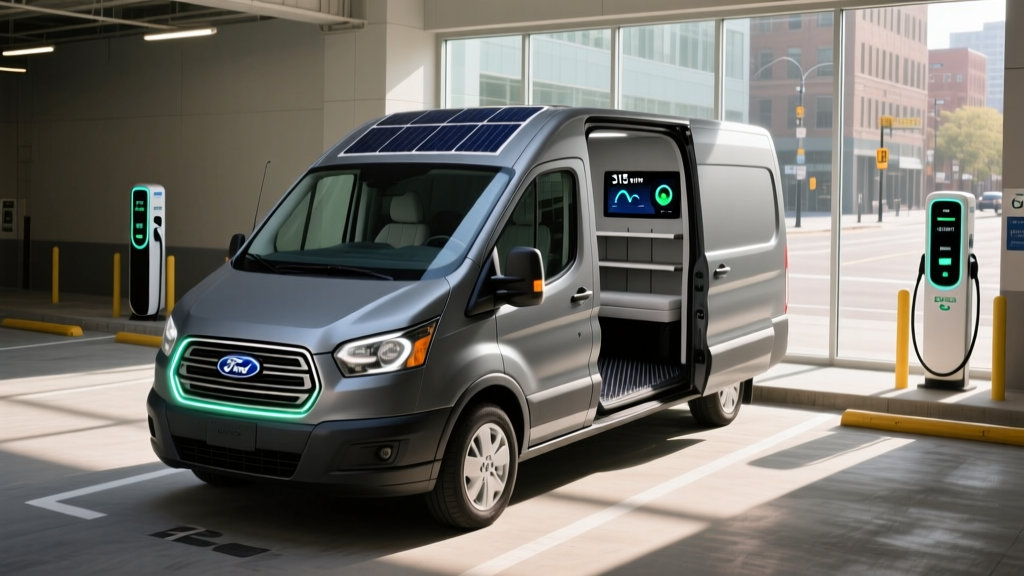
The Ford E-Transit is a purpose-built electric cargo van with an EPA-estimated 126 miles of range (low-roof cutaway), a 68 kWh usable lithium-ion battery, and DC fast charging up to 115 kW (10–80% in roughly 45 minutes). Starting around $51,000 MSRP before incentives, it targets commercial fleets and owner-operators with predictable daily routes under 100 miles. It won't replace a long-haul diesel work van, but for last-mile delivery, tradespeople, and urban shuttle duty, it can cut fuel and maintenance costs significantly — provided you can charge at your depot or home overnight.
What the E-Transit Actually Offers in 2026
Ford's E-Transit entered the US market for the 2022 model year and has remained largely consistent through 2026, with incremental software and thermal-management updates. It shares the Transit's body-in-white, meaning upfitting, shelving, and rack systems carry over directly from the gas model — a critical point for fleet managers who don't want to redesign their interiors.
The powertrain is a single rear-mounted electric motor producing 266 horsepower and 317 lb-ft of torque, paired with a 68 kWh usable battery pack (NMC chemistry). Ford offers the E-Transit in cargo van (low, medium, and high roof), cutaway, and chassis cab configurations. Range varies by body style, with the high-roof cargo van rated lowest due to aerodynamic drag.
| Spec | Value |
|---|---|
| EPA Range (Low-Roof Cargo Van) | 126 miles |
| EPA Range (High-Roof Cargo Van) | 108 miles |
| Usable Battery Capacity | 68 kWh (NMC) |
| Motor Output | 266 hp / 317 lb-ft |
| Peak DC Fast Charge Rate | 115 kW |
| 10–80% DC Fast Charge Time | ~45 minutes |
| Level 2 AC Charge Rate | 10.5 kW (onboard charger) |
| Level 2 Full Charge Time (0–100%) | ~8 hours |
| Max Payload (Cargo Van) | ~3,880 lbs |
| Cargo Volume (Low-Roof) | 246.7 cu ft |
| Starting MSRP (Cargo Van) | ~$51,000 |
| Battery Warranty | 8 years / 100,000 miles |
Real-World Range Reality Check
The EPA's 126-mile figure assumes a mix of city and highway driving at moderate temperatures with minimal cargo. In practice:
- Urban delivery routes (stop-and-go, under 50 mph): Expect 110–130 miles — regenerative braking helps recapture energy in traffic.
- Highway-heavy routes (65–75 mph): Expect 85–100 miles. The E-Transit's boxy aerodynamics punish efficiency at speed.
- Cold weather (below 30°F): Expect 80–100 miles, depending on cabin and cargo-area heating demands. The E-Transit lacks a heat pump, relying on resistive heating, which draws heavily from the pack.
- Fully loaded at max payload: Subtract roughly 5–10% from any estimate.
If your daily route exceeds 90 miles with any regularity, the E-Transit requires mid-day charging or is simply the wrong tool.
E-Transit vs. Gas Transit: Total Cost of Ownership
The headline question for any commercial buyer: does the electric premium pay for itself? The answer depends on your mileage, fuel costs, and how long you hold the vehicle. Here's a side-by-side look at a 5-year / 75,000-mile ownership scenario comparing the E-Transit cargo van to a similarly configured gas-powered Transit 250 with the 3.5L V6.
| Cost Category | Ford E-Transit | Ford Transit 250 (Gas V6) |
|---|---|---|
| Base MSRP (approx.) | $51,000 | $46,000 |
| Federal Commercial EV Credit (§45W) | −$7,500 | $0 |
| Effective Purchase Price | $43,500 | $46,000 |
| Fuel / Energy (75k mi) | $3,750 (at $0.14/kWh) | $11,250 (at $3.60/gal, 15 MPG) |
| Maintenance (5 yr) | $1,800 | $4,500 |
| Insurance (5 yr est.) | $9,500 | $8,000 |
| 5-Year Total Cost | $58,550 | $69,750 |
| Cost Per Mile | $0.78 | $0.93 |
Key takeaways: The E-Transit saves roughly $11,200 over five years in this scenario, driven primarily by fuel savings ($7,500) and reduced maintenance ($2,700 — no oil changes, fewer brake replacements thanks to regen, no transmission fluid). Insurance tends to run 10–20% higher on electric commercial vehicles due to repair cost data, which partially offsets the savings. If you drive more than 15,000 miles annually, the payback accelerates. If you drive fewer than 8,000 miles per year, the gas Transit may remain cheaper on a pure TCO basis.
For the commercial tax credit: the IRS §45W Commercial Clean Vehicle Credit provides up to $7,500 for vehicles under 14,000 lbs GVWR (the E-Transit qualifies). Unlike the consumer §30D credit, §45W has no MSRP cap or buyer income cap, but the vehicle must be purchased for business use and placed in service. Consult a tax professional for your specific situation.
Charging the E-Transit: Depot, Home, and Public Options
Charging logistics make or break commercial EV ownership. The E-Transit supports three charging methods, and understanding the difference between kW (power — how fast energy flows) and kWh (energy — how much the battery holds) is essential for planning.
| Level | Power (kW) | Miles Added per Hour | Use Case |
|---|---|---|---|
| Level 1 (120V outlet) | ~1.4 kW | ~3–4 mi/hr | Emergency top-off only |
| Level 2 (240V, 48A) | 10.5 kW (max onboard) | ~28–32 mi/hr | Overnight depot/home charging |
| DC Fast Charge (CCS) | Up to 115 kW | ~150+ mi/hr (peak) | Mid-day opportunity charging |
Level 2 is the workhorse. A full overnight charge on a 10.5 kW Level 2 station takes about 8 hours — plug in at 10 PM, fully charged by 6 AM. For fleet depots, Ford partners with charging providers to offer Pro Charging solutions, including networked Level 2 stations with load management. A single commercial-grade Level 2 pedestal installation typically costs $2,500–$6,000 per port, depending on electrical infrastructure. If your depot panel needs an upgrade (common for multi-van fleets), add $5,000–$15,000.
DC fast charging at 115 kW peak is adequate but not class-leading. Expect a 10–80% session to take roughly 45 minutes. The charge curve tapers significantly above 80%, so plan your stops around the 80% mark rather than topping off to full. For fleets with predictable routes, DC fast charging is a safety net rather than a daily necessity.
The E-Transit uses a CCS1 connector for DC fast charging and a J1772 inlet for Level 2 AC. Ford has not adopted the NACS (Tesla-style) connector on the E-Transit as of 2026, though adapters may become available. This means access to Electrify America, EVgo, and ChargePoint DC networks — but not Tesla Superchargers without a future adapter.
Real-World Ownership: What First-Time EV Van Buyers Must Know
If you're transitioning from a gas Transit to the E-Transit, the learning curve is manageable but real. Here are the ownership factors that catch new commercial EV buyers off guard:
Route Planning Is Non-Negotiable
With 108–126 miles of EPA range, you need to know your daily mileage with precision. Most urban delivery and service routes fall under 80 miles per day, which is the E-Transit's sweet spot. But if your route varies wildly — say, 60 miles on Tuesday and 140 miles on Thursday — you'll need a mid-day charging plan or a gas backup vehicle for longer days.
Pro Power Onboard Changes the Game for Trades
The E-Transit offers Ford's Pro Power Onboard system, which provides up to 2.4 kW of exportable 120V AC power directly from the van's battery. This means you can run power tools, job-site lights, or a small compressor without a separate generator. For electricians, plumbers, and HVAC techs, this eliminates the need for a portable generator and its associated fuel, noise, and emissions. It's a genuine competitive advantage over the gas Transit for job-site work.
Cold Weather Demands Respect
The E-Transit does not use a heat pump. Cabin heat and battery thermal management draw from the main pack via resistive elements, which can reduce range by 20–35% in sustained sub-freezing temperatures. If you operate in Minnesota, Chicago, or the Northeast, plan your routes assuming 80–95 miles of usable range in January. Ford's SYNC system includes a range estimator that factors in temperature, but it's wise to build in a 20% buffer for winter route planning.
Maintenance Is Genuinely Lower
Commercial vans see hard use, and maintenance downtime is lost revenue. The E-Transit eliminates oil changes, spark plugs, transmission fluid, and most brake pad replacements (regenerative braking handles the majority of deceleration). Ford's scheduled maintenance for the E-Transit is primarily cabin air filter replacement, tire rotation, and brake fluid checks. Fleet operators report 40–60% reductions in scheduled maintenance costs compared to gas equivalents, per Ford Pro fleet data.
Common Misconceptions About the E-Transit
| Myth | Fact |
|---|---|
| "126 miles of range is useless for a work van." | The average US commercial van drives 74 miles per day (US DOT data). The E-Transit covers 85%+ of daily van routes with range to spare. |
| "The battery will need replacing in a few years." | Ford warranties the battery for 8 years/100,000 miles against degradation below 70% capacity. NMC packs in commercial service typically retain 80–85% capacity at 100k miles. |
| "You can't tow or haul anything with an EV van." | The E-Transit cargo van carries up to ~3,880 lbs of payload — competitive with the gas Transit 250. Towing is limited (not its design purpose), but payload capacity is intact. |
| "Electric vans are more expensive, period." | After the $7,500 commercial credit, the E-Transit's effective price undercuts the gas Transit. Fuel and maintenance savings compound from day one. |
| "Charging takes too long for a work vehicle." | Overnight Level 2 charging (8 hours) handles daily needs for most users. DC fast charging adds ~100 miles in 30 minutes for mid-day emergencies. |
Decision Framework: Should You Buy the Ford E-Transit?
Choose the E-Transit If:
- Your daily route is under 100 miles, predictable, and mostly urban or suburban.
- You have depot or home charging available overnight (Level 2, 240V).
- You drive 12,000+ miles per year — the fuel savings justify the investment faster.
- You value Pro Power Onboard for job-site power export.
- You operate in a city with emissions restrictions or clean-air-zone mandates.
- You plan to hold the van 5+ years to capture full TCO savings.
Stick With the Gas Transit If:
- Your routes regularly exceed 130 miles per day or are highly unpredictable.
- You lack reliable overnight charging access (no depot, no home garage, street parking only).
- You frequently tow heavy trailers (the E-Transit is not optimized for towing).
- You operate primarily in extreme cold climates with long highway stretches.
- You drive fewer than 6,000 miles per year — the fuel savings won't offset the higher upfront cost within a reasonable timeframe.
- You need all-wheel drive — the E-Transit is rear-wheel drive only as of 2026.
2026 E-Transit Pricing, Trims, and Incentives
The E-Transit is offered in a single well-equipped trim level, with pricing varying primarily by body style:
- Cargo Van (Low Roof, 130" WB): ~$51,000 MSRP
- Cargo Van (Medium Roof, 148" WB): ~$53,000 MSRP
- Cargo Van (High Roof, 148" WB): ~$55,000 MSRP
- Cutaway / Chassis Cab: ~$49,000–$51,000 MSRP
All models include Ford's SYNC 4 infotainment with a 12-inch touchscreen, Ford Co-Pilot360 driver-assistance suite (automatic emergency braking, lane-keeping, blind-spot monitoring), and a 2-year/24,000-mile scheduled maintenance plan.
Commercial Clean Vehicle Credit (§45W): Businesses purchasing the E-Transit for commercial use may qualify for up to $7,500 in federal tax credits. Unlike the consumer §30D credit, the commercial credit has no MSRP cap and no buyer income limitation, but the vehicle must be used primarily for business. As always, consult the IRS §45W guidelines and your tax professional to confirm eligibility.
Some states and utilities offer additional commercial EV incentives — California's HVIP program, for example, can stack significant point-of-sale rebates on top of the federal credit. Check your state's clean-fleet programs and your local utility's commercial EV charging rebates before purchasing.
Frequently Asked Questions
What is the real-world range of the Ford E-Transit electric van?
The EPA rates the low-roof E-Transit cargo van at 126 miles and the high-roof at 108 miles. In real-world urban delivery use, expect 110–130 miles for the low-roof variant. Highway driving at 70 mph drops that to 85–100 miles, and sub-freezing temperatures can reduce range by 20–35%. Plan your routes around 90 miles of usable range for a conservative, year-round estimate.
How long does it take to charge the E-Transit?
On a Level 2 (240V) charger at the van's maximum 10.5 kW acceptance rate, a full charge takes about 8 hours — ideal for overnight depot or home charging. On a DC fast charger at up to 115 kW, a 10–80% session takes roughly 45 minutes. Level 1 (120V) charging adds only 3–4 miles per hour and is impractical for daily use.
Does the Ford E-Transit qualify for the $7,500 tax credit?
Yes, but through the commercial vehicle credit (§45W), not the consumer credit (§30D). Businesses purchasing the E-Transit for commercial use can claim up to $7,500. There is no MSRP cap or income cap for the commercial credit. The vehicle must be used primarily for business. Confirm eligibility with a tax professional and current IRS guidelines.
Can I use the E-Transit for towing?
The E-Transit is not designed or rated for significant towing. Its strength is payload capacity (up to ~3,880 lbs in the cargo van), not trailer pulling. If your work requires regular towing of 3,000+ lbs, the gas or diesel Transit remains the better choice.
What is the battery warranty on the E-Transit?
Ford covers the E-Transit's high-voltage battery for 8 years or 100,000 miles, whichever comes first. The warranty guarantees the battery will retain at least 70% of its original capacity during that period. Real-world data from early fleet deployments suggests NMC packs in commercial van service typically retain 80–85% capacity at the 100,000-mile mark.
How does the E-Transit handle in winter?
The E-Transit uses resistive cabin heating (no heat pump), which draws from the main battery and reduces range by 20–35% in sustained cold below 30°F. The battery thermal management system keeps the pack in its optimal operating window, but energy is consumed doing so. Preconditioning the van while still plugged in — warming the cabin and battery before departure — is essential in cold climates to preserve driving range.
Is the E-Transit good for a small business or sole proprietor?
If you're a sole proprietor, tradesperson, or small fleet operator with a predictable daily route under 100 miles and overnight charging access, the E-Transit is a strong financial decision. The combination of lower fuel costs, reduced maintenance, Pro Power Onboard for job-site electricity, and the $7,500 commercial tax credit makes the math work. The key is honest self-assessment of your daily mileage and charging situation before committing.