The Quick Answer: Is the Ford E-Transit Right for Your Fleet?
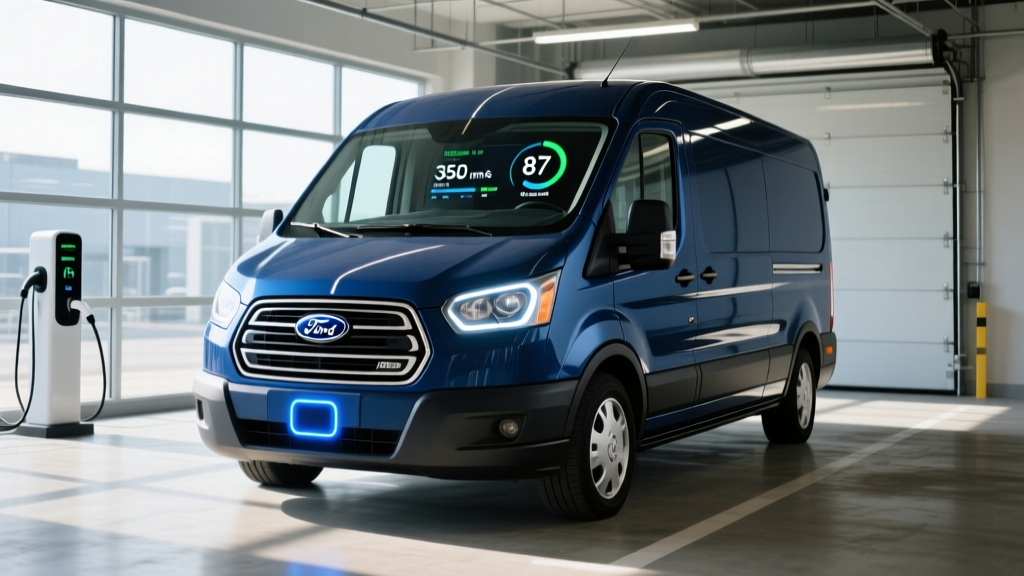
The 2026 Ford E-Transit is a purpose-built electric commercial van with an EPA-estimated range of 126 miles (low-roof, short wheelbase) powered by a 68 kWh usable lithium-ion NMC battery. It's designed for last-mile delivery and urban fleet routes averaging 60–90 miles per day. Peak DC fast charging reaches 115 kW, achieving a 15–80% charge in approximately 45 minutes. Starting MSRP is around $51,995 before incentives, with the federal §30D commercial tax credit of up to $7,500 available for qualifying purchases. If your daily routes stay under 100 miles with depot charging, the E-Transit cuts fuel and maintenance costs significantly versus the gas Transit. If you run long-haul intercity routes or lack overnight charging infrastructure, the gasoline Transit remains the pragmatic choice.
E-Transit Specs: Range, Battery, and Charging Numbers That Matter
The E-Transit's engineering prioritizes payload and urban efficiency over long-distance range. Here are the exact figures fleet buyers need:
| Specification | E-Transit (Low Roof, Short WB) | E-Transit (High Roof, Long WB) |
|---|---|---|
| EPA Range | 126 miles | 108 miles |
| Battery Capacity (usable) | 68 kWh, NMC chemistry | 68 kWh, NMC chemistry |
| Motor Output | 266 hp (198 kW), 317 lb-ft torque | 266 hp (198 kW), 317 lb-ft torque |
| Max DC Fast Charge Rate | 115 kW | 115 kW |
| 15–80% DC Charge Time | ~45 minutes | ~45 minutes |
| Level 2 Charge Rate | 11.3 kW (48A) | 11.3 kW (48A) |
| Level 2 Full Charge Time | ~8 hours | ~8 hours |
| Max Payload | 3,880 lbs | 3,336 lbs |
| Cargo Volume | 246.7 cu ft | 487.3 cu ft |
| Starting MSRP | $51,995 | ~$55,495 |
| Powertrain Warranty | 8 years / 100,000 miles | 8 years / 100,000 miles |
Real-World Range Reality: The EPA's 126-mile figure assumes mixed driving. In real-world fleet use, expect approximately 95–110 miles on a highway-heavy route at 65 mph, and as low as 75–90 miles in cold weather (below 30°F) due to cabin heating demands and battery chemistry limitations. Ford's thermal management system includes a heat pump on newer model years, which mitigates some cold-weather loss, but fleet managers in northern climates should budget 25–30% range reduction in winter. Routes with frequent stops and regenerative braking actually improve efficiency versus steady highway driving.
E-Transit vs. Gas Transit: Operating Cost Breakdown
The purchase price gap between the E-Transit and the gasoline Transit is substantial, but commercial fleet economics depend on total cost of ownership (TCO). Let's compare with concrete numbers based on EPA efficiency data and current energy prices.
| Cost Factor | E-Transit (Electric) | Gas Transit (3.5L V6) |
|---|---|---|
| Base MSRP | $51,995 | $46,995 |
| Federal Tax Credit (§30D) | Up to $7,500 (commercial credit) | $0 |
| Effective Purchase Price | ~$44,495 | $46,995 |
| Energy Cost per Mile | $0.13 (at $0.14/kWh avg commercial rate, 2.0 kWh/mi) | $0.28 (at $3.50/gal, 15 mpg combined) |
| Annual Energy Cost (15,000 mi) | $1,950 | $4,200 |
| Annual Maintenance | ~$400 (no oil changes, fewer brake replacements) | ~$1,200 (oil, filters, transmission service) |
| 5-Year Energy + Maintenance | ~$11,750 | ~$27,000 |
| 5-Year Estimated TCO | ~$56,245 | ~$73,995 |
The E-Transit saves approximately $15,000–$18,000 over five years in energy and maintenance alone, and the effective purchase price after the commercial clean vehicle credit can be lower than the gas equivalent. According to the IRS, the §45W commercial clean vehicle credit provides up to $7,500 for qualified commercial EVs under 14,000 lbs GVWR. This credit applies to businesses and tax-exempt organizations — consult a tax professional to confirm eligibility for your fleet structure.
Charging Infrastructure: What Fleet Operators Actually Need
The E-Transit's viability hinges entirely on charging access. Here's what fleet managers should plan for:
Depot Charging (Level 2)
Most E-Transit fleets charge overnight at the depot using Level 2 (240V) chargers. At 11.3 kW, a full charge takes about 8 hours — sufficient for next-morning deployment. A commercial-grade Level 2 station (such as a ChargePoint CT4000 or EV Box BusinessLine) costs between $2,500 and $6,000 per port for hardware, plus $3,000–$8,000 for electrical installation depending on panel capacity and conduit runs. For a 10-van fleet, budget $55,000–$140,000 for depot charging infrastructure. Many utilities offer commercial EV charging rebates that offset 30–50% of installation costs.
DC Fast Charging (Public or Depot)
At 115 kW peak, the E-Transit adds roughly 45 miles of range in 15 minutes on a DC fast charger. The charge curve tapers significantly above 80% state of charge (SoC) — charging from 80–100% can take nearly as long as 15–80%. For midday top-ups, target the 20–80% window for maximum efficiency. Public DC fast charging costs $0.35–$0.55/kWh, making it significantly more expensive than depot Level 2 charging. Fleets should treat public fast charging as a supplement, not a primary strategy.
Real-World Charging Scenario
A delivery van completing an 85-mile route returns to the depot with approximately 30% SoC (roughly 38 miles remaining on a 126-mile van). Plugging into an 11.3 kW Level 2 charger at 5 PM, the van reaches 100% by approximately 1 AM — well before the next morning's 7 AM departure. This cycle works reliably for routes under 100 miles.
Common Misconceptions About the E-Transit
| Myth | Fact |
|---|---|
| "126 miles of range isn't enough for any real business." | Ford's own fleet data shows 90%+ of commercial vans drive under 100 miles daily. For last-mile delivery, tradespeople, and urban service routes, 126 miles with overnight charging is sufficient. It's not designed for intercity hauling. |
| "Electric vans can't handle cold weather." | Range drops 20–30% in sub-freezing temperatures — real and significant. But preconditioning the battery while plugged in and using the heat pump system mitigates losses. Fleets in Minnesota and Michigan operate E-Transits year-round by adjusting route lengths seasonally. |
| "Battery replacement will cost more than the van is worth." | The E-Transit battery carries an 8-year/100,000-mile warranty with a capacity retention threshold of 70%. NMC battery degradation data from similar Ford platforms shows approximately 8–12% capacity loss over 100,000 miles. Full replacement (if out of warranty) is estimated at $12,000–$18,000, but most fleet vehicles are retired or sold before this becomes relevant. |
| "The E-Transit is slower and less capable than the gas version." | The electric motor delivers 317 lb-ft of torque instantly from zero RPM, making it quicker in stop-and-go urban traffic than the gas Transit's 3.5L V6 (275 hp, 262 lb-ft). Payload capacity is comparable within 200–500 lbs depending on configuration. |
| "You can't tow with an electric van." | The E-Transit is rated for up to 7,500 lbs towing capacity (with the proper equipment). However, towing a loaded trailer will reduce range by 30–50%, making it impractical for long-distance towing. Short tows within a depot or job site are fine. |
Who Should Buy the E-Transit (and Who Shouldn't)
Choose the Ford E-Transit if:
- Your fleet vehicles average under 100 miles per day with predictable routes
- You have (or can install) depot Level 2 charging where vehicles park overnight
- Your operation is urban or suburban with frequent stop-and-go driving (maximizes regenerative braking efficiency)
- You want to reduce per-mile operating costs and qualify for the §45W commercial credit
- Your business has sustainability reporting goals or operates in areas with clean-air-zone regulations
- You plan to hold vehicles 5+ years to capture full TCO savings
Stick with the gasoline Transit if:
- Your routes regularly exceed 120 miles per day or are highly variable
- You lack overnight charging access and can't install depot infrastructure
- You operate primarily in extreme cold (below 10°F) with long highway routes
- Your vans tow heavy trailers over significant distances daily
- You turn over fleet vehicles every 2–3 years (upfront cost savings don't offset)
- You operate in rural areas with no public DC fast-charging backup
First-Time Electric Fleet Buyer: What You Need to Know
Transitioning from a gas fleet to electric involves operational changes beyond the vehicle itself. Here are the practical realities no brochure mentions:
Electrical panel upgrades are common. Adding 5–10 Level 2 chargers at 11.3 kW each requires 57–113 kW of additional electrical capacity. Many commercial buildings need a panel upgrade or dedicated transformer, which can cost $10,000–$40,000 depending on utility requirements. Get an electrical assessment before ordering vehicles.
Route planning becomes essential. Gas fleet managers refuel opportunistically. Electric fleet managers must map routes to stay within range, accounting for payload weight (heavier loads reduce range by 5–10%), ambient temperature, and HVAC use. Ford's commercial telematics system (Ford Pro) includes range prediction tools that factor in these variables.
Driver training matters. Regenerative braking in the E-Transit is aggressive enough for near one-pedal driving. Drivers accustomed to gas vans need a 1–2 day adjustment period. Proper regen use extends range by 8–12% versus drivers who ride the friction brakes.
Insurance costs are slightly higher. Commercial EV insurance premiums run 10–15% higher than equivalent gas vehicles, reflecting higher repair costs for battery and powertrain components. Factor this into your TCO model — typically $200–$400 more per vehicle annually.
Residual values are still uncertain. The used commercial EV market is young. Early data suggests E-Transit resale values at 36 months are roughly 45–55% of MSRP, compared to 55–65% for gas Transits. This gap may narrow as the used EV market matures, but it's a real consideration for fleets that sell rather than run vehicles to end-of-life.
Frequently Asked Questions
Can the Ford E-Transit qualify for the $7,500 federal tax credit?
Yes, but through the §45W Commercial Clean Vehicle Credit, not the consumer §30D credit. Businesses and tax-exempt organizations purchasing the E-Transit for commercial use can claim up to $7,500 per vehicle. Eligibility depends on your business structure and tax liability. Consult a tax professional and review current IRS guidance on §45W before purchasing.
How long does the E-Transit battery last before needing replacement?
Ford warranties the battery for 8 years or 100,000 miles, guaranteeing at least 70% capacity retention. Real-world data from similar NMC battery packs in commercial service shows 8–12% degradation over 100,000 miles. Many fleet batteries remain functional well beyond the warranty period, albeit with reduced range. Budget for eventual replacement at 150,000–200,000 miles if you plan to keep the vehicle that long.
What happens if an E-Transit runs out of charge on a route?
The E-Transit provides progressive range warnings starting at approximately 20 miles remaining. If the battery depletes fully, the vehicle requires a flatbed tow to a charger — you cannot jump-start the traction battery. Ford Pro offers roadside assistance that includes EV-specific towing. This is why route planning with a 15–20% range buffer is critical for fleet operations.
Does the E-Transit support vehicle-to-load (V2L) or vehicle-to-grid (V2G)?
The current E-Transit does not offer V2L (powering tools or equipment from the van's battery) or V2G (selling energy back to the grid). Ford has announced Pro Power Onboard for future model years, which would enable V2L functionality similar to the F-150 Lightning. If mobile power is a priority, the gas Transit with an onboard generator remains the available option.
How does the E-Transit handle in extreme heat?
The battery thermal management system actively cools the pack during hot-weather operation and DC fast charging. Range loss in extreme heat (above 95°F) is typically 5–10%, less severe than cold-weather loss. The system may limit peak charge rate during very hot conditions to protect battery longevity — expect 90–100 kW peak instead of 115 kW when ambient temperatures exceed 100°F.