Quick Answer: Is the Ford E-Transit Right for Your Fleet?
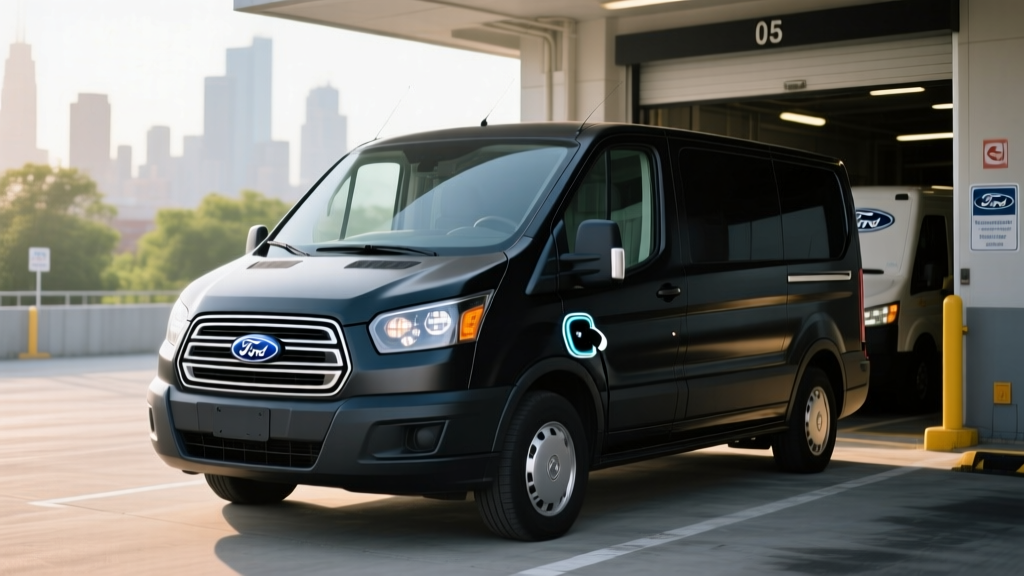
The Ford E-Transit (the Ford Transit van electric variant) delivers an EPA-estimated 126 miles of range from a 68 kWh usable LFP battery, targeting last-mile delivery and urban commercial routes. Starting around $45,000 MSRP before incentives, it costs more upfront than a gas Transit but can save $2,500–$4,500 annually in fuel and maintenance for fleets running predictable sub-100-mile daily loops with depot charging access. It is not suited for long-haul routes, cold-climate operations exceeding 90 miles without mid-day charging, or fleets without reliable Level 2 or DC fast charging infrastructure.
Ford E-Transit Specs: Range, Battery, and Charging Data
The E-Transit uses a lithium iron phosphate (LFP) battery pack — a chemistry choice that prioritizes cycle life and thermal stability over maximum energy density. For commercial fleets planning 8–12 years of daily cycling, LFP's slower degradation curve (typically retaining 85%+ capacity after 1,500 full cycles) matters more than squeezing out an extra 20 miles of range.
| Specification | 2025/2026 Ford E-Transit |
|---|---|
| EPA Range (Cutaway/Low Roof) | 126 miles |
| Battery Chemistry | LFP (Lithium Iron Phosphate) |
| Usable Battery Capacity | 68 kWh |
| Peak DC Fast Charge Rate | 115 kW |
| 10–80% DC Fast Charge Time | ~45 minutes |
| Level 2 AC Charge Rate | 10.5 kW (onboard charger) |
| Level 2 Full Charge Time (0–100%) | ~8 hours |
| Motor Output | 266 hp / 317 lb-ft torque |
| Top Speed (Governed) | 75 mph |
| Max Payload | ~3,880 lbs (Cargo Van Low Roof) |
| Battery Warranty | 8 years / 100,000 miles |
| Base MSRP (Cargo Van Low Roof) | ~$45,000 |
Real-World Range Expectations
EPA Sticker: 126 miles (low-roof cargo van configuration).
Real-World Urban Delivery Route: Expect 100–115 miles with frequent stops, regenerative braking recapturing energy in stop-and-go traffic, and moderate HVAC use.
Highway / 65+ mph Sustained: Range drops to roughly 85–95 miles due to aerodynamic drag on the boxy body. The E-Transit is not optimized for highway-heavy routes.
Cold Weather (Below 32°F): Plan for 25–40% range loss, yielding 75–95 usable miles. LFP chemistry is more resilient than NMC in cold, but cabin heating and battery thermal management still draw significant energy. Preconditioning while plugged in is essential.
E-Transit vs Gas Transit: Total Cost of Ownership
The purchase-price gap between an E-Transit and a gasoline Transit 250 is real — roughly $8,000–$12,000 before incentives. But commercial fleet economics hinge on per-mile operating cost, not sticker price. Here is how the numbers stack up over a 5-year / 75,000-mile ownership horizon for a typical urban delivery route.
| Cost Factor (5 Years / 75K Miles) | Ford E-Transit | Ford Transit 250 (Gas) |
|---|---|---|
| Base MSRP (Approx.) | $45,000 | $37,000 |
| Federal §30D Commercial Credit* | Up to $7,500 | $0 |
| Net Purchase After Credit | ~$37,500 | $37,000 |
| Fuel / Electricity (75K miles) | $3,400–$5,600** | $11,250–$14,000*** |
| Maintenance (5 Years) | $1,200–$1,800 | $3,500–$5,000 |
| Estimated 5-Year Total | $42,100–$44,900 | $51,750–$56,000 |
*The IRS §30D clean vehicle credit applies to qualifying commercial EVs. Eligibility depends on battery sourcing, MSRP caps, and buyer income limits for personal use; commercial fleet purchases may qualify under §45W instead. Consult a tax professional for your specific situation.
**Based on $0.10–$0.16/kWh commercial depot charging and 2.0–2.5 kWh/mile efficiency.
***Based on 14–16 MPG combined (EPA) and $3.00–$3.75/gallon regular unleaded.
The E-Transit's LFP battery also eliminates oil changes, transmission fluid service, spark plugs, and exhaust system repairs. Brake wear drops significantly thanks to regenerative braking handling the bulk of deceleration in stop-and-go delivery routes — expect brake pad life of 80,000–120,000 miles versus 30,000–50,000 on the gas Transit.
Charging Infrastructure: What Your Fleet Actually Needs
The E-Transit's viability hinges entirely on charging access. Here is the infrastructure reality for depot-based fleet operations:
| Charging Level | Power (kW) | Miles Added Per Hour | Best Use Case |
|---|---|---|---|
| Level 1 (120V Standard Outlet) | 1.4 kW | ~3–4 miles | Emergency/top-up only; not viable for daily fleet ops |
| Level 2 (240V, 48A circuit) | 10.5 kW (vehicle-limited) | ~25–30 miles | Overnight depot charging; full charge in ~8 hours |
| DC Fast Charging (CCS) | Up to 115 kW peak | ~150–180 miles (peak) | Mid-day opportunity charging; 10–80% in ~45 min |
Depot charging installation cost for a fleet of five E-Transits with Level 2 chargers typically runs $30,000–$75,000 total, including:
- Five Level 2 EVSE units (e.g., ChargePoint or Blink commercial): $5,000–$12,000
- Electrical panel upgrades and conduit runs: $10,000–$30,000 (highly site-dependent)
- Electrician labor, permits, utility interconnection: $15,000–$33,000
Many utilities offer commercial EV charging rebates or demand-management programs that can offset 30–50% of infrastructure costs. Check with your local utility's commercial EV program before finalizing depot plans.
Charge curve reality: The E-Transit peaks at 115 kW only between roughly 15–55% State of Charge. Above 70%, the rate tapers significantly to protect the LFP cells — expect 40–60 kW in the 70–90% range. For mid-day opportunity charging, plan for 20–25 minute sessions that add 40–55 miles, not a full recharge.
Who Should Buy the E-Transit (And Who Shouldn't)
Decision Framework: Is the E-Transit Right for Your Route?
Choose the Ford E-Transit if:
- Your daily routes are under 90 miles round-trip with predictable patterns
- You have depot or warehouse space where Level 2 chargers can be installed
- Vehicles return to base nightly for 8+ hours of charging
- Your operation is urban/suburban with frequent stops (regenerative braking maximizes efficiency)
- You want to reduce fleet maintenance costs and eliminate emissions in city centers
- You qualify for federal, state, or utility EV incentives that narrow the purchase-price gap
Stick with the gas Transit (or consider a PHEV alternative) if:
- Daily routes regularly exceed 100 miles without mid-day charging access
- You operate in extreme cold climates (sustained sub-20°F) where range loss pushes your route beyond the battery's usable capacity
- Your fleet relies on street parking without charging access — depot charging is non-negotiable
- You need maximum payload; the E-Transit's battery adds weight that reduces cargo capacity by roughly 200–300 lbs versus the gas model
- Routes include sustained highway driving above 65 mph for long stretches — efficiency drops sharply
Common Misconceptions About the E-Transit
| Myth | Fact |
|---|---|
| "126 miles of range is useless for commercial work." | The average last-mile delivery van drives 70–90 miles per day (fueleconomy.gov and fleet telematics data). The E-Transit covers this with margin — but only if routes are mapped to the battery's real-world limits. |
| "Electric vans can't handle payloads." | The E-Transit offers up to ~3,880 lbs payload in low-roof cargo configuration — competitive with many gas Transit 250 trims. The battery sits under the floor, preserving cargo volume. |
| "The battery will need expensive replacement in a few years." | LFP chemistry is among the most durable lithium-ion options, with 2,000+ full-cycle capability before hitting 80% capacity. At 75 miles/day, 5 days/week, that is 15+ years of service. Ford's 8-year/100,000-mile battery warranty provides additional security. |
| "Charging takes too long for fleet operations." | Overnight Level 2 charging fully replenishes the battery in ~8 hours — perfectly aligned with fleet depot schedules. DC fast charging adds ~50 miles in 20 minutes for mid-day top-ups. |
| "EVs are more expensive to insure." | Commercial EV insurance varies by carrier and region. Some insurers now offer EV fleet discounts due to lower collision repair frequency (fewer moving parts in the drivetrain). Get fleet quotes before assuming a premium increase. |
ProConnect, Software, and Fleet Management
The E-Transit ships with Ford Pro's connected services suite, which includes real-time vehicle health monitoring, geofencing, charge scheduling, and route optimization tools. Fleet managers can set charge targets (e.g., 90% for daily use to preserve LFP longevity), precondition cabins before drivers arrive, and monitor energy consumption per route.
The 12-inch touchscreen runs SYNC 4 with EV-specific navigation that factors in battery state, terrain, and temperature when estimating arrival range. For fleet managers running mixed gas-and-electric fleets, Ford Pro's telematics platform integrates E-Transit data alongside conventional vehicles in a single dashboard.
Frequently Asked Questions
Can the Ford E-Transit tow a trailer?
The E-Transit is rated for up to 7,500 lbs maximum towing capacity (when properly equipped, cutaway configuration). However, towing significantly reduces range — expect a 30–50% reduction depending on trailer weight and aerodynamics. If your operation requires regular towing, the gas Transit remains more practical for range flexibility.
Does the E-Transit qualify for the $7,500 federal tax credit?
Potentially, but eligibility is complex. The IRS §30D credit has MSRP caps ($80,000 for vans), buyer income limits (for personal purchases), and battery component/critical mineral sourcing requirements that change annually. Commercial fleet purchases may qualify under the separate §45W commercial clean vehicle credit instead. Always verify current-year eligibility with a tax professional before committing to a purchase.
How does cold weather affect the E-Transit's range?
In sustained temperatures below 32°F, expect 25–40% range reduction. The LFP battery's internal resistance increases in cold, and cabin heating draws 3–5 kW continuously. For a 126-mile EPA rating, plan for 75–95 real-world miles in winter. Preconditioning the battery and cabin while the van is still plugged in at the depot recovers 10–15 miles of effective range and is strongly recommended.
What happens if the battery fails out of warranty?
LFP batteries rarely fail catastrophically — they gradually lose capacity over thousands of cycles. If replacement is needed, current commercial EV battery replacement costs run $12,000–$18,000 for a pack of this size. However, given LFP's 2,000+ cycle life at 80% retention, most E-Transits will outlive their fleet service life before needing a battery swap. Module-level repair (replacing individual degraded cells rather than the full pack) is also becoming available through specialized EV service centers.
Can I charge the E-Transit at public DC fast chargers?
Yes — the E-Transit uses the CCS1 connector standard and is compatible with Electrify America, EVgo, and other CCS-equipped networks. At a 150+ kW station, the E-Transit will peak at its 115 kW maximum. However, for fleet economics, depot Level 2 charging at commercial electricity rates ($0.10–$0.16/kWh) is dramatically cheaper than public DC fast charging ($0.30–$0.50/kWh). Reserve public fast charging for route emergencies or mid-day top-ups when depot charging isn't enough.
Is the E-Transit available in all body configurations?
The E-Transit is offered in Cargo Van (low, medium, and high roof), Cutaway, and Chassis Cab configurations. The 126-mile EPA rating applies to the low-roof cargo van; higher-roof and cutaway variants may see slightly reduced range due to increased weight and aerodynamic drag. Check Ford's commercial vehicle specifications for configuration-specific EPA data.