Quick Answer: Is the Ford E-Transit Right for Your Fleet?
The Ford E-Transit is a purpose-built electric cargo van with an EPA-estimated range of 126 miles (low-roof, 130-inch wheelbase), a 68 kWh usable LFP battery, and DC fast charging up to 115 kW (10–80% in roughly 45 minutes). Starting at approximately $51,995 before incentives, it targets last-mile delivery, tradespeople, and commercial fleets with predictable daily routes under 100 miles. It is not a long-haul vehicle — it is a route-optimized work tool where fuel and maintenance savings offset the higher upfront price within 2–4 years depending on mileage and duty cycle.
What Is the Ford E-Transit? The Electric Van Explained
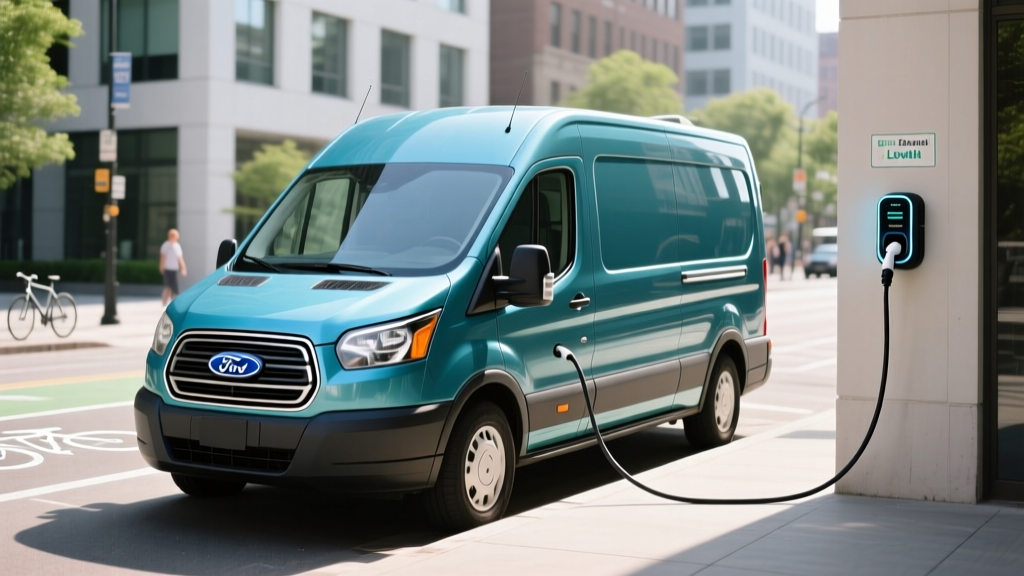
The Ford E-Transit is the battery-electric variant of Ford's full-size Transit commercial van, now in its third model year for the U.S. market. It shares the Transit's body structure, cargo dimensions, and upfit compatibility but replaces the 3.5L V6 with a rear-mounted electric motor producing 266 horsepower and 317 lb-ft of torque. Ford designed it specifically for vocational use — think plumbing contractors, bakery delivery routes, Amazon DSP fleets, and municipal vehicle pools — not for consumer road trips.
The van is available in the same configurations as the gas Transit: low, medium, and high roof heights; 130-inch and 148-inch wheelbases; and cargo van, cutaway, and chassis cab body styles. Cargo volume tops out at 487.3 cubic feet in the high-roof, extended-length version — identical to the internal-combustion Transit because the battery pack is mounted under the load floor.
E-Transit Specs: Range, Battery, and Charging
The single most important spec for any EV buyer is usable battery capacity paired with real-world range. Here is the E-Transit's full powertrain breakdown:
| Specification | Value |
|---|---|
| Battery Chemistry | LFP (Lithium Iron Phosphate) |
| Usable Battery Capacity | 68 kWh |
| EPA Range (Low Roof, 130" WB) | 126 miles |
| EPA Range (High Roof, 148" WB) | 108 miles |
| Motor Output | 266 hp / 317 lb-ft torque |
| Drive Type | Rear-wheel drive |
| Max DC Fast Charge Rate | 115 kW (peak) |
| 10–80% DC Fast Charge Time | ~45 minutes |
| Level 2 AC Charge Rate | 10.5 kW (onboard charger) |
| Level 2 Full Charge Time | ~8 hours |
| Charge Port | CCS1 (NACS adapter available) |
| Energy Efficiency (Combined) | ~2.0 kWh/mile |
| Max Payload | 3,880 lbs (low-roof cargo van) |
| Max Towing | Not rated for towing |
Real-World Range: What the EPA Sticker Doesn't Tell You
The 126-mile EPA figure applies to the lightest configuration. In practice, fleet operators report 90–110 miles of usable range when the van is loaded to half-payload and driven on mixed suburban routes with frequent stops. Cold weather (below 32°F) can reduce range by 20–35% because LFP chemistry is more sensitive to low temperatures than NMC, and cabin heating draws directly from the traction battery. The E-Transit does offer an optional heat pump on newer model years to mitigate this, but resistance heating remains standard on base trims. Plan routes with a 30-mile buffer minimum in winter conditions.
E-Transit vs. Gas Transit: Total Cost of Ownership
The E-Transit's $51,995 starting MSRP is roughly $8,000–$10,000 more than a comparable gas-powered Transit 250 cargo van. The purchase-price gap narrows significantly when you factor in fuel savings, reduced maintenance, and available incentives. Here is a five-year TCO comparison based on 20,000 miles per year, the average for a last-mile delivery van:
| Cost Category | Ford E-Transit (EV) | Ford Transit 250 (Gas V6) |
|---|---|---|
| Base MSRP | $51,995 | $43,500 |
| §30D Commercial Clean Vehicle Credit (§45W) | –$7,500* | $0 |
| Net Purchase Price | $44,495 | $43,500 |
| Fuel/Energy (100,000 total miles) | $6,000 (at $0.15/kWh avg) | $17,500 (at $3.50/gal, 14 MPG) |
| Maintenance (5 years) | $2,500 | $6,500 |
| Insurance (5-year avg) | $14,000 | $12,000 |
| Estimated Depreciation | $22,000 | $18,000 |
| 5-Year Total | $89,495 | $97,500 |
*The §45W Commercial Clean Vehicle Credit applies to vehicles used in a trade or business. For personal-use purchases, §30D rules apply with income caps ($150K single / $300K joint) and MSRP limits ($80K for vans). Consult a tax professional and reference IRS.gov clean vehicle credits for current eligibility. Battery sourcing requirements may affect credit availability.
The $11,500 fuel and maintenance savings over five years is where the E-Transit makes its case. Electric motors have no oil changes, no spark plugs, no transmission fluid, and regenerative braking dramatically extends brake pad life — fleet operators report brake pad replacements at 100,000+ miles instead of 30,000–40,000. Insurance runs 10–15% higher on the E-Transit due to higher repair costs for EV-specific components, but this gap has been narrowing as collision shops gain EV training.
Charging the E-Transit: Home, Depot, and Public Options
Charging logistics determine whether the E-Transit is practical for your operation. Unlike consumer EV owners who charge at home overnight, fleet operators need depot charging infrastructure.
Level 2 Depot Charging (The Primary Method)
The E-Transit's 10.5 kW onboard charger means a full charge from empty takes about 8 hours on a 48-amp Level 2 station — perfectly suited for overnight depot charging. Ford offers the Ford Pro Q4 All-In-One Home Charger (a Connected Charge Station) rated at 48 amps / 11.5 kW for approximately $799 for the unit. Professional installation for a commercial depot with multiple units typically runs $2,500–$6,000 per stall depending on electrical panel capacity, trenching, and local permitting. A 200-amp panel upgrade may be required if your facility lacks spare capacity, adding $1,500–$3,500.
DC Fast Charging (Mid-Day Top-Ups)
The 115 kW peak DC rate means a 10–80% session takes roughly 45 minutes — adequate for a lunch-break top-up but not fast enough to minimize vehicle downtime for multi-shift operations. The charge curve tapers significantly above 80%, so charging from 80–100% can add another 30+ minutes. For fleets needing rapid turnaround, this is a limitation worth planning around. The E-Transit uses a CCS1 connector natively, with a NACS adapter available for Tesla Supercharger access, though Supercharger stalls designed for passenger cars may be physically tight for a full-size van.
Pro Power Onboard: The E-Transit's Hidden Advantage
Available Pro Power Onboard provides up to 2.4 kW of 120V AC power from the van's traction battery, turning the E-Transit into a mobile generator. Tradespeople can run power tools, lighting, or job-site equipment without a separate gasoline generator. This feature alone can justify the EV premium for contractors who currently spend $20–$40/week on fuel for portable generators.
Common Misconceptions About the Ford Electric Van
| Myth | Fact |
|---|---|
| "126 miles of range is unusable for real work" | The U.S. Census Bureau's Vehicle Inventory and Use Survey shows 78% of commercial vans travel under 100 miles daily. The E-Transit covers most routes with margin. |
| "EV batteries won't last in a work van" | The LFP battery chemistry is rated for 2,000+ full charge cycles before reaching 80% capacity. Ford's warranty covers 8 years / 100,000 miles with a minimum 70% capacity retention threshold. LFP degrades more slowly than NMC at high states of charge, making it ideal for daily full-cycle fleet use. |
| "You can't charge a van in cold weather" | You can — but range drops 20–35% and charging speeds slow until the battery warms. The E-Transit's battery thermal management system preconditioning helps, but fleets in northern climates should spec the heat pump option and plan for 80–90 mile winter range. |
| "The tax credit covers the full $7,500 for everyone" | Commercial fleets use §45W (no income cap, but different rules). Personal-use buyers must meet §30D income limits and battery-sourcing requirements. The credit amount varies — some buyers qualify for the full $7,500, others for less, and some for none. Always verify at IRS.gov. |
| "Electric vans can't handle heavy payloads" | The E-Transit's max payload is 3,880 lbs (low-roof), which is lower than the gas Transit's ~4,300 lbs but still competitive within the segment. The battery's weight reduces payload by roughly 400 lbs compared to the ICE version. |
Real-World Ownership: What Fleet Operators Actually Report
Based on fleet operator feedback and Ford Pro data, here are the practical realities of E-Transit ownership that spec sheets don't capture:
- Depot charging is mandatory. Public DC fast charging a full-size van is inconvenient — stalls are tight, charging is slow compared to passenger EVs, and the cost per kWh at public stations ($0.30–$0.48) erases most of the fuel savings. This vehicle only makes financial sense with overnight Level 2 charging at $0.08–$0.18/kWh (commercial or residential rates).
- Regenerative braking changes driving habits. The E-Transit offers multiple regen levels. In the highest setting, drivers report near one-pedal driving in stop-and-go delivery routes, which reduces brake wear and driver fatigue. Training new drivers on regen behavior takes about a week.
- Ford Pro telematics integration is strong. The E-Transit pairs with Ford Pro's fleet management platform, providing real-time state-of-charge monitoring, route optimization based on remaining range, and predictive maintenance alerts. For fleets of 5+ vehicles, this software alone can justify the ecosystem.
- Cargo space is unchanged from gas Transit. Because the battery is under the floor, you lose zero cargo volume. Upfitting with shelving, ladder racks, and bulkheads works identically to the gas model. This is a significant advantage over some EV conversions that compromise interior space.
- Highway efficiency suffers. The boxy aerodynamic profile means efficiency drops sharply above 55 mph. Fleets running highway-heavy routes at 70+ mph will see range closer to 80–95 miles. The E-Transit is optimized for 25–45 mph urban and suburban stop-and-go.
Decision Framework: Should You Buy the Ford E-Transit?
Choose the E-Transit If:
- Your daily routes are under 100 miles with predictable stops
- You have (or can install) overnight Level 2 charging at a depot or home garage
- You operate primarily in urban or suburban areas with average speeds under 50 mph
- You want to eliminate fuel cost volatility and reduce maintenance line items
- You value Pro Power Onboard for job-site electricity
- Your fleet qualifies for the §45W commercial credit or state/local EV incentives
- You plan to keep the vehicle 4+ years to capture the full TCO advantage
Stick With the Gas Transit If:
- Your routes regularly exceed 120 miles or include long highway segments
- You lack access to reliable overnight charging (no depot, no home garage, street parking only)
- You operate in extreme cold climates (sustained sub-zero temperatures) without heated garage storage
- You need maximum payload capacity (the gas Transit carries ~400 lbs more)
- You require towing capability (the E-Transit is not rated for towing)
- Your annual mileage is under 10,000 miles — the fuel savings won't offset the purchase premium
Warranty, Service, and Long-Term Battery Outlook
Ford backs the E-Transit's battery and electric drivetrain with an 8-year / 100,000-mile warranty guaranteeing at least 70% capacity retention. The bumper-to-bumper warranty is 3 years / 36,000 miles. Ford Pro's commercial service network covers the E-Transit at participating dealers, and mobile service vans can handle many routine maintenance items on-site at your depot.
The LFP battery chemistry is a strategic choice for commercial use: LFP cells tolerate daily charging to 100% without the accelerated degradation that plagues NMC batteries charged to full. This means fleet operators can charge to 100% every night without worrying about long-term health — a significant practical advantage over consumer EVs where the recommendation is to cap at 80%. Real-world LFP degradation data from high-cycle fleet applications suggests 10–15% capacity loss over 8 years of daily cycling, which keeps most units within the warranty threshold.
Frequently Asked Questions
What is the real-world range of the Ford E-Transit?
The EPA rates the low-roof E-Transit at 126 miles, but real-world loaded fleet use typically yields 90–110 miles in moderate weather and 70–90 miles in cold conditions. Highway-heavy routes at 65+ mph will see the lower end of that range. Plan routes around 80–90 miles to maintain a safe buffer.
How long does it take to charge the E-Transit?
On a Level 2 charger at 10.5 kW, a full charge takes about 8 hours — ideal for overnight depot charging. On a DC fast charger at up to 115 kW, a 10–80% session takes approximately 45 minutes. The charge rate tapers above 80%, so a full DC charge to 100% takes significantly longer.
Does the Ford E-Transit qualify for the federal tax credit?
Commercial fleets purchasing the E-Transit for business use may qualify for the §45W Commercial Clean Vehicle Credit of up to $7,500 (for vehicles under 14,000 lbs GVWR). Personal-use buyers must meet §30D requirements including income caps, MSRP limits ($80K for vans), and battery component/critical mineral sourcing rules. Eligibility changes — verify current rules at IRS.gov.
Can the E-Transit tow a trailer?
No. The E-Transit is not rated for towing. If your operation requires towing, you will need the gas-powered Transit or wait for Ford to release a towing-rated electric variant.
Is the E-Transit good for cold-weather climates?
It works in cold weather but with significant range penalties — expect 20–35% range loss below freezing. The optional heat pump helps, and preconditioning the battery while still plugged in at the depot reduces the impact. Fleets in Minnesota, Maine, or similar climates should spec the heat pump, garage the vehicles if possible, and plan winter routes around 75–85 miles.
How does the E-Transit compare to the Mercedes eSprinter or BrightDrop Zevo?
The E-Transit undercuts the eSprinter on price by roughly $5,000–$8,000 and offers comparable range (the eSprinter is rated around 150 miles with its larger battery option but at a higher cost). The BrightDrop Zevo 600 targets larger parcel delivery fleets with 150+ mile range but has more limited dealer service infrastructure. The E-Transit's advantage is Ford Pro's dealer network, upfit compatibility with existing Transit accessories, and the lowest entry price in the full-size electric van segment.
What happens if the battery fails out of warranty?
Full battery replacement for the E-Transit is estimated at $15,000–$20,000 based on current LFP pack pricing. However, LFP batteries rarely fail catastrophically — they gradually lose capacity. A 10-year-old E-Transit battery might hold 75–80% of original capacity, which still supports 80–90 miles of range for shorter routes. Module-level repair (replacing individual cell groups rather than the full pack) is expected to reduce out-of-warranty costs as the service ecosystem matures.