The Short Answer on Ford's Electric Tempo Van
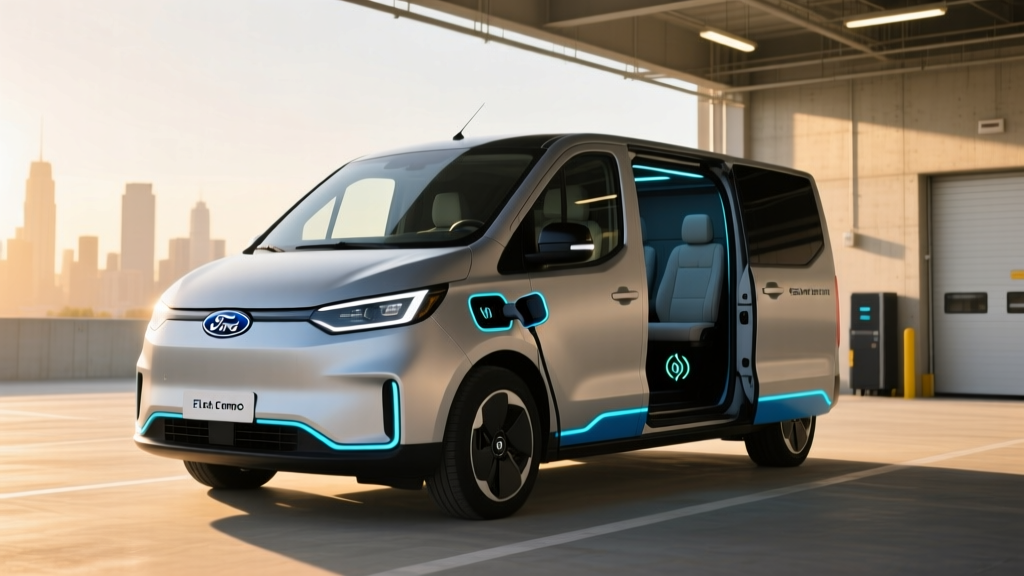
Ford's E-Transit — often searched as the "electric tempo" due to its spiritual lineage from the classic Ford Tempo and its European Transit heritage — is a full-size electric commercial van targeting fleet operators and small businesses. The 2026 E-Transit offers 126 miles of EPA-estimated range, a 68 kWh usable battery (NMC chemistry), 266 horsepower, and peak DC fast charging at 115 kW (10–80% in approximately 45 minutes). Starting at roughly $47,000 MSRP before incentives, it's designed for predictable urban and suburban routes under 100 miles per day — not long-haul logistics.
What Is the Ford E-Transit Electric Van?
The Ford E-Transit is the battery-electric version of Ford's ubiquitous Transit commercial van. Available in multiple roof heights, wheelbases, and body styles (cargo van, cutaway, chassis cab), it serves last-mile delivery fleets, tradespeople, and municipal fleets. The "electric tempo" search trend reflects buyer interest in an electric commercial vehicle that echoes the efficiency-first philosophy of Ford's earlier commuter cars, now applied to a work vehicle.
For 2026, Ford continues to refine the E-Transit's thermal management and software, but the core powertrain remains carried over from the refreshed platform. It competes directly with the Mercedes-Benz eSprinter and the Rivian EDV (built primarily for Amazon), while offering broader retail availability than either rival.
Specs, Range, and Real-World Expectations
| Specification | 2026 Ford E-Transit (Low Roof Cargo Van) |
|---|---|
| EPA Range | 126 miles |
| Real-World Range (loaded, mixed driving) | ~95–110 miles |
| Battery (usable) | 68 kWh, NMC lithium-ion |
| Motor Output | 266 hp / 317 lb-ft torque |
| 0–60 mph | ~8.0 seconds (unloaded) |
| Max Payload | Up to 3,880 lbs (varies by config) |
| Max DC Fast Charge Rate | 115 kW (peak) |
| 10–80% DC Fast Charge Time | ~45 minutes |
| Level 2 AC Charge Rate | 10.5 kW (~11 hours 0–100%) |
| MPGe (combined) | 2.0 kWh/mile (~105 MPGe equivalent) |
| Base MSRP (Cargo Van, Low Roof) | ~$47,000 |
| Battery Warranty | 8 years / 100,000 miles |
Real-World Range Reality Check
The 126-mile EPA figure assumes moderate temperatures, partial load, and mixed driving. In practice, fleet operators should plan for:
- Fully loaded (near max payload): expect 95–105 miles before needing a charge
- Cold weather (below 30°F): range drops 20–30%, yielding as little as 85–100 miles
- Highway-heavy routes (65+ mph sustained): the boxy aerodynamic profile cuts efficiency sharply — budget for 90–100 miles
The E-Transit is a route vehicle, not a road-tripper. If your daily mileage consistently exceeds 90 miles with margin for detours and climate, DC fast charging mid-route or a larger-battery competitor becomes necessary.
Charging Infrastructure: What Fleet Operators Need
Commercial EV ownership lives or dies on depot charging. The E-Transit's 10.5 kW Level 2 onboard charger means a full recharge from empty takes roughly 11 hours on a single 48-amp Level 2 station — adequate for overnight depot turnaround but slow for multi-shift operations.
| Charging Level | Power | Miles Added Per Hour | Use Case |
|---|---|---|---|
| Level 1 (120V) | ~1.4 kW | ~2–3 mi/hr | Emergency / trickle only |
| Level 2 (240V, 48A) | 10.5 kW (vehicle-limited) | ~18–22 mi/hr | Overnight depot charging |
| DC Fast Charge | Up to 115 kW (peak) | ~100+ mi/hr (to 80%) | Mid-day top-up, opportunity charging |
Depot charging cost estimate: At the national commercial electricity average of ~$0.13/kWh (EIA data), fully recharging the 68 kWh battery costs approximately $8.84. For a fleet van driving 80 miles/day at 2.0 kWh/mile, daily energy cost is roughly $20.80 — compared to approximately $38–45/day in gasoline for a comparable gas Transit at 14 MPG combined and $3.50/gallon.
Home Charging for Owner-Operators
Small business owners parking the E-Transit at home will need a dedicated 240V / 60-amp circuit to support a 48-amp Level 2 charger. Installation costs typically range from $800 to $2,500 depending on panel proximity and whether a panel upgrade (200A service) is needed. A licensed electrician should always perform the final assessment — older homes with 100-amp panels will likely require an upgrade costing $1,500–$3,000 additional.
EV vs Gas Transit: Total Cost of Ownership
The E-Transit carries a significant upfront premium over a gas-powered Ford Transit (which starts around $39,000 for a comparable cargo van). But operational savings can close that gap within 3–5 years for high-utilization fleets.
| Cost Factor (5-Year / 100K Miles) | E-Transit (Electric) | Gas Transit (2.0L EcoBoost) |
|---|---|---|
| Purchase Price (base) | ~$47,000 | ~$39,000 |
| Federal Tax Credit (§30D commercial) | Up to $7,500* | $0 |
| Fuel / Energy (100K miles) | ~$13,000 (at $0.13/kWh) | ~$25,000 (at $3.50/gal, 14 MPG) |
| Maintenance (estimated) | ~$2,500 | ~$5,500 |
| Insurance (estimated 5-yr) | ~$9,000 | ~$7,500 |
| Total 5-Year Cost | ~$64,000 | ~$77,000 |
*The IRS §30D clean vehicle credit has specific requirements including MSRP caps, buyer income limits, and battery component/critical mineral sourcing rules. Commercial fleets may alternatively qualify under the §45W commercial clean vehicle credit. Consult a tax professional for eligibility.
The ~$13,000 fuel savings over five years is the E-Transit's strongest economic argument. Maintenance savings add another ~$3,000 — no oil changes, fewer brake replacements (thanks to regenerative braking), and no transmission fluid. Insurance tends to run 15–20% higher for EVs due to repair cost structures, partially offsetting gains.
Common Misconceptions About Electric Commercial Vans
| Myth | Fact |
|---|---|
| "The battery won't last in a work van" | Ford warranties the battery for 8 years / 100,000 miles against degradation below 70% capacity. Real-world fleet data from early adopters shows ~5–8% degradation at 60K miles — well within warranty thresholds. |
| "126 miles of range is useless for deliveries" | The average US last-mile delivery route covers 60–80 miles/day (BTS freight data). The E-Transit covers the majority of urban routes with margin — but it's not suited for rural or long-distance routes without mid-day charging. |
| "You can't charge a van at a regular station" | The E-Transit uses the CCS1 connector standard, compatible with Electrify America, EVgo, and most public DC fast networks. Ford's Pro charging solutions also include depot hardware for fleet operators. |
| "Electric vans can't handle payloads" | The E-Transit offers up to 3,880 lbs of payload capacity — competitive with some gas Transit configurations. The battery pack is mounted under the floor, preserving cargo volume. |
| "Cold weather makes it impractical" | Cold weather reduces range 20–30%, which is real and must be planned for. However, the E-Transit includes battery preconditioning and a heat pump to mitigate losses. Northern fleets in Norway and Canada have operated similar vans successfully with route planning adjustments. |
Who Should Buy the E-Transit (And Who Shouldn't)
Decision Framework: Is the E-Transit Right for Your Operation?
Choose the E-Transit if:
- Your daily routes are under 90 miles with predictable stops
- You have depot or home charging access for overnight turnaround
- You operate in urban/suburban areas with moderate climate or can plan for cold-weather range loss
- You want to reduce fuel spend and qualify for federal/state commercial EV incentives
- You value lower maintenance downtime and regenerative braking in stop-and-go delivery patterns
Look elsewhere (gas Transit, diesel, or larger-battery EV) if:
- Your routes regularly exceed 100 miles without reliable mid-day DC fast charging
- You operate in extreme cold (sustained below 10°F) with no garage parking
- You need maximum towing capacity (the E-Transit is not rated for heavy towing)
- You lack any form of dedicated charging — public-only charging is unreliable for daily commercial use
- Your payload requirements push near max capacity daily in hilly terrain, which accelerates range consumption
What First-Time Commercial EV Buyers Must Know
1. kW vs kWh — Know the Difference
The E-Transit's battery holds 68 kWh of energy (think: fuel tank size). Its charger can accept up to 115 kW of power (think: how fast fuel flows into the tank). Confusing these two is the most common first-time EV buyer mistake. A 115 kW charger doesn't fill a 68 kWh battery in 35 minutes — the charge curve tapers significantly above 80% State of Charge to protect battery longevity.
2. The Charge Curve Matters
The E-Transit peaks at 115 kW only at low states of charge (roughly 10–30% SoC). From 30–80%, the rate drops progressively to around 50–60 kW. This is why the 10–80% time is ~45 minutes rather than the ~25 minutes you might calculate from peak rate alone. Plan your mid-day charging stops accordingly — charging from 80–100% at a DC fast charger is painfully slow and rarely worth the wait.
3. Incentive Stacking Can Transform Economics
Beyond the federal §30D or §45W credit, many states and utilities offer commercial EV rebates, make-ready infrastructure grants, and time-of-use electricity rates that further reduce operating costs. California's CEC and HVIP programs, for instance, can stack thousands in additional incentives. Always check state and utility programs — but verify current availability, as these programs have limited funding windows.
4. Insurance Costs More — Budget for It
EV insurance premiums run 15–25% higher on average than equivalent gas vehicles. Commercial auto policies for electric vans reflect higher repair costs (specialized high-voltage training, battery replacement risk). Get quotes before purchasing to avoid surprises in your operating budget.
Frequently Asked Questions
Can the Ford E-Transit tow a trailer?
The E-Transit is not optimized for towing. Ford does not publish a tow rating for the standard cargo van configuration. If towing is central to your operation, a gas or diesel Transit remains the better choice. The electric powertrain prioritizes payload efficiency and urban route performance over hauling capacity.
How long will the E-Transit battery last before replacement?
Ford warranties the high-voltage battery for 8 years or 100,000 miles against degradation below 70% of original capacity. Industry data from similar NMC commercial batteries suggests 150,000–200,000 miles before capacity drops to 70–75% — at which point the van is still drivable, just with reduced range. Full battery replacement (out of warranty) currently costs between $15,000 and $20,000 including labor, though prices are expected to decline through the decade.
Does the E-Transit qualify for the $7,500 federal tax credit?
Eligibility depends on multiple factors under current IRS rules: the van must meet battery component and critical mineral sourcing requirements, the buyer's income must fall under the cap ($150K single / $300K joint for §30D), and the MSRP must be under the $80,000 van/truck cap. Commercial buyers may alternatively use the §45W commercial credit. Rules change frequently — consult the IRS clean vehicle credit page and a tax professional before assuming eligibility.
What happens if I run out of charge on a route?
The E-Transit includes Ford's onboard navigation with charge-point routing and range prediction based on payload and terrain. If you do deplete the battery, Ford Roadside Assistance includes towing to the nearest charger. However, running out of charge should be a rare planning failure, not a regular occurrence — fleet management software and telematics (Ford Pro) help prevent this with real-time SoC monitoring and route optimization.
Is the E-Transit available with all-wheel drive?
As of the 2026 model year, the E-Transit is rear-wheel drive only. Ford has not announced an AWD variant. For fleets operating in heavy snow or off-pavement conditions, this is a meaningful limitation compared to the AWD gas Transit.