Quick Verdict: The Urban Delivery Workhorse That Knows Its Lane
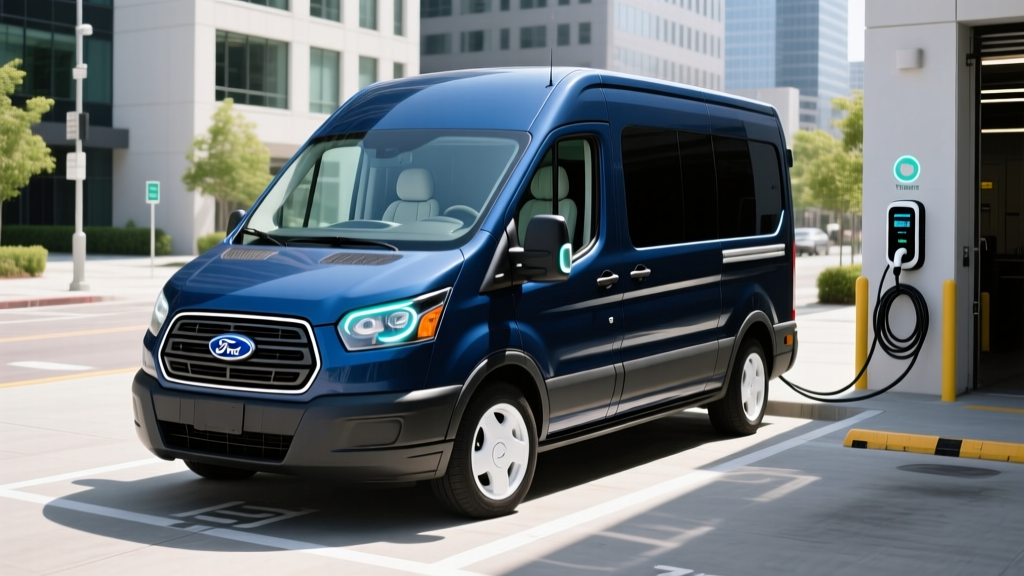
The 2026 Ford E-Transit Cargo Van isn't trying to be a long-haul electric truck. It's a purpose-built last-mile delivery vehicle with a 126-mile EPA range, a 68 kWh usable battery, and a payload capacity that rivals its gas-powered Transit sibling. For fleet operators running predictable urban routes under 100 miles a day, the E-Transit delivers dramatically lower per-mile operating costs, zero tailpipe emissions in city centers, and the kind of torque that makes stop-and-go traffic almost bearable. It's not for everyone — range limitations rule out long-haul routes — but for its intended use case, it's the most practical electric commercial van on the market.
Range, Battery, and Real-World Efficiency
The E-Transit's powertrain centers on a 68 kWh usable lithium-ion battery pack using NMC (nickel manganese cobalt) chemistry. Ford quotes a 126-mile EPA-estimated range for the low-roof, regular-length T-150 Cargo Van configuration. Higher roof options and longer wheelbases reduce that figure slightly due to added weight and aerodynamic drag.
EPA Estimated: 126 miles (T-150 low-roof cargo van, unladen)
Real-World Expectations:
- Urban delivery route (stop-and-go, 25-40 mph): 115–130 miles — regenerative braking recaptures energy in city driving, often matching or exceeding EPA estimates
- Highway cruising (65-70 mph, steady): 85–100 miles — the boxy aerodynamic profile hurts efficiency at speed
- Cold weather (below 32°F, cabin heat on): 75–95 miles — expect a 25–40% range reduction due to battery chemistry and HVAC load
- Fully loaded (near max payload): Subtract 10–15% from any of the above figures
Bottom line: If your daily route exceeds 90 miles with payload, you need to plan a mid-day charge or reconsider.
Efficiency clocks in at approximately 2.0–2.2 kWh per mile in mixed urban use, translating to an EPA-rated 108 MPGe combined for the low-roof cargo variant, according to fueleconomy.gov. That's less efficient than a passenger EV but competitive for a 6,000+ pound commercial vehicle.
| Spec | Value |
|---|---|
| EPA Range (low-roof T-150) | 126 miles |
| Battery Capacity (usable) | 68 kWh (NMC chemistry) |
| Motor / Drivetrain | Single rear-mounted motor, RWD |
| Horsepower | 266 hp |
| Torque | 317 lb-ft |
| 0-60 mph (unladen) | ~8.0 seconds |
| Max Payload (T-150 low-roof) | ~3,880 lbs |
| Cargo Volume (T-150 low-roof, 130" WB) | 246.7 cu ft |
| Max DC Fast Charge Rate | 126 kW (peak) |
| 10-80% DC Fast Charge | ~45 minutes |
| Level 2 AC Charge Rate | 10.5 kW (onboard charger) |
| Level 2 Charge Time (0-100%) | ~8 hours |
| Efficiency (combined) | ~108 MPGe / ~2.1 kWh/mi |
| GVWR | 9,500 lbs (Class 2b) |
| Battery Warranty | 8 years / 100,000 miles |
| Bumper-to-Bumper Warranty | 3 years / 36,000 miles |
| Powertrain Warranty | 5 years / 60,000 miles |
Charging: Depot Overnight or Opportunistic DC Top-Ups
Charging strategy is the make-or-break factor for E-Transit adoption. Fleet operators need to understand both the overnight depot model and the potential for mid-route DC fast charging.
| Charging Level | Power / Rate | Time (approx.) | Miles Added per Hour |
|---|---|---|---|
| Level 1 (120V, standard outlet) | ~1.4 kW | ~50+ hours (0-100%) | ~2–3 mi/hr |
| Level 2 (240V, 48A circuit) | 10.5 kW (vehicle-limited) | ~8 hours (0-100%) | ~16 mi/hr |
| DC Fast Charge (peak) | 126 kW | ~45 min (10-80%) | N/A (burst rate) |
| DC Fast Charge (sustained avg) | ~70–85 kW | ~60 min (10-90%) | N/A |
Home / Depot Level 2: The E-Transit's 10.5 kW onboard charger means a full 0-100% charge takes roughly 8 hours on a 48-amp Level 2 station. For fleet depots, this is ideal — vans plug in at end-of-shift and are fully charged by morning. Ford supports AC charging via the J1772 connector standard. Most fleet installations will use networked Level 2 stations from ChargePoint or similar providers to manage load and track energy use per vehicle.
DC Fast Charging Reality: The E-Transit peaks at 126 kW on a capable CCS1 DC fast charger, but as with all EVs, that peak rate isn't sustained. The charge curve tapers noticeably above 60% state of charge. Expect the 10-80% charge to take roughly 45 minutes under ideal conditions (battery preconditioned, warm ambient temperature, uncrowded charger). In practice, mid-day DC top-ups at Electrify America or EVgo stations add 40-60 miles of range in a 20-30 minute lunch break — enough to extend a route but not a substitute for overnight depot charging.
Important: The E-Transit uses the CCS1 connector for DC fast charging. As of 2026, Ford has not migrated the E-Transit to NACS (Tesla-style). Fleet operators should verify CCS1 availability at their preferred public charging networks.
Performance and Driving Dynamics
The E-Transit uses a single rear-mounted electric motor producing 266 horsepower and 317 lb-ft of torque, driving the rear wheels. That instant torque delivery makes a meaningful difference in urban driving — the van pulls away from stoplights with authority even when partially loaded, and the lack of gear shifts keeps acceleration smooth.
Unladen 0-60 mph times hover around 8.0 seconds, which is respectable for a vehicle with a 9,500-pound GVWR. Loaded near max payload, expect that to stretch to 10-11 seconds. Top speed is electronically limited to approximately 75 mph — Ford designed this for urban and suburban routes, not interstate hauling.
The low center of gravity from the underfloor battery pack reduces body roll compared to the gas Transit, and the regenerative braking system (with selectable intensity) cuts brake wear significantly in stop-and-go duty. Ford's Pro Power Onboard system offers up to 2.4 kW of exported 120V AC power from the van's battery — useful for running job-site tools, lighting, or equipment without a separate generator.
Cargo Capacity and Configurations
Ford offers the E-Transit in the same body configurations as the gas Transit, which is a key selling point for fleet standardization:
- T-150 (low roof, 130" wheelbase): 246.7 cu ft cargo volume, ~3,880 lbs max payload
- T-250 (medium roof, 148" wheelbase): 311.8 cu ft cargo volume, ~3,800 lbs max payload
- T-350 (high roof, 148" wheelbase): 404.3 cu ft cargo volume, ~3,330 lbs max payload
- Cutaway and chassis cab: Available for upfit applications (box trucks, shuttle bodies)
Interior cargo floor length ranges from approximately 10.1 feet (low-roof, short wheelbase) to 14.4 feet (extended). The load floor is flat and unobstructed by a driveshaft tunnel thanks to the rear-axle electric motor. Side and rear door openings match the gas Transit, so existing shelving and upfit solutions carry over directly.
One limitation: Ford does not offer an AWD or dual-motor E-Transit. The RWD-only configuration works fine in most urban environments but may limit traction in snow-belt regions without proper winter tires.
Pricing, Trims, and Tax Credit Eligibility
The 2026 E-Transit Cargo Van starts at approximately $47,895 MSRP for the T-150 low-roof cargo van with the standard 68 kWh battery. Higher configurations push pricing higher:
| Configuration | Base MSRP | As-Tested (typical fleet) | Est. Federal Credit (§30D) |
|---|---|---|---|
| T-150 Cargo Van (low roof, 130" WB) | ~$47,895 | ~$52,000 | Up to $7,500* |
| T-250 Cargo Van (med roof, 148" WB) | ~$50,395 | ~$55,000 | Up to $7,500* |
| T-350 Cargo Van (high roof, 148" WB) | ~$52,895 | ~$57,500 | Up to $7,500* |
| Cutaway (138" / 156" WB) | ~$46,595 | Varies by upfit | Up to $7,500* |
*Federal tax credit eligibility under IRS §30D is subject to multiple requirements. See checklist below.
- Vehicle MSRP cap: Vans and trucks must have an MSRP under $80,000 — the E-Transit qualifies.
- Buyer income cap: Adjusted gross income must not exceed $150,000 (single), $225,000 (head of household), or $300,000 (joint filers). Note: Fleet purchases by corporations follow different rules — consult a tax professional.
- Battery sourcing: A percentage of critical minerals and battery components must be sourced from the US or free-trade-agreement partners. The exact required percentage increases annually. Verify current-year compliance on irs.gov before purchasing.
- Point-of-sale transfer: As of 2024+, buyers can transfer the credit to the dealer at purchase, reducing the upfront cost rather than waiting for a tax refund. This applies to commercial retail purchases.
- Commercial clean vehicle credit (§45W): Businesses that don't qualify for §30D may be eligible for the §45W commercial clean vehicle credit (up to $7,500 for vehicles under 14,000 lbs GVWR). Fleet operators should consult their tax advisor to determine which credit applies.
Source: IRS Clean Vehicle Credits. Rules change frequently — always verify before purchase.
Tech, Driver Assists, and Notable Drawbacks
Infotainment: The E-Transit features a 12-inch touchscreen running Ford's SYNC 4 system with wireless Apple CarPlay and Android Auto, cloud-connected navigation with EV-aware route planning (accounts for charge level and charger locations), and over-the-air update capability. Ford Pro telematics integration provides fleet managers with real-time vehicle location, battery state of charge, driver behavior data, and maintenance alerts through the Ford Pro Intelligence platform.
Driver Assistance (Ford Co-Pilot360): Standard equipment includes:
- Automatic Emergency Braking with Pedestrian Detection
- Lane-Keeping System with Lane-Keeping Alert
- Blind Spot Information System (BLIS) with trailer coverage
- Rear View Camera with dynamic hitch assist
- Available: Adaptive Cruise Control, 360-degree camera, Reverse Brake Assist
These are SAE Level 1-2 driver-assist features. The driver must remain fully engaged at all times — the E-Transit does not offer hands-free driving capability like Ford's BlueCruise (available on the F-150 Lightning and Mustang Mach-E but not the E-Transit as of 2026).
Notable Drawbacks:
- Range ceiling: 126 miles EPA is a hard constraint. Routes exceeding ~90 miles loaded need mid-day charging infrastructure.
- No AWD option: Limits utility in snow and ice regions.
- DC charge speed: 126 kW peak is slower than some passenger EVs (200+ kW), meaning longer stops at public chargers.
- No NACS connector: Tesla Supercharger network access requires an adapter (if supported) or is unavailable.
- High upfront cost: The $15,000-$20,000 premium over a gas Transit requires 2-4 years of fuel and maintenance savings to recoup, depending on mileage.
- Best-in-class cargo volume matching gas Transit body styles
- Dramatically lower per-mile fuel cost (~$0.08/mi electricity vs ~$0.22/mi gas at fleet rates)
- Reduced maintenance — no oil changes, fewer brake replacements, no transmission service
- Pro Power Onboard (2.4 kW) eliminates separate job-site generators
- Strong Ford Pro telematics and fleet management integration
- Qualifies for federal tax credits (up to $7,500) and many state/utility incentives
- Quiet, smooth operation reduces driver fatigue on urban routes
- 126-mile EPA range limits route flexibility
- 45-minute DC fast charge (10-80%) is slow for mid-day recovery
- No AWD — RWD only limits cold-climate utility
- Higher upfront cost than gas Transit ($15-20K premium)
- CCS1 connector only — no native NACS/Supercharger access
- BlueCruise hands-free driving not available on E-Transit
- Cold-weather range loss can be severe (25-40%)
Total Cost of Ownership: E-Transit vs. Gas Transit
The purchase-price premium of the E-Transit is substantial, but fleet operators should evaluate total cost of ownership (TCO) over a typical 5-year / 75,000-mile hold period:
| Cost Category | E-Transit (est.) | Gas Transit T-150 (est.) |
|---|---|---|
| Purchase Price (after $7,500 credit) | ~$44,500 | ~$38,000 |
| Fuel / Electricity (75K mi) | ~$5,600 | ~$16,500 |
| Maintenance (5 years) | ~$2,200 | ~$5,800 |
| Brake Replacement | $0–$400 (regen extends life) | ~$1,200 |
| Insurance (5 years) | ~$8,500 | ~$7,500 |
| Estimated Resale Value (Year 5) | -$18,000 | -$15,000 |
| Net 5-Year Cost | ~$43,200 | ~$54,000 |
Based on $0.14/kWh commercial electricity and $3.30/gallon regular unleaded at 16 MPG combined (gas Transit EPA). Actual costs vary by region, utility rate, route profile, and incentives. Many utility companies offer commercial EV charging rebates that further reduce depot-charging costs. Check with your local utility for available programs.
Who Should Buy the Ford E-Transit Cargo Van?
- Your daily routes are under 90 miles round-trip with predictable stops
- You operate in an urban or suburban delivery environment (last-mile logistics, parcel delivery, service calls)
- You have depot or warehouse access where overnight Level 2 charging can be installed
- Your fleet qualifies for the §30D tax credit or §45W commercial clean vehicle credit
- You want to reduce per-mile operating costs and maintenance burden across a multi-vehicle fleet
- Your municipality or clients require zero-emission vehicles for contracts or urban low-emission zones
- Your routes regularly exceed 100 miles per day without mid-day charging access
- You operate primarily in cold climates with heavy snow (no AWD option)
- You need highway-speed long-distance capability (the boxy aero profile and 126-mile range aren't suited)
- You need to tow — the E-Transit is not rated for trailer towing in most configurations
Competitor Comparison
The E-Transit's closest competitors in the electric commercial van space include the Mercedes-Benz eSprinter and the BrightDrop Zevo 600 (formerly Chevy BrightDrop). The NHTSA has not published crash-test ratings for most commercial vans in this class, so safety comparisons rely on available active safety technology.
- Mercedes-Benz eSprinter: Higher starting price (~$70,000+), but offers a larger battery option (~113 kWh usable) with up to ~200 miles of range. Better suited for longer routes but significantly more expensive. Available in more configurations.
- BrightDrop Zevo 600: Built on the Ultium platform with up to ~250 miles of range (larger battery option). Newer to market with a smaller dealer/service network. Targets similar last-mile delivery use cases but with higher range and higher cost.
- Rivian EDV (Amazon delivery van): Purpose-built for Amazon — not available to general fleet buyers as of 2026.
The E-Transit wins on price, dealer network breadth, and Ford Pro fleet support infrastructure. It loses on range. For most urban delivery fleets, the price advantage and proven service network outweigh the range limitation — provided routes are planned around the battery.
Frequently Asked Questions
What is the real-world range of the Ford E-Transit?
The EPA rates the E-Transit at 126 miles for the low-roof T-150 cargo van. In real-world urban delivery use with regenerative braking, expect 115-130 miles. On the highway at 65-70 mph, expect 85-100 miles. In cold weather below freezing, range can drop to 75-95 miles. Loaded near max payload, subtract another 10-15%.
How fast does the E-Transit charge?
On a DC fast charger, the E-Transit peaks at 126 kW and charges from 10-80% in approximately 45 minutes. On a Level 2 (240V) charger at 10.5 kW, a full 0-100% charge takes about 8 hours — ideal for overnight depot charging. Level 1 (120V) charging is impractical for daily use at 50+ hours for a full charge.
Does the Ford E-Transit qualify for the federal EV tax credit?
The E-Transit is eligible for up to $7,500 under the §30D clean vehicle credit for qualifying retail buyers, subject to income caps ($150K single / $300K joint), MSRP caps (under $80K for vans), and battery sourcing requirements. Fleet buyers may qualify for the §45W commercial clean vehicle credit instead. Always verify current rules at irs.gov and consult a tax professional.
Is the E-Transit worth buying over a gas Transit?
For urban delivery fleets with predictable sub-100-mile routes and depot charging access, yes — the E-Transit's lower fuel cost (~$0.08/mi vs ~$0.22/mi), reduced maintenance, and tax credits typically offset the higher purchase price within 2-4 years. For long routes, cold climates without AWD, or operations without charging infrastructure, the gas Transit remains more practical.
Can the E-Transit tow a trailer?
The E-Transit is not rated for conventional trailer towing in most configurations. Ford designed it for cargo hauling within the van body, not towing. If your operation requires towing, the gas or diesel Transit is the appropriate choice.
What is the battery warranty?
Ford covers the E-Transit's high-voltage battery for 8 years or 100,000 miles (whichever comes first), with a capacity retention threshold typically set at 70% of original capacity. The powertrain is covered for 5 years / 60,000 miles, and bumper-to-bumper coverage is 3 years / 36,000 miles.
Does the E-Transit have BlueCruise or self-driving capability?
No. The E-Transit includes Ford Co-Pilot360 driver-assist features (automatic emergency braking, lane-keeping, blind-spot monitoring) which are SAE Level 1-2 systems requiring full driver engagement. Ford's BlueCruise hands-free highway driving feature is not available on the E-Transit as of 2026. No production commercial van currently offers autonomous driving capability.