Quick Answer: What the Ford CEO's EV Teardowns Mean for Buyers
Ford CEO Jim Farley was humbled after taking apart rival EVs — specifically Chinese-market models like the BYD Seagull and Xiaomi SU7 — because their engineering quality, cost efficiency, and battery integration far exceeded what Western automakers were producing at similar price points. For you as a buyer, the takeaway is practical: today's EVs pack more technology per dollar than ever, but real ownership costs depend on your charging access, driving patterns, and climate. This guide breaks down exactly what to expect in 2026, with real numbers.
The Teardown That Shook Detroit
When Jim Farley publicly discussed Ford's competitive teardowns of rival electric vehicles, the automotive industry paid attention. Farley, an enthusiast who races classic cars and understands vehicle dynamics intimately, described being genuinely surprised by what his engineers found inside competitor EVs — particularly those from Chinese manufacturers.
The specifics matter. BYD's Seagull, a compact EV selling for roughly the equivalent of $10,000 in China, featured:
- A structurally integrated battery pack (cell-to-body design) that reduced weight and parts count
- LFP (lithium iron phosphate) blade cells with excellent thermal stability and a 3,000+ cycle life
- An 800-volt electrical architecture in a budget vehicle — something still rare in US-market EVs under $50,000
- Fit-and-finish and software integration that rivaled vehicles costing three times as much
For US buyers, these specific models aren't available (tariffs and homologation barriers keep them out), but the competitive pressure they create is reshaping every EV you can buy. Ford, GM, Hyundai, and Tesla have all accelerated cost-reduction and technology integration in response. The 2026 model-year lineup reflects this directly: more standard range, faster charging, and lower MSRPs than the 2023-2024 generation.
What This Means for Your Wallet: Real EV Costs in 2026
The teardown revelations ultimately benefit buyers through better vehicles at more competitive prices. But the question remains: does an EV save you money? Here's the honest math.
| Category | 2026 EV (e.g., Hyundai Ioniq 5 SEL, ~$43,000 MSRP) | 2026 Gas (e.g., Toyota RAV4 LE, ~$30,000 MSRP) | 2026 Hybrid (e.g., RAV4 Hybrid, ~$33,500 MSRP) |
|---|---|---|---|
| Purchase Price (after §30D credit) | ~$35,500* | $30,000 | $33,500 |
| Fuel/Energy (5 years) | $3,750 (home charging @ $0.14/kWh) | $10,500 (28 MPG avg @ $3.50/gal) | $6,560 (40 MPG avg @ $3.50/gal) |
| Maintenance (5 years) | $1,200 | $3,800 | $3,200 |
| Insurance (5 years, avg) | $9,500 | $7,200 | $7,500 |
| Estimated Depreciation | $17,750 (50%) | $12,000 (40%) | $13,400 (40%) |
| Total 5-Year Cost | $67,700 | $63,500 | $64,160 |
*§30D federal tax credit eligibility requires meeting MSRP caps ($55,000 for SUVs/trucks, $50,000 for sedans), buyer income limits ($150K single / $300K joint AGI), and battery sourcing requirements. Verify current-year rules at IRS.gov. Credit may be transferred to dealer at point of sale as of 2024+.
The EV wins on fuel and maintenance but loses on depreciation and insurance. Your actual numbers shift dramatically based on three variables: whether you can charge at home, your local electricity rate, and your state's incentive structure.
EV vs. Gas vs. Hybrid: Which Powertrain Fits You?
| Factor | Battery EV (BEV) | Plug-in Hybrid (PHEV) | Hybrid (HEV) | Gas (ICE) |
|---|---|---|---|---|
| EPA Range / Tank | 250–380 mi (varies by model) | 25–45 mi electric + 350–500 mi gas | 450–600 mi | 350–500 mi |
| Efficiency | 100–140 MPGe (25–35 kWh/100mi) | 70–100 MPGe electric; 30–40 MPG gas | 40–55 MPG combined | 22–32 MPG combined |
| Refuel/Recharge Time | Level 2: 6–10 hrs; DC fast: 18–35 min (10–80%) | Level 2: 2–4 hrs; Gas: 5 min | Gas: 5 min | Gas: 5 min |
| Home Charging Needed? | Essential for cost savings | Highly recommended to use electric range | No | No |
| Maintenance Burden | Lowest (no oil, filters, spark plugs, minimal brake wear) | Moderate (gas engine still needs service) | Moderate | Highest |
| Cold-Weather Impact | 20–35% range loss at 20°F | Minimal (gas engine supplements heat) | Minimal | Minimal |
What First-Time EV Buyers Must Know Before Signing
The competitive teardowns Farley described revealed that modern EVs are engineering marvels — but they also clarified where Western OEMs are still catching up. Here are the ownership realities that no marketing brochure will tell you:
1. Home Charging Is Non-Negotiable for Most Buyers
Without home Level 2 charging (240V, typically 7.7–11.5 kW), your EV experience changes fundamentally. Public DC fast charging costs 2–3× more per kWh than home electricity and adds wear from repeated high-rate charging. A Level 2 home installation runs $800–$2,500 total (charger + electrician + permit), assuming your electrical panel has capacity. If you need a panel upgrade (100A → 200A), add $1,500–$3,500.
2. The EPA Range Sticker Is Not Your Real-World Range
EPA range estimates assume a mix of city and highway driving at moderate temperatures. In practice:
- Highway driving at 75+ mph: expect 80–90% of EPA range
- Cold weather (below 30°F): expect 65–80% of EPA range, depending on heat pump availability
- Mountain driving with elevation gain: significant consumption increase uphill, partial recovery via regen downhill
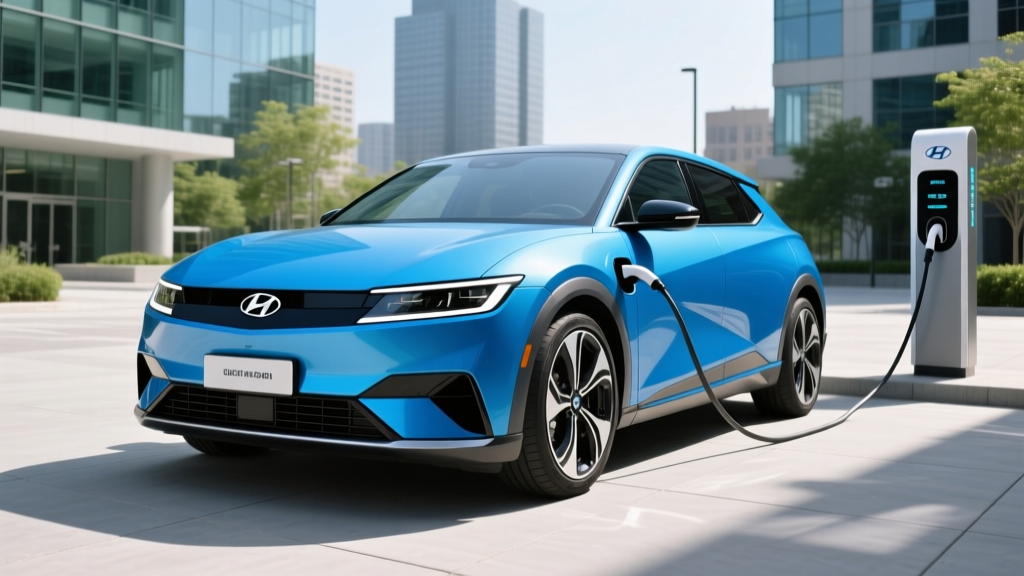
A 2026 Hyundai Ioniq 5 with the 84 kWh battery (NMC chemistry) carries an EPA rating of roughly 310 miles. In real-world highway testing at 70 mph and 65°F, expect approximately 260–280 miles. At 20°F with cabin heating, plan for 210–240 miles. This isn't a defect — it's physics. Battery chemistry is less efficient at low temperatures, and cabin heating draws 2–5 kW continuously.
3. DC Fast Charging Slows Above 80% — Plan Accordingly
When manufacturers advertise "10–80% in 18 minutes," they're describing the peak portion of the charge curve. Above 80% State of Charge (SoC), the battery management system deliberately reduces charge rate to protect cell longevity. A session from 80–100% can take as long as the 10–80% portion. For road trips, plan to charge to 80% and go — the time penalty of topping off isn't worth it.
4. Battery Degradation Is Real but Manageable
Most 2026 EVs use either NMC (nickel manganese cobalt) or LFP chemistry. NMC offers higher energy density (more range per pound) but degrades slightly faster. LFP sacrifices some range for a longer cycle life and greater thermal stability. Typical degradation over 5 years/75,000 miles is 8–12% for NMC and 5–8% for LFP. Federal warranty requirements mandate 8 years/100,000 miles with at least 70% capacity retention — and most manufacturers exceed this in practice.
Common EV Myths — Corrected With Data
| Myth | Fact (with data) |
|---|---|
| "EV batteries need replacing every few years and cost $20,000." | Modern EV batteries are designed for 1,500–3,000+ full charge cycles. At 300 miles per cycle, that's 450,000–900,000 miles before reaching end-of-life (defined as 70–80% capacity). Full replacement costs $8,000–$18,000 depending on pack size, but is rarely needed within a vehicle's useful life. Source: fueleconomy.gov. |
| "EVs are worse for the environment because of battery mining." | Lifecycle analyses (including mining, manufacturing, driving, and recycling) consistently show EVs produce 50–70% fewer lifetime emissions than gas cars, even on coal-heavy grids. The break-even point vs. a gas car is typically 15,000–30,000 miles of driving. |
| "You can't take an EV on a road trip." | The US DC fast-charging network (Tesla Supercharger, Electrify America, EVgo) covers all major interstate corridors. A 300-mile-range EV charging from 10–80% at 150–250 kW adds ~200 miles in 18–25 minutes. Plan stops around meals and rest breaks. |
| "The tax credit is $7,500 for every EV." | The §30D credit has strict eligibility: MSRP caps ($55K SUVs/trucks, $50K sedans), buyer income limits, and battery critical-mineral and component sourcing requirements that change annually. Many popular EVs qualify for $3,750 or $0 depending on the model year. Always check IRS guidance before purchasing. |
| "EVs cost more to insure." | Generally true: EV insurance premiums run 15–30% higher than equivalent gas cars due to higher repair costs (specialized body shops, battery replacement protocols). Shop quotes before buying — some insurers have narrowed the gap significantly. |
The Teardown Lesson: How to Choose the Right EV in 2026
What Farley's competitive teardowns ultimately revealed is that the EV market has matured faster than legacy automakers expected. Chinese competitors achieved cost and quality benchmarks that forced Western OEMs to fundamentally rethink their platforms. The result for 2026 buyers: better vehicles, faster charging architectures, and more competitive pricing across the board.
Your EV Decision Framework
Choose a BEV (full electric) if:
- You have reliable home charging (garage, driveway, or workplace Level 2)
- Your daily driving is under 100 miles round-trip
- You want the lowest per-mile fuel cost ($0.04–$0.06/mile on home electricity vs. $0.12–$0.16/mile for gas)
- You qualify for the §30D credit or your state offers additional incentives
Choose a PHEV (plug-in hybrid) if:
- You want electric-only commuting (25–45 mi) but need gas flexibility for long trips
- You have home charging but live in an area with sparse public DC fast charging
- You experience extreme cold winters where BEV range loss is a concern
Choose an HEV (standard hybrid) if:
- You have no home charging access (apartment, street parking)
- You want improved MPG (40–55 combined) with zero behavior change
- Your budget is under $35,000 and you need maximum practicality
Stick with gas for now if:
- You drive fewer than 8,000 miles/year (fuel savings won't offset higher EV purchase price)
- You have no reliable charging access at home or work
- You regularly tow heavy loads in cold climates (EV towing range drops 40–50%)
Frequently Asked Questions
Will Chinese EVs like BYD be available in the US soon?
Not in the near term. Current US tariffs on Chinese-manufactured vehicles (100%+ as of 2024) effectively block direct imports. However, Chinese companies are building factories in Mexico, Europe, and Southeast Asia, and some models may eventually enter the US market through these production channels. For now, the competitive pressure from these vehicles is already benefiting US buyers through improved pricing and features from domestic and Korean/Japanese brands.
How much does home Level 2 charger installation actually cost?
A typical installation with a quality Level 2 charger (32–48 amp, 7.7–11.5 kW) runs $1,200–$2,500 all-in: $400–$700 for the charger unit, $600–$1,500 for electrician labor and wiring, and $50–$300 for permits. If your electrical panel needs upgrading from 100A to 200A service, add $1,500–$3,500. Always get a licensed electrician's assessment before committing — panel capacity and conduit run length are the biggest cost variables.
Is it true that fast charging damages the battery?
Exclusively using DC fast charging does accelerate degradation slightly — studies show roughly 2–4% additional capacity loss over 100,000 miles compared to primarily Level 2 charging. However, modern battery management systems are sophisticated enough that occasional fast charging (road trips, a few times per month) has negligible long-term impact. The real degradation risk comes from regularly charging to 100% and letting the car sit in hot weather — avoid that regardless of charging method.
What happens if my EV battery fails outside of warranty?
Full battery pack replacement costs $8,000–$18,000 depending on capacity and chemistry. However, catastrophic battery failure outside of warranty is rare. More common is gradual capacity loss, and most packs retain 85–92% capacity at 100,000 miles. Independent shops increasingly offer module-level repairs (replacing individual degraded cells rather than the full pack) for $2,000–$5,000. The 8-year/100,000-mile federal battery warranty provides substantial coverage, and several manufacturers (Hyundai, Tesla, Rivian) have honored battery claims beyond minimum requirements.
Should I wait for solid-state batteries before buying an EV?
Solid-state batteries promise higher energy density and faster charging, but mass-market availability remains years away. Toyota has announced limited solid-state production for 2027–2028, but initial volumes will be small and pricing will be premium. Current lithium-ion technology (NMC and LFP) is mature, well-understood, and offers 250–380 miles of range with 18–30 minute fast charging. If you need an EV now, today's battery technology is more than adequate for the vast majority of drivers.
Sources: EPA fueleconomy.gov for range and efficiency data; IRS.gov for §30D tax credit rules; manufacturer spec sheets for battery and charging specifications.