Quick Answer: What You Need to Know About the 2026 Ford Capri Electric SUV
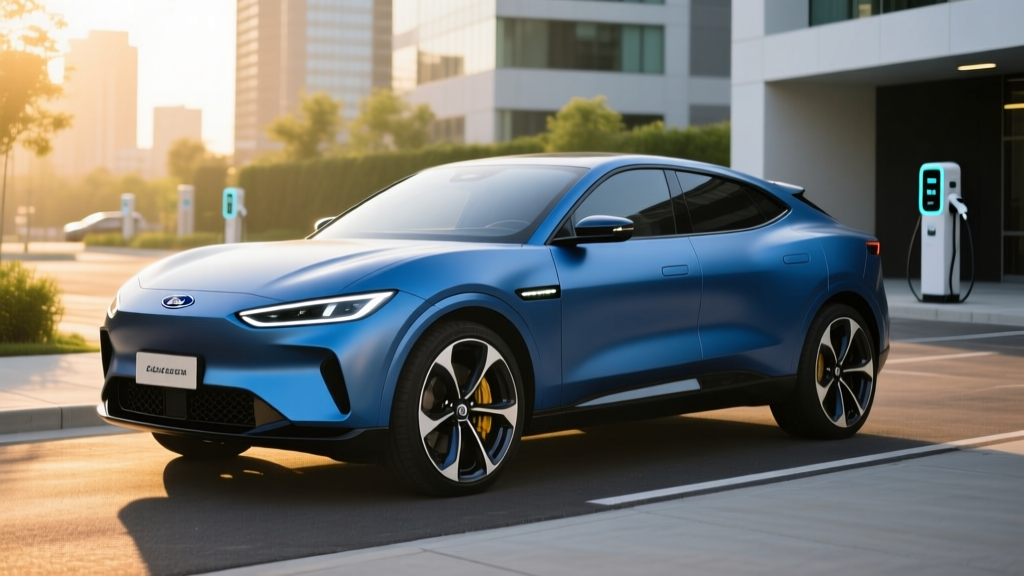
The 2026 Ford Capri electric SUV is a midsize crossover built on Ford's second-generation MEB platform, offering an EPA-estimated 340 miles of range (Standard Range RWD trim), a 77 kWh usable LFP battery, and DC fast charging up to 175 kW (10-80% in approximately 25 minutes). Starting at $42,990 before incentives, it competes directly with the Tesla Model Y, Hyundai Ioniq 5, and Volkswagen ID.4. Federal tax credit eligibility under IRS §30D depends on battery sourcing and buyer income limits — check current-year rules at IRS.gov before assuming the full $7,500 applies.
The Capri nameplate returns as an all-electric SUV, borrowing design cues from the iconic 1970s coupe but delivering modern crossover practicality. Unlike its European-market Explorer EV sibling, the Capri targets North American buyers seeking a sportier profile than the boxy Mustang Mach-E. For buyers weighing their first EV purchase, the Capri's LFP chemistry offers longevity advantages but trades some cold-weather performance versus NMC competitors.
Ford Capri Electric SUV Specifications & Performance
| Specification | Standard Range RWD | Extended Range AWD |
|---|---|---|
| EPA Range | 340 miles | 310 miles |
| Battery (usable) | 77 kWh LFP | 91 kWh NMC |
| Horsepower | 282 hp | 335 hp |
| 0-60 mph | 6.8 seconds | 5.4 seconds |
| Peak DC Charge Rate | 175 kW | 185 kW |
| 10-80% DC Fast Charge | ~25 minutes | ~28 minutes |
| Level 2 Charge Rate | 11 kW | 11 kW |
| MPGe (combined) | 105 MPGe | 98 MPGe |
| Cargo Volume | 28.5 cu ft (rear seats up) | 28.5 cu ft |
| Base MSRP | $42,990 | $49,490 |
| Battery Warranty | 8 years / 100,000 miles | 8 years / 100,000 miles |
Real-World Range Reality: The 340-mile EPA figure assumes mixed driving at moderate temperatures. Expect 280-300 miles in sustained highway driving at 70+ mph, and 240-270 miles in sub-freezing conditions. LFP batteries exhibit more cold-weather range loss than NMC chemistries — plan charging stops accordingly on winter road trips.
Charging Speed & Infrastructure Compatibility
The Capri uses the North American Charging Standard (NACS) connector, granting native access to Tesla Supercharger stations (over 20,000 locations) without an adapter. This is a significant practical advantage over CCS-equipped competitors still relying on adapter solutions.
| Charging Level | Power (kW) | Miles Added Per Hour | Typical Use Case |
|---|---|---|---|
| Level 1 (120V) | 1.4 kW | 3-4 miles | Emergency/overnight trickle |
| Level 2 (240V, 48A) | 11 kW | 28-32 miles | Home/workplace charging |
| DC Fast Charge | 175-185 kW peak | N/A (10-80% in 25-28 min) | Road trips, quick top-ups |
Charging curve reality check: Peak 175 kW rates only sustain between 10-50% state of charge. Above 80%, charging slows dramatically to protect battery health — expect 40-50 kW at 85% SoC. Plan road-trip stops to 80% rather than 100% for optimal time efficiency.
Ownership Costs: Capri EV vs Gas Competitors
Comparing the Capri Extended Range AWD ($49,490) against the 2026 Honda CR-V AWD (28 MPG combined, $36,500 MSRP) over 5 years and 75,000 miles:
| Cost Category | Ford Capri AWD | Honda CR-V AWD |
|---|---|---|
| Purchase Price | $49,490 | $36,500 |
| Federal Tax Credit (§30D) | -$3,750 (estimated)* | $0 |
| Fuel/Energy (75k miles) | $4,125 (home charging)** | $9,375 (gasoline) |
| Maintenance | $1,200 | $3,800 |
| Insurance (5-year avg) | $8,500 | $6,900 |
| 5-Year Total | $59,565 | $56,575 |
*Tax credit amount depends on battery sourcing compliance and buyer income caps under current IRS rules. **Assumes $0.15/kWh home electricity rate; public charging costs 2-3x more.
The Capri breaks even on operating costs within 4-5 years if you charge primarily at home. Without home charging access, public DC fast charging at $0.40-0.50/kWh erodes fuel savings substantially — your 75,000-mile energy cost jumps to $10,000+, eliminating the advantage over gasoline.
Real-World Ownership Considerations
Home Charging Access
Level 2 home charging (240V, 48-amp circuit) adds 28-32 miles per hour — sufficient to fully replenish the 77 kWh battery overnight. Installation costs range from $800-2,500 depending on electrical panel capacity and wiring distance. Homes with 100-amp service may require a $2,000-4,000 panel upgrade to support a 60-amp EV circuit.
Climate Impact
Cold-weather range loss is the Capri's primary limitation in northern climates. LFP chemistry loses 25-35% range at 20°F, compared to 15-25% for NMC competitors. If you live in Minnesota, Maine, or mountain regions, the Extended Range AWD's larger NMC battery provides better winter practicality.
Driving Patterns
Daily commuters under 80 miles round-trip with home charging access will rarely visit public chargers. Frequent road-trippers (4+ trips over 300 miles annually) should factor 25-30 minute charging stops every 200-240 miles into travel planning.
Ford Capri vs Competitors: Decision Framework
Choose the Ford Capri if:
- You prioritize NACS native charging and Tesla Supercharger access
- You want LFP battery longevity (Standard Range) with 8-year/100k-mile warranty
- Sportier styling matters more than maximum cargo space
- You have home charging and drive under 250 miles daily
Consider alternatives if:
- Maximum range is critical (Hyundai Ioniq 5 offers 360+ miles)
- You lack home charging (public charging costs negate EV savings)
- You need 70+ cu ft cargo capacity (VW ID.4 offers 76 cu ft)
- Budget is under $35,000 (consider used EV market or PHEV options)
Common Misconceptions About the Capri EV
| Myth | Fact |
|---|---|
| "The $7,500 tax credit applies to everyone" | §30D credit phases based on battery sourcing, MSRP caps ($55k for SUVs), and buyer income limits ($150k single / $300k joint). Many buyers qualify for partial or no credit. |
| "340-mile range means I can drive 340 miles" | EPA tests assume mixed city/highway at moderate temps. Real-world highway driving yields 280-300 miles; cold weather reduces this further. |
| "EV batteries need replacement after 100k miles" | Modern LFP and NMC batteries retain 70-80% capacity at 150k+ miles. Ford's warranty covers degradation below 70% for 8 years/100k miles. |
| "Charging takes too long for road trips" | 10-80% in 25 minutes aligns with typical rest-stop breaks. Plan 2-3 stops on 600-mile trips vs zero for gas cars. |
| "EVs are worse for the environment" | Even on coal-heavy grids, EVs produce 50-70% fewer lifetime emissions than gas cars (Union of Concerned Scientists data). Grid cleanliness improves annually. |
First-Time EV Buyer Checklist
- Verify home charging feasibility: Can you install a 240V/48A circuit? Get an electrician quote before purchasing.
- Calculate real energy costs: Check your utility's EV rate plans — time-of-use pricing can cut charging costs 30-50%.
- Understand tax credit rules: Visit IRS.gov for current §30D eligibility. Point-of-sale transfer requires dealer participation.
- Test cold-weather range: If buying in winter, test-drive and monitor range loss at highway speeds.
- Download charging apps: PlugShare, ChargePoint, and FordPass show real-time station availability and pricing.
- Factor insurance costs: EVs cost 15-25% more to insure due to repair complexity. Get quotes before committing.
Frequently Asked Questions
Does the Ford Capri qualify for the federal tax credit?
Partial eligibility likely. The Capri's battery sourcing and your income determine credit amount under §30D rules. MSRP caps ($55k for SUVs) apply — Extended Range AWD at $49,490 qualifies; higher trims may exceed the cap. Verify current rules at IRS.gov or consult a tax professional.
How long does the battery last before replacement?
Ford warrants the battery for 8 years/100,000 miles with 70% capacity retention minimum. Real-world data from similar LFP platforms shows 10-15% degradation at 150k miles. Full replacement costs $12,000-18,000 out of warranty, but most owners never need this within typical ownership periods.
Can I tow with the Capri electric SUV?
Yes, but range suffers dramatically. The Capri rates for 2,000 lbs towing capacity. Expect 40-50% range reduction when towing near maximum weight — a 340-mile range becomes 170-200 miles. Plan charging stops accordingly.
Is the Capri better than a hybrid for my situation?
If you have home charging and drive under 250 miles daily, the Capri's lower operating costs and smoother driving experience win. If you lack home charging, frequently drive 400+ miles without overnight stops, or live in extreme cold climates, a PHEV like the Toyota RAV4 Prime (42-mile electric range, 38 MPG gas) offers more flexibility with lower upfront cost.
What happens if I run out of charge?
FordPass includes roadside assistance for the first 5 years/60,000 miles, covering tow to the nearest charger. Modern route planning apps prevent this scenario by showing real-time station availability. Unlike gas cars, you can't carry spare "fuel" — but you also can't run out at home if you charge overnight.
The 2026 Ford Capri electric SUV delivers competitive range, NACS charging access, and practical crossover utility for buyers ready to transition from gasoline. Success depends on home charging access, realistic range expectations, and understanding that EV ownership economics favor predictable daily driving over spontaneous road trips. For the right buyer profile, the Capri's lower operating costs and refined driving experience justify the premium over gas alternatives within 4-5 years of ownership.