The Short Answer on the Bronco EV
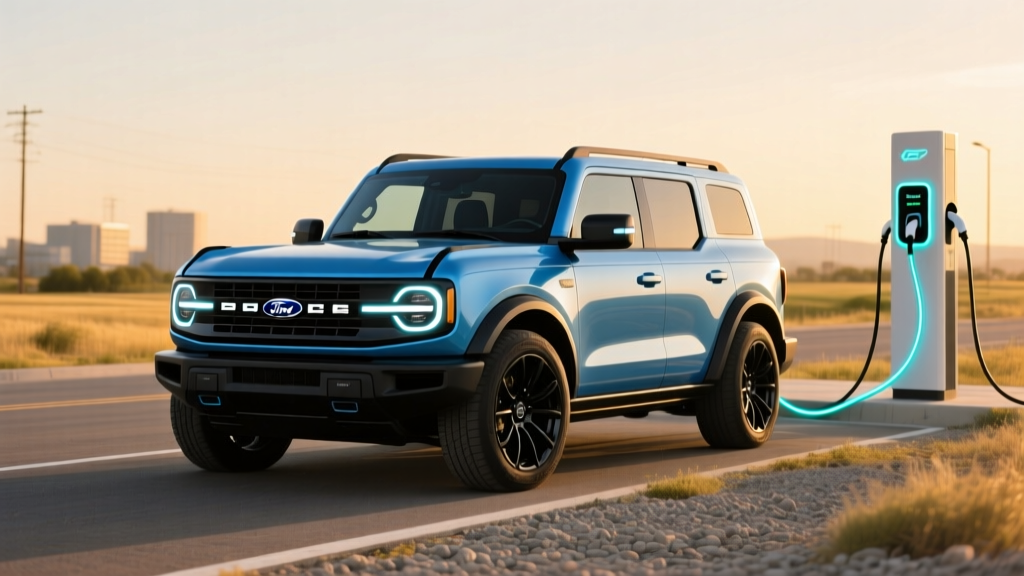
As of early 2026, Ford has not yet released a production Bronco EV. The electric Bronco remains an announced/upcoming model expected to arrive for the 2027 or 2028 model year, likely built on a dedicated EV platform shared with next-generation Ford trucks and SUVs. Based on Ford's current EV architecture and competitive positioning against the Rivian R1S and Jeep Recon, industry analysts project an EPA range between 280–350 miles, a starting MSRP in the $55,000–$65,000 range, and DC fast charging capability around 200–250 kW peak. Nothing below is final — treat all figures as preliminary estimates until Ford officially unveils the production vehicle.
Why Ford Is Building an Electric Bronco
The gas-powered Ford Bronco has been a runaway success since its 2021 revival, consistently selling over 100,000 units annually. But with CAFE standards tightening and Ford's own EV investment exceeding $50 billion through 2026, an electrified Bronco was inevitable. Ford CEO Jim Farley has publicly confirmed that the Bronco nameplate will go electric, though the company has been deliberately vague on timing.
The strategic logic is straightforward: the Bronco's boxy, rugged persona attracts buyers who prioritize capability and lifestyle over efficiency. That same buyer demographic — outdoor enthusiasts, weekend adventurers, rural and suburban homeowners — increasingly overlaps with early EV adopters who have home charging access and the budget for a premium vehicle. Ford's challenge is delivering genuine off-road capability with an electric powertrain, something Rivian has proven is possible with the R1S but at a significantly higher price point.
Projected Specs: What the Numbers Might Look Like
While Ford has not published official specifications, we can make educated projections based on the company's existing EV platforms, battery supply chain partnerships (including SK On and CATL), and the competitive landscape. Below is an estimated spec table — all figures are preliminary and subject to change.
| Attribute | Projected Estimate | Basis for Estimate |
|---|---|---|
| EPA Range | 280–350 miles | Comparable to Rivian R1S (up to 410 mi Max Pack) and Ford Explorer EV; boxy aero hurts efficiency |
| Battery Capacity | ~100–130 kWh usable | Large pack needed for heavy, non-aerodynamic body; similar to F-150 Lightning Extended Range (131 kWh) |
| Battery Chemistry | NMC (likely), LFP possible for base trim | Ford uses NMC for performance/range trims; LFP for cost-optimized models (e.g., base Mustang Mach-E) |
| Peak DC Fast Charge | 200–250 kW | F-150 Lightning peaks at ~155 kW; newer platforms target 250+ kW |
| 10–80% Charge Time | ~25–35 minutes (est.) | Depends on pack size and charge curve; larger packs charge slower at same kW |
| Level 2 Charging | ~11–19 kW (48A) | Standard for Ford EVs; ~8–10 hours for full charge on large pack |
| Horsepower | 400–600 HP (dual motor) | Rivian R1S dual motor: 533 HP; Ford will target competitive output |
| 0–60 mph | ~4.0–5.5 seconds | Weight and off-road tires will limit acceleration vs. sportier EVs |
| Towing Capacity | 5,000–7,500 lbs (est.) | F-150 Lightning tows 7,700–10,000 lbs; Bronco is lighter-duty |
| Base MSRP | $55,000–$65,000 | Gas Bronco starts ~$38k; EV premium + battery cost; positioned below Rivian R1S ($79,900+) |
| Connector | NACS (Tesla-standard) | Ford has committed to NACS for all new EVs starting 2025 |
| Warranty | 8 yr / 100,000 mi battery | Federal minimum for EV batteries; Ford typically matches or exceeds |
Real-World Range Reality Check
If the Bronco EV achieves a 320-mile EPA estimate, expect real-world highway range closer to 240–270 miles at 70–75 mph, and potentially 200–230 miles in cold weather (below 30°F). The Bronco's boxy shape, high ground clearance, and likely all-terrain tires create significant aerodynamic drag — the single biggest enemy of EV highway efficiency. Rivian R1S owners report similar 15–25% reductions from EPA estimates during sustained highway driving. If you plan to tow a trailer or carry a rooftop tent, subtract another 30–50% from range.
Bronco EV vs. Gas Bronco: Cost and Capability Comparison
The most common question from prospective buyers: does going electric make financial and practical sense in a rugged SUV? Here's a side-by-side comparison using the current gas Bronco (2026 model year, Big Bend trim with 2.3L EcoBoost) against projected Bronco EV figures.
| Factor | Gas Bronco (2.3L EcoBoost) | Bronco EV (Projected) |
|---|---|---|
| Starting MSRP | ~$39,635 | ~$55,000–$65,000 |
| Fuel / Energy Cost per Mile | ~$0.18/mi (20 MPG, $3.60/gal) | ~$0.05/mi (home L2 at $0.14/kWh) |
| Annual Fuel/Energy (12,000 mi) | ~$2,160 | ~$600 (home charging) |
| 5-Year Fuel/Energy Cost | ~$10,800 | ~$3,000 |
| Maintenance (5-yr est.) | ~$3,500 (oil, filters, brakes) | ~$1,200 (cabin filter, tires, wipers) |
| Federal Tax Credit (§30D) | $0 | Up to $7,500 (eligibility depends on battery sourcing, income, MSRP caps) |
| 5-Year Total Running Cost | ~$14,300 | ~$4,200 |
| Off-Road Capability | Proven — GOAT modes, locking diffs, sway bar disconnect | Unknown — likely torque-vectoring AWD, air suspension possible |
| Removable Roof/Doors | Yes (signature feature) | Unlikely — structural battery pack limits body flexibility |
| Water Fording | Up to 33.5 inches (Badlands) | TBD — EVs handle water well but electronics sealing is critical |
The math is clear on operating costs: the Bronco EV saves roughly $10,000 over five years in fuel and maintenance if you charge primarily at home. But the upfront price premium of $15,000–$25,000 means the breakeven point is approximately 7–10 years — longer than most buyers keep a vehicle. The EV only makes financial sense if you plan to own it long-term, drive high annual miles, or value the instant torque and quiet trail driving experience enough to justify the premium.
Federal Tax Credit: What §30D Means for the Bronco EV
The IRS §30D Clean Vehicle Credit offers up to $7,500 for qualifying new EVs, but eligibility is far from guaranteed. As of 2026, the credit requires:
- MSRP Cap: SUVs must be priced at or below $80,000 — the Bronco EV should clear this
- Buyer Income Cap: Modified AGI ≤ $300,000 (joint), $225,000 (head of household), $150,000 (single)
- Battery Sourcing: Critical minerals and battery components must meet escalating domestic/free-trade-agreement percentages — this is where many EVs lose partial or full credit eligibility
- Final Assembly: Must occur in North America — Ford's US plants should satisfy this
- Point-of-Sale Transfer: Buyers can transfer the credit to the dealer at purchase for an immediate price reduction, or claim it on their tax return
Key uncertainty: Whether the Bronco EV's battery will meet the critical-minerals sourcing thresholds in its launch year. Ford's battery supply chain is evolving, and the sourcing requirements tighten annually. Consult a tax professional and check the fueleconomy.gov credit lookup once the vehicle is officially released before assuming you'll receive the full $7,500.
Real-World Ownership: What First-Time EV Buyers Should Know
If you're considering the Bronco EV as your first electric vehicle, several practical factors will determine whether it's a good fit for your lifestyle.
Home Charging Is Nearly Essential
Public DC fast charging is improving, but relying on it exclusively is expensive ($0.35–$0.55/kWh at Electrify America or Tesla Superchargers) and time-consuming. A Level 2 home charger (240V, 48A / ~11.5 kW) is the backbone of practical EV ownership. For a ~120 kWh battery pack, expect a full home charge to take 10–12 hours — plug in overnight and wake up full every morning.
Home Level 2 installation typically costs $800–$2,500 for the charger and electrical work if your panel has capacity. If you need a 200A panel upgrade (common in older homes), add $1,500–$3,500. Always get a quote from a licensed electrician before purchasing.
Climate Matters More Than You Think
If you live in a region with sustained winter temperatures below 30°F, plan for 20–35% range loss in cold weather. The Bronco EV's large battery will help mitigate this in absolute miles, but it's still a significant factor for road trips. Ford's EVs typically include a heat pump (confirmed on F-150 Lightning and Mustang Mach-E), which reduces cabin-heating energy draw compared to resistive heaters — expect the Bronco EV to include one as well.
Charging Deserts and Road Trips
Ford's adoption of the NACS connector means Bronco EV owners will have access to the Tesla Supercharger network, which is the most reliable and expansive DC fast-charging network in North America with over 30,000 stalls. However, rural areas, national parks, and remote trailheads — exactly where Bronco owners tend to go — remain underserved by public charging infrastructure. Plan road trips with apps like A Better Routeplanner and carry a portable Level 1 charger for emergency trickle charging from standard 120V outlets.
How It Stacks Up Against the Competition
The Bronco EV won't exist in a vacuum. Here's how projected specs compare to the closest competitors already on the market or announced.
| Spec | Ford Bronco EV (Projected) | Rivian R1S (2026 Dual-Motor Max) | Jeep Recon (Announced) | Gas Bronco Badlands |
|---|---|---|---|---|
| Starting Price | ~$55,000–$65,000 | $89,900 | ~$55,000 (est.) | $47,295 |
| EPA Range | 280–350 mi | 410 mi | ~300 mi (est.) | ~340 mi (19 MPG × 18 gal) |
| Horsepower | 400–600 HP | 533 HP | ~500 HP (est.) | 300 HP (2.7L EcoBoost) |
| 0–60 mph | 4.0–5.5 sec | 4.5 sec | ~5.0 sec (est.) | 6.6 sec |
| DC Fast Charge | 200–250 kW | ~220 kW | TBD | N/A |
| Off-Road Hardware | TBD | Quad-motor torque vectoring, air suspension | Trail-rated, Selec-Trac 4×4 | Locking diffs, sway bar disconnect, GOAT modes |
| Removable Roof/Doors | Unlikely | No (glass roof) | Removable doors (confirmed) | Yes |
The Rivian R1S is the most capable electric SUV on the market today, but its near-$90,000 starting price puts it in a different segment. The Jeep Recon is the Bronco EV's most direct competitor — also announced, also targeting off-road credibility with electric power, also expected around $55,000. The race between Ford and Jeep to deliver a credible electric off-roader at a mainstream price will define this segment through 2028.
Decision Framework: Should You Wait for the Bronco EV?
Wait for the Bronco EV if:
- You want a mainstream-priced electric off-roader and don't need a vehicle immediately
- You have home Level 2 charging and drive under 300 miles per day
- You value Ford's dealer network and service infrastructure over startup brands
- You plan to keep the vehicle 7+ years (to recoup the EV price premium through fuel savings)
- You want NACS Supercharger access for road trips from day one
Buy something else now if:
- You need a vehicle within 12 months — the Bronco EV is at least 1–2 years from production
- You regularly drive remote trails with zero charging infrastructure nearby
- Removable doors and roof are non-negotiable — consider the gas Bronco or wait for the Jeep Recon
- You tow heavy loads frequently (trailers over 5,000 lbs) — EV towing range loss of 40–50% is a real constraint
- Your budget is under $50,000 — the Bronco EV will likely start above this threshold
| Myth | Fact |
|---|---|
| "EVs can't handle off-road trails" | Electric motors deliver instant torque at zero RPM — ideal for rock crawling. Rivian R1S and GMC Hummer EV have proven EV off-road capability. The limiting factor is ground clearance, tire choice, and underbody protection, not the powertrain. |
| "The battery will get damaged on trails" | EV battery packs are housed in reinforced enclosures and typically sit between the axles, protected by skid plates. Rivian and Ford both engineer substantial underbody armor. That said, a punctured battery is a total-loss event — off-road EV buyers should prioritize comprehensive insurance. |
| "I'll never be able to charge in remote areas" | While remote trailheads lack DC fast chargers, a portable Level 1 charger (120V) can add ~3–5 miles of range per hour from any standard outlet. For overnight camping trips, this can provide enough range to reach the nearest fast charger. Some campsites offer 240V dryer outlets that can add ~25 miles/hour. |
| "The Bronco EV will be just as cheap as the gas Bronco" | A 100+ kWh battery pack costs Ford roughly $10,000–$15,000 at current cell prices. Combined with dual motors, advanced thermal management, and EV-specific engineering, expect a $15,000–$25,000 premium over the equivalent gas trim. Tax credits narrow but don't eliminate this gap. |
| "Electric SUVs depreciate terribly" | Early EVs did depreciate rapidly, but mainstream models from established brands with competitive range are stabilizing. The IIHS and resale data from sources like iSeeCars show that popular-nameplate EVs (like the F-150 Lightning) hold value better than generic EVs. The Bronco's cult following should support resale value. |
What to Watch For Next
Ford is expected to reveal more concrete details about the Bronco EV in late 2026 or early 2027, with production beginning no earlier than the 2028 model year. Key details to monitor:
- Platform confirmation: Whether it uses Ford's next-gen flexible EV architecture or a modified version of the current F-150 Lightning platform
- Battery chemistry and supplier: This will directly determine tax credit eligibility and long-term degradation characteristics
- Off-road hardware: Locking differentials, sway bar disconnect, terrain modes — how Ford translates GOAT-mode capability to electric
- Body configuration: Two-door vs. four-door, removable panels, and whether the Bronco EV retains the iconic silhouette or evolves it for aerodynamics
- Pricing and trim structure: Whether Ford offers a base model under $55,000 or positions it entirely in the premium tier
Until Ford makes an official reveal, treat every number in this guide as an educated projection. Bookmark the Ford Bronco page and monitor Ford's quarterly earnings calls for production timeline updates. When official specs drop, we'll update this guide with confirmed data.
Frequently Asked Questions
Is the Ford Bronco EV available to buy now?
No. As of early 2026, the Bronco EV has not entered production. Ford has confirmed it is in development, but no official release date, pricing, or specifications have been published. Expect a reveal no earlier than late 2026, with production likely for the 2028 model year.
Will the Bronco EV have removable doors and roof like the gas Bronco?
This is unlikely. The gas Bronco's removable doors and roof rely on a body-on-frame design with a separate cab structure. An EV with a structural battery pack integrated into the chassis typically requires a more rigid body for safety and torsional stiffness. The Jeep Recon has committed to removable doors, so Ford may attempt it — but expect compromises or a different approach (e.g., a modular roof panel rather than full door removal).
How much will it cost to charge a Bronco EV at home?
Assuming a ~120 kWh usable battery and a national average electricity rate of $0.14/kWh, a full home charge would cost approximately $16.80. That's roughly equivalent to 2.5 gallons of gas — but delivers 280–350 miles of range versus the gas Bronco's ~340 miles from a full 18-gallon tank at ~$65. Over a year of 12,000 miles, home charging costs about $600 versus $2,160 for gas.
Will the Bronco EV qualify for the $7,500 federal tax credit?
Possibly, but it depends on battery sourcing at the time of purchase. The §30D credit requires specific percentages of critical minerals and battery components to be sourced from the US or free-trade-agreement countries, and these thresholds tighten each year. The MSRP and buyer income caps are likely to be satisfied, but battery sourcing is the wildcard. Check fueleconomy.gov once the vehicle is released for a definitive answer.
Can the Bronco EV tow a boat or camper?
Projected towing capacity is 5,000–7,500 lbs, which covers most small boats, utility trailers, and light campers. However, towing reduces EV range by 40–50% due to the massive increase in aerodynamic drag and rolling resistance. A 320-mile EPA range could drop to 160–190 miles while towing — plan charging stops accordingly. The F-150 Lightning has shown that EV towing is viable but requires careful route planning on longer trips.
Should I buy a gas Bronco now or wait for the EV version?
If you need a vehicle within the next 12–18 months, buy the gas Bronco. The EV version is at minimum 2 years from production, and early-production EVs often carry teething issues and limited trim availability. If your current vehicle is fine and you're simply planning ahead, waiting lets you compare the Bronco EV against the Jeep Recon and potentially benefit from improving battery technology and charging infrastructure by 2028.