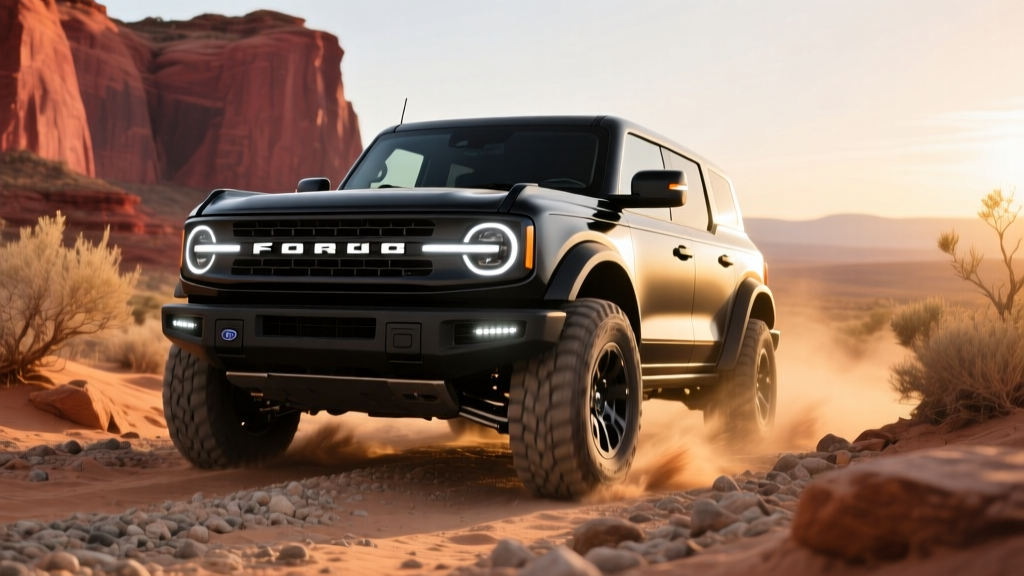
Quick Answer: As of early 2026, Ford has not yet released a fully electric Bronco SUV for sale. The automaker has confirmed an electric Bronco is in development as part of its broader EV strategy, but no official EPA range, battery capacity, pricing, or on-sale date has been published. This guide compiles every confirmed detail, credible reporting, and what buyers should realistically expect based on Ford's current EV platform technology — plus how an electric Bronco would compare to the gas model and competitors like the Rivian R1S and Jeep Wrangler 4xe.
Is There a Ford Bronco Electric SUV You Can Buy Right Now?
No. As of 2026, you cannot purchase a fully electric Ford Bronco. What you can buy is the conventional gas-powered Bronco (available with the 2.3L EcoBoost, 2.7L EcoBoost, or 3.0L EcoBoost V6) and the Bronco Sport, which is a unibody crossover. Ford has referenced an electrified Bronco in various strategy presentations, and industry reporting indicates a battery-electric Bronco is planned, likely riding on a next-generation EV platform. However, Ford has not published official specifications, and the vehicle has not appeared in EPA certification filings as of this writing.
What Ford has delivered is the F-150 Lightning, which provides a useful template for what an electric Bronco might look like in terms of battery sizing, charging architecture, and pricing strategy. The Mustang Mach-E also demonstrates Ford's approach to translating an iconic nameplate to electric. Both vehicles offer data points we can use to set realistic expectations.
What an Electric Bronco Would Likely Look Like: Projected Specs
While official numbers don't exist, we can build a reasonable projection using Ford's existing EV hardware, the current gas Bronco's dimensions, and competitive benchmarks. The following table reflects estimated figures based on available platform data — treat these as informed projections, not confirmed specs.
| Attribute | Projected / Estimated | Basis for Estimate |
|---|---|---|
| Battery Capacity (usable) | ~100–130 kWh | F-150 Lightning Extended Range uses 131 kWh usable; Bronco is lighter/smaller |
| Battery Chemistry | Likely NMC (nickel manganese cobalt) | Ford's performance/range-oriented EVs currently use NMC; LFP reserved for cost-optimized models |
| EPA Range (estimated) | ~260–320 miles | Boxy aerodynamics hurt highway efficiency; Mach-E GT Extended Range achieves 290 mi EPA with 91 kWh |
| Peak DC Fast Charge Rate | ~150–200 kW | F-150 Lightning peaks at 170 kW; newer platforms may push higher |
| 10–80% DC Charge Time (est.) | ~30–40 minutes | Based on Lightning's ~41-minute 10–80% curve at 150+ kW chargers |
| Level 2 Home Charging Rate | ~10.5–11.5 kW (48A) | Consistent with Ford Mobile Power Cord and Connected Charge Station |
| Horsepower (dual-motor AWD) | ~480–580 HP | Lightning Extended Range produces 580 HP; Bronco EV likely similar or slightly detuned |
| 0–60 mph (est.) | ~4.5–5.5 seconds | Lightning does 0–60 in ~4.0s; Bronco is more off-road focused, heavier gearing possible |
| Towing Capacity (est.) | ~5,000–7,500 lbs | Gas Bronco max tows 4,500 lbs; EV torque advantage likely increases this |
| Base MSRP (estimated) | ~$55,000–$65,000 | F-150 Lightning base started ~$55K before incentives; Bronco EV likely positioned similarly |
| Battery/Powertrain Warranty | 8 years / 100,000 miles | Federal minimum requirement; Ford currently meets this on Lightning and Mach-E |
Critical real-world caveat on range: The Bronco's boxy, upright design creates significant aerodynamic drag. EVs lose efficiency disproportionately at highway speeds compared to city driving, and a vehicle with the Bronco's frontal area and flat windshield will see real-world highway range drop 15–25% below EPA estimates. If the EPA sticker reads 300 miles, plan for roughly 230–255 miles on a 75 mph highway trip. Add cold weather (below 32°F), and expect another 15–30% reduction, potentially bringing usable highway range to 180–210 miles in winter conditions. This is physics, not a defect — every boxy EV (including the Rivian R1S and Mercedes G-Class EV) faces the same reality.
Electric Bronco vs. Gas Bronco vs. Plug-In Hybrid Alternatives
If you're shopping for an electrified off-road SUV today, you don't have to wait. Here's how the current options stack up against what a Bronco EV would likely offer:
| Specification | 2026 Ford Bronco (2.7L EcoBoost) | Jeep Wrangler 4xe (PHEV) | Rivian R1S (Dual-Motor Max) | Projected Bronco EV |
|---|---|---|---|---|
| Powertrain | Gas turbo V6 | Plug-in hybrid 2.0L turbo + electric | Battery electric (dual motor) | Battery electric (dual motor, projected) |
| EPA Combined MPGe / MPG | ~20 MPG combined | 49 MPGe (electric) / 20 MPG (gas-only) | ~72 MPGe combined | ~65–75 MPGe (est.) |
| Electric-Only Range | N/A | 22 miles (EPA) | ~350+ miles (EPA, Max pack) | ~260–320 miles (est.) |
| Total Range (gas + electric) | ~350 miles | ~370 miles combined | 350+ miles (battery only) | 260–320 miles (battery only) |
| Starting MSRP | ~$41,000 | ~$51,000 | ~$79,900 | ~$55,000–$65,000 (est.) |
| Federal Tax Credit (§30D) | None | Up to $3,750 (partial credit, sourcing dependent) | Eligibility varies by battery sourcing — check IRS.gov | Unknown until battery sourcing confirmed |
| Off-Road Capability | Excellent (locking diffs, sway-bar disconnect) | Excellent (solid axles, locking diffs) | Very good (air suspension, quad-motor torque vectoring available) | Expected: very good (instant torque, likely solid rear axle or independent with e-lockers) |
| Removable Roof/Doors | Yes | Yes | No (fixed roof, glass roof option) | Likely yes (core Bronco identity) |
The Wrangler 4xe is the closest thing to an electrified Bronco you can buy today. Its 22 miles of electric-only range covers most daily commutes, and the gas engine eliminates range anxiety for longer trips. The tradeoff: you still pay for oil changes, spark plugs, and transmission fluid, and the combined powertrain adds complexity. The Rivian R1S is the most capable electric off-roader currently available, but it starts nearly $80,000 and lacks the removable panels that define the Bronco experience.
Real Ownership Costs: What a Bronco EV Would Cost to Run
One of the strongest arguments for an electric Bronco is operating cost. Here's a five-year cost comparison based on 15,000 miles per year, national average electricity rates ($0.17/kWh as of 2026), and regular unleaded at $3.40/gallon:
| Cost Category | Gas Bronco (2.7L EcoBoost) | Projected Bronco EV | Notes |
|---|---|---|---|
| Purchase Price (base MSRP) | $41,000 | ~$60,000 (est.) | EV carries upfront premium |
| Federal Tax Credit | $0 | Up to $7,500 (if eligible) | Depends on income, MSRP caps, battery sourcing — see IRS §30D rules |
| Fuel/Energy (5 years) | ~$12,750 (15 MPG real-world, $3.40/gal) | ~$4,250 (2.0 kWh/mi, $0.17/kWh, home charging) | Public DC fast charging at $0.40–0.50/kWh would raise EV cost to ~$7,500–$9,000 |
| Maintenance (5 years) | ~$3,500 (oil, filters, plugs, brakes) | ~$1,200 (cabin filter, wipers, brake fluid, tire rotation) | EVs eliminate oil changes, spark plugs, and regenerative braking extends pad life significantly |
| Insurance (5 years, est.) | ~$9,000 | ~$11,000 | EVs typically cost 15–25% more to insure due to repair costs and battery replacement exposure |
| Estimated 5-Year Total | ~$66,250 | ~$68,950 (before credit) / ~$61,450 (with full credit) | Break-even heavily depends on tax credit eligibility and home charging access |
The home charging variable is decisive. If you charge primarily at home on Level 2 (a 240V/48A circuit delivering ~11.5 kW), your per-mile energy cost is roughly $0.05–$0.07. If you rely exclusively on public DC fast charging networks like Electrify America or EVgo, your cost rises to $0.12–$0.18 per mile — approaching or exceeding gasoline costs in some markets. Buyers without access to home or workplace charging should carefully model their local public charging rates before committing to any EV.
Federal Tax Credit Eligibility: What We Know (and Don't Know)
The IRS §30D Clean Vehicle Credit provides up to $7,500 for qualifying new EVs, but eligibility hinges on several factors that won't be confirmed for the Bronco EV until Ford reveals its battery supply chain:
- MSRP Cap: SUVs must have a base MSRP at or below $80,000 to qualify. A Bronco EV priced at $55,000–$65,000 would clear this threshold comfortably.
- Buyer Income Limits: Modified adjusted gross income (MAGI) must not exceed $300,000 (joint filers), $225,000 (head of household), or $150,000 (single filers).
- Battery Component Sourcing: A percentage of battery components must be manufactured or assembled in North America (threshold increases annually). This is the wildcard — Ford's battery supply chain decisions will determine whether the Bronco EV qualifies for the full $3,750 component credit.
- Critical Minerals Sourcing: A percentage of critical minerals must be sourced from the U.S. or free-trade-agreement partners. This determines eligibility for the other $3,750 half of the credit.
- Point-of-Sale Transfer: Qualified buyers can transfer the credit to the dealer at purchase, reducing the out-of-pocket price immediately rather than waiting for a tax refund.
Because Ford has not disclosed the Bronco EV's battery cell supplier or mineral sourcing, it is impossible to confirm credit eligibility at this time. Buyers should monitor fueleconomy.gov for updates as the vehicle approaches production.
Common Misconceptions About an Electric Bronco
| Myth | Fact |
|---|---|
| "An electric Bronco can't handle off-road trails." | Electric motors deliver instant torque at zero RPM — ideal for rock crawling. Rivian's R1S and GMC's Hummer EV have demonstrated serious off-road capability on electric powertrains. The challenge is ground clearance for the battery pack and underbody protection, which Ford's engineers will need to address. |
| "I'll get the full EPA range on the highway." | No EV achieves its EPA sticker at sustained 75+ mph speeds, and a boxy vehicle like the Bronco suffers disproportionately from aerodynamic drag. Plan for 75–85% of EPA range on highway trips, and 55–70% in cold weather with highway driving combined. |
| "Charging takes too long for road trips." | At a functioning 150+ kW DC fast charger, a 10–80% charge takes roughly 30–40 minutes — comparable to a meal break. The real bottleneck is charger availability and reliability, not charging speed itself. Networks like Tesla Supercharger (now open to other brands via NACS adapter) tend to have better uptime than some CCS-only networks. |
| "The battery will need replacing in a few years and cost $20,000+." | Modern NMC and LFP batteries are designed to retain 70–80% of original capacity after 150,000–200,000 miles. Ford warranties its EV batteries for 8 years/100,000 miles at a minimum 70% capacity retention threshold. Full replacement is rare and typically only needed after major physical damage. |
| "I can charge from any standard outlet quickly." | Level 1 charging (120V/12A) delivers roughly 1.4 kW, adding about 3–5 miles of range per hour. For a 100+ kWh battery, a full Level 1 charge would take 70+ hours. Level 2 (240V) home charging is practically essential for daily use, adding 25–35 miles per hour of charging. |
Decision Framework: Should You Wait for the Bronco EV or Buy Now?
Choose the gas Bronco now if:
- You need a vehicle within the next 6 months
- You regularly drive in remote areas with no charging infrastructure (overlanding, rural trails)
- You don't have access to home or workplace Level 2 charging
- Your budget is under $45,000
- Removable doors and fold-flat windshield are non-negotiable (EV structural requirements may compromise this)
Choose the Jeep Wrangler 4xe (PHEV) now if:
- You want electric daily commuting (22 miles EV range) plus gas-engine trail range
- You need proven off-road hardware today with solid axles and locking differentials
- You want removable roof and doors with some electrification benefit
- You're not ready to commit to a full EV but want to reduce fuel consumption
Choose the Rivian R1S now if:
- Your budget extends to $80,000+
- You want a production-ready electric SUV with genuine off-road capability today
- You prioritize technology, air suspension, and available quad-motor torque vectoring
- You don't need removable panels and can accept a more refined, less rugged aesthetic
Wait for the Bronco EV if:
- You want the Bronco's iconic design and removable panels in an electric package
- Your timeline is flexible (likely 2027+ model year at earliest)
- You have reliable home Level 2 charging access
- You're willing to accept first-model-year risk (potential software bugs, build-quality teething issues)
- You want Ford's dealer network for service rather than a startup's mobile service model
What First-Time EV Buyers Should Know Before Waiting
If the Bronco EV will be your first electric vehicle, start preparing now:
Assess your electrical panel. A Level 2 home charger typically requires a 240V/60A dedicated circuit (similar to an electric dryer). Installation costs range from $500–$2,500 depending on panel proximity and whether your home's electrical panel needs a 200A upgrade (which can add $1,500–$3,000+). Get a licensed electrician's quote now so you're ready when the vehicle launches.
Map your charging ecosystem. Use apps like PlugShare or A Better Routeplanner to identify DC fast chargers along your most common road-trip routes. If you live in a charging desert — common in rural Mountain West, parts of the South, and remote Northeast — an EV of any kind will require more planning than a gas vehicle.
Understand the connector landscape. Ford has adopted the North American Charging Standard (NACS) for its newer EVs, meaning future Ford EVs will likely use the Tesla-style NACS connector and have native access to Tesla's Supercharger network. This is a significant advantage over CCS-only vehicles, which currently face a less reliable public charging experience.
Budget for insurance. EV insurance premiums run 15–25% higher than equivalent gas vehicles. Get quotes before ordering to avoid surprises. Insurers cite higher repair costs, specialized labor, and battery replacement exposure as factors.
Frequently Asked Questions
Has Ford officially confirmed a Bronco EV release date?
No. Ford has acknowledged an electric Bronco is part of its future portfolio, but no specific model year, on-sale date, or production timeline has been officially announced as of early 2026. Industry analysts expect a reveal no earlier than late 2026 or 2027, with deliveries potentially in 2028.
Will the electric Bronco have removable doors and a fold-down windshield?
This is unconfirmed. The gas Bronco's removable doors and roof are core to its identity, and Ford is aware that losing these features would alienate the enthusiast base. However, EV battery placement and structural rigidity requirements (especially for roof-off safety) present engineering challenges. Ford has not commented on this specific feature.
Will the Bronco EV qualify for the $7,500 federal tax credit?
It depends on battery sourcing, which Ford has not yet disclosed. The MSRP cap ($80,000 for SUVs) and buyer income limits will likely be met, but the critical-minerals and battery-component sourcing requirements under IRS §30D are the determining factors. This information will become available closer to launch.
How will an electric Bronco handle off-road trails compared to the gas version?
Electric powertrains offer instant torque delivery, precise individual-wheel torque control, and no need to maintain engine RPM during slow crawling — all advantages for technical off-roading. The challenges will be underbody battery protection, ground clearance, and weight (EVs are typically 1,000–1,500 lbs heavier than gas equivalents). Ford's off-road engineering experience with the Bronco Raptor and F-150 Lightning suggests they'll address these issues, but real-world trail testing will be the ultimate measure.
What should I buy if I want an electric off-roader today?
The Rivian R1S is the most capable electric off-road SUV currently in production, starting around $79,900 with available dual- or quad-motor configurations, air suspension, and up to 350+ miles of EPA range. The GMC Hummer EV SUV offers extreme performance (up to 830 HP) but starts above $100,000 and is very large. For a more accessible electrified off-roader, the Jeep Wrangler 4xe plug-in hybrid provides 22 miles of electric range with full gas-engine trail capability.