The Short Answer on the Electric Bronco
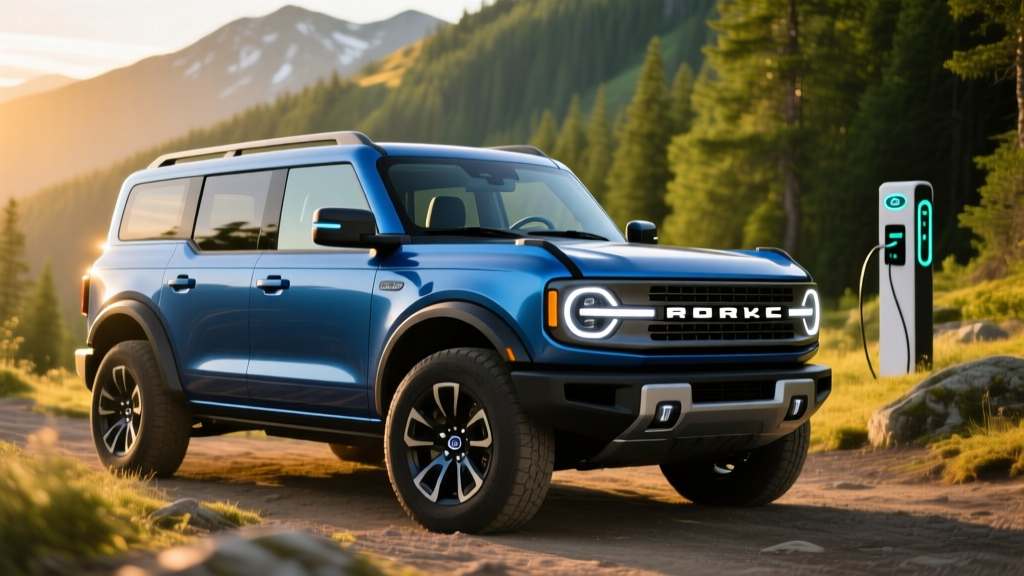
Ford has confirmed it is developing a battery-electric Bronco, but as of early 2026, the vehicle has not been officially unveiled or released for sale. Ford CEO Jim Farley confirmed in 2024 that an electric Bronco is part of the company's future lineup, built on a dedicated EV platform. Until Ford publishes official specs, every figure circulating — range, battery size, pricing — remains preliminary and subject to change. If you need an electric SUV today, alternatives like the Rivian R1S, Tesla Model Y, or Hyundai Ioniq 5 are available now with confirmed EPA data. If you can wait, the electric Bronco targets the off-road-capable EV segment that currently has very few entrants.
What Ford Has Confirmed (and What Remains Unannounced)
Ford's commitment to an electric Bronco is real, but details are sparse. Here is the current state of confirmed information versus speculation:
- Confirmed: An electric Bronco is in Ford's product pipeline. Farley has referenced it in earnings calls and public statements as a vehicle that leverages Ford's "iconic nameplates" on its next-generation EV architecture.
- Confirmed: Ford is investing heavily in its "Universal EV" platform and a separate body-on-frame EV architecture that could underpin trucks and rugged SUVs like the Bronco and a next-generation electric Ranger.
- Unannounced: Exact battery capacity (kWh), EPA-estimated range, horsepower, 0-60 times, towing capacity, trim levels, MSRP, and on-sale date.
- Likely but unconfirmed: Dual-motor AWD as standard or widely available, given the Bronco's off-road positioning. NACS charge port compatibility (Ford has already adopted NACS across its EV lineup starting in 2025).
This means any article giving you a definitive "350-mile range" or "$55,000 starting price" for the electric Bronco is projecting, not reporting. We will flag projections clearly below.
Projected Specs Based on Ford's EV Platform and Segment Rivals
While we wait for official data, we can make informed estimates based on Ford's existing EV technology, the competitive landscape, and what the Bronco's mission requires. The current gas Ford Bronco offers 4-door models with an EPA combined fuel economy of roughly 17-20 MPG depending on engine and tire configuration. An electric Bronco would need to deliver meaningfully better efficiency and enough range for trail use and highway transit to the trailhead.
| Attribute | Projected / Estimated | Segment Context |
|---|---|---|
| Battery Capacity | ~100-120 kWh usable (NMC likely) | Rivian R1S: 106-149 kWh; Tesla Model Y: ~75 kWh |
| EPA Range (est.) | 280-340 miles | R1S Large: ~352 mi; Model Y LR: 308 mi |
| Drivetrain | Dual-motor AWD (standard or optional) | R1S: dual or quad motor; Bronco gas: 4WD standard |
| Horsepower | 400-550 hp | R1S Dual: 533 hp; Bronco Raptor: 418 hp |
| 0-60 mph | 4.5-5.5 seconds (est.) | R1S Dual: ~4.5s; Bronco Badlands: ~6.5s |
| DC Fast Charge Peak | ~175-250 kW (NACS) | R1S Gen 2: ~200 kW; F-150 Lightning: 150 kW |
| 10-80% Charge Time | ~25-35 minutes (est.) | R1S: ~30 min; Model Y: ~25 min |
| Towing Capacity | 5,000-7,500 lbs (est.) | R1S: 7,700 lbs; Bronco gas: 3,500 lbs |
| Off-Road Hardware | G.O.A.T. modes, locking diffs, high clearance | Must match gas Bronco's trail credibility |
Key takeaway on range: The Bronco's boxy, upright design creates significant aerodynamic drag. Expect real-world highway range to fall 15-25% below whatever EPA sticker Ford eventually publishes — a pattern we see with the Rivian R1S and GMC Hummer EV, both of which lose range rapidly above 70 mph. Cold-weather driving could push that loss to 30-35% in sub-freezing temperatures.
Electric Bronco vs. Gas Bronco: Cost and Capability Comparison
The core decision for Bronco buyers will be whether electrification enhances or compromises what makes the Bronco desirable. Here is how the math and capability stack up:
| Factor | Gas Bronco Badlands | Electric Bronco (Projected) |
|---|---|---|
| Base MSRP | ~$51,000 | ~$55,000-$65,000 (est.) |
| Fuel / Energy Cost (annual, 12k mi) | ~$2,400 (18 MPG avg, $3.60/gal) | ~$540-$720 (3.0 mi/kWh, $0.14-$0.18/kWh) |
| Maintenance (annual avg.) | ~$600-$800 (oil, filters, brakes) | ~$200-$400 (cabin filter, tires, wipers) |
| Federal Tax Credit (§30D) | None | Up to $7,500 if eligible (see IRS rules below) |
| Off-Road Capability | Proven: locking diffs, sway bar disconnect, 4WD | Must prove: torque vectoring potential, but ground clearance and articulation TBD |
| Removable Roof/Doors | Yes (core feature) | Unknown — critical for brand identity |
| Trail Range Anxiety | Refuel from jerry can, ~350 mi tank range | Remote charging access is limited; range drops hard off-road |
| Towing | 3,500 lbs | Projected 5,000-7,500 lbs |
The fuel savings alone could save an electric Bronco owner roughly $1,700-$2,000 per year versus the gas version, assuming home charging at residential electricity rates. Over a 5-year ownership period, that is $8,500-$10,000 in fuel savings — enough to offset a higher purchase price. Maintenance savings add another $1,000-$2,000 over five years.
However, the gas Bronco has a decisive advantage in remote off-road scenarios. There are no DC fast chargers at most trailheads. A gas Bronco can carry spare fuel; an electric Bronco cannot carry spare electrons beyond its battery pack. If your primary use case involves multi-day overlanding far from the grid, the gas Bronco remains the pragmatic choice until charging infrastructure reaches backcountry areas.
Real-World Ownership Considerations
Before committing to any electric SUV — including a future electric Bronco — honestly assess these ownership factors:
Home Charging Access
This is the single biggest determinant of EV satisfaction. If you can install a Level 2 (240V) home charger, daily ownership is effortless: plug in at night, wake up to a full battery. A Level 2 installation typically costs $500-$2,000 for the charger hardware plus $800-$3,000 for electrician labor and permits, depending on whether your electrical panel needs an upgrade from 100A to 200A service. Without home charging, you are dependent on public infrastructure — and a vehicle the size of a Bronco with a ~100+ kWh battery will take a long time to fill on Level 1 (120V) alone, adding roughly 3-5 miles of range per hour.
Climate and Range Loss
Lithium-ion batteries lose efficiency in cold weather. Expect 20-35% range reduction in sustained sub-freezing temperatures, especially if you are using cabin heat. A heat pump (which Ford has been incorporating into newer EVs) mitigates this somewhat but does not eliminate it. If you live in northern Minnesota or Montana and plan to use the Bronco as a daily driver in January, plan for a real-world range well below the EPA sticker.
Driving Patterns
The electric Bronco's projected 280-340 mile range handles most daily driving and even weekend trips easily. But if you regularly tow a trailer, highway-tow range can drop 30-50%. And the Bronco's boxy aerodynamics mean highway efficiency at 80 mph will be noticeably worse than at 65 mph — this is physics, not a defect.
Federal Tax Credit Eligibility (§30D): What Applies in 2026
The IRS §30D clean vehicle credit offers up to $7,500 for qualifying new EVs, but eligibility is not guaranteed. Key rules for 2026:
- MSRP Cap: SUVs must have an MSRP at or below $80,000. If Ford prices the electric Bronco above this threshold on higher trims, those trims will not qualify.
- Buyer Income Cap: Modified adjusted gross income must not exceed $150,000 (single), $225,000 (head of household), or $300,000 (married filing jointly).
- Battery Sourcing: The $7,500 credit splits into two $3,750 halves — one tied to critical minerals sourcing, one to battery component manufacturing. Vehicles that meet only one requirement receive $3,750. Sourcing rules tighten annually.
- Point-of-Sale Transfer: Buyers can transfer the credit to the dealer at purchase, reducing the out-of-pocket price immediately rather than waiting for a tax refund.
- Final Assembly: Must occur in North America.
Whether the electric Bronco qualifies for the full $7,500, a partial $3,750, or nothing at all will depend on Ford's battery supply chain at launch. This is not something buyers can assume — check fueleconomy.gov for the definitive list once the vehicle is released.
Common Misconceptions About an Electric Bronco
| Myth | Fact |
|---|---|
| "It's available to order now." | As of early 2026, Ford has not opened reservations or published official specs. The vehicle is confirmed but unreleased. |
| "Electric means it can't off-road." | Electric motors deliver instant torque at zero RPM, which is excellent for low-speed rock crawling. Rivian R1S and GMC Hummer EV have demonstrated credible off-road capability. The challenge is ground clearance, articulation, and trail-side charging — not power delivery. |
| "The battery will need replacing in 5 years." | Modern EV batteries (NMC and LFP) are designed for 200,000+ miles with gradual degradation. Ford's EV battery warranty typically covers 8 years / 100,000 miles with a capacity retention threshold (usually 70%). Real-world data from Tesla, Hyundai, and Ford's own Mustang Mach-E show most packs retaining 85-92% capacity after 100,000 miles. |
| "It will charge as fast as filling a gas tank." | Even at a projected 250 kW peak DC charge rate, a 10-80% session will take roughly 25-35 minutes. Charging also tapers significantly above 80% to protect battery health — a full 0-100% DC session could take 50+ minutes. Plan road trips around this reality. |
| "I'll save money no matter what." | EV insurance premiums run 15-25% higher than comparable gas vehicles. Upfront cost is typically higher. Savings depend on electricity rates, annual mileage, and whether you qualify for the tax credit. Low-mileage drivers may not recoup the premium. |
Competitive Landscape: What Else Can You Buy Today?
If the electric Bronco's timeline doesn't work for you, here is where the competition stands in the electric SUV segment:
| Vehicle | EPA Range | Starting MSRP | Off-Road Credibility | DC Fast Charge |
|---|---|---|---|---|
| Rivian R1S (Dual Motor, Large Battery) | ~352 mi | ~$79,900 | High (air suspension, 4WD modes) | ~200 kW peak |
| Tesla Model Y Long Range | 308 mi | ~$48,990 | Low (no dedicated off-road hardware) | ~250 kW peak |
| Hyundai Ioniq 5 Limited AWD | 290 mi | ~$54,200 | Low (AWD only, no locking diffs) | ~240 kW peak (10-80% in ~18 min) |
| GMC Hummer EV SUV | ~314 mi | ~$99,995 | Very High (Extract mode, CrabWalk) | ~350 kW peak |
| Ford Bronco Electric (Projected) | 280-340 mi (est.) | $55,000-$65,000 (est.) | Must be High (brand requirement) | 175-250 kW (est.) |
The electric Bronco's most direct competitor, if Ford prices it in the $55,000-$65,000 range, would be the Tesla Model Y and Hyundai Ioniq 5 on price — but neither offers serious off-road capability. The Rivian R1S matches or exceeds the Bronco's likely off-road potential but costs $15,000-$25,000 more. This pricing gap is exactly where Ford could carve out a unique position: an off-road-capable electric SUV at a mainstream price.
Decision Framework: Should You Wait or Buy Now?
Wait for the Electric Bronco If:
- Off-road capability is a genuine requirement, not just an aesthetic preference.
- You want the Bronco's removable roof/door experience (assuming Ford carries it over).
- You can afford to wait 1-2+ years and want to see official EPA data before committing.
- You want a mainstream-priced electric SUV with real trail credentials — a gap no current vehicle fills perfectly.
Buy an Available EV Now If:
- You need a vehicle within 3-6 months.
- Your driving is primarily on-road, and off-road capability is secondary.
- You want confirmed EPA range data, real-world charging reviews, and established reliability track records.
- You qualify for the 2026 §30D tax credit on a currently eligible vehicle and don't want to risk future rule changes.
- You are considering a Rivian R1S and can absorb the higher price point for immediate availability and proven capability.
Frequently Asked Questions
When will the electric Ford Bronco be available?
Ford has not announced an official release date. Industry estimates place it in the 2026-2028 timeframe, but this is speculation until Ford confirms. Reserve with caution on any "pre-order" claims from unofficial sources.
Will the electric Bronco have removable doors and roof?
This has not been confirmed. The removable top and doors are central to the Bronco's identity, and Ford would risk alienating the core buyer base by removing them. However, EV skateboard platforms and battery packaging could present engineering challenges for a fully open-air design. This will be one of the most important details when the vehicle is finally revealed.
Will the electric Bronco qualify for the $7,500 federal tax credit?
Possibly, but not guaranteed. Eligibility depends on MSRP (must be ≤$80,000 for SUVs), buyer income, battery sourcing requirements, and North American final assembly. Check IRS.gov and fueleconomy.gov once the vehicle launches for the definitive answer.
How will the electric Bronco compare to the gas Bronco off-road?
Electric motors offer instant, controllable torque — ideal for rock crawling and low-speed technical terrain. The challenges will be ground clearance (battery packs sit low), suspension articulation, weight (EVs are heavy), and the inability to refuel from portable containers on remote trails. Ford will need to engineer carefully to match the gas Bronco's trail reputation.
What will it cost to charge an electric Bronco at home?
Assuming a ~110 kWh battery and a residential electricity rate of $0.14/kWh, a full charge from empty would cost approximately $15-$16. In practice, most owners charge partially each night. Annual charging cost for 12,000 miles at 3.0 miles/kWh would be roughly $560 — compared to $2,400+ in gasoline for the gas Bronco at 18 MPG.
Is an electric Bronco practical for towing?
Electric SUVs can tow well (the Rivian R1S is rated for 7,700 lbs), but towing cuts range dramatically — often by 30-50%. If the electric Bronco achieves a projected 300-mile EPA range, expect roughly 150-200 miles of real-world range when towing a 4,000-lb trailer at highway speeds. This is manageable for short hauls but requires careful planning for longer trips.