The Short Answer: No Bronco EV Exists Yet
As of early 2026, Ford does not sell an electric Bronco. The current sixth-generation Bronco is offered exclusively with turbocharged gas engines (2.3L EcoBoost, 2.7L EcoBoost, and the 3.0L V6 in the Raptor). Ford has not officially announced a production Bronco EV with a confirmed on-sale date. Buyers searching for a "Bronco electric car" today have two practical paths: wait for an official Ford announcement, or pivot to an available electric SUV with similar off-road capability or open-air character. Below, we break down the real costs, alternatives, and ownership math to help you decide.
Why the Electric Bronco Doesn't Exist Yet
Ford's electrification strategy has prioritized high-volume segments first. The Mustang Mach-E launched for 2021, the F-150 Lightning for 2022, and the E-Transit van for commercial fleets. The Bronco, while iconic, sells in lower volumes than the F-150 or Escape and occupies a niche — serious off-roading with a removable roof and doors — that presents unique engineering challenges for a battery-electric platform.
Key hurdles Ford must solve before an electric Bronco reaches showrooms:
- Off-road durability vs. battery weight: A competitive EV Bronco would need a 100+ kWh battery pack (likely NMC chemistry for energy density), adding 1,200–1,500 lbs. over the gas model. That mass complicates suspension articulation, approach/departure angles, and trail durability.
- Range under off-road load: Low-range crawling, sand, and rock modes draw sustained high current. Expect real-world trail range to drop 40–60% versus EPA highway estimates — a critical consideration for remote backcountry use.
- Removable roof and structural rigidity: The gas Bronco's body-on-frame architecture allows door and roof removal without compromising the chassis. A skateboard-style EV platform with a structural battery pack requires rethinking how open-air modularity works.
- Charging infrastructure on trails: Popular off-road destinations (Moab, Rubicon Trail, Ouray) have limited or zero DC fast charging. A gas Bronco can carry spare fuel; an EV Bronco cannot practically carry spare kWh.
Ford CEO Jim Farley has hinted at expanding the "icon" nameplate EV lineup beyond the F-150 Lightning, but no Bronco-specific program has been confirmed with a production timeline as of this writing.
What to Buy Instead: Electric SUVs That Compete
If you want an electric SUV with genuine off-road credibility or open-air potential in 2026, here are the closest alternatives to a hypothetical Bronco EV, with hard numbers from fueleconomy.gov and manufacturer specifications:
| Spec | 2026 Ford Bronco (2.3L Gas) | 2026 Rivian R1S Dual-Motor | 2026 Jeep Wrangler 4xe (PHEV) |
|---|---|---|---|
| Powertrain | 2.3L Turbo I-4 | Dual-Motor BEV | 2.0L Turbo PHEV |
| Horsepower | 300 hp | 533 hp | 375 hp combined |
| 0–60 mph | ~6.5 sec | ~4.5 sec | ~6.0 sec |
| Range / Electric Range | ~370 mi (gas tank) | EPA 352 mi (Max Pack) | 21 mi electric + ~310 mi gas |
| Efficiency | 20 MPG combined | 73 MPGe / 46 kWh/100mi | 49 MPGe (elec) / 20 MPG (gas) |
| Max DC Charge / 10–80% | N/A | ~200 kW / ~28 min | ~50 kW (Level 2 only) |
| Off-Road Capability | Excellent (G.O.A.T. modes, lockers) | Very Good (air susp., tank turns) | Excellent (solid axles, lockers) |
| Open-Air / Removable Roof | Yes (roof + doors off) | No | Yes (roof + doors off) |
| Base MSRP | ~$39,630 | ~$75,900 (Dual-Motor) | ~$51,790 |
| Federal Tax Credit (§30D) | Not eligible | Up to $7,500 (income/MSRP caps apply) | Up to $3,750 (partial battery sourcing) |
Sources: EPA fueleconomy.gov, Ford and Rivian manufacturer spec pages. Tax credit eligibility depends on buyer income, MSRP caps, and battery-sourcing requirements per IRS §30D rules. Verify with a tax professional.
Real Costs: Gas Bronco vs. Electric SUV Ownership
The purchase price is only the start. Here's a five-year total cost of ownership (TCO) comparison assuming 15,000 miles/year, home Level 2 charging at $0.14/kWh (national average), and gas at $3.40/gallon:
| Cost Category (5 Years) | 2026 Bronco 2.3L Gas | 2026 Rivian R1S Dual-Motor |
|---|---|---|
| Purchase Price (base) | $39,630 | $75,900 |
| Federal Tax Credit | $0 | –$7,500 (if eligible) |
| Fuel / Electricity (75,000 mi) | $12,750 (at 20 MPG) | $4,830 (at 46 kWh/100mi) |
| Maintenance | $3,800 (oil, filters, brakes) | $1,500 (cabin filter, wipers, tires) |
| Insurance (avg.) | $8,400 | $11,200 |
| 5-Year TCO (est.) | ~$64,580 | ~$85,930 |
The Rivian saves roughly $7,920 on fuel and $2,300 on maintenance over five years, but its higher purchase price and insurance premiums keep the total cost significantly above the gas Bronco. The math shifts if you wait for a more affordable mid-size electric SUV — or if a Bronco EV eventually launches near the $50,000–$60,000 range with full tax credit eligibility.
Home Charging Reality: What First-Time EV Buyers Must Know
Buying any electric SUV — whether a future Bronco EV or a current Rivian — hinges on charging access. Do not assume you can rely on public charging alone; it's more expensive, less reliable, and slower than home charging.
| Charging Level | Power (kW) | Miles Added/Hour | Best For |
|---|---|---|---|
| Level 1 (120V outlet) | 1.4 kW | 3–5 mi/hr | Overnight top-ups, PHEVs |
| Level 2 (240V, home) | 7.7–11.5 kW | 25–40 mi/hr | Daily home charging |
| DC Fast Charge | 50–350 kW | 150–800+ mi/hr (peak) | Road trips, quick stops |
Home Level 2 installation costs typically range from $800 to $2,500 for a straightforward install (charger near the panel, no upgrade needed). If your home has a 100-amp electrical panel and you need a 200-amp upgrade, expect $2,000–$4,000 additional. Consult a licensed electrician for a site-specific quote.
Cold-weather range loss is real. In sustained temperatures below 30°F, expect a 20–35% reduction in range for any EV. A future Bronco EV rated at 300 miles EPA could deliver as little as 195–240 miles in freezing conditions, especially with cabin heating. Vehicles equipped with a heat pump (standard on many 2026 EVs) mitigate this somewhat, but physics is physics — cold batteries have higher internal resistance and slower charge acceptance.
Common Bronco EV Misconceptions — Fact-Checked
| Myth | Fact |
|---|---|
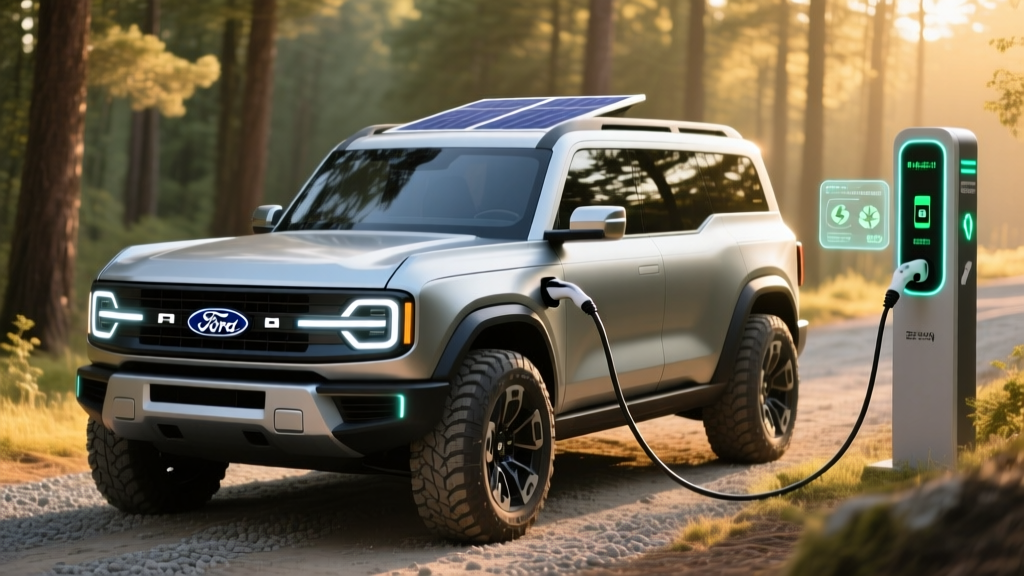
| "The electric Bronco is already on sale." | No production Bronco EV exists. The current Bronco is gas-only. Any images of a "Bronco EV" online are renderings or concepts, not confirmed products. |
| "An EV can't do serious off-roading." | The Rivian R1S and GMC Hummer EV demonstrate that EVs can be highly capable off-road (instant torque, precise low-speed control). However, range on technical trails drops dramatically, and remote trail charging remains a genuine limitation. |
| "I'll save money going electric no matter what." | Fuel and maintenance savings are real ($7,900–$10,200 over 5 years), but EV insurance premiums run 15–35% higher, purchase prices are often higher, and home charger installation adds $800–$4,000+. Run the full TCO before deciding. |
| "The $7,500 tax credit applies to every EV." | Per IRS §30D rules, the credit requires meeting battery-sourcing and critical-mineral thresholds, buyer income caps ($150K single / $300K joint), and MSRP caps ($80K for SUVs/trucks). Many vehicles qualify for only $3,750 or nothing at all. |
Decision Framework: Should You Wait or Buy Now?
Your Bronco EV Decision Path
Choose to WAIT for a potential Bronco EV if:
- You specifically want the Bronco's removable roof/doors with electric powertrain
- Your current vehicle is functional and you can delay a purchase 2–4 years
- You regularly take off-road trips to remote areas with no charging infrastructure
- You want Ford's dealer network and parts availability for trail repairs
Choose the Rivian R1S NOW if:
- You want a capable electric SUV today with proven off-road performance
- You have reliable home Level 2 charging and mostly drive within 200 miles of home
- You can absorb the ~$75,000+ purchase price and qualify for up to $7,500 in federal credits
- Open-air driving is not a priority
Choose the Jeep Wrangler 4xe NOW if:
- You want removable roof and doors with some electric capability (21 mi EV range)
- You need serious off-road hardware (solid axles, lockers, sway-bar disconnect)
- You can charge at home to capture the 21-mile electric commute but need gas range for trail and road trips
- You want a lower entry price (~$51,790) with partial tax credit potential
Stick with the gas Bronco if:
- You frequently drive to remote off-road destinations with zero charging access
- Your budget is under $45,000 and you want maximum off-road capability per dollar
- You lack home charging access and don't want to rely on public infrastructure
What to Watch: Ford's EV Roadmap Clues
Ford has committed to a next-generation universal EV platform (using LFP battery chemistry for cost reduction) expected to underpin affordable models starting around 2027. While not confirmed for the Bronco, this platform could theoretically support a mid-size electric SUV. Key signals to monitor:
- Ford's annual capital allocation updates — any Bronco EV program would require a dedicated investment announcement.
- LFP battery sourcing partnerships — Ford's CATL licensing deal for LFP cells in Michigan could lower costs for future electric SUVs, though LFP's lower energy density makes it challenging for a heavy off-roader.
- NACS charging standard adoption — Ford EVs now use the NACS connector, granting access to Tesla Supercharger stations, which expands the trail-adjacent charging map considerably.
Until Ford makes an official announcement with production specs, treat any "Bronco EV" range, pricing, or release-date claims as speculative.
Frequently Asked Questions
Will Ford make an electric Bronco?
Ford has not confirmed a production Bronco EV. The company has hinted at expanding its "icon" EV lineup, but no timeline or specs have been announced. If it arrives, expect it no earlier than 2028–2029 based on typical automotive development cycles.
Is there an electric SUV that can go off-road like a Bronco?
The Rivian R1S offers strong off-road capability (quad-motor versions include tank turns, adjustable air suspension, and over 11 inches of ground clearance). The GMC Hummer EV SUV is also extremely capable but starts above $98,000. Neither offers a removable roof or doors like the Bronco, which is a key differentiator for the gas model.
How much would a Bronco EV cost if it existed?
Based on Ford's current EV pricing (Mach-E from ~$43,000, F-150 Lightning from ~$55,000) and the Bronco's position as a premium off-roader, a Bronco EV would likely start in the $55,000–$65,000 range, with fully loaded trims exceeding $75,000. This is speculative until Ford announces official pricing.
Does the Jeep Wrangler 4xe count as an electric Bronco alternative?
The Wrangler 4xe is a plug-in hybrid, not a full EV. It offers 21 miles of electric-only range (enough for short commutes) plus a gas engine for unlimited range. It matches the Bronco in open-air modularity and off-road hardware, making it the closest available alternative if you want electrification plus trail capability today.
Can I charge an EV at off-road trailheads?
Charging infrastructure at popular off-road destinations is extremely limited. Most trailheads in Moab, the Rubicon Trail, and similar areas have no DC fast charging within 30+ miles. This is the single biggest practical barrier to a fully electric off-roader for remote backcountry use. A PHEV like the Wrangler 4xe sidesteps this problem entirely.