The Quick Answer: Ford's Affordable EV Truck Situation in 2026
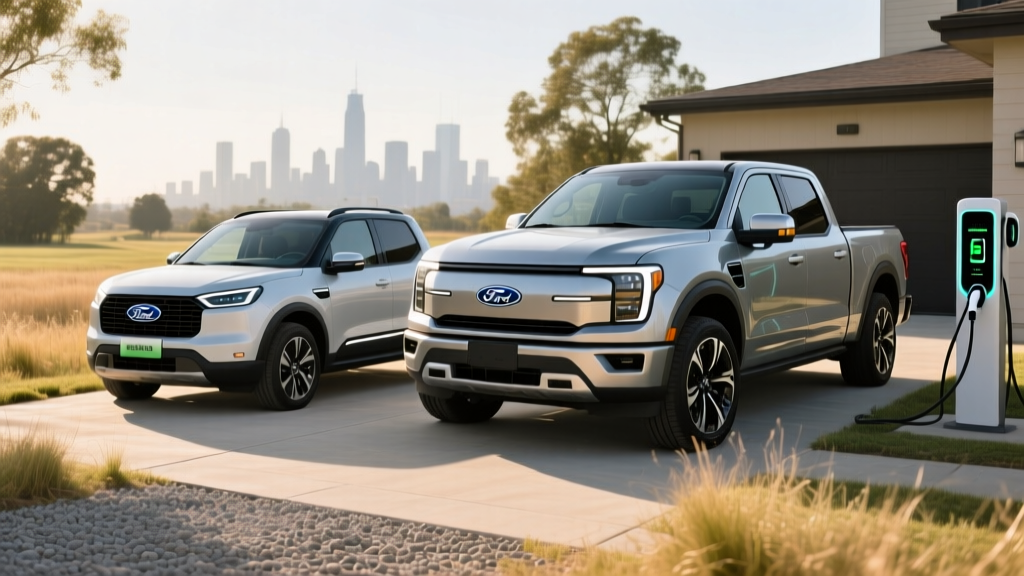
If you're searching for a Ford affordable EV truck, here's the reality: Ford does not currently sell a sub-$40,000 fully electric pickup. The F-150 Lightning starts at approximately $54,995 MSRP for the 2026 Pro trim before incentives, while the highly popular Ford Maverick is offered only as a hybrid (HEV) or gas model — not a plug-in or full EV. The most affordable path to a Ford electrified truck today is the Maverick Hybrid at ~$28,995, which delivers an EPA-estimated 42 MPG city but has no battery-only driving range. If you need a true battery-electric Ford truck, the F-150 Lightning is your only option, and after the federal §30D tax credit (up to $7,500 for eligible buyers), the effective price can drop into the high-$40K range.
Ford's Electrified Truck Lineup: What You Can Actually Buy
Ford offers two truck platforms with some form of electrification in 2026, and understanding the difference is critical before you walk into a dealership:
| Spec | 2026 F-150 Lightning (Pro) | 2026 Ford Maverick Hybrid |
|---|---|---|
| Powertrain | Battery Electric (BEV) | 2.5L Hybrid (HEV) |
| MSRP (Base) | ~$54,995 | ~$28,995 |
| EPA Range / MPG | 240 mi (Std Range) / 320 mi (Ext Range) | 42 MPG city / 33 hwy / 37 combined |
| Battery Capacity | 98 kWh usable (Std) / 131 kWh (Ext), NMC | 1.1 kWh (non-plug-in) |
| DC Fast Charge Peak | ~150 kW (Std) / ~155 kW (Ext) | N/A |
| 10-80% DCFC Time | ~36 min (Std) / ~44 min (Ext) | N/A |
| Level 2 Charge Rate | 19.2 kW (80A) max | N/A |
| Horsepower | 563 hp | 191 hp (combined system) |
| 0-60 mph | ~3.8 sec | ~7.5 sec |
| Towing Capacity | 7,700 lb (Std) / 10,000 lb (Max Tow) | 2,000 lb (Hybrid AWD: 1,500 lb) |
| Warranty (Battery) | 8 yr / 100,000 mi | 8 yr / 100,000 mi (hybrid components) |
| Federal §30D Credit | Up to $7,500 (eligibility varies) | Not eligible (not a plug-in) |
The distinction matters: the Maverick Hybrid is an excellent fuel-saver, but it's a conventional hybrid — you never plug it in, and it has zero electric-only range. The F-150 Lightning is a full battery-electric vehicle (BEV) that must be charged from an external source. Neither qualifies as an "affordable EV truck" in the sub-$35K sense, but they serve very different buyers.
Real-World Range: What the EPA Sticker Doesn't Tell You
F-150 Lightning Standard Range: EPA 240 miles. Expect roughly 195-215 miles on a highway road trip at 70 mph, and 160-185 miles in freezing temperatures with the cabin heater running. Towing a 5,000-lb trailer? Plan for 100-130 miles between charges.
F-150 Lightning Extended Range: EPA 320 miles. Real-world highway driving yields approximately 260-285 miles. Cold weather drops this to 215-240 miles. Towing cuts range by 40-55%.
These numbers come from consistent real-world testing patterns documented by fueleconomy.gov and independent EV reviewers. The Lightning's boxy aerodynamics and heavy curb weight (~6,200 lb) work against highway efficiency. The truck achieves approximately 2.0-2.3 kWh/mile under mixed driving — far thirstier than a sedan like the Tesla Model 3 (~0.25 kWh/mile).
The charge curve also matters. While the Lightning's peak DC fast-charge rate is around 150-155 kW, that peak is sustained only from roughly 10-55% state of charge. Above 80%, charging slows dramatically to protect the battery, often dropping below 40 kW. This is why Ford (and the EPA) quote 10-80% times rather than 0-100% — filling the last 20% can add 25-35 minutes to your stop.
The Cost Breakdown: Lightning EV vs. Maverick Hybrid vs. Gas F-150
To understand whether a Ford electric truck makes financial sense, we need to look at total cost of ownership, not just sticker price. Here's a 5-year / 75,000-mile comparison:
| Cost Factor (5yr/75K mi) | F-150 Lightning Pro (BEV) | Maverick Hybrid (HEV) | F-150 XLT 3.5L V6 (Gas) | |
|---|---|---|---|---|
| Base MSRP | $54,995 | $28,995 | $48,500 | |
| Fed. Tax Credit (§30D) | -$7,500 (if eligible) | $0 | $0 | |
| Effective Purchase Price | $47,495 | $28,995 | $48,500 | |
| Home Charger Install (L2) | $1,200-$2,500 | $0 | $0 | |
| Energy/Fuel Cost | $3,750-$5,625 (home + DCFC) | $6,080 (37 MPG, $3/gal) | $10,310 (20 MPG, $3/gal) | |
| Maintenance | ~$1,500 | ~$2,800 | ~$3,500 | |
| Insurance (avg) | ~$11,250 | ~$7,500 | ~$9,000 | |
| Estimated Depreciation | ~$22,000 | ~$10,000 | ~$19,000 | |
| Approx. 5-Year Total | $87,195-$90,370 | $55,375 | $90,310 |
Notes: Energy costs assume 70% home charging at $0.15/kWh and 30% public DCFC at $0.40/kWh for the Lightning. Gas prices vary regionally. Federal §30D eligibility depends on income caps ($150K single / $300K joint), MSRP caps ($80K for trucks), and battery sourcing rules — verify at IRS.gov. Insurance premiums for EVs run 15-25% higher on average due to repair cost structures. Depreciation figures are estimates based on current market trends and may shift.
The Maverick Hybrid wins decisively on pure economics if you don't need full-size truck capability. The Lightning competes closely with a gas F-150 over five years if you qualify for the full tax credit and charge primarily at home. Public-charging-heavy drivers will see higher energy costs that erode savings.
Home Charging Reality: What Installation Actually Costs
Owning an F-150 Lightning without home charging is technically possible but financially punishing. Relying exclusively on public DC fast chargers at $0.35-$0.55/kWh means paying more per mile than a gas truck. Here's what a home Level 2 setup requires:
| Item | Cost Range | Notes |
|---|---|---|
| Level 2 Charger (48A-80A) | $400-$750 | Ford Mobile Power Cord included; wall unit recommended |
| Electrical Permit | $50-$200 | Varies by municipality |
| Electrician Labor (240V/60-100A circuit) | $800-$2,000 | Depends on panel proximity |
| Panel Upgrade (if needed) | $1,500-$3,500 | Required if you have a 100A service or maxed-out panel |
| Total Install Range | $1,250-$6,450 | Most homes with 200A service: $1,200-$2,500 |
The Lightning's onboard charger supports up to 19.2 kW (80 amps) on Level 2, which is exceptional. At that rate, a fully depleted Standard Range battery (98 kWh) refills in roughly 5.5 hours. More common 48A chargers deliver 11.5 kW, taking about 9 hours — still enough for overnight replenishment. Always have a licensed electrician evaluate your panel before committing to a charger purchase.
If you live in an apartment, rely on street parking, or lack access to a dedicated 240V outlet, the Lightning's ownership proposition becomes significantly harder. Public charging infrastructure continues to expand via Tesla Superchargers (with Ford's NACS adapter), Electrify America, and others, but reliability and pricing remain inconsistent in many regions.
Tax Credit Eligibility: The §30D Rules You Must Verify
2026 Federal EV Tax Credit (§30D) Requirements for F-150 Lightning:
- MSRP Cap: Vehicle MSRP must not exceed $80,000 (trucks/vans/SUVs). The Lightning Pro qualifies; high-end Platinum/Lariat trims may exceed the cap depending on options.
- Buyer Income Cap: Modified AGI ≤ $150,000 (single) or ≤ $300,000 (married filing jointly).
- Battery Sourcing: Critical minerals and battery components must meet phased-in percentage thresholds from US/free-trade-agreement countries. These requirements tighten annually — verify current compliance on the manufacturer's documentation.
- Point-of-Sale Transfer: As of 2024+, eligible buyers can transfer the credit to the dealer at purchase, reducing the out-of-pocket price immediately rather than waiting for a tax refund.
- Assembly: Vehicle must undergo final assembly in North America (the Lightning is built in Dearborn, MI — confirmed).
Always confirm eligibility at IRS.gov and with your tax professional before purchasing. Rules change and individual situations vary.
Common Misconceptions About Ford Electric Trucks
| Myth | Fact |
|---|---|
| "The Maverick has an electric version." | As of 2026, the Maverick is available only as a 2.5L hybrid (HEV) or 2.0L EcoBoost gas model. No plug-in or BEV variant exists. Ford has not announced a Maverick EV. |
| "The Lightning gets 320 miles no matter how you drive." | 320 miles is the EPA estimate for the Extended Range battery under mixed conditions. Highway-only driving, cold weather, and especially towing reduce range by 20-55%. |
| "EV batteries need replacing every few years." | Ford warranties the Lightning's battery for 8 years / 100,000 miles with a minimum 70% capacity retention threshold. Real-world NMC degradation data from similar platforms suggests 85-92% capacity at 100K miles under normal use. |
| "The §7,500 credit is guaranteed for every buyer." | Eligibility depends on your income, the vehicle's MSRP, battery mineral sourcing compliance, and North American assembly. Not every buyer or trim qualifies. |
| "Charging is always cheaper than gas." | Home charging at $0.15/kWh is cheaper per mile. Exclusive DC fast charging at $0.40-$0.55/kWh can equal or exceed the per-mile cost of a 25-MPG gas truck. |
| "The Lightning can tow just like a gas F-150." | It has the torque and rated capacity, but towing 7,000+ lb cuts range to roughly 100-130 miles, requiring frequent charging stops. Gas trucks don't lose half their range when towing. |
Decision Framework: Which Ford Truck Fits Your Situation?
Choose the Ford Maverick Hybrid if:
- Your budget is under $35,000 and you want a compact truck for daily commuting
- You don't have access to home or workplace charging
- You need 37+ MPG combined and light cargo/1,500-lb towing capability
- You want zero lifestyle change — just fill up at any gas station
Choose the F-150 Lightning if:
- You need full-size truck payload, 7,700-10,000 lb towing, and 563 hp
- You have (or can install) a 240V Level 2 home charger
- Your daily driving is under 200 miles and road trips are occasional
- You qualify for the §30D credit, bringing effective cost close to a gas F-150
- You value the frunk, Pro Power Onboard (up to 9.6 kW V2L), and near-silent operation
Wait or look elsewhere if:
- You tow long distances regularly (gas or diesel remains more practical)
- You live in a region with sparse public charging infrastructure
- You need a sub-$40K electric truck — no Ford product fits today; consider the Chevrolet Silverado EV Work Truck or wait for next-gen platforms
What a First-Time EV Truck Buyer Should Know
If the F-150 Lightning is your entry into electric vehicles, prepare for these ownership realities:
Charging time becomes part of your routine. A full overnight Level 2 charge takes 5-10 hours depending on battery size and charger amperage. You'll plug in every night, like charging a phone. On road trips, plan 25-40 minute DC fast-charge stops every 180-250 miles (real-world).
Cold weather is a real range penalty. NMC lithium-ion batteries lose efficiency below freezing. Expect 20-30% range reduction at 20°F, mitigated somewhat by the Lightning's heat pump and battery preconditioning feature (use it before arriving at a fast charger).
Tire wear increases. The Lightning's 6,200+ lb curb weight and instant torque eat through tires 15-25% faster than a comparable gas F-150. Budget for replacement rubber every 25,000-35,000 miles.
Insurance costs more. EV repair costs, battery replacement risk, and specialized labor drive premiums 15-25% above gas equivalents. Get quotes before purchasing.
Frequently Asked Questions
Will Ford make a smaller, cheaper electric truck?
Ford has not officially announced an electric Maverick or Ranger BEV as of 2026. The company has signaled next-generation electric trucks built on a new flexible architecture, but timelines and pricing remain unconfirmed. Any claims about release dates should be treated as speculative.
Can I use Tesla Superchargers with the F-150 Lightning?
Yes. Ford transitioned to the NACS (North American Charging Standard) connector beginning with the 2025 model year. 2026 Lightning models ship with a native NACS charge port, granting direct access to Tesla's Supercharger network (15,000+ stations). Earlier CCS-equipped Lightnings can use a Ford-approved adapter.
How much does it cost to charge an F-150 Lightning at home?
At the US average residential rate of ~$0.16/kWh, fully recharging the Standard Range battery (98 kWh) costs about $15.70. The Extended Range (131 kWh) costs roughly $21.00. This translates to approximately $0.07-$0.09 per mile — roughly half the fuel cost of a 20-MPG gas F-150 at $3/gallon.
Is the F-150 Lightning good for towing?
The Lightning has strong towing capability (up to 10,000 lb with Max Tow package) and excellent low-end torque. However, towing at capacity cuts real-world range to 100-130 miles. For long-distance towing, a diesel or gas truck remains more practical due to refueling speed and range retention.
What happens if the Lightning's battery degrades?
Ford's battery warranty covers 8 years / 100,000 miles with a minimum 70% capacity retention. If the battery falls below that threshold within the warranty period, Ford will repair or replace it. Out-of-warranty replacement costs are estimated at $15,000-$25,000 depending on battery size, though prices are expected to decline as battery manufacturing scales.