The Short Answer
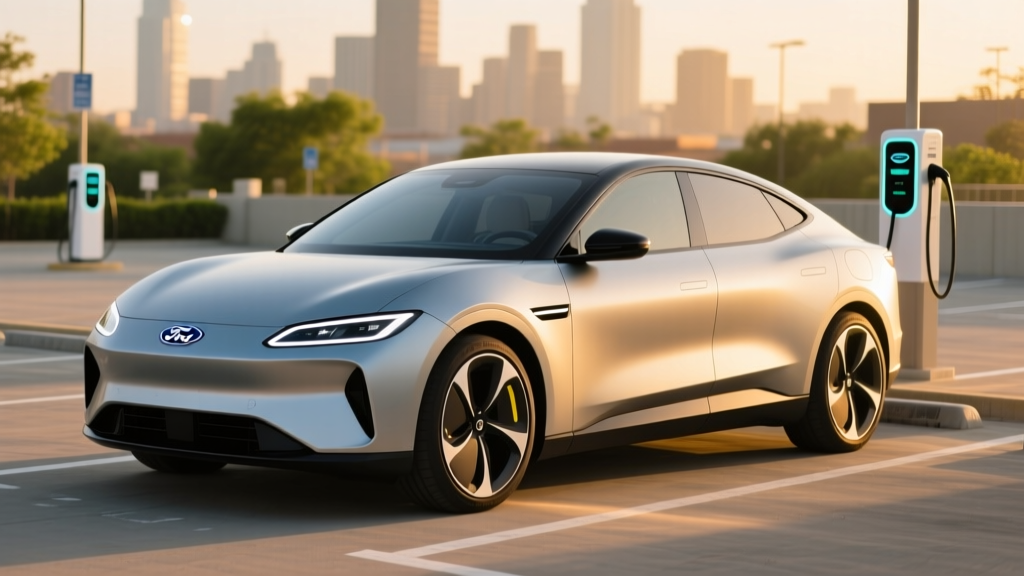
Ford's next-generation affordable EV platform — announced in 2024 and targeting production by late 2026/early 2027 — is engineered around a radical simplification: fewer parts, fewer suppliers, and a unibody-style architecture that eliminates the traditional body-on-frame complexity. The goal is a starting MSRP near $30,000 before incentives, with a projected EPA range of roughly 250–300 miles on an LFP (lithium iron phosphate) battery pack estimated at 55–65 kWh usable. If Ford delivers on this platform, it would represent the first mainstream American-brand EV priced at parity with compact gas cars — but buyers should understand what "fewer parts" means for repairability, performance, and long-term ownership before committing.
Why Ford Is Betting on a Simplified EV Architecture
Legacy automakers have struggled to match Tesla's manufacturing cost advantage, and the core reason is parts count. A conventional vehicle — EV or gas — can contain 30,000+ individual components sourced from hundreds of suppliers. Ford's new platform strategy, outlined by CEO Jim Farley in the company's Advanced EV Development team announcement, targets a roughly 30% reduction in vehicle content cost through three engineering moves:
- Integrated structural battery pack: The battery enclosure becomes a load-bearing chassis element, eliminating separate frame rails, cross-members, and mounting hardware. This is similar to Tesla's structural pack approach in the Model Y and the 4680-cell vehicles.
- Mega-casting: Large aluminum or steel castings replace dozens of stamped and welded body panels at the front and rear of the vehicle, cutting part count, assembly time, and weight.
- Reduced wiring harness complexity: A centralized zonal electrical architecture replaces the traditional distributed wiring harness (which in many vehicles weighs 60+ lbs and contains over a mile of wire), cutting weight, copper cost, and assembly labor.
The result, Ford projects, is a smaller, lighter, cheaper-to-build electric vehicle that can be sold profitably at a price point where current EVs lose money or require heavy incentives to move metal.
Projected Specs: What We Know (and What's Preliminary)
As of early 2026, Ford has not released a production model name or finalized every specification. The vehicle is widely expected to be a compact crossover or hatchback, potentially slotted below the Mustang Mach-E and competing with the Chevrolet Equinox EV, Volvo EX30, and a next-generation Tesla Model 2 if it materializes. Here's what industry reporting and Ford's disclosures point to:
| Attribute | Projected Figure | Notes |
|---|---|---|
| Target Base MSRP | ~$30,000 | Before §30D tax credit; final pricing TBD |
| Battery Chemistry | LFP (lithium iron phosphate) | Lower cost, longer cycle life, lower energy density vs NMC |
| Estimated Usable Battery | 55–65 kWh | Based on platform size class and range targets |
| Projected EPA Range | 250–300 miles | Real-world highway/cold weather: expect ~200–250 mi |
| Peak DC Fast Charge Rate | ~150–175 kW (est.) | LFP chemistry typically supports moderate peak rates |
| 10–80% DC Charge Time | ~25–35 minutes (est.) | LFP charge curves tend to taper less aggressively than NMC |
| Level 2 AC Charging | ~10.5 kW onboard charger | ~7–8 hours for full charge on a 48A home circuit |
| Connector | NACS (Tesla-standard) | Ford has committed to NACS for all new models |
| Drivetrain | RWD or FWD single motor | AWD likely unavailable or limited to higher trims |
| Estimated 0–60 mph | ~7.0–8.5 seconds | Cost-focused platform prioritizes efficiency over performance |
| Battery/Powertrain Warranty | 8 years / 100,000 miles (expected) | Federal minimum for EV traction batteries |
Note: These figures are preliminary and based on Ford's public statements and industry analysis as of early 2026. Final production specs may differ. We will update this guide when official EPA and manufacturer data is released.
What "Fewer Parts" Means for Real Ownership
The manufacturing story is compelling, but buyers need to translate platform simplification into day-to-day ownership reality. Here's how fewer parts maps to the things that actually affect your wallet and your experience:
Repair Costs and Insurance
Mega-castings are a double-edged sword. They reduce manufacturing cost, but if a rear casting is damaged in a collision, it may need full replacement rather than section-by-section repair. Early Tesla Model Y vehicles with mega-castings saw higher-than-average insurance claims costs for rear impacts. Ford will need to design repair-friendly break points and ensure body shop training and parts availability — something that takes years to mature. Expect insurance premiums on this platform to be moderate to slightly above average for the segment initially, settling down as repair networks gain experience.
Software-Defined Simplicity
Ford's zonal architecture means fewer physical control modules (the small computers scattered throughout a modern car) and more centralized processing. In theory, this means fewer electronic gremlins and simpler over-the-air updates. In practice, Ford's SYNC 4A and BlueCruise systems have been uneven in reliability compared to Tesla's stack. A simpler hardware architecture helps, but software quality remains the bigger variable.
LFP Battery Longevity
LFP chemistry is a smart choice for an affordable platform. LFP cells tolerate daily charging to 100% without the accelerated degradation that NMC batteries experience at high state of charge. Cycle life typically exceeds 3,000 full cycles before significant capacity loss — translating to well over 500,000 miles of equivalent driving. The trade-off: LFP is heavier per kWh and loses more range in extreme cold (often 25–35% range reduction at 20°F vs. 15–25% for NMC). If you live in Minnesota or Maine, plan accordingly.
Cost Breakdown: Ford Affordable EV vs. Comparable Gas Car
Let's compare the projected Ford platform against a typical compact gas crossover (e.g., Toyota RAV LE, MSRP ~$30,000) over 5 years and 60,000 miles. This assumes home Level 2 charging is available and uses national average electricity and gas prices.
| Cost Category | Ford Affordable EV (Projected) | Compact Gas Crossover |
|---|---|---|
| Purchase Price (base MSRP) | $30,000 | $30,000 |
| §30D Federal Tax Credit | Up to $7,500 (eligibility varies — see below) | $0 |
| Effective Purchase Price | ~$22,500 (if full credit applies) | $30,000 |
| Fuel / Energy (60,000 mi) | ~$3,300 (at $0.14/kWh, 3.5 mi/kWh) | ~$7,200 (at $3.40/gal, 28 MPG combined) |
| Maintenance (5 years) | ~$1,200 (tire rotations, cabin filter, wipers) | ~$3,800 (oil, filters, brakes, spark plugs, transmission fluid) |
| Insurance (5-year avg.) | ~$8,500 (est. slightly above gas avg.) | ~$7,200 |
| Estimated Depreciation | ~$12,000 (EV depreciation remains elevated) | ~$10,500 |
| Total 5-Year Cost | ~$25,500 (with credit) | ~$34,500 |
Key takeaway: If the buyer qualifies for the full §30D credit and has home charging access, the Ford platform could save roughly $9,000 over five years versus a comparable gas crossover. Without the tax credit, the savings narrow to roughly $1,500–$2,000, driven primarily by fuel and maintenance differences — still meaningful, but less transformative.
Tax Credit Eligibility Reality Check
The §30D federal tax credit is not guaranteed for every buyer or every vehicle. Current rules under IRS guidelines require:
- MSRP cap: Vans, SUVs, and pickups must be under $80,000; sedans and other body styles under $55,000. A ~$30,000 vehicle clears this easily.
- Buyer income cap: Modified AGI must not exceed $150,000 (single), $225,000 (head of household), or $300,000 (joint).
- Battery sourcing: Critical minerals and battery components must meet escalating domestic/free-trade-partner sourcing thresholds. Ford's LFP supply chain — heavily reliant on CATL in China — has been a point of uncertainty for credit eligibility.
- Point-of-sale transfer: Buyers can apply the credit as a down-payment reduction at the dealer rather than waiting for a tax refund.
Ford has indicated it is working to qualify its LFP-based vehicles for the credit, but battery sourcing rules remain the variable to watch. Always verify eligibility on fueleconomy.gov before purchasing.
EV vs. Gas vs. Hybrid: Who Should Wait for This Ford?
The affordable EV platform won't be the right answer for every buyer. Here's how it stacks up against the alternatives based on real driving situations:
| Your Situation | Best Choice | Why |
|---|---|---|
| Home charging available, commute <80 mi/day, mild climate | Ford Affordable EV (or current EV) | Lowest operating cost, simplest maintenance, tax credit potential |
| No home charging, apartment/condo dweller | HEV (e.g., Toyota RAV4 Hybrid) | No charging dependency; ~40 MPG combined; ~$1,500/yr fuel savings vs gas-only |
| Frequent 400+ mi road trips, rural area | PHEV (e.g., Toyota RAV4 Prime) | 35–42 mi electric-only for daily driving + gas engine for long trips; no range anxiety |
| Cold climate (sub-20°F winters), home charging | PHEV or EV with heat pump | LFP range loss in cold is significant; a heat pump-equipped EV or PHEV mitigates this |
| Budget under $25K, need a car now | Used EV (with §25E credit up to $4,000) | Chevrolet Bolt EV/EUV, Nissan LEAF available well under $20K with the used credit |
Common Misconceptions About Affordable EVs
| Myth | Fact |
|---|---|
| "A $30K EV will have terrible range." | 250–300 EPA miles is realistic on a 55–65 kWh LFP pack in a compact, aerodynamic vehicle. The Chevy Bolt EV achieved 259 mi on 65 kWh at a similar price point years ago. |
| "LFP batteries are inferior." | LFP trades energy density for cycle life and safety. For a daily commuter vehicle, LFP's 3,000+ cycle life and tolerance for 100% daily charging is a practical advantage, not a compromise. |
| "Fewer parts means it'll be unreliable." | Fewer mechanical parts generally means fewer failure points. The risk is concentrated in mega-casting repair costs and software maturity, not mechanical breakdown. |
| "I'll never save money because insurance is higher." | EV insurance is typically 10–20% higher, but fuel savings of ~$1,300/year and maintenance savings of ~$500/year usually offset the premium differential. |
| "Charging takes too long for road trips." | At 150–175 kW peak, a 10–80% charge takes roughly 25–35 minutes — comparable to a rest stop with food and bathroom break. Ford's NACS adoption means access to 16,000+ Tesla Superchargers. |
What First-Time EV Buyers Should Know Before Committing
If Ford's affordable platform is your first EV, here are the non-negotiable preparation steps:
- Confirm home charging feasibility. A Level 2 home charger (240V, 40–48 amp circuit) is the single biggest ownership quality-of-life factor. Installation typically costs $800–$2,500 depending on panel capacity and run length. If your electrical panel is at capacity, a 200-amp upgrade can add $1,500–$4,000. Get a licensed electrician's quote before ordering the car.
- Understand your real-world range. EPA estimates assume mixed driving at moderate temperatures. Sustained highway driving at 75 mph typically reduces range by 10–15%. Cold weather (below 32°F) can reduce LFP range by 25–35%. A 280-mile EPA rating might deliver 200 miles on a cold winter highway trip. Plan accordingly.
- Map your public charging options. Even with home charging, you'll need DC fast charging for road trips. Ford's NACS connector gives access to Tesla Superchargers and the growing network of NACS-equipped stations from Electrify America, EVgo, and others. Download the PlugShare or A Better Routeplanner app and map a sample road trip before buying.
- Verify tax credit eligibility with a tax professional. The §30D credit has income limits, MSRP caps, and battery sourcing requirements that change. The IRS point-of-sale transfer option simplifies the process, but confirm your eligibility before relying on the credit in your budget.
- Budget for tire replacement. EVs are heavier and deliver instant torque, which accelerates tire wear. Expect to replace tires every 30,000–40,000 miles rather than the 50,000–60,000 miles typical for gas cars. Budget $600–$1,000 per set for quality all-season or EV-optimized tires.
Decision Framework: Should You Wait or Buy Now?
Wait for Ford's Affordable EV Platform If:
- You want a new EV near $30,000 and can wait until late 2026 or 2027 for availability
- You prefer a mainstream brand with a large dealer network for service
- You want NACS charging compatibility from day one without adapters
- Your daily driving is under 100 miles and you have home charging
- You value LFP battery longevity and plan to keep the vehicle 8+ years
Buy a Current EV Now If:
- You need a vehicle within the next 3–6 months
- The Chevrolet Equinox EV (starting ~$33,000, EPA up to 319 mi) meets your needs today
- You qualify for the §30D credit now and want to lock it in before potential policy changes
- You want proven real-world data on range, charging, and reliability rather than projections
Choose a Hybrid (HEV/PHEV) Instead If:
- You lack reliable home or workplace charging access
- You regularly drive 400+ miles in areas with sparse DC fast charging infrastructure
- You live in an extreme cold climate where EV range loss significantly impacts your daily needs
- You want to minimize upfront cost and don't need electric-only driving
Frequently Asked Questions
When will Ford's affordable EV platform be available to buy?
Ford has targeted production starting in late 2026 or early 2027 at its Louisville, Kentucky assembly plant (retooled for next-gen EVs). Exact on-sale dates and market rollout order have not been confirmed as of early 2026. Production ramp-up typically takes 3–6 months before vehicles reach dealerships in volume.
Will the vehicle qualify for the $7,500 federal tax credit?
The MSRP (expected ~$30,000) easily clears the $55,000 cap for non-SUV body styles. However, the battery sourcing requirements — particularly critical minerals and battery component rules — are the key uncertainty with LFP cells largely sourced from Chinese suppliers like CATL. Ford has stated it is working to establish compliant supply chains, but buyers should check fueleconomy.gov for the official eligibility list once the vehicle is certified.
How does LFP battery chemistry affect my daily charging habits?
LFP batteries can and should be charged to 100% regularly — unlike NMC batteries, which benefit from staying between 20–80% for longevity. This means you get full use of the battery's capacity every day. LFP also has a flatter voltage curve, which makes state-of-charge estimation slightly less precise (the car's range estimate may fluctuate more near the top and bottom of the charge).
What will insurance cost compared to a gas car?
Expect EV insurance premiums to run 10–20% higher than an equivalent gas vehicle, primarily due to higher repair costs for collision damage (mega-castings, battery protection, specialized labor). On a $30,000 vehicle, this might translate to $1,500–$1,800/year vs. $1,200–$1,500/year for a gas compact crossover. Shop quotes from multiple insurers — some (like Geico and Progressive) have narrowed the EV premium gap significantly.
Can I take road trips with a 250–300 mile range EV?
Yes, with planning. At highway speeds, real-world range will likely be 210–260 miles. Ford's NACS connector provides access to Tesla Superchargers, where a 10–80% charge in roughly 25–35 minutes adds approximately 175–220 miles of range. Apps like A Better Routeplanner let you plan trips with charging stops factored in. Most road-trip charging stops align naturally with rest breaks.
Is the simplified platform a risk for long-term reliability?
Fewer mechanical parts generally reduces failure points — there's no transmission, no exhaust system, no timing belt, no oil pump. The primary reliability risks for this platform are software-related (infotainment glitches, OTA update failures) and structural repair costs after collision damage. Ford's 8-year/100,000-mile battery and powertrain warranty provides a safety net for the most expensive components.