Quick Answer: Is There a Ford $30,000 Electric Truck?
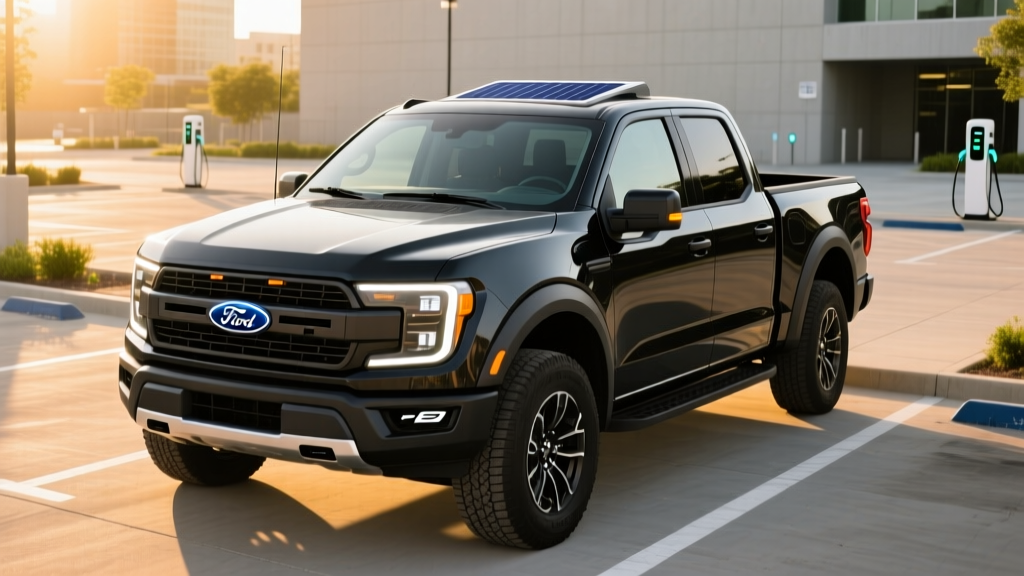
As of early 2026, Ford has not yet released a $30,000 electric pickup. What exists is an announced next-generation midsize electric truck — part of Ford's "universal EV platform" — targeted at a starting price near $30,000. Production is expected to begin in late 2026 or 2027 at Ford's Louisville, Kentucky assembly plant. The truck is projected to use an LFP (lithium iron phosphate) battery pack, target roughly 250+ miles of EPA range, and position itself below the F-150 Lightning in both size and price. Until Ford publishes official specs, every number below is based on Ford's public statements, supply-chain reporting, and platform analysis — treat them as preliminary estimates.
What Ford Has Actually Confirmed
Ford CEO Jim Farley has publicly stated the company is developing a family of affordable electric vehicles on a new dedicated EV architecture, with a midsize pickup among the first models. The stated goal: a base MSRP near $30,000 before incentives, undercutting the current F-150 Lightning (which starts around $55,000) and competing directly with midsize gas pickups like the Toyota Tacoma and Ford Ranger.
Key confirmed or strongly signaled details:
- Platform: New "universal" EV skateboard architecture, separate from the F-150 Lightning's platform
- Assembly: Louisville, Kentucky plant (retooling underway)
- Battery chemistry: LFP expected — Ford has already adopted LFP in the Mustang Mach-E Standard Range and F-150 Lightning Standard Range to cut costs and avoid cobalt/nickel supply constraints
- Timeline: Production targeted for late 2026 or 2027; exact on-sale date unconfirmed
- Size class: Midsize — think Ranger dimensions, not F-150
Ford has not released battery capacity (kWh), motor output (HP), EPA range estimates, charging speeds (kW), or trim-level pricing. We'll update this article the moment official specs drop.
Projected Specs: What a $30K Ford Electric Truck Could Look Like
Based on the LFP battery packs Ford currently deploys, competitor benchmarks (Chevrolet Silverado EV, Rivian R2, Hyundai Ioniq 5-based trucks), and the cost constraints of a $30,000 MSRP target, here is a reasonable projection. These are estimates, not official specs.
| Attribute | Projected Estimate | Notes |
|---|---|---|
| Base MSRP | ~$30,000 | Before incentives; higher trims likely $35K–$42K |
| Battery Chemistry | LFP | Lower cost, longer cycle life, less energy-dense than NMC |
| Battery Capacity (usable) | ~60–75 kWh | Constrained by cost target; LFP packs are heavier per kWh |
| EPA Range (est.) | ~230–270 miles | Real-world highway: expect ~190–230 mi; cold weather: ~160–200 mi |
| Motor / Drivetrain | RWD standard, AWD optional | Single rear motor likely on base; dual-motor AWD on higher trims |
| Horsepower (est.) | ~250–350 HP | Depending on single vs. dual motor |
| 0–60 mph (est.) | ~6.0–7.5 seconds | Quick for a midsize truck; EV torque advantage |
| Max DC Fast Charge | ~150–180 kW (peak) | LFP packs typically charge at moderate C-rates; 10–80% in ~28–35 min |
| Level 2 Home Charge | ~11.5 kW (48A) | ~25–30 miles of range per hour of charging |
| Towing Capacity (est.) | ~3,500–5,000 lbs | Midsize class; significantly less than F-150 Lightning's 7,700–10,000 lbs |
| Payload (est.) | ~1,200–1,500 lbs | Comparable to Ranger/Tacoma |
| Battery Warranty | 8 yr / 100,000 mi | Federal minimum for EV batteries; Ford typically meets this |
Range Reality Check
If the truck lands at ~250 miles EPA, plan for 190–220 miles on the highway at 70+ mph, and 160–190 miles in sub-freezing temperatures. LFP batteries experience similar cold-weather range loss to NMC (~25–35% reduction), though they tolerate repeated 100% charging without degradation concerns — a real ownership advantage for daily drivers who need every available mile.
Cost Breakdown: EV Truck vs. Gas Midsize Pickup
The $30,000 price tag is the headline, but total cost of ownership (TCO) is what actually matters. Here's how a projected Ford $30K electric truck compares to a similarly priced gas midsize pickup (e.g., 2026 Ford Ranger or Toyota Tacoma) over five years and 75,000 miles.
| Cost Category | Ford $30K EV Truck (Projected) | Gas Midsize Pickup (~$32K) |
|---|---|---|
| Purchase Price (base MSRP) | $30,000 | $32,000 |
| Federal Tax Credit (§30D) | Up to $7,500 (see eligibility below) | $0 |
| Effective Purchase Price | ~$22,500 (if full credit applies) | $32,000 |
| Fuel / Electricity (75K mi) | ~$2,800–$3,800 (home charging at $0.13/kWh) | ~$8,400 (25 MPG combined, $2.80/gal) |
| Maintenance (5 yr) | ~$1,200 (no oil changes, less brake wear) | ~$3,200 (oil, filters, plugs, brakes) |
| Insurance (5 yr est.) | ~$7,500–$9,000 (EV premiums typically 10–20% higher) | ~$6,500–$7,500 |
| Estimated 5-Year TCO | ~$34,000–$38,800 | ~$50,100–$51,100 |
Key takeaway: If you qualify for the full $7,500 federal credit and charge primarily at home, the EV truck's 5-year TCO could be $12,000–$16,000 lower than a gas equivalent. But that "if" carries weight — read the tax credit section below.
Federal Tax Credit: Will the $30K Ford Truck Qualify?
Under current IRS §30D rules, a new EV can qualify for up to $7,500 in federal tax credits, split into two halves:
- $3,750 if the battery meets critical-minerals sourcing requirements
- $3,750 if the battery meets component-manufacturing (North America) requirements
§30D Eligibility Checklist (2026 Rules)
- MSRP cap: Trucks/vans/SUVs must have a base MSRP ≤ $80,000 — the $30K Ford easily clears this
- Buyer income cap: AGI ≤ $150,000 (single) / $300,000 (joint) / $225,000 (head of household)
- Final assembly: Must occur in North America — Louisville, KY qualifies
- Battery sourcing: Critical minerals and component rules tighten annually; LFP chemistry (iron, phosphate) may face fewer supply-chain hurdles than NMC but China-processed minerals remain a risk factor
- Point-of-sale transfer: You can apply the credit as a dealer discount at purchase rather than waiting for tax filing
- Foreign entity of concern (FEOC): Battery components from FEOC nations (primarily China) can disqualify the credit
The risk: Ford's use of LFP chemistry may involve Chinese-processed minerals (CATL is a major LFP supplier globally). Ford has been working to onshore LFP supply — including its BlueOval Battery Park in Michigan using CATL-licensed technology — but whether the final pack meets FEOC and critical-mineral thresholds at launch is not guaranteed. Check the IRS qualified vehicles list once the truck is officially on sale.
EV vs. Gas vs. Hybrid: Which Midsize Truck Makes Sense?
The Ford $30K electric truck won't exist in a vacuum. Buyers will cross-shop it against gas midsize pickups (Ford Ranger, Toyota Tacoma, Chevrolet Colorado) and potentially hybrid options. Here's how the three powertrains compare for typical truck buyers.
| Factor | EV Truck (~$30K) | Gas Midsize (~$32K) | Hybrid Midsize (~$36K) |
|---|---|---|---|
| Upfront Cost (after credits) | ~$22,500–$30,000 | $32,000 | ~$36,000 (some PHEV credit possible) |
| Range / Total Distance | ~230–270 mi (must recharge) | ~400–450 mi (5-min refill) | ~450–550 mi (gas + electric assist) |
| Refuel/Recharge Time | 30 min (DC fast) / 8+ hr (L2 home) | 5 minutes | 5 minutes (gas); 2–4 hr plug-in (if PHEV) |
| Fuel Cost per Mile | ~$0.04–$0.05 (home) / ~$0.12 (public DC) | ~$0.11–$0.13 | ~$0.08–$0.10 |
| Towing | ~3,500–5,000 lbs (range drops 40–50% while towing) | ~5,000–7,500 lbs | ~5,000–7,500 lbs |
| Cold-Weather Impact | 25–35% range loss below freezing | Minimal (~5% fuel economy drop) | Minimal |
| Maintenance | Low (no oil, fewer moving parts) | Moderate (standard ICE schedule) | Moderate (ICE + some EV components) |
| Home Energy Use | Can offset with solar; V2L possible | N/A | N/A (unless PHEV w/ V2L) |
Real-World Ownership: What a First-Time EV Truck Buyer Must Know
If this is your first EV, the buying equation goes beyond MSRP. Here are the practical realities that determine whether an electric truck works in your life.
Home Charging Is the Make-or-Break Factor
Over 80% of EV charging happens at home. If you can install a Level 2 (240V) charger in your garage or driveway, a ~60–75 kWh battery will recharge overnight in 6–8 hours, meaning you start every morning with a full "tank." A Level 2 home charger installation typically costs $800–$2,000 (charger unit + electrician + permit), assuming your electrical panel has capacity. A 200-amp panel is usually sufficient; older homes with 100-amp panels may need a $1,500–$3,000 panel upgrade.
If you cannot charge at home (apartment, street parking, no garage), you'll rely on public DC fast chargers and Level 2 destination chargers. This adds time, cost ($0.30–$0.50/kWh at public stations vs. ~$0.13/kWh at home), and inconvenience. An EV truck without home charging is still viable, but it's a meaningfully different ownership experience.
Towing and Payload: The Honest Limitations
Electric trucks lose 40–50% of their range when towing near max capacity. This is physics — moving 5,000+ pounds of trailer requires substantially more energy. If you tow frequently over long distances, a gas or hybrid truck remains more practical today. For occasional light towing (a small boat, utility trailer, bikes), the EV truck handles it fine, just plan charging stops accordingly.
Climate Considerations
LFP batteries are robust and tolerate daily 100% charging well, but they are not immune to cold-weather efficiency loss. If you live in northern states with sustained sub-freezing winters, budget for 25–35% less range from December through February. Preconditioning the battery while plugged in (a standard EV feature) mitigates this somewhat by warming the pack before you drive.
Common Misconceptions About a Budget Ford EV Truck
| Myth | Fact |
|---|---|
| "A $30K electric truck will have 400 miles of range." | At $30K, battery cost constraints limit the pack to ~60–75 kWh, yielding roughly 230–270 miles EPA. Long-range EVs cost more because batteries are the single most expensive component. |
| "It will tow as much as an F-150 Lightning." | Midsize trucks (electric or gas) tow less than full-size trucks. Expect ~3,500–5,000 lbs — adequate for light duty, not heavy hauling. |
| "The $7,500 tax credit is guaranteed." | Credit eligibility depends on battery sourcing, your income, and MSRP — all of which can shift. Verify on the IRS qualified vehicle list before purchasing. |
| "LFP batteries are inferior." | LFP has lower energy density than NMC (meaning a heavier pack for the same kWh), but offers longer cycle life (3,000+ cycles), better thermal stability, no cobalt or nickel, and tolerance for daily 100% charging. For a work truck charged nightly, LFP is arguably the better chemistry. |
| "Electric trucks can't handle job sites." | EVs deliver instant torque from 0 RPM, making them excellent for low-speed load-pulling and off-road crawling. The bed and chassis are built to the same durability standards as gas trucks. The limitation is range under heavy load, not capability. |
| "I'll save $10,000 a year on fuel." | Realistic savings depend on your mileage, electricity rate, and whether you charge at home. At 15,000 miles/year with home charging, expect ~$1,100–$1,400/year in fuel savings vs. gas. At public DC rates, savings shrink significantly. |
Decision Framework: Should You Wait for the Ford $30K Electric Truck?
Buy (or Reserve) the Ford $30K Electric Truck If:
- You have home charging access (garage or driveway with 240V outlet or ability to install one)
- Your daily driving is under 150 miles round-trip (covers ~95% of US commutes)
- You want a low-cost work truck for job-site commuting, light hauling, and urban/suburban use
- You qualify for the §30D federal tax credit (income under caps, tax liability sufficient or use point-of-sale transfer)
- You rarely tow heavy loads over long distances
- You value low operating costs and minimal maintenance over maximum range
Consider a Gas or Hybrid Midsize Truck Instead If:
- You cannot charge at home and public charging infrastructure in your area is sparse
- You regularly tow 4,000+ lbs over distances exceeding 100 miles
- You live in an extreme cold-weather climate and need consistent range year-round without planning overhead
- You need a truck now — the Ford $30K EV truck may not be available until late 2026 or 2027
- Your budget cannot absorb the higher insurance premiums typical of EVs (10–20% above gas equivalents)
Look at a Used F-150 Lightning or Rivian R1T If:
- You need full-size truck capability (towing, payload, bed size) but want electric
- You can find a used Lightning under the $4,000 used-EV tax credit (vehicle must be ≤ $25,000, sold by a dealer, model year at least 2 years old)
What to Watch Before This Truck Goes on Sale
Until Ford publishes the window sticker, these are the data points that will determine whether the $30K electric truck is a genuine bargain or a compromise:
- Actual EPA range: Anything below 230 miles will be tough to sell against 400+ mile gas trucks, even at $30K
- DC fast-charging speed: A 150+ kW peak with a flat charge curve (sustaining speed, not just peaking) is essential for road-trip viability
- Tax-credit eligibility at launch: If battery sourcing rules disqualify it from the $7,500 credit, the effective price jumps to $30K+ — a very different value proposition
- Trim-level pricing: A $30K base with a spartan interior and a $42K "real" trim is a pattern we've seen before; watch the mid-trim pricing
- Software and ADAS: Ford's BlueCruise (Level 2 hands-free highway driving) is competitive — whether it's included or a subscription add-on matters for TCO
Frequently Asked Questions
When will the Ford $30,000 electric truck be available to buy?
Ford has targeted production starting in late 2026 or 2027 at its Louisville, Kentucky plant. An exact on-sale date has not been announced. Reservations may open months before production begins — monitor Ford's official channels for announcements.
Will the Ford $30K electric truck qualify for the $7,500 federal tax credit?
It's likely but not guaranteed. The truck will be assembled in North America (Louisville, KY) and should clear the $80,000 MSRP cap. The variable is battery sourcing — specifically whether the LFP pack meets critical-minerals and FEOC-free component rules under §30D. Check the IRS qualified vehicle list once the model is certified.
How does a $30K electric truck compare to the Ford Maverick?
The Ford Maverick (gas and hybrid) starts around $26,000–$28,000 and gets 37–42 MPG combined in hybrid form. The electric truck would cost slightly more upfront but offer dramatically lower per-mile energy costs (~$0.04/mi vs. ~$0.09/mi for the Maverick Hybrid). The Maverick Hybrid is the closest internal comparison — it's an excellent budget truck today, while the EV version is still forthcoming.
Can I charge the Ford electric truck at a Tesla Supercharger?
Ford EVs currently sold (F-150 Lightning, Mustang Mach-E) use the NACS connector or come with adapters for Tesla Supercharger access. It is highly likely the $30K truck will ship with a native NACS port, given Ford's commitment to the Tesla charging standard. This would grant access to 25,000+ Superchargers nationwide.
What will insurance cost for a $30K electric truck?
EV insurance premiums are typically 10–20% higher than equivalent gas vehicles, driven by higher repair costs (specialized parts, battery replacement risk, ADAS sensor recalibration). For a $30K electric truck, expect annual premiums of roughly $1,500–$1,800, varying by state, driving record, and insurer. Get quotes before purchasing — some insurers (like Tesla Insurance and a growing number of mainstream carriers) offer competitive EV rates.
Is LFP battery chemistry safe for a truck?
LFP is among the safest lithium-ion chemistries available. It has higher thermal stability (less prone to thermal runaway), longer cycle life, and no cobalt. The trade-off is lower energy density — meaning a heavier, physically larger pack for the same kWh. For a truck where daily charging is routine and weight is less critical than in a sedan, LFP is an excellent fit. Ford already uses LFP in the Mustang Mach-E Standard Range and F-150 Lightning Standard Range without reported safety issues.
What happens if I need to replace the battery?
Under federal law, EV batteries carry a minimum warranty of 8 years / 100,000 miles against defects and excessive degradation (typically defined as falling below 70% of original capacity). LFP batteries are projected to retain 80%+ capacity after 200,000+ miles based on cycle-life data. Out-of-warranty replacement for a ~65 kWh LFP pack would likely cost $8,000–$14,000 based on current LFP cell pricing trends, though this is speculative for a truck not yet in production.