The Short Answer on Ford's $30K Electric Pickup
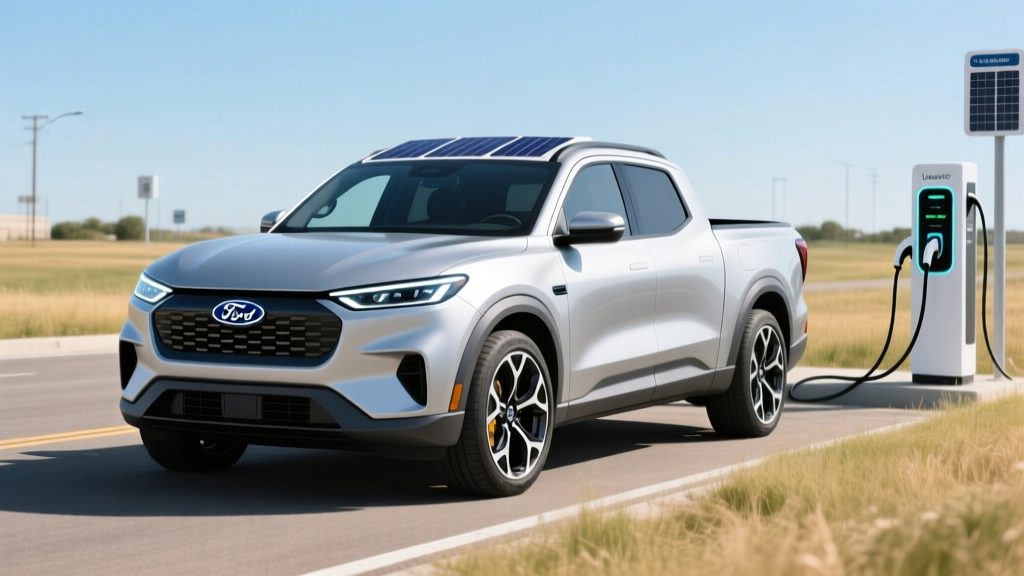
As of early 2026, Ford does not yet sell a $30,000 electric pickup truck. The gasoline and hybrid Ford Maverick starts around $26,000–$28,000 MSRP, but an all-electric Maverick EV has not officially launched. Ford's cheapest current electric vehicle is the Mustang Mach-E, starting near $38,000 before incentives, while the F-150 Lightning begins above $50,000. If you need an affordable electric pickup today, the closest alternatives are the base Chevrolet Silverado EV Work Truck (approximately $39,900) or waiting for Ford's next-generation compact EV pickup, which industry reports suggest could debut for the 2027–2028 model year with a target price near $30,000.
What Ford Actually Sells Right Now in the Electric Truck Space
Ford's electric truck lineup in 2026 centers on one production model: the F-150 Lightning. After significant price restructuring following the 2024 launch, here is where the Lightning stands:
| Spec | F-150 Lightning Pro (Base) | F-150 Lightning XLT |
|---|---|---|
| MSRP | ~$50,000 | ~$57,000 |
| EPA Range | 240 mi (std) / 320 mi (ext) | 240 mi (std) / 320 mi (ext) |
| Battery (usable) | 98 kWh (std) / 131 kWh (ext) | 98 kWh (std) / 131 kWh (ext) |
| Peak DC Fast Charge | 150 kW | 150 kW |
| 10–80% Charge Time | ~41 min (ext battery) | ~41 min (ext battery) |
| Horsepower | 580 hp | 580 hp |
| 0–60 mph | ~4.0 sec | ~4.0 sec |
| Max Towing | 7,700 lb (std) / 10,000 lb (ext) | 7,700 lb (std) / 10,000 lb (ext) |
| Warranty | 8 yr / 100,000 mi battery | 8 yr / 100,000 mi battery |
The Lightning is a full-size truck — far larger and more expensive than what a buyer searching for a "Ford $30K electric pickup" likely wants. This is precisely why interest in an electric Maverick persists. The Maverick's compact footprint, car-like ride, and sub-$30,000 gas pricing make it the natural candidate for Ford's affordable electric truck ambitions.
The Maverick EV: What We Know and What's Speculation
Ford CEO Jim Farley has publicly stated the company is developing a new generation of affordable electric vehicles, and multiple industry reports point to a compact electric pickup as a priority. Here is what is confirmed versus what remains unverified:
Confirmed or Highly Likely
- Ford is investing in a universal EV platform for smaller, lower-cost vehicles
- Target price point for next-gen compact EVs: approximately $25,000–$35,000
- Ford has acknowledged the compact pickup segment as a strategic priority
- Expected production timeline: late 2026 at earliest, more likely 2027–2028 model year
Not Yet Confirmed (Preliminary/Estimated)
- Exact model name (Maverick EV, Ranger EV, or new nameplate)
- Battery chemistry — likely LFP (lithium iron phosphate) given the cost target
- EPA range — estimated 230–280 miles based on platform efficiency targets
- Charging architecture — 400V expected (not 800V, to control cost)
- Federal tax credit eligibility under IRS §30D rules will depend on battery sourcing at time of launch
Buyer caution: Until Ford officially announces pricing and specs, any "$30,000 Ford electric pickup" listing you find online refers either to the gas/hybrid Maverick or to speculative renders. No reservation system is currently open for this vehicle.
Affordable Electric Trucks You Can Buy or Pre-Order in 2026
If you need an electric pickup now — or soon — here is how the realistic options compare on price and capability:
| Model | Starting MSRP | EPA Range | Battery | Max Towing | Est. §30D Credit |
|---|---|---|---|---|---|
| Ford F-150 Lightning Pro | ~$50,000 | 240–320 mi | 98–131 kWh NMC | 10,000 lb | Up to $7,500* |
| Chevrolet Silverado EV 4WT | ~$39,900 | ~280 mi (est.) | ~100 kWh (est.) | 8,000 lb | Up to $7,500* |
| Rivian R1T (Dual Motor) | ~$74,800 | 270–352 mi | 106–141 kWh | 11,000 lb | $0 (over MSRP cap) |
| Tesla Cybertruck AWD | ~$79,990 | 318 mi | ~123 kWh | 11,000 lb | $0 (over MSRP cap) |
| Ford Maverick Hybrid (gas) | ~$27,000 | 42 MPG city | 1.1 kWh (hybrid) | 2,000 lb | N/A (not a BEV) |
*§30D credit eligibility depends on buyer income caps ($150K single / $300K joint), MSRP caps ($80K trucks), and critical-mineral/battery-component sourcing rules. Always verify on irs.gov and with a tax professional before purchasing.
Cost Comparison: Electric Pickup vs. Gas Maverick Over 5 Years
Let's ground the "Ford $30K electric pickup" question in real ownership economics. We'll compare a hypothetical $30,000 electric compact pickup (assuming it launches with 250 mi range, 70 kWh LFP battery) against the current gas Maverick Hybrid at $27,000 MSRP.
| Cost Factor (5 yr / 75,000 mi) | Hypothetical EV Pickup ($30K) | Maverick Hybrid ($27K) |
|---|---|---|
| Purchase Price | $30,000 | $27,000 |
| Est. §30D Federal Credit | −$7,500 (if eligible) | $0 |
| Effective Purchase | $22,500 | $27,000 |
| Fuel / Electricity (75K mi) | ~$3,400 (home L2 at $0.14/kWh) | ~$6,750 (42 MPG at $3.80/gal) |
| Maintenance (oil, filters, brakes) | ~$900 | ~$2,800 |
| Insurance (avg.) | ~$7,500 | ~$6,000 |
| Est. 5-Year Total Cost | $34,300 | $42,550 |
Key takeaway: Even at a $3,000 higher sticker, a $30K electric pickup with full tax-credit eligibility saves roughly $8,250 over five years compared to the Maverick Hybrid — driven by $3,350 in fuel savings, $1,900 in maintenance savings, and the $7,500 credit. However, this assumes home Level 2 charging access and full credit eligibility. Without home charging, public DC fast charging at $0.35–$0.50/kWh would push electricity costs to $8,500–$12,250, erasing much of the fuel-cost advantage.
Real-World Ownership Considerations Before You Wait
The decision to wait for a Ford $30K electric pickup or buy something now depends on your specific situation. Here are the practical factors that matter most:
Home Charging Access
This is the single biggest determinant of EV satisfaction. A Level 2 home charger (240V, 32–48 amps / 7.7–11.5 kW) adds roughly 25–37 miles of range per hour of charging. Installation typically costs $800–$2,500 depending on panel capacity and conduit run. If you rent, live in an apartment, or lack a dedicated parking spot with electrical access, daily EV life becomes significantly harder. Public charging costs 2–4× more than home charging and requires planning.
Climate and Real-World Range
An electric compact pickup with a 70 kWh LFP battery and a 250-mile EPA rating will realistically deliver:
- Mild weather, mixed driving: 220–250 miles
- Highway at 75+ mph: 190–220 miles
- Cold weather (below 30°F): 150–190 miles (LFP chemistry loses 25–35% range in deep cold without preconditioning)
- Towing (even light loads): 120–160 miles — EV range drops dramatically under tow, often by 40–50%
Driving Patterns
If your daily round-trip commute is under 80 miles and you can charge at home overnight, an EV pickup covers your needs with margin to spare. If you regularly drive 200+ miles in a single day, tow frequently, or live in a region with sparse DC fast-charging infrastructure, a hybrid like the Maverick Hybrid remains the more practical choice today.
Decision Framework: Should You Wait or Buy Now?
Choose to WAIT for the Ford $30K Electric Pickup if:
- Your current vehicle is functional and you can delay a purchase 12–24 months
- You have confirmed home Level 2 charging access (garage or driveway with 240V)
- Your daily driving is under 100 miles round-trip with rare long road trips
- You don't need to tow more than 2,000–3,000 lb regularly
- You live in a moderate climate (less extreme cold-weather range loss)
- You want the lowest possible total cost of ownership and expect to qualify for the full §30D credit
Choose to BUY NOW (Maverick Hybrid or Silverado EV) if:
- You need a truck within the next 3–6 months
- You tow regularly (Maverick Hybrid: 2,000 lb; Silverado EV: 8,000+ lb)
- You lack reliable home charging and depend on public infrastructure
- You live in a cold-weather state and need consistent range year-round (hybrid is climate-independent)
- You drive long highway routes frequently and can't plan charging stops
- Your income exceeds §30D caps ($150K single / $300K joint), reducing the EV cost advantage
Common Misconceptions About a $30K Electric Pickup
| Myth | Fact |
|---|---|
| "The Ford Maverick EV is available to order now." | It is not. Only the gas and hybrid Maverick are in production. No official EV variant has been announced with a release date. |
| "A $30K electric truck will qualify for the full $7,500 tax credit." | Eligibility depends on battery critical-mineral sourcing, buyer income, and MSRP caps. Many EVs lose partial or full credit due to sourcing requirements. |
| "A small EV pickup can tow like an F-150." | Compact EV trucks will likely be rated for 2,000–4,000 lb max. Towing also cuts range by 40–50%, making long-distance towing impractical. |
| "EV batteries won't last." | Modern LFP batteries are rated for 3,000+ charge cycles with minimal degradation. Ford's warranty covers 8 years / 100,000 miles with a capacity-retention threshold (typically 70%). Real-world data from fueleconomy.gov shows most EVs retain 85–90% capacity at 100K miles. |
| "Charging an EV takes too long." | Home Level 2 charging happens overnight while you sleep — 8 hours adds 200+ miles. DC fast charging on road trips: 10–80% in approximately 25–35 minutes for a 70 kWh pack at 100–150 kW peak. |
What First-Time EV Pickup Buyers Should Know
If you've never owned an electric vehicle, the transition involves a few adjustments that catch new owners off guard:
kW vs. kWh — learn this distinction. kW (kilowatts) measures power — how fast energy flows into the battery during charging. kWh (kilowatt-hours) measures energy — the total capacity of the battery, like gallons in a fuel tank. A 70 kWh battery charged at 11 kW (Level 2) takes roughly 6.5 hours from empty. That same battery at a 100 kW DC fast charger reaches 80% in about 40 minutes.
Charging curves are not linear. EVs charge fastest between 10–50% state of charge. Above 80%, charging slows dramatically to protect battery health. A "150 kW peak" charge rate is only sustained briefly — average rate over a 10–80% session is often 60–70% of the peak number.
LFP vs. NMC battery chemistry matters. A $30K electric pickup will almost certainly use LFP (lithium iron phosphate) cells. LFP advantages: lower cost, longer cycle life, no cobalt. LFP trade-offs: lower energy density (heavier pack for the same range), worse cold-weather performance, and a recommendation to charge to 100% regularly (unlike NMC, which prefers 80% daily limits). This is actually a benefit for truck owners — you get the full battery capacity daily.
Insurance costs more. EV insurance premiums run 15–25% higher than comparable gas vehicles, driven by higher repair costs and battery replacement values. Get quotes before purchasing — the savings on fuel can be partially offset by higher premiums. Expect $1,400–$1,800/year for a compact EV pickup versus $1,100–$1,400 for a gas Maverick.
The §30D point-of-sale transfer is a game-changer for cash flow. Under current IRS rules, you can transfer the federal EV tax credit to the dealer at purchase, reducing your out-of-pocket cost immediately rather than waiting to claim it on your tax return. This effectively turns a $30,000 truck into a $22,500 truck at the dealership — if you qualify.
Frequently Asked Questions
Is Ford making a $30,000 electric pickup truck?
Ford has announced plans for affordable next-generation EVs targeting the $25,000–$35,000 range, and a compact electric pickup is widely expected to be among them. However, no official model name, pricing, or release date has been confirmed as of early 2026. Industry timelines point to a 2027–2028 model year launch.
What is the cheapest electric pickup truck available now?
The Chevrolet Silverado EV 4WT starts at approximately $39,900, making it the lowest-priced full-size electric pickup. There is currently no electric compact pickup on the US market at any price point — which is exactly why demand for a Maverick EV is so high.
Will a $30K electric Ford truck qualify for the $7,500 tax credit?
Possibly, but it depends on three factors: (1) your adjusted gross income must be under $150,000 (single) or $300,000 (joint); (2) the truck MSRP must be under $80,000 (trucks qualify for the higher cap); and (3) the battery must meet critical-mineral and component-sourcing requirements set by the IRS. These sourcing rules tighten annually, so eligibility at launch is not guaranteed. Verify on irs.gov at time of purchase.
How much does home charging cost for an electric pickup?
At the US average residential rate of $0.14–$0.17/kWh, fully charging a 70 kWh battery costs approximately $9.80–$11.90 — yielding 200–250 miles of range. That works out to roughly $0.04–$0.06 per mile, compared to $0.12–$0.15 per mile for a gas Maverick Hybrid at current fuel prices.
Can an electric pickup truck tow?
Yes, but with major range implications. A compact EV pickup will likely be rated for 2,000–4,000 lb. However, towing cuts range by 40–50% due to the extreme energy demands of pulling a trailer. A truck rated for 250 miles of range may deliver only 125–150 miles while towing. For frequent heavy towing, a diesel or gas truck remains more practical today.
Should I buy a Maverick Hybrid instead of waiting for the EV?
If you need a truck now, tow regularly, lack home charging, or live in extreme cold, the Maverick Hybrid at ~$27,000 and 42 MPG city is an excellent choice with zero range-anxiety trade-offs. If you can wait 12–24 months, have home charging, and want the lowest long-term cost, the upcoming electric option will likely save $7,000–$10,000 over five years of ownership.