The Short Answer on a Ford $30,000 EV Pickup
As of early 2026, Ford does not sell a $30,000 electric pickup truck. The cheapest new Ford F-150 Lightning starts near $55,000, and Ford's upcoming next-generation midsize electric pickup (built on the Universal EV platform) is targeted for a roughly $30,000 price point but is not expected to reach dealers before late 2027 at the earliest. If you need an electric pickup today near $30,000, your only realistic path is a used F-150 Lightning (2022–2023 Pro trims have depreciated into the $28,000–$38,000 range) or waiting while considering a plug-in hybrid truck like the Ford Maverick Hybrid as a bridge vehicle.
Where Ford's Affordable EV Pickup Actually Stands
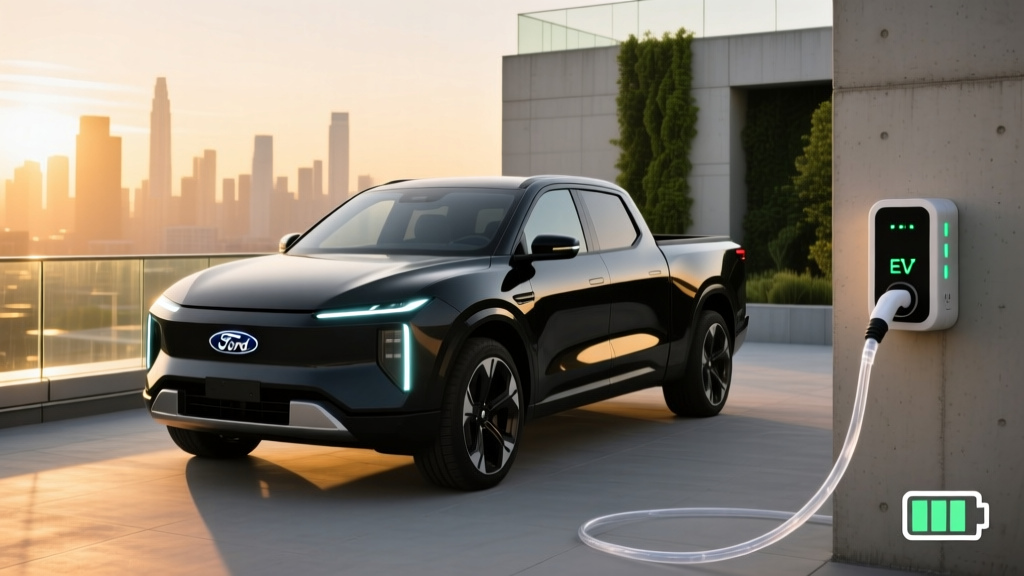
Ford CEO Jim Farley has publicly confirmed that a compact, body-on-frame electric pickup is under development on the company's Universal EV architecture — a flexible platform designed to underpin multiple affordable models. Internal targets place the starting MSRP around $30,000 before incentives, which would make it one of the cheapest electric trucks on the U.S. market. However, Ford has pushed the timeline for this vehicle multiple times. The original announcement window of 2025 has slipped, and current industry reporting points to a late 2027 or 2028 model-year debut.
What we know so far about the announced platform:
- Compact/midsize truck footprint (smaller than F-150 Lightning, closer to Maverick)
- Targeted starting MSRP: ~$30,000
- Expected battery chemistry: LFP (lithium iron phosphate) for cost control and longevity
- Estimated range: 250–300 miles (preliminary, unconfirmed)
- DC fast charging: likely 150 kW peak (preliminary)
These specs are estimates based on Ford's public statements and industry analysis, not confirmed production figures. Buyers should not make purchasing decisions around unreleased vehicle specs.
What You Can Actually Buy Today: Current EV Pickup Pricing
If you're shopping now, here's where electric pickups stand in 2026:
| Vehicle | Starting MSRP | EPA Range | Battery (kWh) | Max DC Charge (kW) | 0–60 mph |
|---|---|---|---|---|---|
| Ford F-150 Lightning Pro | $54,995 | 240 mi | 98 kWh (NMC) | 150 kW | ~6.5 sec |
| Ford F-150 Lightning (Extended Range) | $69,995 | 320 mi | 131 kWh (NMC) | 150 kW | ~4.5 sec |
| Chevrolet Silverado EV 4WT | $52,500 | 260 mi | 100 kWh (NMC) | 200 kW | ~5.5 sec |
| Rivian R1T Dual-Motor Standard | $69,900 | 270 mi | 95 kWh (NMC) | 200 kW | ~4.5 sec |
| Used F-150 Lightning Pro (2022–23) | $28,000–$38,000 | 240 mi (orig.) | 98 kWh (NMC) | 150 kW | ~6.5 sec |
The used F-150 Lightning is the only way to touch the $30,000 mark today. Depreciation on early Lightnings has been steep — partly due to the EV market correction of 2023–2025 and partly because fleet buyers have cycled out of early models. A 2022 F-150 Lightning Pro with 30,000–50,000 miles can be found in the $28,000–$35,000 range at franchise dealers. However, buyers should verify battery State of Health (SoH) before purchasing — request a pre-purchase battery diagnostic showing capacity retention, ideally above 90%.
EV Pickup vs. Gas Truck: Real Cost Comparison
Let's compare what a used F-150 Lightning Pro at ~$32,000 costs to own versus a new Ford Maverick gas truck at a similar effective price point, over 5 years and 75,000 miles:
| Cost Category | Used F-150 Lightning Pro (2022) | New Ford Maverick XL AWD (Gas) |
|---|---|---|
| Purchase Price | $32,000 | $28,500 |
| Federal Tax Credit (§30D) | $0 (used credit max $4,000 if eligible) | $0 |
| Fuel/Energy (75k mi) | $5,250 (home L2, $0.14/kWh avg) | $9,375 (26 MPG combined, $3.25/gal) |
| Maintenance (5 yr) | $1,800 (tires, cabin filter, fluid checks) | $4,500 (oil, brakes, filters, transmission) |
| Insurance (5 yr est.) | $11,500 | $7,500 |
| Estimated Depreciation | $12,000 | $10,000 |
| 5-Year Total Cost | ~$62,550 | ~$59,875 |
The EV saves roughly $4,125 on fuel and $2,700 on maintenance over five years, but those savings are partially offset by higher insurance premiums (EVs typically cost 15–25% more to insure due to battery repair costs) and steeper depreciation. The net result: total cost of ownership is close to breakeven at this price point. The EV wins decisively only if you have access to cheap home charging (under $0.12/kWh) and drive high annual miles (15,000+).
Source: fueleconomy.gov side-by-side comparison tool
Real-World Ownership: What First-Time EV Truck Buyers Must Know
Home Charging Is Non-Negotiable for Most Buyers
An electric pickup makes financial sense primarily when you charge at home. Public DC fast charging costs $0.35–$0.55/kWh on most networks (Electrify America, EVgo, Tesla Superchargers), which erases the fuel-cost advantage versus gas. A Level 2 home charger installation (240V, 48A circuit) typically costs $800–$2,500 including equipment and electrician labor, depending on whether your panel needs upgrading. Without home charging, expect to pay $0.35–$0.50 per mile equivalent in DC fast charging — more than a gas truck.
Real-World Range vs. EPA Sticker
The F-150 Lightning Pro carries a 240-mile EPA rating. In real-world conditions:
- Highway driving (70+ mph): expect ~190–210 miles
- Cold weather (below 32°F): expect ~160–190 miles (LFP and NMC batteries lose 20–30% range in freezing temps)
- Towing a 4,000-lb trailer: expect ~120–150 miles (towing can cut range by 40–50%)
- City/suburban driving: 230–250 miles (regen braking helps)
If your daily commute is under 60 miles round-trip and you charge at home nightly, range is a non-issue. If you regularly tow or drive 200+ mile highway stretches, an EV pickup in this price range will require route planning around DC fast chargers.
Charging Speed Reality
The F-150 Lightning peaks at 150 kW on DC fast charging. In practice, it sustains roughly 130–140 kW from 10% to about 55% State of Charge (SoC), then tapers to ~80 kW through 80%, and drops sharply above 80%. A 10–80% charge takes approximately 41 minutes at a functioning 150+ kW station. Plan road-trip stops accordingly — this is not a 15-minute gas fill-up.
Common Misconceptions About Affordable EV Trucks
| Myth | Fact |
|---|---|
| "The $30,000 Ford EV pickup is available now" | It is announced but not in production. Earliest realistic arrival is late 2027 or 2028. |
| "I'll get the full $7,500 federal tax credit on any EV" | The §30D credit has MSRP caps ($80,000 for trucks), buyer income limits ($150K single/$300K joint), and strict battery mineral sourcing rules. Many EVs qualify for partial or no credit. Always check current IRS guidance. |
| "EVs need no maintenance" | Tires wear 20–30% faster on heavy EVs. Cabin filters, brake fluid, coolant, wiper blades, and 12V batteries still require service. Expect $300–$500/year. |
| "The battery will need replacing in 5 years" | Ford covers the F-150 Lightning battery for 8 years/100,000 miles with a minimum 70% capacity retention threshold. Real-world degradation data shows most EV batteries retain 85–92% capacity at 100,000 miles. |
| "Any electrician can install a home charger" | You need a licensed electrician familiar with continuous-load calculations (NEC Article 625). A 48A charger requires a 60A breaker and 6 AWG wire minimum. Get a panel assessment first — a 200A panel upgrade adds $1,500–$3,000. |
Decision Framework: Should You Wait, Buy Used, or Go Hybrid?
If-Then Guide for Budget EV Truck Shoppers
Buy a used F-150 Lightning Pro now IF:
- You have home charging (or can install a 240V Level 2 circuit)
- Your daily driving is under 80 miles round-trip
- You don't regularly tow more than 3,000 lbs
- You're comfortable with a 2–3 year old vehicle and remaining factory warranty
- You qualify for the up-to-$4,000 used EV tax credit (income cap: $75K single/$150K joint; vehicle must be under $25,000 MSRP original, model year at least 2 years old)
Wait for the Ford $30,000 EV pickup IF:
- You need a brand-new vehicle with full warranty coverage
- You can wait until late 2027 or 2028
- You want a compact truck footprint (easier parking, lower weight)
- You want LFP battery chemistry (longer cycle life, no rare-earth sourcing concerns)
Consider the Ford Maverick Hybrid as a bridge IF:
- You lack reliable home charging access
- You frequently tow or take long highway trips
- You want a new vehicle under $30,000 today (Maverick Hybrid starts at $28,490 for 2026)
- You want 42 MPG combined with no charging infrastructure needed
- You plan to transition to a full EV in 3–5 years when affordable options mature
The Tax Credit Landscape in 2026
Federal EV incentives have tightened significantly. Under current IRS §30D rules, the new clean vehicle credit (up to $7,500) requires:
- Vehicle MSRP under $80,000 for pickups/SUVs
- Buyer adjusted gross income under $150,000 (single) or $300,000 (joint)
- Battery components manufactured in North America (phased thresholds increase annually)
- Critical minerals sourced from the U.S. or free-trade-agreement partners
The used EV credit (up to $4,000, equal to 30% of sale price) applies to vehicles sold for $25,000 or less, at least 2 model years old, through a licensed dealer. A 2022 F-150 Lightning Pro selling for $32,000 would not qualify for the used credit because it exceeds the $25,000 sale-price cap. This is a common point of confusion — always verify the actual transaction price against the cap.
Point-of-sale transfer is available for both credits, meaning the dealer can apply the credit as a down-payment reduction at purchase rather than waiting for a tax refund. Consult a tax professional for your specific eligibility.
Frequently Asked Questions
Will the Ford $30,000 EV pickup have enough range for daily use?
Ford has not confirmed specs, but a 250–300 mile EPA target is expected based on the compact platform and likely 60–75 kWh LFP battery. For daily commuting under 60 miles, that's more than sufficient with nightly home charging. For road trips, expect 190–220 real-world highway miles before needing a DC fast-charge stop.
Can I charge an EV pickup on a standard 120V outlet?
Yes, but slowly. Level 1 charging (120V, 12A) delivers roughly 1.4 kW — adding about 3–4 miles of range per hour. Fully recharging a 98 kWh F-150 Lightning battery from empty would take over 60 hours. Level 1 works only as overnight trickle charging for short commutes. A 240V Level 2 installation is strongly recommended for any EV truck owner.
How does cold weather affect EV pickup range?
Expect 20–30% range loss in sustained temperatures below 32°F, and up to 40% loss below 0°F. This is due to battery chemistry (lithium-ion internal resistance increases in cold) and cabin heating demand. Preconditioning the battery while plugged in recovers some efficiency. The F-150 Lightning includes a heat pump on higher trims, which reduces HVAC energy draw compared to resistive heating.
Is insurance really more expensive for EV trucks?
Yes, typically 15–25% higher than comparable gas trucks. Reasons include higher repair costs for battery-adjacent damage, specialized technician requirements, and elevated parts pricing. Shop quotes from multiple carriers — some insurers now offer EV-specific policies with competitive rates.
What happens if the battery degrades past the warranty threshold?
Ford's battery warranty guarantees minimum 70% capacity retention for 8 years/100,000 miles. If your battery falls below that threshold within the warranty period, Ford will repair or replace it at no cost. Out-of-warranty battery replacement for the F-150 Lightning currently costs $15,000–$22,000 depending on the pack — a significant expense. However, real-world data from high-mileage EVs shows that most NMC and LFP batteries retain 80–90% capacity well past 150,000 miles with normal use.
Should I be concerned about charging on road trips?
The F-150 Lightning uses the NACS (Tesla) connector as of the 2025 model year, granting access to Tesla Superchargers with an adapter for older models. The Supercharger network is the most reliable public charging infrastructure in the U.S. For road trips in an EV pickup, plan stops every 180–200 miles and expect 30–45 minute charging sessions. Apps like A Better Routeplanner can model routes with your specific vehicle's charge curve.