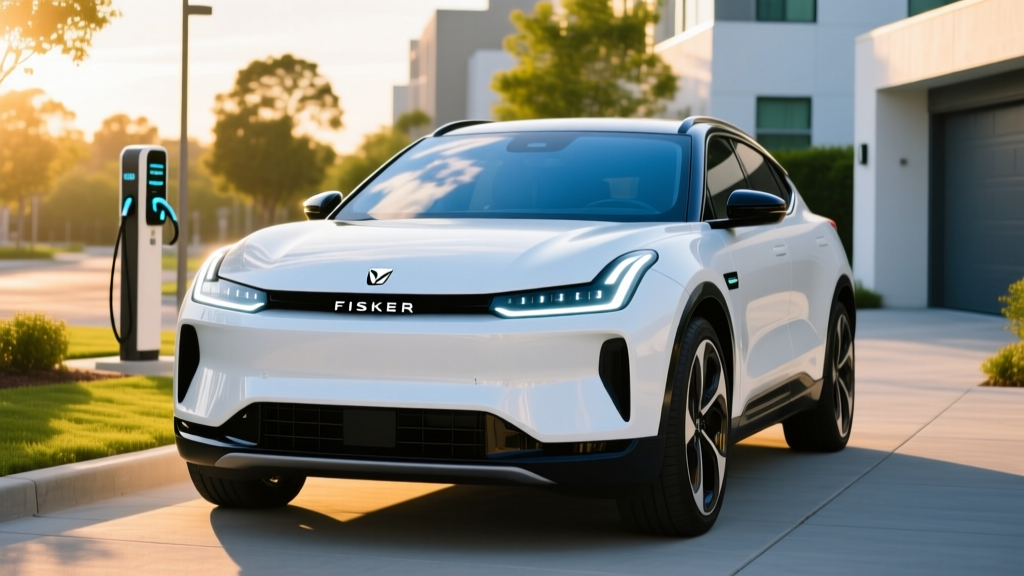
If you're researching the Fisker warranty on the Ocean SUV — whether you're a current owner trying to understand your coverage or a used-EV shopper evaluating risk — this guide breaks down exactly what Fisker covers, for how long, and how the Ocean stacks up on range, charging, and ownership cost in 2026.
The Fisker Ocean entered a crowded midsize electric SUV market with aggressive pricing, a large battery, and a solar roof gimmick. But the real question buyers ask isn't about the roof — it's about long-term protection. Let's dissect the warranty, the specs, and whether this EV still makes sense against rivals like the Hyundai Ioniq 5, Ford Mustang Mach-E, and Tesla Model Y.
Fisker Ocean Warranty: What's Covered and For How Long
The Fisker warranty structure is split across several coverage areas. Here's the full breakdown:
| Coverage Type | Duration | Mileage Limit |
|---|---|---|
| Limited Vehicle Warranty (bumper-to-bumper) | 6 years | 60,000 miles |
| Battery & Powertrain Warranty | 8 years | 100,000 miles |
| Corrosion (Perforation) Warranty | 12 years | Unlimited |
| Roadside Assistance | 6 years | 60,000 miles |
The 8-year/100,000-mile battery and powertrain warranty is the headline coverage and aligns with the federal minimum mandated by the EPA for EV battery systems. Fisker warrants the high-voltage battery against defects and excessive capacity loss — specifically, if the battery's State of Health (SoH) drops below 70% of its original usable capacity within the warranty period, Fisker will repair or replace it.
The 6-year/60,000-mile bumper-to-bumper period is notably generous compared to the industry-standard 3-year/36,000-mile limited warranty offered by legacy automakers. This matters for an EV from a startup brand where long-term parts availability is a legitimate concern.
Battery Capacity Retention: What to Expect
The Ocean uses an NMC (nickel manganese cobalt) chemistry pack — either the 113 kWh usable "Hyper Range" battery (sourced from CATL) or the smaller 80 kWh "Sport Range" pack. NMC batteries typically degrade 8-12% over the first 100,000 miles under normal use. The 70% SoH warranty threshold means you'd need catastrophic degradation — far beyond normal aging — to trigger a claim. In practice, most NMC packs retain 85-90% capacity at the 100K-mile mark.
Range, Efficiency, and Real-World Expectations
The Fisker Ocean is available in several trims, each with different battery sizes, drivetrains, and EPA range ratings. Here's what the EPA says — and what you'll actually see:
| Trim | Battery (kWh usable) | Drivetrain | EPA Range | MPGe (combined) | kWh/100mi |
|---|---|---|---|---|---|
| Sport (base) | 80 kWh (NMC) | FWD / Single Motor | 250 mi | 106 MPGe | 32 |
| Ultra | 113 kWh (NMC) | AWD / Dual Motor | 340 mi | 101 MPGe | 33 |
| Extreme / One | 113 kWh (NMC) | AWD / Dual Motor | 350 mi | 100 MPGe | 34 |
Real-World Range: The Honest Numbers
EPA 350 miles (Extreme/One): Expect roughly 290-310 miles in mixed driving at 70°F. On sustained highway runs at 75 mph, plan for 260-280 miles before needing a charger. In freezing temperatures (below 32°F), the Ocean's heat pump helps, but range still drops 15-25%, putting real-world winter highway range around 220-240 miles.
EPA 250 miles (Sport): Real-world mixed driving yields about 215-230 miles. Highway-only at 75 mph drops this to roughly 195-210 miles. Cold weather reduces it further to 165-185 miles.
The Solar Roof adds a nominal 1-2 miles of range per day under ideal sun exposure — treat it as a battery-maintenance trickle, not a meaningful range extender.
Charging Speed: DC Fast, Level 2, and the Charge Curve
Charging speed is where the Ocean's large battery becomes a double-edged sword. A 113 kWh pack holds a lot of energy, but filling it takes time even at high-power chargers.
| Charging Level | Power / Rate | Time or Rate | Connector |
|---|---|---|---|
| Level 1 (120V household) | ~1.4 kW | ~3-4 mi/hr | J1772 / NACS adapter |
| Level 2 (240V home) | 11 kW (onboard charger) | ~30-33 mi/hr; full charge in ~11 hrs (113 kWh) | J1772 / NACS adapter |
| DC Fast Charge (peak) | Up to 250 kW (Ultra/Extreme) | 10-80% in ~30 min | CCS1 (NACS adapter available) |
| DC Fast Charge (Sport) | Up to 175 kW | 10-80% in ~33 min | CCS1 |
Charge curve reality check: The Ultra and Extreme trims peak at 250 kW, but that rate only holds between roughly 10-30% State of Charge (SoC). The curve tapers significantly above 50%, and charging above 80% slows dramatically to protect the NMC cells. On a road trip, plan your stops around the 10-80% window — that's where you'll add ~200+ miles in 30 minutes on a 250 kW charger. Pushing to 90% or 100% at a DC station will add another 25-40 minutes for relatively few extra miles.
For home charging, the 11 kW onboard charger is competitive. On a 48-amp Level 2 circuit (the most common home install), you'll add roughly 30 miles of range per hour of charging. Overnight charging from 20% to 80% takes about 6-7 hours on the 113 kWh pack — perfectly adequate for daily use.
Performance, Cargo Space, and Daily Livability
The Ocean isn't a performance EV in the Tesla Model Y Performance or Ford Mustang Mach-E GT sense, but it's no slouch either.
| Spec | Sport (FWD) | Ultra / Extreme (AWD) |
|---|---|---|
| Horsepower | 275 hp | 540 hp (Ultra) / 550 hp (Extreme) |
| 0-60 mph | 6.9 sec | 3.7 sec (Ultra) / 3.6 sec (Extreme) |
| Drivetrain | Single-motor FWD | Dual-motor AWD |
| Cargo (behind 2nd row) | 27.2 cu ft | |
| Cargo (seats folded) | 58.0 cu ft | |
| Front Legroom | 41.7 in | |
| Rear Legroom | 38.2 in | |
| Frunk | None | |
| Towing Capacity | — | 4,000 lbs |
The dual-motor AWD trims deliver genuine sports-sedan acceleration in a family SUV body. The Sport trim's 275 hp and FWD layout prioritize efficiency over thrills — it's a perfectly adequate commuter but won't win drag races.
Cargo space is the Ocean's weak point relative to competitors. The 27.2 cu ft behind the second row trails the Model Y (~30 cu ft) and significantly trails the Kia EV9 three-row SUV. The absence of a frunk (front trunk) is a missed opportunity for additional storage. Rear legroom at 38.2 inches is adequate for adults but tighter than the Ioniq 5's generous 39.4 inches.
Pricing, Trims, and Federal Tax Credit Eligibility
The Fisker Ocean's pricing has shifted since launch, and understanding where it sits in 2026 — especially after the IRS §30D federal tax credit — is critical.
| Trim | Base MSRP | §30D Credit Eligible? | Effective Price (if eligible) |
|---|---|---|---|
| Sport | $38,999 | Up to $7,500* | ~$31,499 |
| Ultra | $52,999 | Up to $7,500* | ~$45,499 |
| Extreme | $62,999 | Up to $7,500* | ~$55,499 |
*Critical tax credit caveats: The §30D credit has strict eligibility requirements that apply to all EVs in 2026:
- MSRP Cap: SUVs must have an MSRP at or below $80,000 (all Ocean trims qualify).
- Buyer Income Cap: Modified AGI must not exceed $150,000 (single), $225,000 (head of household), or $300,000 (joint).
- Battery Sourcing: The credit is split into two halves — $3,750 for meeting critical-mineral sourcing requirements and $3,750 for battery-component manufacturing in North America or FTA-partner nations. The Ocean's CATL-sourced battery (China) has faced scrutiny under these rules. Verify current eligibility on fueleconomy.gov before purchasing, as sourcing compliance can change by model year and production batch.
- Point-of-Sale Transfer: Eligible buyers can transfer the credit to the dealer at purchase, reducing the out-of-pocket price immediately rather than waiting for a tax refund.
Consult a tax professional for your specific situation — credit eligibility depends on your income, filing status, and the vehicle's exact build date and battery sourcing documentation.
Technology, Driver Assists, and Standout Features
The Ocean packs several features that distinguish it from competitors, along with some notable omissions:
Standout features:
- Solar Roof (California Mode): Integrated photovoltaic cells on the roof panel can add up to ~1,500 miles of range per year under ideal conditions. In practice, expect 500-800 miles/year — a nice trickle charge for offsetting vampire drain and climate-control preconditioning.
- 17.1-inch Rotating Touchscreen: The center display rotates from a landscape "Control Mode" to a portrait "Hollywood Mode" for media consumption while parked. It's a party trick, but the screen itself is bright and responsive.
- Fisker Intelligent Pilot (ADAS): A Level 2 driver-assistance suite including adaptive cruise control, lane-centering, automatic emergency braking, and blind-spot monitoring. This is not autonomous driving — the driver must remain engaged at all times.
- Recycled & Vegan Interior: The Ocean uses sustainably sourced materials throughout, including recycled plastics and vegan leather. The "California Mode" opens all windows simultaneously for an open-air experience.
Notable drawbacks:
- No frunk: The front trunk space is occupied by power electronics — a practical loss for grocery runs and charging-cable storage.
- Software maturity: Early owners reported infotainment bugs, slow boot times, and OTA update delays. Software has improved with updates, but the system still lags behind Tesla and Hyundai's polish.
- Charging network access: The Ocean ships with a CCS1 port. With the industry shifting to NACS (Tesla's connector), Fisker offers a NACS adapter, but accessing Tesla Superchargers requires this adapter and may have compatibility limitations depending on the charger generation.
- Parts and service network: As a startup automaker, Fisker's service-center footprint is smaller than legacy brands. Collision repair and body-panel replacement can involve longer wait times for parts.
Fisker Ocean vs. Key Competitors: Is It Worth Buying?
The Ocean competes in the midsize electric SUV segment against well-established rivals. Here's how it compares on the metrics that matter:
| Spec | Fisker Ocean Ultra | Hyundai Ioniq 5 (Long Range AWD) | Tesla Model Y (Long Range) | Ford Mustang Mach-E (Ext. Range AWD) |
|---|---|---|---|---|
| EPA Range | 340 mi | 290 mi | 320 mi | 312 mi |
| Battery (kWh) | 113 (NMC) | 77.4 (NMC) | 75 (NMC) | 91 (NMC) |
| DC Fast Peak | 250 kW | 238 kW | 250 kW | 150 kW |
| 10-80% Time | ~30 min | ~18 min | ~25 min | ~45 min |
| 0-60 mph | 3.7 sec | 4.5 sec | 4.8 sec | 4.8 sec |
| Cargo (rear seats up) | 27.2 cu ft | 27.2 cu ft | 30.2 cu ft | 29.7 cu ft |
| Battery Warranty | 8 yr / 100K mi | 10 yr / 100K mi | 8 yr / 120K mi | 8 yr / 100K mi |
| Starting MSRP | $52,999 | $49,950 | $47,990 | $50,995 |
Choose the Fisker Ocean If:
- You want the longest EPA range in the segment (340-350 mi)
- You value the generous 6-year bumper-to-bumper warranty
- Sustainability and recycled materials matter to you
- You like the solar roof concept for passive trickle charging
- You want dual-motor AWD performance under 4 seconds to 60 mph
Consider a Competitor If:
- Faster DC charging (10-80% in under 20 min) is a priority → Ioniq 5
- You need the most cargo space and a mature Supercharger network → Model Y
- A longer battery warranty (10-year) matters more → Ioniq 5
- You want a proven dealer/service network in your area → Mach-E or Ioniq 5
- You need a frunk for practical storage → Model Y or Mach-E
According to IIHS and NHTSA databases, verify current safety ratings before purchasing — the Ocean's crash-test performance is an important data point that complements the warranty story.
Frequently Asked Questions
What is the real-world range of the Fisker Ocean?
The EPA rates the Ocean Ultra at 340 miles and the Extreme/One at 350 miles. In real-world mixed driving at moderate temperatures, expect 290-310 miles. Highway-only driving at 75 mph reduces this to roughly 260-280 miles. Cold weather (below 32°F) cuts range by 15-25%, yielding approximately 220-240 miles on the highway. The Sport trim's 250-mile EPA rating translates to about 215-230 miles in mixed real-world use.
How fast does the Fisker Ocean charge at home and on the road?
At home on a Level 2 (240V, 48-amp) charger, the Ocean's 11 kW onboard charger adds about 30-33 miles of range per hour. A full charge from empty takes roughly 11 hours on the 113 kWh pack. On DC fast chargers, the Ultra and Extreme peak at 250 kW and charge from 10-80% in approximately 30 minutes. The Sport trim peaks at 175 kW with a 10-80% time of about 33 minutes. Expect significant charge-curve tapering above 80% SoC.
Does the Fisker Ocean qualify for the $7,500 federal EV tax credit?
The Ocean's MSRP falls well under the $80,000 SUV cap, so it passes the price test. However, the full $7,500 credit depends on battery-component and critical-mineral sourcing requirements under IRS §30D. The Ocean's CATL battery has faced scrutiny under these rules. Check fueleconomy.gov for the specific model year and build date you're considering, and consult a tax professional. Buyer income caps also apply ($150K single / $300K joint).
What does the Fisker battery warranty actually cover?
The 8-year/100,000-mile battery warranty covers defects in materials and workmanship, plus excessive capacity loss. If the high-voltage battery's State of Health drops below 70% of its original usable capacity within the warranty period, Fisker will repair or replace it at no cost. Normal degradation (typically 8-12% over 100,000 miles for NMC chemistry) does not trigger a warranty claim.
Is the Fisker Ocean worth buying over a Tesla Model Y or Hyundai Ioniq 5?
The Ocean wins on raw EPA range (340-350 miles) and offers a strong bumper-to-bumper warranty. However, the Ioniq 5 charges significantly faster (10-80% in ~18 minutes vs. ~30), and the Model Y offers a more mature Supercharger network, more cargo space, and a longer-established service infrastructure. If range is your top priority and you have reliable home charging, the Ocean is compelling. If charging speed and service accessibility matter more, look at the Ioniq 5 or Model Y.
What are the biggest drawbacks of the Fisker Ocean?
The main limitations are: no front trunk (frunk), a smaller service-center network compared to legacy automakers, software that has historically been less polished than competitors, CCS1 charging port requiring an adapter for NACS/Tesla Supercharger access, and cargo volume that trails the Model Y. The solar roof, while innovative, adds only marginal real-world range.