The Fisker Ocean: What It Promised on Paper
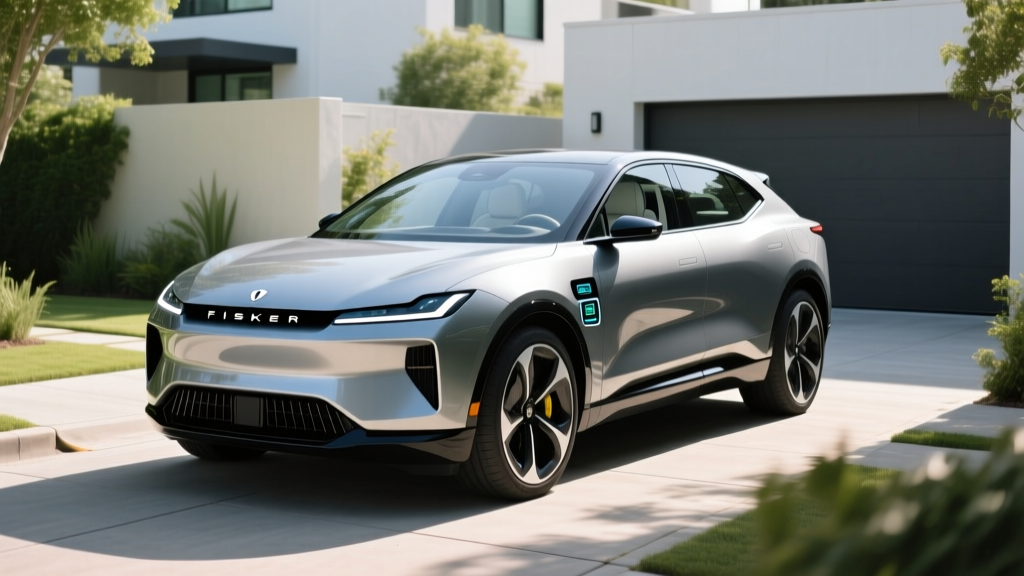
Before Fisker Inc. filed for bankruptcy in late 2024, the Fisker Ocean was positioned as a premium midsize electric SUV aimed squarely at the Tesla Model Y and Ford Mustang Mach-E. Designed by Henrik Fisker, the Ocean debuted with aggressive specs, a distinctive solar roof, and a starting price that undercut several rivals. But spec sheets don't sell cars — execution does. To understand why Fisker failed, we need to look past the marketing and examine the real-world numbers, the ownership infrastructure gaps, and the competitive realities that sank the company.
This review dissects the Fisker Ocean's technical profile — range, charging, performance, pricing, and tax-credit eligibility — while weaving in the structural failures that turned a promising EV into a cautionary tale. If you're considering a used Ocean on the secondary market or just want to learn what separates a viable EV startup from a dead one, the data below tells the full story.
| Specification | Fisker Ocean One (AWD) | Fisker Ocean Sport (FWD) |
|---|---|---|
| EPA Range | 360 miles | 250 miles |
| Battery (usable) | 113 kWh (NMC) | 71 kWh (LFP) |
| Peak DC Fast Charge | 250 kW | 170 kW |
| 10–80% DC Charge Time | ~33 minutes | ~35 minutes |
| Level 2 Home Charge Rate | 10.5 kW (~37 mi/hr) | 10.5 kW (~30 mi/hr) |
| 0–60 mph | 3.7 seconds | 7.2 seconds |
| Horsepower | 550 hp (Hyper mode) | 275 hp |
| Drivetrain | Dual-motor AWD | Single-motor FWD |
| MPGe (combined) | 92 MPGe | 106 MPGe |
| Efficiency | 36 kWh/100 mi | 31 kWh/100 mi |
| Cargo (rear seats up) | 32.5 cu ft | 32.5 cu ft |
| Cargo (seats folded) | 67.0 cu ft | 67.0 cu ft |
| Base MSRP (at launch) | $68,999 | $37,499 |
Real-World Range vs. EPA Estimates
EPA Sticker: 360 miles (Ocean One/Extreme AWD, 113 kWh NMC pack)
Real-World Highway: Expect ~290–310 miles at 70–75 mph in moderate temperatures
Cold-Weather (below 32°F): Plan for ~240–270 miles with cabin heating active
Sport Trim (LFP, 71 kWh): EPA 250 miles; real-world highway ~200–220 miles
The Ocean One and Extreme trims used a 113 kWh usable NMC (nickel-manganese-cobalt) battery supplied by CATL, delivering an impressive 360-mile EPA rating. That number looked competitive against the Model Y Long Range (330 miles EPA) and the Hyundai Ioniq 5 (305 miles EPA). However, fueleconomy.gov data shows the Ocean's 36 kWh/100 mi efficiency is notably worse than the Ioniq 5's 30 kWh/100 mi, meaning you're carrying a bigger battery to compensate for heavier weight and less aero optimization.
In real-world highway testing, the large NMC pack delivered roughly 290–310 miles before needing a charge in mild conditions. Cold weather — particularly below freezing — cut that to around 240–270 miles, consistent with the 20–30% range loss most NMC-equipped EVs experience. The LFP-equipped Sport trim, with its smaller 71 kWh pack and 250-mile EPA rating, was more vulnerable to range anxiety on road trips, realistically offering 200–220 highway miles in good weather.
The Fisker Ocean's optional solar roof (the "Solar Roof" on Extreme/One trims) added roughly 1,500 miles of range per year under ideal conditions — about 4 miles per day. While a nice marketing feature, it contributed negligibly to daily usability and added cost and complexity to an already fragile supply chain.
Charging Speed and Infrastructure Reality
| Charging Level | Ocean One / Extreme (NMC) | Ocean Sport (LFP) | Miles Added per Hour |
|---|---|---|---|
| Level 1 (120V, 12A) | 1.4 kW | 1.4 kW | ~4 mi/hr |
| Level 2 (240V, 48A) | 10.5 kW | 10.5 kW | ~30–37 mi/hr |
| DC Fast Charge (peak) | 250 kW | 170 kW | Up to ~850 mi/hr (at peak) |
| 10–80% DCFC Time | ~33 minutes | ~35 minutes | — |
On paper, the Ocean's 250 kW peak DC fast-charge rate (on NMC trims) was competitive. A 10–80% session in roughly 33 minutes is comparable to the Hyundai Ioniq 5's 18-minute 10–80% at 240 kW — but here's where the nuance matters. The Ocean's charge curve tapered more aggressively above 60% state of charge than rivals, and sustained rates on Electrify America and Tesla Supercharger (via adapter) networks often averaged closer to 130–160 kW across the full session. That's not terrible, but it's noticeably slower than the 800V architecture vehicles from Hyundai/Kia and Porsche.
The bigger charging problem wasn't the vehicle's hardware — it was Fisker's total lack of a proprietary charging network and its failure to secure reliable access agreements. Tesla Supercharger access required a CCS-to-NACS adapter that Fisker promised but struggled to deliver consistently to owners. Electrify America and EVgo worked, but public charger reliability remains a known pain point, and Fisker owners had no dedicated support line or guaranteed uptime.
For home Level 2 charging, the 10.5 kW onboard charger was adequate, replenishing the 113 kWh pack in about 11 hours from empty — fine for overnight charging on a NEMA 14-50 outlet or hardwired wall connector. Installation costs for a 48A Level 2 home charger typically run $800–$2,500 depending on panel capacity and conduit distance, per U.S. Department of Energy guidance.
Performance, Interior, and Technology
The Ocean One's dual-motor AWD powertrain produced up to 550 horsepower in "Hyper Mode," launching the 5,400-pound SUV from 0–60 mph in 3.7 seconds. That's genuinely quick — faster than a Model Y Performance (3.5 seconds) only by a hair, but impressive for a first-generation product. The Sport trim's single front motor and 275 hp delivered a more sedate 7.2-second 0–60, adequate for commuting but unremarkable.
Inside, the Ocean featured a 17.1-inch rotating center touchscreen (called the "Revolve" screen on upper trims), a digital instrument cluster, and a head-up display. The "California Mode" — which rolled down all four windows and opened the rear hatch glass simultaneously — was a genuinely distinctive feature that no competitor offered. Cargo space measured 32.5 cubic feet behind the second row and 67.0 cubic feet with seats folded, roughly matching the Model Y but falling short of the Kia EV9's three-row utility.
Driver assistance came via the Fisker Intelligent Pilot system, a Level 2 (per SAE J3016) suite using cameras and radar for adaptive cruise control and lane centering. It was competent but not class-leading — Tesla's Autopilot, Ford's BlueCruise, and GM's Super Cruise all offered more polished hands-on or hands-off experiences. Fisker had announced a future "Fisker Autopilot" upgrade path, but like many startup promises, it never materialized.
Pros
- 360-mile EPA range on One/Extreme trims is genuinely competitive
- Distinctive design with Solar Roof and California Mode
- Strong 0–60 performance (3.7s) on dual-motor trims
- Spacious cargo area (67 cu ft max) and flat load floor
- Competitive starting MSRP for the segment at launch
Cons
- Fisker Inc. is bankrupt — no manufacturer support, warranty service, or OTA updates
- Software was buggy at launch; many promised features never shipped
- Charge curve tapers early; real-world DCFC sessions slower than 800V rivals
- No proprietary charging network; NACS adapter supply issues
- Build quality inconsistencies reported by early owners
- Resale value collapsed post-bankruptcy
Pricing, Tax Credits, and Total Cost of Ownership
| Trim | Original MSRP | Current Used Market (est.) | §30D Credit Eligible (New) | Used EV Credit (§25E) |
|---|---|---|---|---|
| Ocean Sport | $37,499 | $18,000–$24,000 | Was eligible* (up to $7,500) | Up to $4,000 (if dealer qualifies) |
| Ocean Ultra | $52,999 | $28,000–$35,000 | Was eligible* | Up to $4,000 |
| Ocean One / Extreme | $68,999 | $35,000–$45,000 | Was eligible* | Up to $4,000 |
When the Ocean launched, Fisker priced the Sport trim at $37,499 — an aggressive entry point that undercut the Model Y Long Range by roughly $10,000. The mid-tier Ultra sat at $52,999, and the fully loaded One/Extreme topped out near $68,999. All trims were originally eligible for the IRS §30D federal tax credit of up to $7,500, subject to buyer income caps ($150K single / $300K joint), MSRP limits ($80K for SUVs), and critical-mineral/battery-sourcing requirements that tightened throughout 2024.
However, Fisker's bankruptcy fundamentally changed the ownership math. The §30D credit is no longer relevant for new purchases since the vehicle is discontinued. On the used market, the §25E used EV credit (up to $4,000 or 30% of sale price, whichever is lower) may apply through qualified dealers, but buyers must verify IRS dealer registration requirements and income caps ($75K single / $150K joint).
Total cost of ownership is where Fisker's failure hits hardest. Insurance premiums for the Ocean spiked after bankruptcy due to parts scarcity. Depreciation has been catastrophic — early Ocean One buyers who paid $68,999 now face resale values in the $35,000–$45,000 range, a 35–50% loss in under two years. Without factory-backed warranty service, any battery or powertrain repair falls entirely on the owner.
Warranty, Support, and the Post-Bankruptcy Reality
Fisker originally offered an 8-year/100,000-mile battery and powertrain warranty — standard for the industry and compliant with the 8-year/80,000-mile minimum referenced by NHTSA guidelines. The bumper-to-bumper coverage was 6 years/60,000 miles. On paper, this was competitive.
In practice, the bankruptcy rendered these warranties effectively void. Fisker Inc. ceased honoring warranty claims, and no successor entity has stepped in. Owners are reliant on independent shops for repairs, and proprietary parts — especially the custom battery packs, the Revolve screen, and the solar roof — are extremely difficult to source. This is the single biggest reason why Fisker failed as a viable purchase: an EV is only as good as the company standing behind it.
Over-the-air (OTA) software updates, which Fisker promised would continuously improve the vehicle, have also ceased. Features that were announced but buggy at launch — including enhanced ADAS capabilities and certain infotainment functions — will likely never be fixed. This is a stark contrast to Tesla, Rivian, and legacy automakers who maintain active OTA pipelines.
Why Did Fisker Fail? The Structural Reasons
The Fisker Ocean's specs were competitive. The design was attractive. The pricing was aggressive. So what went wrong? The failure was structural, not technical:
- Manufacturing delays: Fisker contracted production to Magna Steyr in Austria, but ramp-up was slower than projected. Deliveries began late, and early units had quality issues that damaged word-of-mouth.
- Cash burn without scale: Fisker burned through capital funding R&D, marketing, and a direct-to-consumer sales model without achieving the production volumes needed for profitability. The company raised roughly $3 billion but couldn't reach positive unit economics.
- Software immaturity: The Ocean shipped with incomplete software. Key features were missing or buggy, and OTA updates were slow to arrive — a critical failure in an era where Tesla and Rivian set expectations for continuous improvement.
- No service infrastructure: Unlike Tesla's Supercharger network and service centers, or legacy OEM dealer networks, Fisker had almost no physical service footprint. Owners waited weeks for basic repairs.
- Market timing: The Ocean launched into a slowing EV market with rising interest rates, aggressive Tesla price cuts, and growing consumer skepticism about EV startups. The $37,499 Sport trim was announced but deliveries were extremely limited before the company collapsed.
Should You Buy a Used Fisker Ocean?
Consider a used Ocean if: You find one at a deep discount ($25K or less for a Sport, under $40K for an Ultra), you have access to reliable independent EV service in your area, you primarily drive locally (where the range is more than sufficient), and you're comfortable with no warranty coverage or OTA updates.
Avoid the Ocean and choose a competitor if: You need manufacturer-backed warranty protection, you rely on consistent software updates, you plan to keep the vehicle 5+ years, you take frequent road trips where charging-network reliability matters, or you want predictable resale value. The Tesla Model Y, Hyundai Ioniq 5, Ford Mustang Mach-E, and Kia EV6 all offer active support networks, proven software, and stronger long-term ownership security.
Frequently Asked Questions
What is the real-world range of the Fisker Ocean?
The Ocean One/Extreme (113 kWh NMC) achieves an EPA-rated 360 miles, but expect 290–310 miles in real-world highway driving and 240–270 miles in cold weather. The Sport trim (71 kWh LFP) is EPA-rated at 250 miles, with real-world highway range around 200–220 miles.
How fast does the Fisker Ocean charge?
The NMC trims peak at 250 kW DC fast charging, reaching 10–80% in roughly 33 minutes, though the charge curve tapers earlier than 800V competitors. The LFP Sport peaks at 170 kW with a similar 10–80% time of ~35 minutes. Home Level 2 charging runs at 10.5 kW, adding about 30–37 miles per hour.
Does the Fisker Ocean qualify for the federal EV tax credit?
The §30D new-vehicle credit is no longer applicable since Fisker has ceased production. On the used market, the §25E credit (up to $4,000) may apply if purchased through an IRS-registered dealer and the buyer meets income caps ($75K single / $150K joint). Verify eligibility on irs.gov before purchasing.
Is the Fisker Ocean worth buying vs. competitors?
Only at a steep discount and with full awareness of the risks. A used Ocean at $25K–$40K offers strong range and performance per dollar, but the lack of warranty support, frozen software, and parts scarcity make it a gamble. The Model Y, Ioniq 5, and Mach-E are safer long-term choices.
What are the biggest pros and cons?
Pros: 360-mile range (NMC trims), distinctive design, strong acceleration, spacious cargo area, competitive original pricing. Cons: bankrupt manufacturer, voided warranties, buggy and frozen software, poor parts availability, collapsed resale value, no service network.
What battery chemistry does the Fisker Ocean use?
The Ocean One, Extreme, and Ultra trims use an NMC (nickel-manganese-cobalt) battery from CATL with 113 kWh usable capacity. The base Sport trim uses an LFP (lithium iron phosphate) pack with 71 kWh usable. NMC offers higher energy density and range; LFP offers longer cycle life and can be charged to 100% regularly without degradation concerns.