Where Is the Fisker Ocean Made? The Manufacturing Story
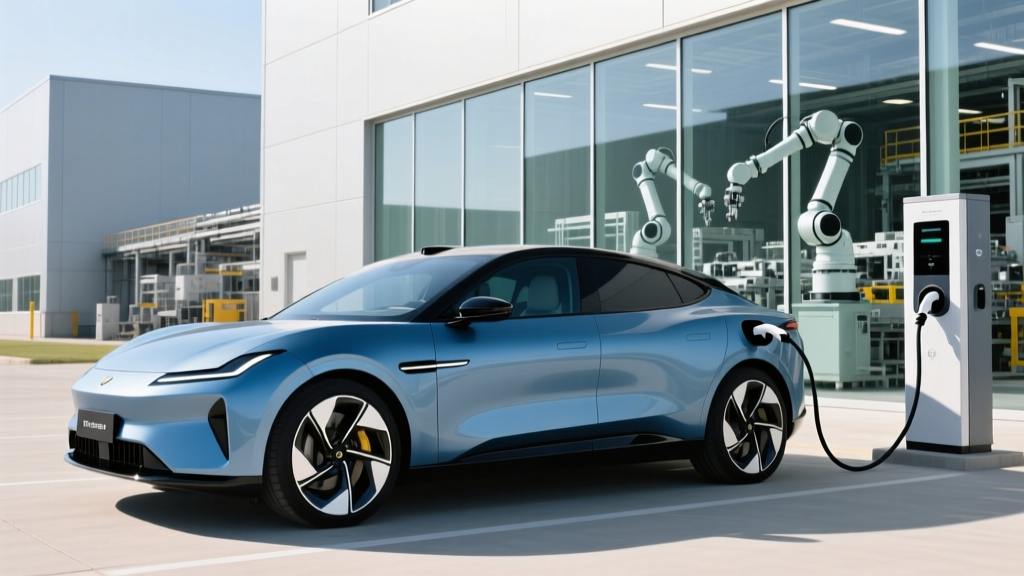
The Fisker Ocean was manufactured by Magna Steyr at its facility in Graz, Austria. Henrik Fisker's automotive startup chose the Austrian contract manufacturer — which has also built vehicles for Mercedes-Benz (G-Class), BMW (5 Series), and Jaguar (I-PACE) — to handle production of its all-electric SUV. The Graz plant is one of the most experienced contract automotive factories in the world, with a track record of producing premium vehicles to exacting quality standards.
Production of the Fisker Ocean began in late 2022, with deliveries starting in early 2023. The decision to manufacture in Europe rather than the United States had significant implications for the vehicle's federal tax credit eligibility, pricing, and ultimately its market positioning.
Fisker Ocean Specifications at a Glance
| Specification | Ocean Sport (FWD) | Ocean Ultra / Extreme (AWD) |
|---|---|---|
| EPA Range | 250 miles | 360 miles (Extreme w/ Hyper Range) |
| Battery Capacity | ~75 kWh usable (LFP) | ~113 kWh usable (NMC) |
| Battery Chemistry | LFP (Lithium Iron Phosphate) | NMC (Nickel Manganese Cobalt) |
| Horsepower | 275 hp | 564 hp (Boost mode) |
| 0-60 mph | ~6.9 seconds | 3.7 seconds (Boost mode) |
| Drivetrain | Single-motor FWD | Dual-motor AWD |
| Max DC Fast Charge | ~170 kW peak | ~250 kW peak |
| 10-80% DC Charge Time | ~34 minutes | ~30 minutes |
| Level 2 Home Charging | 10.5 kW (~30 mi/hr) | 10.5 kW (~36 mi/hr) |
| EPA Efficiency (MPGe) | ~100 MPGe combined | ~84 MPGe combined |
| Base MSRP (at launch) | $37,499 | $68,999 (Ultra) |
| Cargo Volume (rear seats up) | 32.5 cu ft | 32.5 cu ft |
| Cargo Volume (rear seats folded) | ~67 cu ft | ~67 cu ft |
| Front/Rear Legroom | 41.4 / 38.2 in | 41.4 / 38.2 in |
| Battery/Powertrain Warranty | 6 years / 75,000 miles (original) | |
Real-World Range: What the EPA Sticker Doesn't Tell You
The Fisker Ocean Extreme's 360-mile EPA estimate placed it among the longest-range electric SUVs ever sold in the U.S. — rivaling the Lucid Air sedan and exceeding the Tesla Model Y Long Range (~310 mi EPA). However, as with all EVs, real-world conditions tell a more nuanced story.
- City / mixed driving (65-75°F): 320–350 miles — close to EPA thanks to generous regen and moderate speeds
- Highway (75 mph, 65-75°F): 270–300 miles — aerodynamic drag at speed cuts range ~15-20%
- Cold weather (20-35°F, highway): 210–250 miles — NMC batteries lose 25-35% in freezing temps without preconditioning
- Cold weather + cabin heat (city): 250–280 miles — the Ocean's heat pump helps mitigate losses vs. resistive heating
The Ocean Sport's smaller LFP battery delivers a more modest 250-mile EPA rating. LFP chemistry holds an advantage in longevity and thermal stability but suffers greater cold-weather range loss — expect 175–210 miles in freezing highway conditions. LFP owners should also note that this chemistry tolerates regular 100% charging, unlike NMC, which benefits from daily limits around 80%.
According to fueleconomy.gov, the Ocean Extreme achieved approximately 84 MPGe combined (roughly 40 kWh/100 mi), which is less efficient than the Tesla Model Y (~122 MPGe) due to the Ocean's heavier curb weight (~5,200 lbs for AWD trims).
Charging Performance: DC Fast and Home Level 2
Charging speed was one area where the Fisker Ocean's European engineering showed both strengths and limitations. The Ultra and Extreme trims, equipped with the larger NMC pack, supported up to 250 kW peak DC fast charging, while the Sport's LFP pack capped at approximately 170 kW.
| Charging Level | Ocean Sport (LFP) | Ocean Ultra/Extreme (NMC) | Miles Added Per Hour |
|---|---|---|---|
| Level 1 (120V, 12A) | 1.4 kW | 1.4 kW | ~3–4 mi/hr |
| Level 2 (240V, 48A) | 10.5 kW | 10.5 kW | ~30–36 mi/hr |
| DC Fast (Peak) | ~170 kW | ~250 kW | N/A (session-based) |
| 10-80% DC Time | ~34 minutes | ~30 minutes | N/A |
A critical detail for road-trippers: the Ocean's charge curve tapers significantly above 80% State of Charge (SoC). The 250 kW peak on the Extreme is sustained only between roughly 10-40% SoC; by 60%, the rate drops to approximately 120-140 kW, and above 80% it slows to under 50 kW. This means a 10-90% session takes closer to 48-52 minutes, not the 30 minutes a "10-80%" figure might imply. Plan road-trip stops accordingly — charging to 80% and driving on is almost always faster than waiting for the last 10-20%.
For home charging, the Ocean's 10.5 kW onboard charger is competitive. A full overnight charge from 20% to 100% takes approximately 8-10 hours on a properly installed Level 2 home station (240V/48A circuit). Home installation costs for a Level 2 charger typically range from $800 to $2,500 depending on panel capacity and conduit run — a factor every prospective EV buyer should budget for.
Performance, Interior, and Standout Technology
The dual-motor AWD Ocean Ultra and Extreme deliver serious straight-line performance: 564 hp and a 3.7-second 0-60 mph time in Boost mode puts it in sports-sedan territory. The single-motor Sport, at 275 hp and ~6.9 seconds to 60, is adequate for commuting and highway merging but won't win drag races.
Where the Ocean genuinely differentiated itself was in its interior design and sustainability-forward approach:
- California Mode: A one-touch feature that simultaneously lowers all windows, opens the solar roof panel, and adjusts climate settings — a party trick that also functions as genuine open-air ventilation
- Solar Roof (Extreme trim): Integrated photovoltaic panels on the roof that Fisker claimed could add up to 1,500 miles of range per year under ideal conditions (real-world contribution is modest — roughly 3-5 miles per sunny day of parked charging)
- Revolve rotating center screen: The 17.1-inch center display rotates from a landscape "Control Mode" to a portrait "Hollywood Mode" for media consumption while parked
- Recycled materials: Interior surfaces used recycled plastics, reclaimed rubber, and sustainably sourced materials throughout
- Taco Tray: A fold-out tray under the rear passenger seat — quirky but genuinely useful for takeout dining
The infotainment system ran on a custom Android-based OS with Google Maps integration. However, early software reviews noted bugs, sluggish response times, and over-the-air (OTA) update delays — issues that became more concerning after Fisker's bankruptcy halted ongoing software development.
On the driver-assistance front, the Ocean shipped with a comprehensive ADAS suite including adaptive cruise control, lane centering, automatic emergency braking, and blind-spot monitoring. This is SAE Level 2 driver assistance — it requires the driver to remain fully engaged with hands on the wheel and eyes on the road. It is not autonomous or "self-driving." Fisker had announced plans for a more advanced "Intelligent Pilot" system using lidar, but it was never deployed before the company's collapse.
Pricing, Tax Credit Status, and the Bankruptcy Factor
At launch, the Fisker Ocean was positioned aggressively on price:
| Trim | Original MSRP | Federal §30D Credit Eligibility | Effective Price (if eligible) |
|---|---|---|---|
| Ocean Sport | $37,499 | Not eligible — assembled in Austria (fails North American final assembly requirement) | $37,499 |
| Ocean Ultra | $61,499 | Not eligible — same assembly restriction | $61,499 |
| Ocean Extreme | $68,999 | Not eligible — same assembly restriction | $68,999 |
| Ocean One (Launch Ed.) | $68,999 | Not eligible | $68,999 |
The Ocean's Austrian assembly at Magna Steyr meant it did not qualify for the IRS §30D federal EV tax credit, which since 2023 has required North American final assembly as a baseline condition. Per IRS guidelines, only EVs assembled in the U.S., Canada, or Mexico are eligible — regardless of battery sourcing or MSRP. This was a significant competitive disadvantage against domestically assembled rivals like the Tesla Model Y, Ford Mustang Mach-E, and Hyundai Ioniq 5 (once production shifted to Georgia).
The bankruptcy filing in June 2024 dramatically altered the Ocean's value proposition. By late 2024, remaining new inventory was being liquidated at steep discounts — some Extreme trims reportedly sold for under $30,000. As of 2026, pre-owned Ocean examples appear on the used market at deeply depreciated prices, but buyers face serious considerations:
- Parts availability: Body panels, proprietary trim pieces, and replacement components are increasingly scarce
- Software support: OTA updates have ceased; existing bugs will not be patched
- Service network: No authorized dealer network exists; independent EV shops are the primary option
- Warranty validity: The original 6-year/75,000-mile battery warranty is effectively void with no entity to honor claims
- Insurance: Some carriers have restricted coverage or raised premiums due to parts uncertainty
Pros, Cons, and Competitor Comparison
- Class-leading 360-mile EPA range (Extreme) at launch
- Distinctive, sustainability-focused interior design
- Solar roof adds trickle-charge capability
- Spacious cabin with generous rear legroom (38.2 in)
- Strong dual-motor performance (3.7 sec 0-60)
- Deeply discounted used-market pricing post-bankruptcy
- No federal §30D tax credit eligibility (Austria-built)
- Company bankrupt — no warranty, parts, or software support
- Early software quality issues remain unpatched
- Charging speed below class leaders (Rivian R1S, Tesla Model Y)
- Unknown long-term battery degradation without management
- Limited service infrastructure for repairs
- Insurance and resale value uncertainty
Compared to its original competitors, the Ocean's value case has shifted entirely to the used market. A pre-owned Tesla Model Y Long Range offers better Supercharger network access, active software support, and available service centers. The Ford Mustang Mach-E provides domestic assembly, dealer-backed service, and available §30D credit on new models. The Hyundai Ioniq 5 charges faster (peak 350 kW on 800V architecture) and has a more reliable ownership ecosystem. The Ocean's remaining appeal is its striking design, long range, and bargain pricing — for buyers willing to accept the orphan-vehicle risk.
Who Should Consider a Pre-Owned Fisker Ocean?
The Fisker Ocean in 2026 suits a very specific buyer profile:
- Design-forward commuters who prioritize unique styling and sustainability materials over service convenience
- Second-vehicle households that can absorb the risk of a discontinued brand alongside a reliable daily driver
- EV-savvy buyers comfortable with independent mechanics, aftermarket parts sourcing, and self-managed software limitations
- Bargain hunters seeking 300+ miles of range at a sub-$30,000 price point — accepting that total cost of ownership may rise if major repairs are needed
This vehicle does not suit first-time EV buyers, families who need guaranteed service access, or anyone who relies on predictable long-term ownership costs. The bankruptcy risk is not theoretical — it affects daily ownership in tangible ways.
Frequently Asked Questions
Where exactly was the Fisker Ocean manufactured?
The Fisker Ocean was assembled by Magna Steyr at its contract manufacturing facility in Graz, Austria. Magna Steyr is one of the world's largest automotive contract manufacturers and has produced vehicles for BMW, Mercedes-Benz, Jaguar, and Toyota. Fisker chose Magna Steyr to leverage its expertise in low-volume, premium vehicle production without the capital expenditure of building its own factory.
Why doesn't the Fisker Ocean qualify for the federal EV tax credit?
Under the Inflation Reduction Act's revised §30D rules effective January 2023, a vehicle must undergo final assembly in North America (U.S., Canada, or Mexico) to be eligible for the federal clean vehicle credit. Because the Ocean was assembled in Austria, it fails this baseline requirement regardless of its battery sourcing, MSRP, or the buyer's income. Per IRS.gov, this is a non-negotiable criterion.
What is the real-world highway range of the Fisker Ocean Extreme?
While the EPA rates the Ocean Extreme at 360 miles, sustained highway driving at 70-75 mph in moderate temperatures yields approximately 270-300 miles. In cold weather (below 35°F), expect 210-250 miles on the highway. These figures assume no preconditioning — warming the battery before departure can recover 10-15% of cold-weather losses.
How fast does the Fisker Ocean charge at a DC fast charger?
The Ocean Ultra and Extreme support up to 250 kW peak DC fast charging, achieving a 10-80% charge in approximately 30 minutes under optimal conditions. However, the charge curve tapers significantly above 60% SoC, so a 10-90% session takes closer to 48-52 minutes. The Sport trim peaks at ~170 kW with a 10-80% time of roughly 34 minutes. These speeds are slower than 800V competitors like the Hyundai Ioniq 5 (350 kW peak, ~18 min 10-80%).
Is buying a used Fisker Ocean in 2026 risky?
Yes, meaningfully so. Fisker's bankruptcy means no warranty coverage, no ongoing software updates, diminishing parts availability, and no authorized service network. Buyers should budget for potential out-of-pocket repair costs, verify insurance availability in their state, and consider the vehicle as a depreciating asset with limited resale recovery. A pre-purchase inspection by an independent EV technician is strongly recommended.
Does the Fisker Ocean have a heat pump?
Yes. The Ocean is equipped with a heat pump for cabin heating, which is significantly more energy-efficient than resistive heating elements. This helps preserve range in cold weather compared to EVs without heat pumps, though cold-weather range loss of 25-35% should still be expected in sub-freezing conditions.
What battery chemistry does the Fisker Ocean use?
It depends on the trim. The Ocean Sport uses an LFP (Lithium Iron Phosphate) battery, which offers superior cycle life, thermal stability, and tolerance for 100% daily charging, but lower energy density and greater cold-weather range loss. The Ultra and Extreme trims use NMC (Nickel Manganese Cobalt) chemistry, which provides higher energy density (enabling the 360-mile range) but benefits from daily charging limits around 80% to minimize long-term degradation.