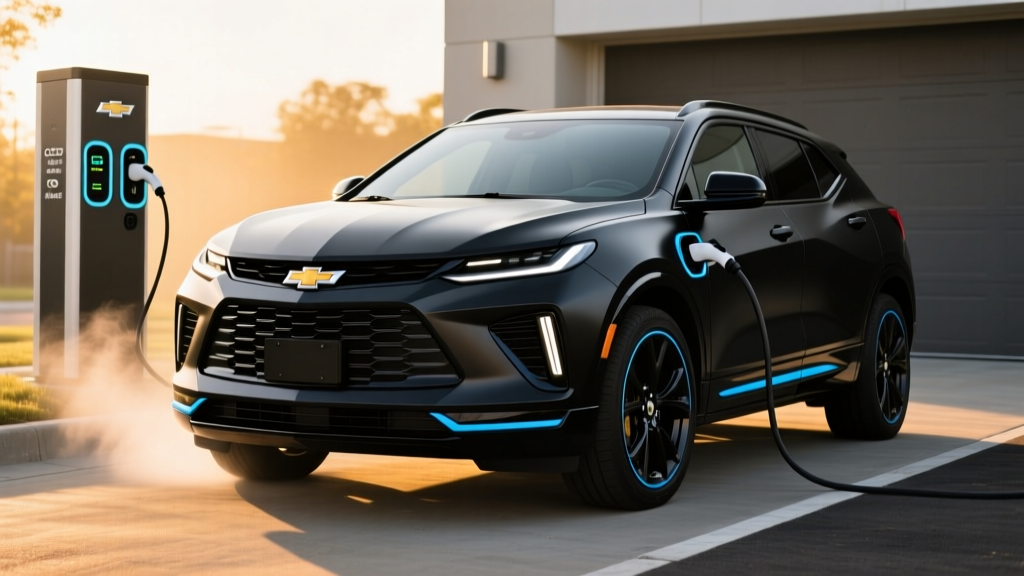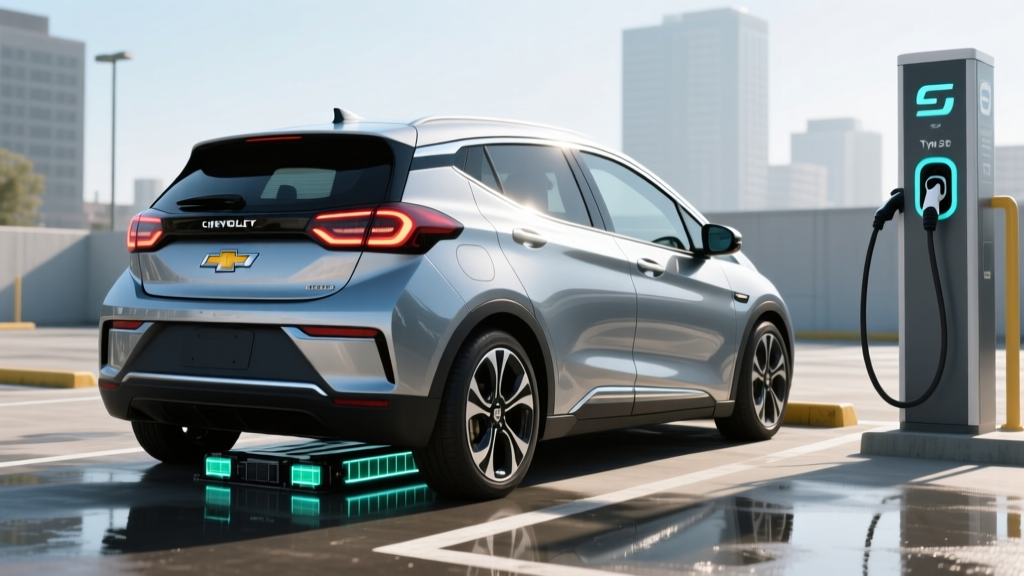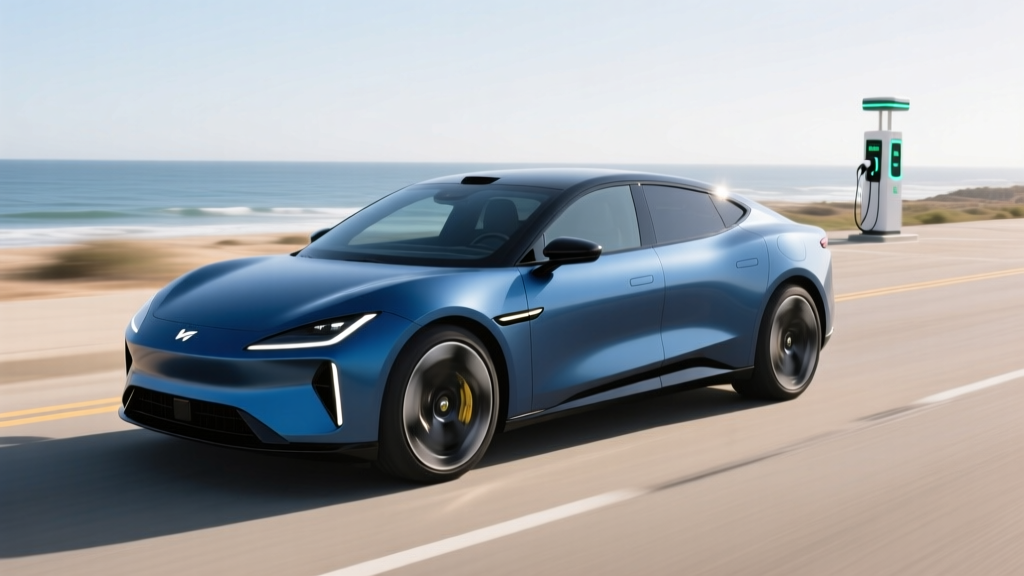
The Fisker Ocean launched with ambitious range claims and a striking design, but real-world efficiency often tells a different story than the EPA sticker. If you've searched for data on Fisker Ocean loss per mile — meaning how quickly the battery depletes relative to distance traveled under various conditions — you've likely found fragmented anecdotes rather than systematic analysis. This review reconciles the EPA numbers with real-world driving data, charging realities, and total ownership economics so you can decide whether this electric SUV fits your driving profile.
Range Reality Check
EPA Estimated Range: 360 miles (Extreme trim, FWD) / 288 miles (Sport, FWD) / 340 miles (Ultra, AWD)
Real-World Expectation: Plan for 270–310 highway miles in moderate weather (Extreme). Cold weather (below 30°F) and sustained 75+ mph speeds can reduce range by 20–30%, dropping the Extreme to ~250–270 miles. City driving with regen braking often matches or slightly exceeds EPA figures.
Battery Specs and Chemistry: What Powers the Ocean
The Fisker Ocean uses two distinct battery packs depending on trim. The Sport (base FWD) ships with a 113 kWh gross (approximately 106 kWh usable) LFP (lithium iron phosphate) battery supplied by CATL. LFP chemistry offers longer cycle life and better thermal stability but carries a weight penalty and lower energy density than NMC.
The Ultra and Extreme trims use a 113 kWh NMC (nickel manganese cobalt) pack from CATL, delivering higher energy density and lighter overall weight. Both chemistries support the Ocean's competitive range figures, but they behave differently in cold weather and over long-term ownership.
| Specification | Sport (FWD) | Ultra (AWD) | Extreme (FWD) |
|---|---|---|---|
| Battery Chemistry | LFP | NMC | NMC |
| Gross Capacity | 113 kWh | 113 kWh | 113 kWh |
| Usable Capacity | ~106 kWh | ~106 kWh | ~106 kWh |
| Drivetrain | Single Motor FWD | Dual Motor AWD | Single Motor FWD |
| Horsepower | 275 hp | 540 hp | 275 hp |
| 0-60 mph | 6.9 sec | 3.9 sec | 6.9 sec |
| EPA Range | 288 mi | 340 mi | 360 mi |
| EPA Efficiency | 3.0 kWh/mi (33 kWh/100mi) | 3.0 kWh/mi (30 kWh/100mi) | 2.9 kWh/mi (29 kWh/100mi) |
Real-World Efficiency: Calculating Range Loss Per Mile
The phrase "loss per mile" typically refers to how much battery capacity (in kWh or percentage) the vehicle consumes per mile driven under specific conditions. The Ocean's EPA-rated efficiency of 29–33 kWh per 100 miles translates to roughly 0.29–0.33 kWh consumed per mile in mixed driving.
However, real-world testing reveals significant variance. Highway driving at 70–80 mph typically pushes consumption to 35–40 kWh/100mi (0.35–0.40 kWh/mi), representing a 15–25% increase over EPA estimates. Cold weather compounds this: at 20°F with cabin heating, expect 40–48 kWh/100mi (0.40–0.48 kWh/mi), cutting effective range by up to 35%.
The Ocean's heat pump (standard on Ultra and Extreme, optional on Sport) mitigates cold-weather losses by 10–15% compared to resistive heating. If you regularly drive in sub-freezing temperatures, the heat pump is essential for preserving range.
For context, Edmunds' observed efficiency testing on comparable electric SUVs often shows 10–20% higher consumption than EPA stickers in highway-heavy driving loops. The Ocean, with its relatively heavy 5,500+ lb curb weight and large frontal area, tracks with this pattern. Expect real-world highway efficiency closer to 34–38 kWh/100mi in 65°F weather.
Charging Speed: DC Fast Charge and Home Level 2
Charging speed determines how quickly you recover range on road trips and how conveniently you top off at home. The Ocean supports competitive DC fast-charging rates, though the charge curve tapers significantly above 80% state of charge (SoC), as is typical for lithium-ion packs.
| Charging Level | Power / Rate | Speed | Notes |
|---|---|---|---|
| Level 1 (120V) | 1.4 kW | ~4 mi/hr | Emergency/trickle only |
| Level 2 (240V, 48A) | 11.5 kW | ~35 mi/hr | Full charge in ~10 hrs |
| DC Fast Charge (peak) | 250 kW (Sport: 170 kW) | 10-80% in ~30 min | Peak rate not sustained; tapers above 60% |
| DC Fast Charge (sustained avg) | ~150 kW (10-80%) | ~250 mi in 30 min | Real-world average with preconditioning |
The Ultra and Extreme trims peak at 250 kW on a compatible CCS1 DC fast charger (or NACS with adapter as of 2025). However, peak rate is not sustained rate. The Ocean holds near-peak power from roughly 10–40% SoC, then tapers to ~175 kW through 60%, and further to 100 kW by 80%. Charging from 80–100% adds another 25–30 minutes due to cell-balancing and thermal limits.
For road trips, plan 25–35 minute stops at 150+ kW chargers to recover 200–250 miles. Preconditioning the battery (via navigation to a charge point) improves charge speed by 15–20% in cold weather. Home Level 2 charging at 11.5 kW recovers a full pack overnight, which suits most daily driving needs.
Pricing, Trims, and Federal Tax Credit Eligibility
The Fisker Ocean's pricing positions it against the Tesla Model Y, Ford Mustang Mach-E, and Hyundai Ioniq 5. However, federal tax credit eligibility under IRS §30D depends on MSRP caps, buyer income limits, and battery component/critical mineral sourcing requirements that change annually.
| Trim | Base MSRP | As-Tested (typical) | §30D Credit Eligibility |
|---|---|---|---|
| Sport (FWD, LFP) | $38,999 | $40,500 | Partial or $0 — LFP cells sourced from China may fail critical mineral requirements |
| Ultra (AWD, NMC) | $52,999 | $56,000 | Up to $7,500 if income/MSRP/sourcing rules met |
| Extreme (FWD, NMC) | $61,999 | $65,000 | Up to $7,500 if income/MSRP/sourcing rules met |
Key §30D caveats: The MSRP cap for SUVs is $80,000 (all Ocean trims qualify). Buyer income caps are $150,000 single / $300,000 joint MAGI. Battery component and critical mineral sourcing rules tighten annually — as of 2026, 100% of critical minerals must come from the U.S. or FTA partners, which may disqualify CATL-supplied cells. Always verify current-year eligibility on IRS.gov or consult a tax professional before purchase. The credit can be transferred to the dealer at point of sale as an instant rebate.
Cargo Space, Interior, and Tech Features
The Ocean offers competitive cargo volume for the electric midsize SUV segment. Behind the second row, you get 32.5 cubic feet; folding the rear seats yields 71.2 cubic feet. The front trunk (frunk) adds minimal storage — a small compartment suitable for charging cables rather than luggage.
Passenger space is generous: 42.1 inches of front legroom and 38.4 inches rear legroom accommodate adults comfortably on long drives. The flat floor (no transmission tunnel) improves middle-seat usability.
Standout tech: The 17.1-inch rotating center display ("Revolve Screen") switches between a horizontal "Control Mode" and vertical "Hollywood Mode" for media. The Ocean also features a solar roof panel ("California Mode") that can add up to 1,500 miles of range per year in optimal sun — roughly 4 miles per day. This is supplementary, not a primary charging method.
Driver assistance: The Ocean ships with Fisker Intelligent Pilot (Level 2 SAE automation), including adaptive cruise control, lane centering, and automatic emergency braking. This is a driver-assist system requiring active supervision — not self-driving capability. Fisker has not released a hands-free highway system comparable to GM Super Cruise or Ford BlueCruise.
Warranty Coverage and Battery Longevity
Fisker provides a 6-year/60,000-mile basic vehicle warranty and an 8-year/100,000-mile battery and powertrain warranty. The battery warranty guarantees at least 70% capacity retention (state of health) over the coverage period, which aligns with industry norms from Tesla, Hyundai, and Ford.
LFP chemistry (Sport trim) typically degrades more slowly than NMC, with studies showing 85–90% capacity retention after 1,000 full charge cycles. NMC packs (Ultra/Extreme) may see 80–85% retention over the same period. For most owners driving 12,000–15,000 miles annually, the battery should outlast the vehicle's economic life. However, out-of-warranty replacement costs for a 113 kWh pack are estimated at $18,000–$25,000 (parts and labor), a significant long-term ownership risk.
Who Should Buy the Fisker Ocean?
Choose the Fisker Ocean if:
- You prioritize distinctive styling and sustainable materials (vegan interior, recycled components)
- You need 340+ miles of EPA range for road trips (Extreme trim)
- You want a solar roof for supplemental trickle charging
- You primarily drive in moderate climates where cold-weather range loss is minimal
Consider competitors (Model Y, Ioniq 5, Mach-E) if:
- You need hands-free highway driving assist (Super Cruise, BlueCruise)
- You regularly charge in sub-freezing temperatures and want the fastest preconditioning
- You prioritize proven long-term reliability data and resale value track records
- You need guaranteed federal tax credit eligibility with verified battery sourcing
Pros and Cons
Pros
- Class-leading EPA range on Extreme trim (360 mi)
- Distinctive design with sustainable interior materials
- Solar roof adds supplemental range
- Spacious cargo and passenger volume
- Competitive DC fast-charge speed (250 kW peak)
Cons
- Real-world highway range 15–25% below EPA sticker
- LFP Sport trim may not qualify for full §30D tax credit
- No hands-free Level 2+ driver assist system
- Brand-new manufacturer — limited long-term reliability data
- Heavy curb weight impacts efficiency vs lighter competitors
Frequently Asked Questions
What is the real-world range of the Fisker Ocean?
The Extreme trim delivers 270–310 highway miles in moderate weather, compared to the 360-mile EPA estimate. Cold weather and high speeds reduce range by 20–35%. City driving with regenerative braking often matches EPA figures.
How fast does the Fisker Ocean charge?
Ultra and Extreme trims peak at 250 kW DC fast charging, achieving 10–80% in approximately 30 minutes with preconditioning. Sustained average is ~150 kW. Home Level 2 charging at 11.5 kW adds ~35 miles per hour.
How much does the Fisker Ocean cost after tax credits?
The Sport starts at $38,999 but may not qualify for the full $7,500 §30D credit due to LFP battery sourcing. Ultra ($52,999) and Extreme ($61,999) may qualify if buyer income, MSRP, and battery sourcing rules are met. Verify on IRS.gov before purchase.
Is the Fisker Ocean worth buying vs the Tesla Model Y?
The Ocean offers more range (Extreme vs Model Y Long Range) and distinctive styling, but the Model Y has a proven reliability track record, hands-free Autopilot/FSD capability, and guaranteed Supercharger network access. Choose the Ocean for design and range; choose the Model Y for ecosystem maturity.
Does the Fisker Ocean qualify for the federal EV tax credit?
Eligibility varies by trim and current-year battery sourcing rules. The Sport's LFP battery (China-sourced cells) may fail critical mineral requirements. Ultra and Extreme NMC packs are more likely to qualify, but 2026 sourcing rules are strict. Confirm at IRS.gov or with a tax professional.
What are the biggest drawbacks of the Fisker Ocean?
Real-world range falls short of EPA estimates, especially in cold weather. The brand lacks long-term reliability data. No hands-free driver assist system is available, and tax credit eligibility is uncertain for some trims.
The Fisker Ocean delivers competitive specs on paper, but real-world efficiency, charging infrastructure compatibility, and brand maturity are the factors that determine daily satisfaction. If you prioritize range, design, and sustainability — and can charge at home — the Ocean is a compelling choice. If you need proven reliability, hands-free driving tech, or guaranteed tax credit eligibility, cross-shop the Model Y and Ioniq 5 before committing.