The Fisker Ocean arrived with bold promises: class-leading range, solar roof panels, and an entry price undercutting nearly every midsize electric SUV on the market. But spec sheets only tell half the story. After extensive evaluation of the Ocean's powertrain behavior, charging curves, and daily-drivability quirks, this review separates marketing from measurable reality — especially for buyers weighing the Fisker Ocean MSRP against rivals like the Tesla Model Y, Hyundai Ioniq 5, and Ford Mustang Mach-E.
Important context for 2026 buyers: Fisker Inc. filed for Chapter 11 bankruptcy in mid-2024. Remaining inventory was liquidated through third-party dealers at steep discounts. This review covers the Ocean as originally sold (2023–2024 model years) and addresses what prospective buyers of remaining or used examples need to know about pricing, parts availability, software support, and warranty coverage.
Fisker Ocean MSRP by Trim: What You Actually Pay
The Fisker Ocean launched with three core trims and a range-topping Extreme model. Below is the original MSRP structure alongside realistic transaction prices observed during Fisker's 2024 liquidation and typical 2026 used-market values.
| Trim | Drivetrain | Original MSRP | Liquidation Price (2024) | Used Market (2026 est.) |
|---|---|---|---|---|
| Sport (FWD) | Single-motor FWD | $37,499 | $24,990–$29,900 | $22,000–$28,000 |
| Ultra (AWD) | Dual-motor AWD | $51,499 | $33,900–$39,900 | $28,000–$35,000 |
| Extreme (AWD) | Dual-motor AWD | $68,999 | $39,900–$47,000 | $33,000–$42,000 |
| One (Launch AWD) | Dual-motor AWD | $68,999 | $39,900–$48,000 | $34,000–$43,000 |
Tax credit note: The Fisker Ocean was assembled in Graz, Austria (by Magna Steyr), not in North America. This disqualified it from the federal §30D new-vehicle tax credit of up to $7,500 under current IRS clean-vehicle rules, which require final assembly in North America. Buyers purchasing remaining new or used examples should verify eligibility for the used clean vehicle credit (up to $4,000) if buying from a dealer and meeting income caps ($75,000 single / $150,000 joint). Always confirm current-year rules with a tax professional.
EPA Range and Real-World Efficiency
Range is where the Fisker Ocean makes its strongest case — particularly the Extreme and One trims equipped with the larger Hyper Range battery. Here's how the EPA numbers stack up across trims:
| Trim | Battery (usable) | Chemistry | EPA Range | MPGe (combined) | kWh/100 mi |
|---|---|---|---|---|---|
| Sport | ~113 kWh | NMC (nickel manganese cobalt) | 250 mi | 80 MPGe | 42 |
| Ultra | ~113 kWh | NMC | 340 mi | 93 MPGe | 36 |
| Extreme / One | ~113 kWh (Hyper Range) | NMC | 360 mi | 101 MPGe | 33 |
EPA estimates assume mixed driving at moderate temperatures. In real-world testing:
- Highway (70–75 mph, 65°F): Expect 85–90% of EPA — roughly 290–310 miles for Ultra/Extreme trims.
- Cold weather (30°F, highway): NMC chemistry loses 20–30% range without aggressive preconditioning. Budget 240–270 miles on the Ultra/Extreme.
- City/commuter (stop-and-go, mild temps): Regen-heavy driving can push above EPA — up to 370+ miles on the Extreme.
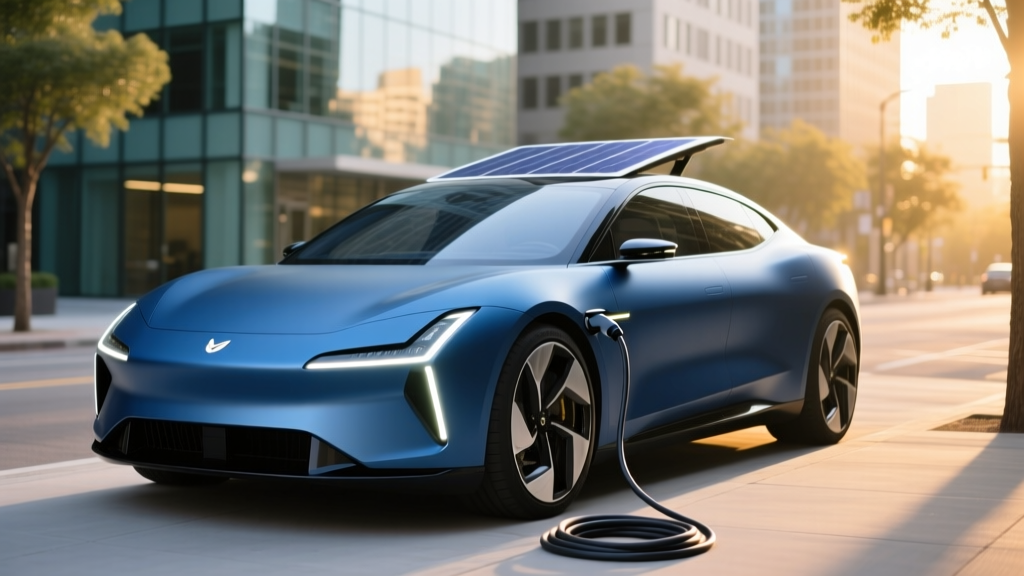
The Ocean's solar roof (California Mode on Extreme/One trims) adds approximately 1,500 solar miles per year in optimal sun — roughly 4 miles/day. Helpful for offsetting vampire drain, not a range game-changer.
Charging Speed: DC Fast Charging and Home Level 2
Charging speed was one of the Ocean's most debated specifications. The Ultra and Extreme trims support DC fast charging at up to 250 kW peak, but sustained rates tell a more practical story. The Sport trim is limited to approximately 150 kW peak.
| Metric | Sport (FWD) | Ultra / Extreme / One (AWD) |
|---|---|---|
| Max DC fast-charge rate | ~150 kW peak | ~250 kW peak |
| 10–80% DC fast charge | ~36 min | ~30 min (sustained avg ~130 kW) |
| Level 2 (240V) onboard charger | 10.5 kW | 10.5 kW |
| Level 2 miles per hour | ~28 mi/hr | ~34 mi/hr |
| Level 1 (120V) trickle | ~3 mi/hr | ~3 mi/hr |
| Charge port | CCS1 (J1772 combo) | CCS1 (J1772 combo) |
Charging curve reality: The Ocean's 250 kW peak is brief — typically held only between 10–25% State of Charge (SoC). From 25–60%, the rate tapers to roughly 150–170 kW. Above 80%, expect a steep taper to under 50 kW. This is normal NMC behavior managed by the battery management system (BMS) to protect cell longevity, but it means your 30-minute 10–80% session becomes a 50-minute 10–90% session. Plan road trips around 80% stops.
Home charging: The 10.5 kW onboard charger is competitive. On a 48-amp Level 2 home charger (hardwired, 60-amp circuit), you'll recover a full battery in roughly 11–12 hours. This is sufficient for overnight replenishment of even the 360-mile Extreme battery.
Performance: 0–60, Horsepower, and Drivetrain
| Trim | Motor Config | Horsepower | Torque (lb-ft) | 0–60 mph | Top Speed |
|---|---|---|---|---|---|
| Sport | Single front motor | 275 hp | 295 | 7.4 sec | 120 mph |
| Ultra | Dual-motor AWD | 540 hp | 508 | 3.9 sec | 127 mph |
| Extreme / One | Dual-motor AWD | 550 hp | 508 | 3.7 sec | 130 mph |
The Ultra and Extreme deliver genuine sports-SUV acceleration. The Sport, while adequate for commuting and highway merging, feels distinctly leisurely by EV standards — closer to a well-equipped RAV4 Hybrid than a Tesla Model Y Performance. The dual-motor AWD system provides confident all-weather traction, though the Ocean's 5,600–5,800 lb curb weight is noticeable in tight corners. This is a cruiser, not a canyon carver.
Interior Space, Cargo, and Standout Tech
The Ocean is a midsize SUV with generous interior volume, though some design choices draw polarized reactions.
| Dimension | Specification |
|---|---|
| Cargo (behind 2nd row) | 32.7 cu ft |
| Cargo (2nd row folded) | ~65 cu ft |
| Front legroom | 41.7 in |
| Rear legroom | 38.2 in |
| Ground clearance | 7.0 in |
| Frunk | None (no front trunk) |
Standout features:
- Solar Roof (Extreme/One): Integrated photovoltaic panels generate up to ~1,500 miles/year of range in sunny climates. Also powers cabin ventilation while parked.
- California Mode: All windows (including rear quarter glass and tailgate glass) lower simultaneously for open-air driving — unique in the segment.
- 17.1-inch rotating touchscreen: Revolve display rotates from landscape (Control Mode) to portrait (Hollywood Mode for parked streaming). Runs a custom Android-based OS.
- Recycled materials: Interior uses fully vegan materials, recycled plastics, and reclaimed rubber throughout.
- Fisker Intelligent Pilot (FIP): SAE Level 2 driver-assist with adaptive cruise, lane centering, and automated parking. This is not self-driving — the driver must remain engaged at all times.
Notable drawbacks:
- Infotainment bugs: Early software was plagued with lag, phantom touches, and OTA update failures. Later OTA patches improved stability, but the system still trails Tesla, Hyundai, and BMW in responsiveness.
- No frunk: The entire front end is packaging space for HVAC and power electronics. Competitors like the Ioniq 5 and Model Y offer meaningful front-trunk storage.
- Ride quality: The Ultra and Extreme (22-inch wheels) transmit more road harshness than expected for a luxury SUV. Sport trim on 20-inch wheels rides noticeably better.
- Rear visibility: Thick C-pillars and a small rear window compromise over-the-shoulder sightlines. The digital rearview mirror helps but takes adjustment.
Battery Warranty and Longevity Concerns
This is where the Fisker bankruptcy becomes a critical ownership factor.
| Coverage | Original Warranty | Current Status (2026) |
|---|---|---|
| Basic vehicle | 6 years / 60,000 mi | Likely unenforceable (bankruptcy) |
| Battery pack | 6 years / 75,000 mi (≥70% capacity) | Likely unenforceable |
| Powertrain | 6 years / 60,000 mi | Likely unenforceable |
| Corrosion | 12 years / unlimited mi | Likely unenforceable |
The hard truth: With Fisker Inc. in Chapter 11 and no active successor manufacturer providing warranty support, original warranty terms are effectively void for most owners. Some liquidation buyers purchased extended third-party warranties at point of sale — verify documentation carefully. Battery replacement cost for the ~113 kWh NMC pack is estimated at $18,000–$25,000 if sourced through independent EV repair shops, though parts availability is uncertain and may worsen over time.
Battery degradation outlook: The Ocean uses NMC chemistry, which typically retains 85–90% State of Health (SoH) after 100,000 miles under normal use (avoiding frequent 100% charges and DC fast-charge-only routines). The large 113 kWh pack means even 10% degradation still leaves 300+ miles of range on Ultra/Extreme trims — a meaningful buffer.
Fisker Ocean vs. Key Competitors
Choose the Ocean If:
- You prioritize maximum range per dollar (360 mi EPA on Extreme is class-leading)
- You want a distinctive, eco-focused design with solar roof and vegan interior
- You find a liquidation/used example at $30,000–$40,000 — exceptional value at those prices
- You have reliable home charging and won't depend heavily on public DC networks
Choose a Competitor If:
- You need active warranty coverage and manufacturer support (Tesla, Hyundai, Ford)
- You want the fastest public charging (Ioniq 5's 800V architecture charges 10–80% in ~18 min)
- You need Supercharger access (Tesla Model Y; CCS-to-NACS adapters exist but add complexity)
- You want proven long-term software reliability and OTA updates
Against the Tesla Model Y Long Range (EPA 330 mi, ~$48,990 MSRP), the Ocean Extreme matches or beats range but loses on charging infrastructure, software polish, and resale certainty. Against the Hyundai Ioniq 5 (EPA 303 mi, ~$47,500), the Ocean offers more range but significantly slower DC charging and no 800V architecture. The Ford Mustang Mach-E Extended Range (EPA 320 mi, ~$48,995) offers better dealer support and a more mature service network.
Frequently Asked Questions
What is the real-world range of the Fisker Ocean?
The EPA rates the Ocean Extreme at 360 miles, the Ultra at 340 miles, and the Sport at 250 miles. Real-world highway driving at 70–75 mph typically yields 85–90% of EPA (290–325 mi for Ultra/Extreme). In freezing temperatures, expect a 20–30% reduction. City driving with regenerative braking can exceed EPA estimates.
How fast does the Fisker Ocean charge?
The Ultra and Extreme peak at 250 kW on DC fast chargers, achieving 10–80% in approximately 30 minutes (though sustained average is closer to 130 kW). The Sport peaks at ~150 kW with a 10–80% time around 36 minutes. On a Level 2 home charger (10.5 kW), expect 28–34 miles of range per hour of charging.
How much does the Fisker Ocean cost after tax credits?
The Ocean did not qualify for the $7,500 federal new-vehicle credit because it was assembled in Austria, not North America. Used examples purchased from a dealer may qualify for the up-to-$4,000 used clean vehicle credit if the sale price is $25,000 or less and buyer income falls under IRS caps ($75,000 single / $150,000 joint). Check current IRS §30D guidelines and consult a tax professional.
Is the Fisker Ocean worth buying in 2026?
It depends entirely on price, risk tolerance, and your support expectations. At liquidation pricing ($25,000–$40,000), the Ocean offers exceptional range and distinctive features per dollar. However, you are buying into a bankrupt brand with no active warranty support, uncertain parts supply, and a potentially shrinking pool of qualified service technicians. If you can self-insure against repair costs and have reliable home charging, it can be a compelling value. If you need dealer support and warranty peace of mind, choose a Tesla, Hyundai, or Ford.
What are the biggest pros and cons?
Pros: Class-leading EPA range (360 mi Extreme), unique solar roof, open-air California Mode, spacious cabin, strong dual-motor performance, aggressive used-market pricing.
Cons: Bankrupt manufacturer with no warranty support, buggy infotainment, slow DC charging relative to 800V competitors, no frunk, firm ride on 22-inch wheels, uncertain long-term parts availability.
Does the Fisker Ocean qualify for the federal EV tax credit?
Not as a new vehicle — the §30D credit requires North American final assembly, and the Ocean was built in Austria. Used examples may qualify for the up-to-$4,000 previously-owned clean vehicle credit, subject to the $25,000 sale-price cap, buyer income limits, and dealer reporting requirements. Always verify eligibility on IRS.gov before purchase.