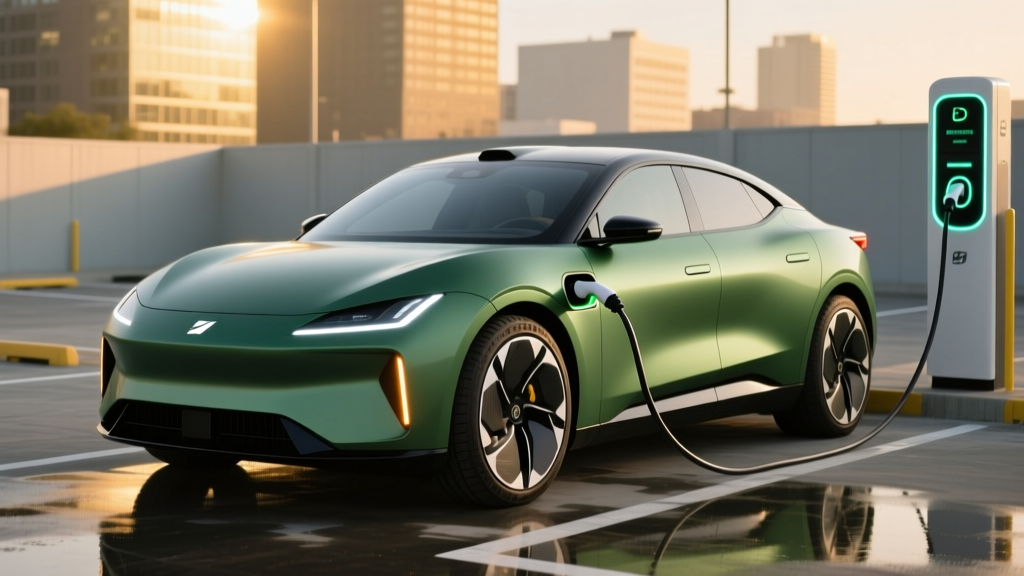
The Fisker Ocean is one of the most polarizing EVs on the used and remaining-new market. After Fisker Inc. filed for bankruptcy in mid-2024, the brand's future became uncertain — but thousands of Ocean SUVs remain on roads and in dealer lots. For 2026, the question isn't whether the Ocean is a capable electric SUV (it is, on paper), but whether leasing or buying one makes financial and practical sense given the company's collapse. This review breaks down every spec that matters — range, charging, battery chemistry, real-world efficiency — and gives you a clear framework for deciding if a Fisker Ocean lease or purchase belongs on your shortlist.
Fisker Ocean Quick Verdict
The Ocean delivers competitive EPA range (up to 350 miles on the Extreme trim with its 113 kWh battery), solid DC fast-charging capability, and a genuinely spacious interior. However, Fisker's bankruptcy means no manufacturer support, uncertain parts availability, and a likely voided warranty. A lease may insulate you from some depreciation risk, but only if a leasing company still holds the paper. Buyers should proceed with eyes wide open.
Range, Battery & Efficiency: The Numbers That Matter
| Spec | Sport / Ultra | Extreme |
|---|---|---|
| EPA Range | 250 mi (Sport) / 340 mi (Ultra) | 350 mi |
| Battery Capacity | ~80 kWh usable (Hyper Range) | ~113 kWh usable (Hyper Range) |
| Battery Chemistry | NMC (CATL) | NMC (CATL) |
| Drivetrain | FWD (Sport) / AWD (Ultra) | AWD dual-motor |
| Horsepower | 275 hp (Sport) / 540 hp (Ultra) | 550 hp |
| 0-60 mph | 7.4s (Sport) / 3.9s (Ultra) | 3.7s |
| MPGe (combined) | ~98 MPGe | ~101 MPGe |
| Efficiency | ~34 kWh/100 mi | ~32 kWh/100 mi |
- Highway (70-75 mph): ~280-310 miles on a full charge
- Cold weather (below 32°F): ~240-270 miles (NMC chemistry loses 15-25% in freezing temps)
- Optimal city/mild weather: 340-360 miles
The Ocean uses NMC (nickel manganese cobalt) lithium-ion cells supplied by CATL. NMC offers higher energy density than LFP (lithium iron phosphate), which is how Fisker packed 113 kWh into the Extreme without making the vehicle impossibly heavy. The trade-off: NMC batteries degrade slightly faster over time and are more sensitive to sustained 100% state-of-charge storage. Expect roughly 8-12% capacity loss over 5 years / 75,000 miles under normal use patterns.
Charging Speed: DC Fast & Home Level 2
| Level | Power | Speed | Notes |
|---|---|---|---|
| Level 1 (120V) | ~1.4 kW | ~4 mi/hr | Emergency/trickle only |
| Level 2 (240V) | 11 kW onboard | ~33 mi/hr (Extreme) | Full charge in ~10-11 hrs |
| DC Fast Charge | Peak 250 kW (Extreme) | 10-80% in ~30 min | CCS1 connector; tapers above 80% |
The Ocean Extreme and Ultra support up to 250 kW peak DC fast charging via a CCS1 connector. However, as with all EVs, that peak rate is not sustained. The charge curve holds roughly 200-250 kW from 10-40% SoC, then progressively tapers. By 60% SoC, you're seeing ~150 kW; by 80%, roughly 70-90 kW. The 10-80% time of approximately 30 minutes assumes a capable 350 kW station and a preconditioned battery.
Important context: The Sport trim with its smaller ~80 kWh battery peaks at roughly 180 kW DC, with a 10-80% time closer to 33 minutes. The smaller battery charges slightly slower in absolute kW but the lower total capacity partially offsets the time difference.
At home on a 48-amp Level 2 charger (11.5 kW delivery), the 11 kW onboard charger is the bottleneck. Expect roughly 33 miles of range added per hour on the Extreme, meaning a full overnight charge is achievable for nearly all daily driving scenarios. If you're installing a home Level 2, a 60-amp circuit with a 48-amp charger (like the ChargePoint Home Flex or Tesla Wall Connector with J1772 adapter) is the sweet spot.
Pricing, Lease Status & Federal Tax Credit Eligibility
This is where the Fisker Ocean story gets complicated — and where any prospective lessee or buyer needs to pay close attention.
Original MSRP by Trim (at launch)
- Ocean Sport: $37,499
- Ocean Ultra: $49,999
- Ocean Extreme: $68,999
- Ocean One (launch edition): $68,999
Following Fisker's June 2024 Chapter 11 bankruptcy filing, remaining inventory was liquidated at steep discounts — often 40-60% below MSRP. In 2026, any remaining Ocean vehicles are being sold through independent dealers, liquidators, or private parties at heavily reduced prices.
Federal Tax Credit (§30D) Status
| Requirement | Threshold | Ocean Status |
|---|---|---|
| MSRP Cap (SUVs) | ≤ $80,000 | ✅ Passes |
| Buyer Income Cap (MFJ) | ≤ $300,000 AGI | Varies by buyer |
| Battery Component Mfg. (N. America) | ≥ 100% (2026) | ❌ Fails (CATL/China) |
| Critical Minerals (US/FTA) | ≥ 80% (2026) | ❌ Fails |
| FEOC Restriction | No Chinese-entity battery components | ❌ Fails (CATL = FEOC) |
Leasing the Ocean in 2026
Traditional Fisker-branded leasing programs are defunct. However, some third-party leasing companies and financial institutions that hold Ocean assets may offer lease-like arrangements or certified pre-owned financing. If you find an active lease listing:
- Verify who holds the lease paper (not Fisker — they're bankrupt)
- Confirm who is responsible for warranty claims (likely no one)
- Negotiate aggressively — residual values have collapsed
- Ensure the leasing entity can provide gap insurance
Interior Space, Cargo & Daily Usability
The Ocean is a legitimately practical midsize SUV. Interior dimensions and cargo space compete directly with the Hyundai Ioniq 5, Ford Mustang Mach-E, and Tesla Model Y.
- Cargo volume (rear seats up): 32.5 cu ft
- Cargo volume (rear seats folded): 67.0 cu ft
- Front legroom: 41.7 inches
- Rear legroom: 38.2 inches
- Frunk (front trunk): Not available — the Ocean has no frunk
- Solar roof (California Mode on Extreme): Adds ~1,500 miles/year of range in optimal sun conditions — a neat party trick, but don't rely on it
The cabin materials on the Ultra and Extreme trims are premium — vegan leather, recycled plastics, and a minimalist aesthetic. The Sport trim uses more basic materials to hit its lower price point. All trims feature a 17.1-inch rotating center touchscreen ("Revolve" screen on Extreme) and a digital instrument cluster.
Driver Assistance & Technology
The Fisker Ocean's "Fisker Intelligent Pilot" driver-assistance suite is an SAE Level 2 system. This means it provides combined steering and acceleration/braking assistance, but the driver must remain fully engaged, hands on or near the wheel, and eyes on the road at all times. This is NOT autonomous or "self-driving" capability.
Standard ADAS features include adaptive cruise control, lane-centering assist, automatic emergency braking, blind-spot monitoring, and rear cross-traffic alert. The system is competent but not class-leading — it lacks the hands-free highway capability of GM's Super Cruise or Ford's BlueCruise.
The infotainment system runs on a custom Android-based platform. Over-the-air updates were promised but are now unlikely given Fisker's bankruptcy. Apple CarPlay and Android Auto are not natively supported — a notable omission that frustrated early owners. The Ocean relies entirely on its native navigation and app ecosystem.
Warranty, Service & Long-Term Ownership Risk
This is the single biggest concern for any Ocean buyer or lessee in 2026.
- Original battery warranty: 6 years / 60,000 miles (below the industry-standard 8 yr / 100,000 mi)
- Original powertrain warranty: 6 years / 60,000 miles
- Original bumper-to-bumper: 3 years / 36,000 miles
- Current warranty status: Effectively void. Fisker's bankruptcy means no entity is honoring warranty claims.
Without an active manufacturer, you're on your own for:
- Battery cell or module replacement (estimated $15,000-$25,000 for the 113 kWh pack)
- Software bugs and infotainment issues (no OTA update pipeline)
- Body panels and crash parts (limited supply from liquidated inventory)
- Recall repairs (NHTSA recalls may go unaddressed)
Some independent EV shops can service the Ocean's basic mechanical components (brakes, suspension, 12V system), but high-voltage battery and powertrain diagnostics require proprietary Fisker software and tooling that may no longer be accessible.
Pros, Cons & Who Should Consider the Ocean
✅ Pros
- Class-leading EPA range on Extreme (350 mi)
- Large 113 kWh battery provides genuine road-trip capability
- Spacious interior with 67 cu ft cargo capacity
- Strong performance: 3.7s 0-60 on Extreme AWD
- Deep discounts from liquidation pricing
- Solar roof adds marginal free range
❌ Cons
- Manufacturer bankrupt — no warranty, no support
- No federal tax credit eligibility (FEOC/battery sourcing)
- No Apple CarPlay or Android Auto
- Software updates effectively frozen
- Parts availability uncertain and declining
- Resale value severely depressed
- Below-average battery warranty even when active
Who This EV Suits
The Fisker Ocean in 2026 is best suited for:
- Risk-tolerant bargain hunters who can acquire an Extreme or Ultra at 50%+ off MSRP and self-insure against repairs
- EV enthusiasts who value range and uniqueness over long-term support
- Secondary-vehicle households where the Ocean isn't the sole daily driver
It is not suited for:
- Families who need reliable warranty coverage and dealer service
- First-time EV buyers who want a supported, low-risk ownership experience
- Anyone who depends on the latest infotainment features or OTA updates
Fisker Ocean vs. Key Competitors
| Spec | Fisker Ocean Extreme | Tesla Model Y LR | Hyundai Ioniq 5 LR | Ford Mach-E ER AWD |
|---|---|---|---|---|
| EPA Range | 350 mi | 320 mi | 303 mi | 290 mi |
| Battery | 113 kWh NMC | ~75 kWh NMC | 77.4 kWh NMC | 91 kWh NMC |
| DC Fast Charge | 250 kW | 250 kW | 240 kW | 150 kW |
| 0-60 mph | 3.7s | 4.8s | 5.1s | 4.8s |
| Base MSRP | $68,999* | ~$47,990 | ~$52,600 | ~$51,995 |
| Fed. Tax Credit | ❌ No | ✅ Partial/Full | ✅ $7,500 | ✅ $7,500 |
| Warranty (batt.) | Void (bankrupt) | 8 yr/120k mi | 10 yr/100k mi | 8 yr/100k mi |
*Ocean Extreme original MSRP; liquidation prices significantly lower.
Decision Framework: Should You Lease or Buy a Fisker Ocean?
Choose the Ocean if:
- You can buy at 50%+ off original MSRP and accept the risk
- 350-mile EPA range is your top priority
- You have access to independent EV service
- This is a secondary or enthusiast vehicle
Choose a competitor (Model Y, Ioniq 5, Mach-E) if:
- You need warranty coverage and dealer service
- You want the $7,500 federal tax credit
- You depend on OTA updates and modern infotainment
- This is your primary family vehicle
Frequently Asked Questions
What is the real-world range of the Fisker Ocean?
The Ocean Extreme achieves its 350-mile EPA estimate in city and mixed driving in mild weather. On highway road trips at 70+ mph, expect 280-310 miles. In freezing temperatures, range drops to roughly 240-270 miles due to NMC battery chemistry limitations and cabin heating demand. The Sport trim delivers ~190-210 highway miles from its smaller battery.
How fast does the Fisker Ocean charge?
On a DC fast charger, the Extreme and Ultra peak at 250 kW (CCS1 connector), achieving 10-80% in approximately 30 minutes on a 350 kW station with a preconditioned battery. The charge curve tapers significantly above 60% SoC. At home on Level 2 (240V, 48A), the 11 kW onboard charger delivers about 33 miles of range per hour, fully charging the 113 kWh battery in roughly 10-11 hours.
Does the Fisker Ocean qualify for the federal EV tax credit?
No. The Ocean's CATL-sourced battery fails the IRS §30D critical-mineral and battery-component sourcing requirements, and CATL is classified as a Foreign Entity of Concern (FEOC). Combined with Fisker's bankruptcy, no federal tax credit is available. Always verify at fueleconomy.gov and consult a tax professional for your specific situation.
Is a Fisker Ocean lease worth it in 2026?
Only under very specific conditions: if a third-party lessor (not Fisker) holds the lease, if the monthly payment reflects the vehicle's severely depressed value, and if you accept that warranty coverage is essentially nonexistent. Most buyers are better served by leasing or buying a supported EV from Hyundai, Tesla, Ford, or Kia, where warranty, software updates, and service infrastructure remain intact.
What happens if the Fisker Ocean battery needs replacement?
Without an active manufacturer, battery replacement would need to be sourced through independent EV repair shops using salvaged or aftermarket cells. Estimated cost: $15,000-$25,000 for the 113 kWh pack. This is a significant financial risk that makes extended warranties or self-insurance reserves essential if you choose to own an Ocean.
Can I still get software updates for the Fisker Ocean?
Effectively no. Fisker's OTA update infrastructure was shut down following the company's bankruptcy. The vehicle's software is frozen at its last update version. This means no new features, no bug fixes, and no security patches going forward — a meaningful drawback compared to actively supported EVs from Tesla, Hyundai, and Ford.