The Rise and Fall of Fisker: A 2026 Retrospective
If you've been searching for Fisker electric vehicles in 2026, you've likely noticed something unusual: the company that produced the Fisker Ocean SUV is no longer in business. Fisker Inc. filed for bankruptcy in late 2024 after a chaotic year of production struggles, software failures, and a dramatic inventory liquidation that saw the Ocean's price slashed by up to 60%. For prospective buyers, this raises critical questions about ownership viability, parts availability, and long-term support.
This review examines the Fisker Ocean — the only production vehicle Fisker ever delivered — through the lens of a 2026 used-EV purchase. We'll cover its specs, real-world range, charging performance, and whether the rock-bottom used prices make it a legitimate bargain or a cautionary tale.
Fisker Ocean Specs at a Glance
| Specification | Sport (FWD) | Ultra / Extreme (AWD) |
|---|---|---|
| EPA Range | 250 miles | 360 miles (Extreme w/ Hyper Range) |
| Battery Capacity | ~80 kWh usable (NMC) | ~113 kWh usable (NMC, Hyper Range pack) |
| Horsepower | 275 hp | 540 hp (Ultra) / 550 hp (Extreme) |
| 0–60 mph | 6.9 sec | 3.7 sec (Ultra) / 3.9 sec (Extreme) |
| Drivetrain | Single-motor FWD | Dual-motor AWD |
| Max DC Fast Charge | ~170 kW peak | ~250 kW peak |
| 10–80% DC Charge Time | ~35 min | ~30 min (Hyper Range pack) |
| Level 2 Home Charging | ~10.5 kW (37 mi/hr) | ~10.5 kW (37 mi/hr) |
| MPGe (Combined) | 86 MPGe | 77–80 MPGe |
| EPA Efficiency | 39 kWh/100 mi | 42–44 kWh/100 mi |
| Cargo Volume (rear seats up) | ~32 cu ft | ~32 cu ft |
| Cargo Volume (rear seats folded) | ~65 cu ft | ~65 cu ft |
| Rear Legroom | ~38.0 in | ~38.0 in |
| Battery/Powertrain Warranty (original) | 6 years / 60,000 miles | |
| Original MSRP (base) | $37,499 | $52,999 (Ultra) / $68,999 (Extreme) |
Note: These are original manufacturer specifications. Actual used-vehicle condition, battery state of health, and software functionality will vary in 2026.
Real-World Range: What the EPA Sticker Doesn't Tell You
Fisker Ocean Extreme (Hyper Range, AWD): EPA 360 miles. Expect approximately 280–310 miles on highway road trips at 70–75 mph. In cold weather (below 32°F / 0°C), plan for 220–260 miles due to battery heating demands and cabin climate load.
Fisker Ocean Sport (FWD): EPA 250 miles. Expect approximately 200–220 miles highway, dropping to 160–185 miles in cold conditions.
The Fisker Ocean Extreme's 360-mile EPA rating was one of the highest of any production EV when it launched, thanks to the massive 113 kWh Hyper Range battery pack supplied by CATL. However, the Ocean is a heavy vehicle — curb weight exceeds 5,400 lbs on AWD trims — and that mass penalizes highway efficiency. The 42–44 kWh/100 mi consumption figure is noticeably thirstier than rivals like the Tesla Model Y (28–30 kWh/100 mi) or the Hyundai Ioniq 5 (30–32 kWh/100 mi).
The Sport trim's 80 kWh pack delivers a more modest 250 miles EPA, which is competitive with base versions of the Volkswagen ID.4 but underwhelming given the vehicle's size. In our experience, the Ocean's range readout can be optimistic; monitor actual kWh/mile consumption on the trip computer for more reliable planning.
Charging Performance: DC Fast and Level 2
| Charging Level | Power / Rate | Speed / Time |
|---|---|---|
| Level 1 (120V household) | ~1.4 kW | ~5 miles per hour |
| Level 2 (240V home/public) | 10.5 kW | ~37 miles per hour; full charge in ~11 hrs (Hyper Range) |
| DC Fast Charge (CCS) | Up to 250 kW peak (AWD) | 10–80% in ~30 min; peak rate not sustained above 55% SoC |
| DC Fast Charge (Sport) | Up to ~170 kW peak | 10–80% in ~35 min |
The Ocean charges via CCS1 (Combo connector), which remains widely supported at Electrify America, EVgo, and ChargePoint DC fast-charging stations. However, it does not natively support the Tesla NACS connector. In 2026, with much of the industry migrating to NACS, Ocean owners will likely need a CCS-to-NACS adapter for Tesla Supercharger access — verify adapter compatibility before relying on this for road trips.
The charging curve on the Hyper Range pack is aggressive early — it can sustain 200+ kW from roughly 10% to 40% SoC — but tapers significantly above 60%. Plan to charge to 80% and go rather than wait for a full top-up at a DC station. The Level 2 rate of 10.5 kW is solid for overnight home charging; a full charge of the 113 kWh pack takes about 11 hours, which is manageable with a properly installed 48-amp Level 2 wallbox on a 60-amp circuit.
Performance, Ride, and Daily Drivability
The dual-motor AWD Ocean (Ultra and Extreme) delivers genuinely quick acceleration. The Ultra's 540 hp and 3.7-second 0–60 time put it in the territory of a Porsche Macan EV, and the instant torque from the dual-motor setup makes highway merging effortless. The single-motor Sport is adequate for commuting but feels its weight during passing maneuvers.
Ride quality is a mixed bag. The Ocean's suspension tuning leans soft, which absorbs city bumps well but introduces noticeable body roll in corners and a floaty sensation on undulating highways. The steering is light and numb — this is a comfort-oriented cruiser, not a driver's SUV. Brake feel, a common EV challenge, is inconsistent; the transition between regenerative braking and the friction brakes can be abrupt.
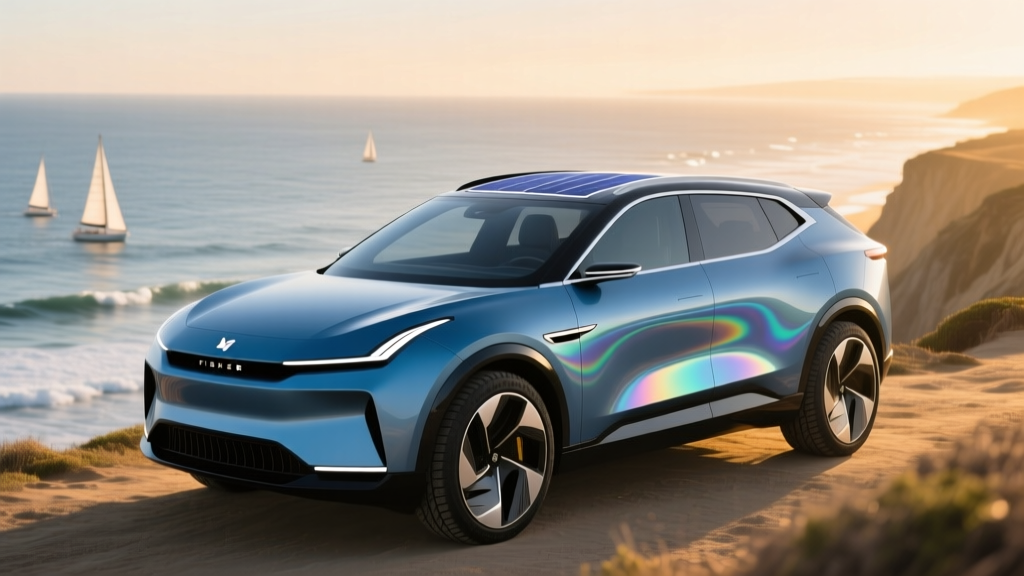
One unique feature: the Fisker Ocean Extreme came equipped with the "Solar Roof" (a photovoltaic panel integrated into the roof glass), which Fisker claimed could add up to 1,500 miles of range per year under ideal conditions. In practice, this translates to roughly 3–5 miles per day of supplemental charging in sunny climates — a nice conversation starter but not a meaningful range extender.
Pricing, Used Market, and Federal Tax Credit Eligibility
The Fisker Ocean's pricing history is one of the most dramatic in EV industry. Originally launched at $37,499 (Sport) to $68,999 (Extreme), Fisker began aggressively discounting inventory in mid-2024 as the company's financial situation deteriorated. By late 2024, Extreme trims were being sold for as low as $24,999–$29,999 — a discount exceeding 55% off MSRP.
| Trim | Original MSRP | Late-2024 Liquidation Price | Est. 2026 Used Price Range |
|---|---|---|---|
| Sport (FWD) | $37,499 | $20,499–$24,999 | $14,000–$19,000 |
| Ultra (AWD) | $52,999 | $28,999–$32,999 | $20,000–$27,000 |
| Extreme (AWD, Hyper Range) | $68,999 | $24,999–$29,999 | $22,000–$30,000 |
Federal Tax Credit (IRS §30D): The Fisker Ocean did not qualify for the $7,500 federal EV tax credit when sold new, due to battery-sourcing and critical-mineral requirements under the Inflation Reduction Act. As a used EV, it may qualify for the Used Clean Vehicle Credit (up to $4,000 or 30% of the sale price, whichever is less) under IRS §25E, subject to these requirements:
- Sale price must be $25,000 or less
- Buyer's modified AGI must not exceed $75,000 (single) / $150,000 (joint)
- Vehicle must be at least 2 model years old (2023 and 2024 models qualify in 2026)
- Must purchase from a licensed dealer
- Credit can be transferred to the dealer as a point-of-sale discount
At current used prices, many Ocean trims will fall under the $25,000 cap, making the $4,000 used-EV credit achievable. Always confirm eligibility with a tax professional and verify the vehicle's VIN against the fueleconomy.gov database.
Biggest Risks of Buying a Fisker Ocean in 2026
- Warranty void: Fisker's original 6-year/60,000-mile battery and powertrain warranty is likely unenforceable following bankruptcy. Third-party extended warranties may be available but verify coverage for EV-specific components.
- Software and OTA updates: The Ocean launched with significant software bugs (infotainment crashes, phantom braking, keyless-entry failures). With Fisker defunct, no further OTA updates or patches should be expected.
- Parts availability: Body panels, trim pieces, and proprietary components may become increasingly difficult to source. Mechanical parts shared with Magna Steyr (the contract manufacturer) may remain available.
- Insurance costs: Some insurers have increased premiums or reduced coverage for defunct-brand EVs. Get quotes before purchasing.
- Resale value: Depreciation has been severe. Further value loss is likely as the fleet ages without manufacturer support.
Pros and Cons
✅ Pros
- Massive 360-mile EPA range (Extreme w/ Hyper Range pack)
- Spacious interior with 65 cu ft cargo capacity
- Dramatically discounted used prices — Extreme under $30K
- Quick dual-motor performance (3.7 sec 0–60)
- Distinctive design with California Mode (all windows drop simultaneously)
- May qualify for $4,000 used-EV tax credit
❌ Cons
- Manufacturer is bankrupt — no warranty support or OTA updates
- Software reliability issues remain unresolved
- Parts availability is uncertain and deteriorating
- Heavy vehicle with poor efficiency (42–44 kWh/100 mi)
- CCS-only charging (no native NACS/Supercharger access)
- Unpredictable brake pedal feel
- Insurance may be costly or limited
Who Should (and Shouldn't) Buy a Fisker Ocean
Consider the Ocean if: You're an EV-savvy buyer comfortable with elevated ownership risk, you want maximum range per dollar at used prices, you have reliable home Level 2 charging, and you treat vehicles as short-to-medium-term purchases (3–5 years). The Extreme with the Hyper Range pack at under $30K (potentially $26K after the used-EV credit) is arguably the most range-per-dollar EV on the used market.
Look elsewhere if: You need a dependable daily driver with warranty backing, you're a first-time EV buyer, you rely on public charging networks (especially Tesla Superchargers), you plan to keep the vehicle 8+ years, or you want current-generation ADAS features. The Hyundai Ioniq 5, Tesla Model Y, or Chevrolet Equinox EV offer more predictable ownership at comparable used prices.
Frequently Asked Questions
What is the real-world range of the Fisker Ocean?
The AWD Extreme with the Hyper Range pack is EPA-rated at 360 miles, but expect 280–310 miles on highway road trips and 220–260 miles in freezing weather. The FWD Sport (250 miles EPA) delivers roughly 200–220 miles highway in moderate conditions.
How fast does the Fisker Ocean charge?
On a DC fast charger, the AWD models peak at ~250 kW and charge from 10–80% in about 30 minutes. The Sport peaks around 170 kW and takes roughly 35 minutes. At home on a Level 2 charger (10.5 kW), expect ~37 miles of range per hour of charging.
Does the Fisker Ocean qualify for a federal tax credit?
It did not qualify for the $7,500 new-vehicle credit (§30D) due to battery-sourcing rules. As a used EV, it may qualify for up to $4,000 under the Used Clean Vehicle Credit (§25E) if the sale price is $25,000 or less, your income falls under the cap, and you buy from a licensed dealer. Confirm details at irs.gov.
Is it worth buying a Fisker Ocean vs. competitors?
At 2026 used prices, the Ocean offers exceptional range and space per dollar, but the bankruptcy risk is real. A used Tesla Model Y Long Range (~$28K–$33K) offers Supercharger access and ongoing software support. A used Hyundai Ioniq 5 (~$25K–$30K) offers a proven platform with better efficiency. The Ocean is a calculated risk for informed buyers only.
What happens if my Fisker Ocean needs repairs?
Fisker's contract manufacturer, Magna Steyr, built the Ocean, and some mechanical components may be serviceable through independent shops. However, proprietary EV components (battery modules, power electronics, infotainment) have no guaranteed parts pipeline. Secure a pre-purchase inspection and explore third-party warranty options before buying.
Does the Fisker Ocean have self-driving capability?
No. The Ocean came equipped with Fisker Intelligent Pilot, a Level 2 driver-assistance system (per SAE automation levels) that includes adaptive cruise control and lane-centering. It requires full driver attention at all times and is not autonomous. It also lacked the polish of systems like GM's Super Cruise or Ford's BlueCruise at launch, and no further software improvements are forthcoming.