The Fisker Ocean EV in 2026: What Buyers Must Know Before Purchasing
The Fisker Ocean entered the electric SUV market with bold design, a solar roof, and competitive range figures. By mid-2024, Fisker Inc. had filed for bankruptcy, leaving early adopters with orphaned vehicles and a complicated ownership landscape. If you're searching for an Ocean EV in 2026, you're almost certainly looking at the used market — where prices have dropped dramatically and compelling value exists for informed buyers willing to accept specific risks.
This review breaks down the Ocean's engineering, real-world performance, and the practical realities of owning a vehicle from a defunct manufacturer. We'll cover every trim — the Sport, Ultra, Extreme, and limited-run One — with exact specifications, charging data, and an honest assessment of what daily ownership looks like today.
Fisker Ocean Specs at a Glance
| Specification | Sport (FWD) | Ultra / Extreme (AWD) |
|---|---|---|
| EPA Range | 250 miles | 360 miles (Extreme) / 340 miles (Ultra) |
| Battery (Usable) | ~80 kWh (LFP) | ~113 kWh (NMC) |
| Horsepower | 275 hp | 540 hp (Ultra) / 550 hp (Extreme) |
| 0-60 mph | 6.9 sec | 3.9 sec (Ultra) / 3.7 sec (Extreme) |
| Drivetrain | Single-motor FWD | Dual-motor AWD |
| Max DC Fast Charge | ~170 kW | ~250 kW |
| 10-80% DC Charge | ~37 min | ~30 min (peak conditions) |
| Level 2 Home Charging | ~11 kW (30 mi/hr) | ~11 kW (30 mi/hr) |
| MPGe (Combined) | ~97 MPGe | ~89 MPGe |
| Energy Consumption | ~35 kWh/100mi | ~38 kWh/100mi |
| Cargo (rear seats up) | 32.5 cu ft | 32.5 cu ft |
| Cargo (rear seats folded) | 67.2 cu ft | 67.2 cu ft |
| Original Base MSRP | $37,499 | $59,999 (Ultra) / $68,999 (Extreme) |
Note: Specs reflect Fisker's published figures and EPA data via fueleconomy.gov. Real-world results vary based on conditions.
Real-World Range: What the EPA Numbers Don't Tell You
In mixed driving, expect approximately 300–330 miles on a full charge. Sustained highway driving at 75+ mph reduces this to roughly 260–290 miles. In freezing temperatures (below 32°F), range drops an additional 20–30%, potentially bringing a full charge down to 220–250 miles with cabin heating active. The Ocean Sport's LFP battery shows less cold-weather degradation percentage-wise but starts from a lower 250-mile EPA baseline.
The Ocean Extreme's 360-mile EPA figure was among the highest of any electric SUV when it launched, enabled by its massive 113 kWh NMC battery pack. But physics always wins: pushing over 5,400 pounds of vehicle at highway speeds demands significant energy. The Ocean's consumption of roughly 38 kWh per 100 miles (AWD trims) is average for its class — comparable to the Ford Mustang Mach-E Extended Range AWD but less efficient than the Tesla Model Y Long Range at roughly 28 kWh/100mi.
The LFP (lithium iron phosphate) battery in the Sport trim trades range for longevity. LFP chemistry typically endures more charge cycles with slower degradation and tolerates regular 100% charging — something NMC batteries don't prefer long-term. For high-mileage commuters who charge daily, the Sport's LFP pack may retain more usable capacity over a decade, even though it starts with fewer miles.
Charging Performance: DC Fast Charging and Home Setup
Charging speed is where the Ocean's real-world story gets nuanced. The AWD trims (Ultra/Extreme) support up to 250 kW peak DC fast charging on compatible stations, but — as with all EVs — peak rate is not sustained rate. The charge curve tapers significantly above 80% state of charge.
| Charging Level | Power (kW) | Approx. Miles Added Per Hour | Notes |
|---|---|---|---|
| Level 1 (120V household) | ~1.4 kW | ~4 mi/hr | Emergency/trickle only |
| Level 2 (240V home, 48A) | ~11 kW | ~30 mi/hr | Full overnight charge in 8-11 hours |
| DC Fast (50 kW station) | 50 kW | ~130 mi/hr | Older public chargers |
| DC Fast (150 kW station) | ~150 kW (sustained) | ~380 mi/hr | Common Electrify America/EVgo rate |
| DC Fast (250-350 kW station) | Up to 250 kW peak | ~600+ mi/hr at peak | 10-80% in ~30 min (AWD trims) |
On a 350 kW Electrify America or Tesla Supercharger (with NACS adapter, if equipped), the Ocean Extreme can add approximately 200 miles of range in 15 minutes when starting from a low state of charge. However, the charging curve tapers noticeably after 60% SoC, and charging from 80-100% can take nearly as long as the 10-80% portion. Battery preconditioning — warming the pack before arriving at a charger — is managed through the vehicle's navigation system, though some owners have reported inconsistent preconditioning behavior.
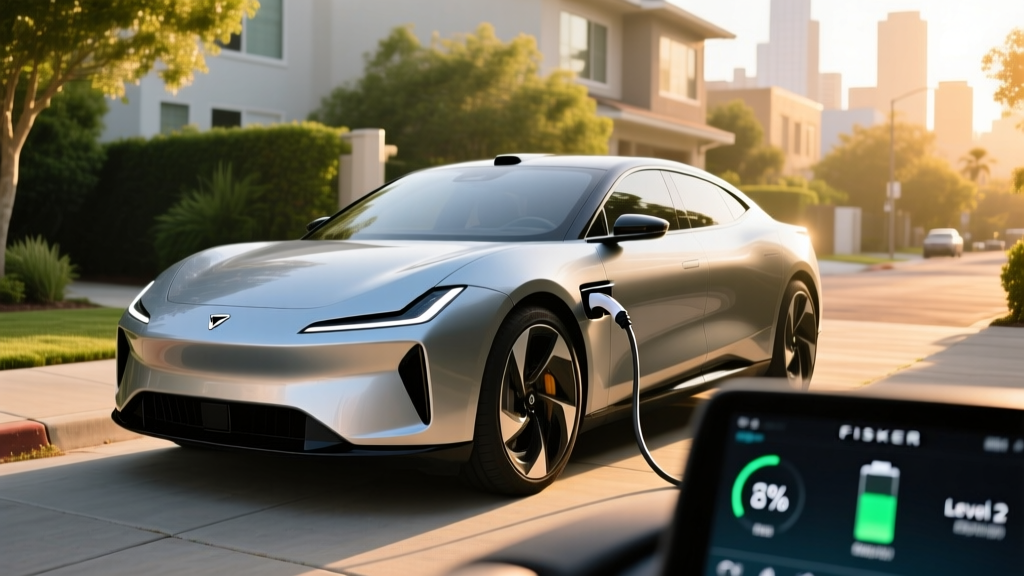
For home charging, a Level 2 wall connector on a 60-amp circuit (delivering 48 amps to the vehicle) adds roughly 30 miles per hour of charging. This means an overnight session from 20% to 80% takes approximately 6-7 hours, sufficient for virtually any daily commute. Installation costs for a home Level 2 setup typically range from $800 to $2,500 depending on your electrical panel capacity and the distance from panel to charger location — a licensed electrician should assess your home's 200-amp service readiness.
Performance and Driving Dynamics
The Ocean Extreme and Ultra deliver genuine performance SUV credentials. The dual-motor AWD system produces 540-550 horsepower, launching the Ocean to 60 mph in 3.7-3.9 seconds — territory occupied by the Tesla Model Y Performance and Porsche Macan EV. The instant torque delivery makes highway merging and passing effortless, and the low center of gravity (batteries mounted in the floor) keeps body roll controlled through corners.
The Sport trim's single front motor with 275 hp is adequate for daily driving but not exciting. The 6.9-second 0-60 time trails competitors like the Hyundai Ioniq 5 RWD (7.4 sec, but lighter) and Volkswagen ID.4 Pro (7.7 sec). Where the Sport excels is efficiency: the lighter front-drive setup and LFP battery combination sips electrons more frugally in city driving.
One standout feature is the SolarSky roof on the Extreme and One trims. Fisker claimed it could add up to 1,500 miles of range per year under ideal sun conditions — roughly 4 miles per day. In practice, most owners report 1-2 miles of daily solar gain. It's a marginal but genuinely unique feature that no competitor offers, and it helps offset phantom drain during extended parking.
The Ocean also features California Mode, which opens all side windows simultaneously with one button press — a party trick that doubles as rapid cabin ventilation. The recycled-material interior, vegan leather surfaces, and minimalist dashboard give the Ocean a distinct identity, though some owners note the 17.1-inch rotating touchscreen (Revolve display on Extreme/One) can be slow to respond and lacks the polish of Tesla or Rivian interfaces.
Pricing, Used Market Value, and Federal Tax Credit Eligibility
Fisker's original MSRP structure positioned the Ocean aggressively against established competitors. The brand's 2024 bankruptcy, however, sent used values into freefall. Here's what the market looks like in 2026:
| Trim | Original MSRP | Est. Used Price (2026) | Federal Used EV Credit (§25E) | Effective Price |
|---|---|---|---|---|
| Sport | $37,499 | $14,000–$19,000 | Up to $4,000 | $10,000–$15,000 |
| Ultra | $59,999 | $20,000–$27,000 | Up to $4,000 | $16,000–$23,000 |
| Extreme | $68,999 | $24,000–$32,000 | Up to $4,000 | $20,000–$28,000 |
| One (Limited) | $79,999 | $28,000–$36,000 | Up to $4,000 | $24,000–$32,000 |
Federal tax credit details: Because Fisker no longer sells new vehicles, the §30D new-vehicle credit (up to $7,500) is not applicable. However, the §25E used clean vehicle credit may apply. This credit offers 30% of the sale price, up to $4,000, for qualifying used EVs priced at $25,000 or less. Key eligibility requirements per IRS guidelines include:
- Vehicle sale price must be $25,000 or less
- Buyer income caps: $75,000 single / $112,500 head of household / $150,000 joint filers
- Vehicle must be at least two model years old (all Ocean models qualify)
- Must purchase from a licensed dealer (private-party sales do not qualify)
- Credit is non-refundable — it can reduce your tax liability to zero but won't generate a refund beyond that
- Vehicle must have been previously sold as new (first transfer triggers eligibility for the used credit)
The $25,000 price cap means Ocean Sport and many Ultra examples qualify, while Extreme and One trims priced above $25,000 do not. Always verify eligibility with a tax professional before relying on the credit, as rules may shift and individual circumstances vary.
Warranty, Parts, and the Orphan-Vehicle Reality
Fisker originally offered a competitive warranty package:
- Basic vehicle warranty: 6 years / 60,000 miles
- Battery and powertrain: 10 years / 100,000 miles (capacity retention threshold: 70%)
- Corrosion warranty: 12 years
The critical question in 2026: who honors these warranties? Following Fisker's Chapter 11 bankruptcy and asset liquidation, warranty claims have become uncertain. Some third-party warranty administrators may still process claims depending on how Fisker structured its warranty reserves, but owners should not count on manufacturer-backed warranty support. Purchasing an extended third-party warranty from a reputable provider is strongly recommended for any Ocean purchase.
Parts availability is the other major concern. Body panels, proprietary trim pieces, and Fisker-specific electronics may be difficult to source as existing inventory depletes. However, the Ocean uses industry-standard components for many wear items — brake components, cabin filters, suspension bushings, and the CCS charging port are all serviceable through standard automotive suppliers. The Magna Steyr-built platform (shared underpinnings with certain European vehicles) means some mechanical parts cross-reference to other manufacturers.
Software updates and connected services are another gray area. Fisker's cloud infrastructure for over-the-air updates and the mobile app may have limited long-term support. Before purchasing, verify that the vehicle's core functions (navigation, charging management, climate control) operate fully without active cloud connectivity.
Who Should Buy the Fisker Ocean in 2026?
Choose the Fisker Ocean if:
- You want 300+ miles of range at a fraction of the original price
- You have reliable home charging and don't depend on a manufacturer app for daily use
- You're comfortable with orphan-brand risk and can self-manage maintenance
- You value distinctive design and sustainable materials over badge prestige
- You want a solar roof feature unavailable on any other production EV
Look elsewhere if:
- You need guaranteed warranty coverage and dealership service support
- You depend on manufacturer-provided roadside assistance
- You plan to keep the vehicle 10+ years and worry about parts scarcity
- You need the latest ADAS features — the Ocean's driver assists are basic Level 2 (lane-keeping, adaptive cruise) and will not receive future feature updates
For budget-conscious EV buyers willing to accept calculated risk, the Ocean Extreme at $20,000-$28,000 (after potential tax credit) represents extraordinary value per mile of range. Compare that to a new Hyundai Ioniq 5 Long Range at roughly $50,000 with 318 miles of EPA range — the used Ocean delivers comparable or better range for nearly half the price.
Pros
- Class-leading 360-mile EPA range (Extreme trim)
- Depreciation creates exceptional used value
- SolarSky roof adds passive range
- Spacious interior with 32.5 cu ft cargo
- Sustainable, recycled-material cabin
- Strong AWD performance (3.7 sec 0-60)
Cons
- Defunct manufacturer — no warranty guarantee
- Parts scarcity for Fisker-specific components
- Infotainment software can be sluggish
- Software update future is uncertain
- Charging speeds trail Hyundai/Kia E-GMP rivals
- Limited ADAS capabilities vs. Tesla, GM Super Cruise
Frequently Asked Questions
What is the real-world range of the Fisker Ocean?
The Ocean Extreme achieves approximately 300-330 miles in mixed real-world driving, with highway-only range dropping to 260-290 miles. Cold weather (below freezing) can reduce range by 20-30%. The Sport trim delivers roughly 200-220 miles real-world from its smaller LFP battery.
How fast does the Fisker Ocean charge?
On a 250+ kW DC fast charger, the Ocean Ultra/Extreme can charge from 10-80% in approximately 30 minutes under ideal conditions. The Sport trim peaks around 170 kW, taking roughly 37 minutes for 10-80%. Home Level 2 charging at 11 kW adds about 30 miles per hour.
Does the Fisker Ocean qualify for any federal tax credit?
Not the new-vehicle §30D credit (Fisker is defunct). However, the §25E used EV credit may apply: up to $4,000 for Ocean examples sold at or below $25,000 by a licensed dealer, subject to buyer income caps. Verify with a tax professional and check current IRS guidance.
Is the Fisker Ocean worth buying vs. a Tesla Model Y or Hyundai Ioniq 5?
If price is the primary factor and you accept orphan-brand risk, the used Ocean offers more range per dollar than nearly any alternative. However, the Model Y and Ioniq 5 provide active manufacturer support, robust service networks, ongoing software updates, and proven long-term reliability. The Ocean is a value play; competitors are safer bets for risk-averse buyers.
Can I still get the Fisker Ocean serviced?
Independent EV-capable mechanics can handle most maintenance (brakes, tires, cabin filters, suspension). Fisker-specific body panels and proprietary electronics are harder to source. Some former Fisker service partners may continue offering repairs, but coverage is inconsistent by region.
What battery chemistry does the Fisker Ocean use?
The Sport trim uses an LFP (lithium iron phosphate) battery — known for longer cycle life and tolerance of 100% daily charging. The Ultra, Extreme, and One trims use NMC (nickel manganese cobalt) chemistry, which offers higher energy density (more range per pound) but benefits from daily charging limits of 80-90% for longevity.
Is the Fisker Ocean's driver assistance self-driving?
No. The Ocean's driver-assist suite is SAE Level 2, meaning it provides lane-centering and adaptive cruise control but requires the driver to remain fully engaged with hands on the wheel and eyes on the road. It does not support hands-free or eyes-off driving, unlike GM's Super Cruise on approved highways.