The Fisker Automobile Story: From Ambition to Bankruptcy
If you've been searching for a Fisker automobile in 2026, you need to know upfront: Fisker Inc. filed for Chapter 11 bankruptcy in June 2024 and subsequently liquidated. The company ceased operations, laid off its workforce, and abandoned its direct-to-consumer sales model. The Fisker Ocean — the brand's only production vehicle — is now an orphaned EV with no manufacturer support, no active OTA update pipeline, and a severely constrained parts supply chain.
This review documents the Fisker Ocean's specifications as they existed at production end, evaluates what ownership looks like post-bankruptcy, and provides a realistic framework for anyone considering a used Ocean in today's market.
Fisker Ocean Specifications at a Glance
| Specification | Ocean Sport (FWD) | Ocean Ultra / Extreme (AWD) |
|---|---|---|
| EPA Range | 250 miles | 360 miles (Ultra) / 350 miles (Extreme) |
| Battery Capacity (Usable) | ~75 kWh (LFP) | ~113 kWh (NMC) |
| Battery Chemistry | LFP (CATL) | NMC (CATL) |
| Drivetrain | Single Motor FWD | Dual Motor AWD |
| Horsepower | 275 hp | 564 hp |
| 0–60 mph | 6.9 seconds | 3.7 seconds |
| Peak DC Fast Charge | ~170 kW | ~250 kW |
| 10–80% DCFC Time | ~35 minutes | ~30 minutes |
| Level 2 AC Charge Rate | 10.5 kW (~35 mi/hr) | 10.5 kW (~35 mi/hr) |
| MPGe (Combined) | 98 MPGe | 86 MPGe |
| Cargo Volume (rear seats up) | ~28 cu ft | ~28 cu ft |
| Cargo Volume (rear seats folded) | ~65 cu ft | ~65 cu ft |
| Base MSRP (at launch) | $37,499 | $68,999 (Ultra) / $61,999 (Extreme) |
| Battery Warranty (original) | 6 yr / 60,000 mi | 6 yr / 60,000 mi |
Real-World Range: What the EPA Numbers Don't Tell You
EPA Estimate: 360 miles (Ultra AWD, 113 kWh NMC)
Real-World Highway (70 mph): Expect ~280–310 miles
Cold Weather (below 32°F): Expect ~220–260 miles (30–40% reduction)
City/Mixed Commuting: ~320–340 miles achievable with regen
The Fisker Ocean Ultra's 360-mile EPA rating was among the highest of any production SUV at launch, driven by its massive 113 kWh NMC battery pack sourced from CATL. In EPA testing, the Ultra achieved 86 MPGe combined — respectable for a 5,300-pound dual-motor AWD vehicle.
However, real-world range diverges significantly from the sticker. Highway driving at sustained 70+ mph speeds pushes consumption to roughly 38–42 kWh/100mi, translating to 280–310 miles before needing a charge. In cold weather, the Ocean's thermal management system — adequate but not class-leading compared to Hyundai's heat pump setup — allows battery temperature to sap range more aggressively. Owners in northern climates reported 30–40% range reduction in sub-freezing conditions.
The Sport trim's LFP battery offered a lower 250-mile EPA figure but came with the advantage of LFP chemistry's superior cycle life and tolerance for regular 100% charging — a practical benefit for daily commuters who could charge fully at home without degradation concerns.
Charging Performance: Adequate, Not Exceptional
| Charging Level | Power / Rate | Speed (Miles Added) | Notes |
|---|---|---|---|
| Level 1 (120V) | ~1.4 kW | ~4–5 mi/hr | Emergency/top-up only |
| Level 2 (240V, 48A) | 10.5 kW | ~35 mi/hr | Full charge in ~11 hrs (Ultra) |
| DC Fast Charge (Peak) | 250 kW (Ultra) / 170 kW (Sport) | — | Peak rate, not sustained |
| DCFC 10–80% (Ultra) | ~30 minutes | ~250 mi added | Curve tapers sharply after 80% |
| DCFC 10–80% (Sport) | ~35 minutes | ~175 mi added | LFP chemistry tolerates higher SoC |
The Ocean Ultra's peak 250 kW DC fast-charge capability sounds competitive, but the charging curve tells a more nuanced story. Like most NMC packs, the Ocean hits peak rate only between roughly 10–30% State of Charge, then progressively tapers. The 10–80% time of approximately 30 minutes was average for 2023–2024 but falls behind the Hyundai Ioniq 5's 18-minute 10–80% capability on its 800V architecture.
Level 2 home charging at 10.5 kW means an overnight session from 20% to full takes roughly 11 hours for the Ultra's 113 kWh pack — workable for most owners but slower than the 11.5–19.2 kW onboard chargers found in competitors like the Rivian R1S or Tesla Model X. If you're installing a home Level 2 charger, a 48-amp hardwired unit on a 60-amp circuit is required to hit the Ocean's maximum AC rate.
One critical post-bankruptcy concern: the Ocean uses a CCS1 connector, which is being phased out industry-wide in favor of NACS (Tesla's standard). While CCS-to-NACS adapters exist and Electrify America and other networks still support CCS, long-term charging access for CCS-equipped vehicles will gradually narrow as infrastructure transitions.
Performance and Driving Dynamics
The Ocean Ultra's dual-motor AWD powertrain produces 564 horsepower and delivers a 3.7-second 0–60 mph time — genuinely quick for a family SUV and competitive with the Tesla Model Y Performance (3.5 sec) and BMW iX xDrive50 (4.4 sec). The Sport's single-motor FWD setup at 275 hp and 6.9 seconds is adequate for commuting but uninspiring for a vehicle in its original price bracket.
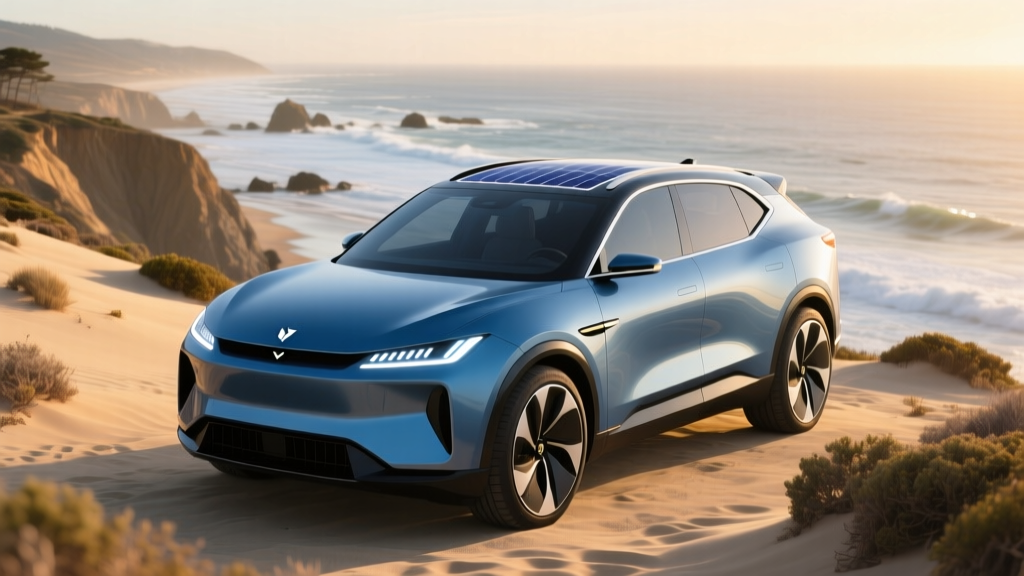
Ride quality drew mixed reviews during the Ocean's brief production run. The Ultra's adaptive damping and air suspension (standard on Extreme, optional on Ultra) provided competent highway comfort, but reviewers noted inconsistent body control over broken pavement and a lack of steering feedback. The California Mode — which lowers the car and opens the solar roof panel's rear hatch glass — was a signature feature that gave the cabin an open-air feel, though it introduced wind noise at highway speeds.
Driver Assistance: Level 2, Not Self-Driving
The Fisker Intelligent Pilot uses a suite of cameras and radar for adaptive cruise control, lane centering, and automated parking. This is a Level 2 driver-assist system, meaning the driver must remain fully engaged with hands on the wheel and eyes on the road at all times. It is not autonomous or self-driving.
Fisker's ADAS stack was competent but unremarkable compared to established systems like GM's Super Cruise or Ford's BlueCruise. The lack of a driver-monitoring camera in early builds and the absence of hands-free highway driving capability put it a generation behind. Post-bankruptcy, no further software updates or feature expansions will arrive — the ADAS system is frozen in its final state.
Pricing, Tax Credits, and the Used Market Reality
At launch, Fisker positioned the Ocean aggressively: the Sport at $37,499 undercut the Tesla Model Y, and the Ultra at $68,999 competed with premium midsize EV SUVUs. However, Fisker's direct-to-consumer model collapsed as inventory piled up, and the company resorted to drastic discounts — reportedly selling fleet units for as low as $20,000–$25,000 per vehicle before bankruptcy.
| Trim | Original MSRP | Current Used Market (2026 est.) | §30D Federal Credit Eligibility |
|---|---|---|---|
| Sport (FWD) | $37,499 | $18,000–$24,000 | Not eligible (new credit); used EV credit may apply |
| Ultra (AWD) | $68,999 | $28,000–$38,000 | Not eligible (new credit); used EV credit may apply |
| Extreme (AWD) | $61,999 | $25,000–$35,000 | Not eligible (new credit); used EV credit may apply |
Federal Tax Credit Status
The IRS §30D new clean vehicle credit is no longer available for Fisker purchases because no new vehicles are being sold. However, buyers purchasing a used Ocean from a licensed dealer may qualify for the §25E Previously-Owned Clean Vehicle Credit, which offers up to $4,000 or 30% of the sale price (whichever is less), subject to:
- Vehicle sale price must not exceed $25,000
- Buyer income caps: $75,000 single / $112,500 head of household / $150,000 joint
- Vehicle must be at least 2 model years old (2023 Ocean qualifies in 2025+)
- Must purchase from a licensed dealer (private-party sales excluded)
- Credit is non-refundable — you must have tax liability to benefit
Given that many used Ocean Sport models now list below $25,000, the §25E credit can meaningfully reduce the effective purchase price — but only if you find a dealer still stocking them and your income falls within the caps. Consult a tax professional for your specific situation.
Ownership in 2026: The Hard Truths
Buying a Fisker Ocean today is a calculated risk, not a conventional purchase decision. Here's what prospective owners must weigh:
✅ Pros
- Massive 113 kWh battery (Ultra) delivers genuinely long range
- Distinctive design with solar roof and California Mode
- LFP Sport offers durable chemistry for daily use
- Used prices represent steep depreciation — potential value buy
- Spacious cargo area (~65 cu ft seats folded)
- CCS1 charging still widely supported in 2026
❌ Cons
- No manufacturer warranty support — Fisker is defunct
- Parts availability is severely limited and worsening
- No OTA updates — software bugs remain permanently unfixed
- Insurance premiums may be elevated or coverage denied
- Resale value is highly uncertain
- Service requires independent EV shops; no dealer network
- ADAS system frozen; no future feature additions
Battery Replacement and Long-Term Costs
The Ocean's original 6-year/60,000-mile battery warranty is effectively void — there is no entity to honor claims. If the CATL NMC pack in the Ultra requires replacement, owners face an out-of-pocket cost estimated at $15,000–$22,000 for the battery module alone, plus labor. No third-party remanufactured packs are currently available for the Ocean, and the vehicle's low production volume (~10,000 units delivered) makes an aftermarket supply chain unlikely.
The LFP battery in the Sport trim offers a meaningful longevity advantage: LFP chemistry typically sustains 3,000+ charge cycles with minimal degradation, compared to ~1,500–2,000 cycles for NMC before hitting 80% capacity retention. For a used buyer, the Sport's LFP pack is the lower-risk proposition.
Who Should (and Shouldn't) Consider a Used Fisker Ocean
Choose the Ocean Ultra If:
- You need 300+ miles of real-world range for road trips
- You accept the orphan-vehicle risk and have an independent EV mechanic
- You value distinctive design over brand support
- You can purchase well below original MSRP and self-insure against battery failure
Avoid the Ocean Entirely If:
- You need reliable warranty coverage and dealer service
- You live in a region with limited independent EV repair options
- Resale value and long-term cost predictability matter to you
- You want ongoing software updates and feature improvements
How the Fisker Ocean Compares to Available Alternatives
| Vehicle | EPA Range | Used Price (est.) | Warranty Status | Charging (10–80%) |
|---|---|---|---|---|
| Fisker Ocean Ultra | 360 mi | $28K–$38K | Void (company defunct) | ~30 min (250 kW) |
| Hyundai Ioniq 5 (AWD) | 260 mi | $28K–$36K | Transferable (10/100K) | ~18 min (800V) |
| Tesla Model Y LR | 330 mi | $30K–$40K | Transferable (8/120K) | ~25 min (250 kW) |
| Ford Mustang Mach-E ER | 312 mi | $27K–$35K | Transferable (8/100K) | ~38 min (150 kW) |
| VW ID.4 Pro S AWD | 275 mi | $24K–$32K | Transferable (8/100K) | ~28 min (175 kW) |
The comparison makes the Ocean's position clear: it offers the longest range and a large battery, but every competitor provides transferable manufacturer warranties, active software support, established service networks, and more predictable long-term ownership costs. The Hyundai Ioniq 5's 800V architecture delivers meaningfully faster charging, and Tesla's Supercharger network (now with NACS) offers the most reliable public charging experience.
Frequently Asked Questions
Can I still buy a new Fisker automobile in 2026?
No. Fisker Inc. filed for Chapter 11 bankruptcy in June 2024 and liquidated its assets. No new Fisker vehicles are being manufactured or sold. Only used and leftover inventory units remain available through independent dealers and auctions.
Is the Fisker Ocean's warranty still valid?
Effectively, no. Fisker's original battery and powertrain warranty (6 years/60,000 miles) and bumper-to-bumper coverage (3 years/36,000 miles) are no longer honored because the company no longer exists. Some third-party extended warranty providers may offer coverage, but options are limited for orphaned vehicles.
Where can I get a Fisker Ocean serviced?
Independent EV repair shops are your primary option. Fisker had no traditional dealer network, and its authorized service partners have largely moved on. Parts sourcing is the bigger challenge — body panels, proprietary electronics, and replacement battery modules are scarce. Owners have formed online communities to share parts sources and repair knowledge.
Does the Fisker Ocean qualify for any federal tax credits?
Not the new-vehicle §30D credit. However, the §25E used EV credit may apply if you purchase from a licensed dealer for $25,000 or less and meet income requirements. The credit is up to $4,000 or 30% of the sale price. Verify current-year rules with the IRS or a tax professional.
Will the Fisker Ocean get software updates or new features?
No. Fisker's OTA update infrastructure was shut down as part of the bankruptcy. The vehicle's software, infotainment, and ADAS features are frozen in their final production state. Any bugs, connectivity issues, or missing features will remain permanently unresolved unless a third party develops an aftermarket solution.
How does the Ocean's CCS1 connector affect charging access?
CCS1 remains widely supported at Electrify America, EVgo, and other major networks in 2026. However, the industry is transitioning to NACS (Tesla's connector). A CCS-to-NACS adapter allows access to Tesla Superchargers, but native CCS infrastructure will gradually shrink over the coming years. This is a manageable but real long-term consideration.
Is a used Fisker Ocean a good deal?
It depends entirely on your risk tolerance. The Ocean Ultra offers exceptional range and a large battery at steeply discounted used prices. But you're accepting zero warranty protection, uncertain parts availability, no software updates, and unpredictable resale value. For most buyers, a used Hyundai Ioniq 5, Tesla Model Y, or Ford Mustang Mach-E with transferable warranty and active manufacturer support is the more prudent choice.