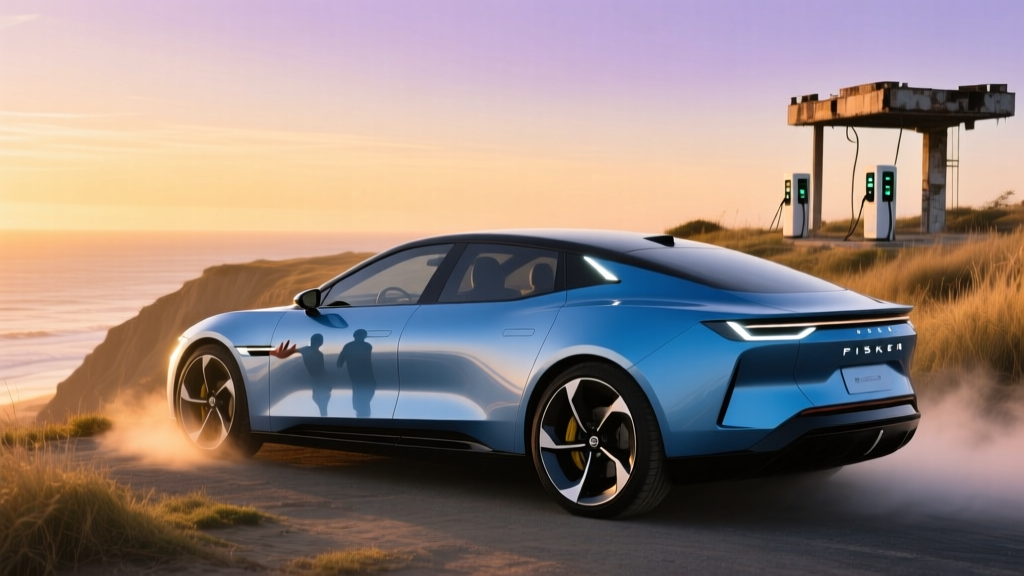
The Fisker Ocean was supposed to be the EV startup's triumphant return. Henrik Fisker, the designer behind the iconic BMW Z8 and Aston Martin DB9, launched Fisker Inc. with a sleek electric SUV that promised 360 miles of range, solar-roof trickle charging, and a sub-$40,000 starting price. Then reality hit: production delays, software bugs, plummeting sales, and ultimately a Chapter 11 bankruptcy filing in June 2024. Fisker Inc. — often searched as Fisker Automotive bankrupt — liquidated its remaining inventory at steep discounts before ceasing operations entirely.
But thousands of Fisker Oceans are still on the road. If you're considering picking one up on the used market in 2026, or you're a current owner trying to understand your vehicle's long-term outlook, this profile breaks down exactly what the Ocean offers, where it falls short, and what bankruptcy means for parts, service, and software.
Fisker Ocean: Key Specifications at a Glance
| Specification | Sport (FWD) | Ultra (AWD) | Extreme / One (AWD) |
|---|---|---|---|
| EPA Range | 250 miles | 340 miles | 360 miles |
| Battery (Usable) | ~80 kWh (NMC, CATL) | ~113 kWh (NMC, CATL) | ~113 kWh (NMC, CATL) |
| Horsepower | 275 hp | 540 hp | 550 hp |
| 0–60 mph | 6.9 sec | 3.7 sec | 3.6 sec |
| Drivetrain | Single-motor FWD | Dual-motor AWD | Dual-motor AWD |
| Max DC Fast Charge | ~170 kW | ~250 kW | ~250 kW |
| 10–80% DC Charge | ~35 min | ~33 min | ~33 min |
| Level 2 Home Charge | ~10.5 kW | ~10.5 kW | ~10.5 kW |
| EPA Efficiency | ~98 MPGe | ~84 MPGe | ~84 MPGe |
| Cargo (behind 2nd row) | ~32 cu ft | ||
| Original Base MSRP | $37,499 | $49,999 | $68,999 |
Note: Fisker adjusted pricing and trim names multiple times before bankruptcy. The figures above reflect the last published specifications before the company ceased operations. Source: fueleconomy.gov and Fisker press materials.
Real-World Range: What the EPA Sticker Doesn't Tell You
Real-World Expectation: ~270–300 miles on mixed highway driving at 70 mph; expect 220–250 miles in freezing temperatures (below 32°F) with cabin heat active. The 250-mile Sport trim delivers roughly 190–210 miles in real-world highway use.
The Ocean Extreme's 360-mile EPA rating was a headline figure, but the physics of a 5,400-pound SUV with a frontal area larger than a Tesla Model Y means highway efficiency suffers. Independent testing by outlets including Edmunds and Car and Driver showed the Ocean Ultra averaging between 2.8 and 3.2 miles per kWh on highway loops — translating to roughly 290–310 real-world miles from the 113 kWh pack.
Cold weather hits all EVs hard, and the Ocean is no exception. Without a dedicated heat pump (Fisker opted for a resistive PTC heater in early production models, with a heat pump added to later builds), range loss in sub-freezing conditions can reach 25–35%. If you live in the Upper Midwest or Northeast, plan for 220–250 usable miles from the big battery in January.
Charging Speed: DC Fast and Level 2 at Home
| Charging Level | Power / Rate | Ocean Ultra/Extreme | Ocean Sport |
|---|---|---|---|
| Level 1 (120V outlet) | ~1.4 kW | ~4 mi/hr | ~4 mi/hr |
| Level 2 (240V, 48A) | ~10.5 kW | ~30 mi/hr | ~25 mi/hr |
| DC Fast Charge (peak) | 250 kW (Ultra/Extreme) / 170 kW (Sport) | 10–80% in ~33 min | 10–80% in ~35 min |
The Ocean's 250 kW peak DC fast-charge rate on the Ultra and Extreme trims sounds competitive, but the charging curve tells a more nuanced story. Like most NMC batteries managed conservatively, the Ocean sustains peak charge rate only briefly — typically between 15–25% state of charge (SoC). Above 50%, the rate tapers significantly, and above 80% it drops to under 50 kW. A 10–80% session takes roughly 33 minutes at a 350 kW-capable Electrify America or EVgo station, but a 20–90% session will stretch closer to 50 minutes.
For home Level 2 charging, the Ocean's onboard charger accepts up to 10.5 kW (48 amps at 240V). A full charge from 10% on the 113 kWh battery takes approximately 11–12 hours — fine for overnight charging. A standard 40-amp Level 2 wallbox (9.6 kW) will add about 28 miles per hour of charging.
Performance and Driving Dynamics
The dual-motor Ultra and Extreme trims deliver genuine performance-SUV acceleration. The Extreme's 550 hp and 3.6-second 0–60 mph time put it in the same ballpark as a Ford Mustang Mach-E GT or Tesla Model Y Performance. The single-motor Sport's 275 hp and 6.9-second sprint are adequate for commuting but feel leisurely given the Ocean's curb weight.
Ride quality drew mixed reviews during production. The Ocean uses a conventional steel-spring suspension (no adaptive dampers or air springs), and most reviewers noted firm damping over sharp impacts. The steering is precise but light — competent, not engaging. Where the Ocean genuinely shines is cabin quietness at highway speed; the double-pane acoustic glass and lack of powertrain noise make it one of the quieter midsize electric SUVs.
The California Mode (a retractable rear hatch glass, similar to a Jeep Wrangler's Freedom Panel) was a standout feature that gave the Ocean an open-air feel unique in the EV segment. However, some owners reported wind noise and seal leaks with the retractable glass after extended use.
The Bankruptcy Reality: What It Means for Ownership
Fisker Inc. filed for Chapter 11 bankruptcy protection in June 2024 after failing to secure emergency financing. The company's remaining Ocean inventory — estimated at several thousand units — was sold to a leasing company and rental fleet operator at steep discounts (reportedly as low as $17,000–$25,000 per vehicle for Ultra and Extreme trims). By late 2024, Fisker had ceased all manufacturing at its Magna Steyr contract facility in Austria.
For current owners and prospective used buyers, the bankruptcy creates several practical challenges:
- Software updates: Fisker's over-the-air (OTA) update infrastructure was shut down. The Ocean's software is frozen at its last production version. Known bugs in the infotainment system, keyless entry, and ADAS calibration remain unpatched.
- Parts availability: Body panels, the unique solar roof, and proprietary interior trim are already scarce. Magna Steyr built the vehicle, but many components were Fisker-specific. Expect long lead times for collision repair.
- Service network: Fisker never built a dealer network; service was handled through a mix of mobile technicians and third-party shops. With the company gone, owners rely on independent EV-savvy mechanics.
- Warranty coverage: The original 6-year/60,000-mile bumper-to-bumper and 8-year/100,000-mile battery warranty are effectively unbacked. There is no corporate entity to honor claims. Some third-party warranty providers may offer aftermarket coverage — shop carefully.
- Insurance: Premiums for the Ocean have risen as insurers account for parts scarcity and higher total-loss likelihood after collision damage.
The Ocean's NMC battery pack, manufactured by CATL, is a proven chemistry with established degradation curves. Under normal use, expect approximately 8–12% capacity loss over the first 100,000 miles. However, if a battery module or the entire pack requires replacement, the cost will likely fall between $18,000 and $28,000 — with no OEM to subsidize it.
Interior, Cargo, and Technology
The Ocean's interior was designed to be a selling point, and in many ways it is. The 17.1-inch rotating central touchscreen (landscape for media, portrait for navigation and climate) is visually striking, though the software suffered from sluggish response times and occasional crashes during production. The digital instrument cluster is a smaller 9.8-inch display.
Passenger space is generous for the segment:
- Front legroom: ~41.5 inches
- Rear legroom: ~38.2 inches
- Cargo behind 2nd row: ~32 cu ft
- Cargo with 2nd row folded: ~65 cu ft (estimated; Fisker published varying figures)
The solar roof ("Fisker Intelligent Solar Roof") on the Extreme trim could theoretically add up to 1,500 miles of range per year under ideal conditions — roughly 4 miles per day of sunny exposure. In practice, most owners in moderate climates reported 1–2 miles of daily range gain. It's a nice trickle-charge feature for 12V battery maintenance and vampire-loss offset, but not a meaningful range extender.
Driver assistance is handled by a suite Fisker branded as "Fisker Intelligent Pilot." It includes adaptive cruise control, lane-keeping assist, automatic emergency braking, and a 360-degree camera system. This is an SAE Level 2 system — meaning the driver must remain fully engaged and hands-on at all times. It is not autonomous driving. The system was competent but not class-leading compared to Tesla Autopilot, Ford BlueCruise, or GM Super Cruise.
Pricing, Tax Credits, and Value in 2026
| Trim | Original MSRP | Current Used Market (2026 est.) | Federal Tax Credit |
|---|---|---|---|
| Sport (FWD) | $37,499 | $14,000–$18,000 | Used-EV credit: up to $4,000 (§25E) |
| Ultra (AWD) | $49,999 | $18,000–$26,000 | Used-EV credit: up to $4,000 (§25E) |
| Extreme/One (AWD) | $68,999 | $24,000–$35,000 | Used-EV credit: up to $4,000 (§25E) |
The Fisker Ocean is no longer eligible for the new-vehicle §30D federal tax credit (up to $7,500) because Fisker Inc. no longer exists as a qualifying manufacturer. However, buyers purchasing an Ocean on the used market may qualify for the §25E Previously Owned Clean Vehicle Credit — up to $4,000 or 30% of the sale price, whichever is less.
To qualify for §25E, per IRS guidelines:
- The vehicle must be purchased from a licensed dealer (private-party sales do not qualify)
- Sale price must be $25,000 or less
- Buyer's adjusted gross income must not exceed $75,000 (single), $112,500 (head of household), or $150,000 (joint)
- The vehicle must be at least 2 model years old (the 2023–2024 Ocean qualifies in 2026)
- The credit can only be claimed once per VIN every 3 years
At current used prices, an Ocean Ultra in good condition can be had for $20,000–$26,000 — putting the Sport and some Ultra listings under the $25,000 cap for the used-EV credit. Consult a tax professional to confirm your eligibility before purchasing.
How the Ocean Compares to Rivals Still in Production
If you're weighing a used Fisker Ocean against a new or certified-pre-owned competitor, here's how it stacks up on key metrics:
- 360-mile EPA range (Extreme) rivals the best in class
- Unique California Mode open-air experience
- Spacious, quiet cabin with premium materials
- Depressed used prices offer significant value
- Solar roof offsets vampire drain
- No manufacturer support: warranty, software, or parts
- Infotainment software is buggy and frozen
- Collision repair parts are scarce and slow to source
- No heat pump on early-build models (range loss in cold)
- Insurance costs are elevated
- Resale value is highly uncertain
Compared to a new Hyundai Ioniq 5 (EPA 305 miles, ~$42,000, full warranty, NACS charging access to Tesla Superchargers) or a Tesla Model Y Long Range (EPA 320 miles, ~$44,000, extensive Supercharger network), the Ocean trades long-term peace of mind for a lower entry price and distinctive design. If you can absorb the risk of unsupported ownership, the value proposition is real. If you need reliable service, OTA updates, and predictable resale, a supported vehicle is the safer choice.
Who Should (and Shouldn't) Buy a Fisker Ocean in 2026
- You're an EV-savvy buyer comfortable with third-party service and DIY troubleshooting
- You want maximum range per dollar and can accept the bankruptcy risk
- You live in a mild climate where cold-weather range loss is minimal
- You have access to home Level 2 charging and don't rely solely on public DC fast chargers
- You need dealer-backed warranty coverage and reliable service infrastructure
- You frequently drive in sub-freezing conditions
- Resale value predictability matters to your purchase decision
- You want ongoing software improvements and feature additions
Frequently Asked Questions
What is the real-world range of the Fisker Ocean?
The Ocean Extreme's EPA rating is 360 miles, but expect 270–300 miles in real-world highway driving and 220–250 miles in cold weather. The Sport trim's 250-mile EPA rating translates to roughly 190–210 miles on the highway.
How fast does the Fisker Ocean charge?
The Ultra and Extreme trims peak at 250 kW on DC fast chargers, achieving a 10–80% charge in approximately 33 minutes. The Sport peaks at ~170 kW with a similar 35-minute 10–80% time. Home Level 2 charging runs at 10.5 kW, adding about 30 miles per hour.
Does the Fisker Ocean qualify for any federal tax credit?
Not the new-vehicle §30D credit — Fisker no longer qualifies as a manufacturer. However, used Ocean purchases from a licensed dealer at or below $25,000 may qualify for the §25E used-EV credit of up to $4,000, subject to income limits. See IRS §25E guidelines.
Is it worth buying a Fisker Ocean after the bankruptcy?
At current used prices ($18,000–$35,000 depending on trim), the Ocean offers exceptional range and space per dollar. But you're accepting the risk of no warranty support, frozen software, scarce parts, and uncertain resale. It's a calculated risk that makes sense for EV-experienced buyers with home charging and a tolerance for unsupported ownership.
What happens if the Fisker Ocean's battery fails?
With no manufacturer to honor the original 8-year/100,000-mile battery warranty, a full pack replacement would cost an estimated $18,000–$28,000. The CATL NMC cells are proven and degradation should be moderate (~8–12% over 100,000 miles), but a catastrophic failure is an uninsured financial risk.
Can I still get the Fisker Ocean serviced?
Yes, but not through any OEM network. Independent EV repair shops and mobile technicians handle most Ocean service. Body repair is the biggest challenge — proprietary panels and the solar roof are difficult to source. Some owners have formed online communities to share parts sources and repair knowledge.