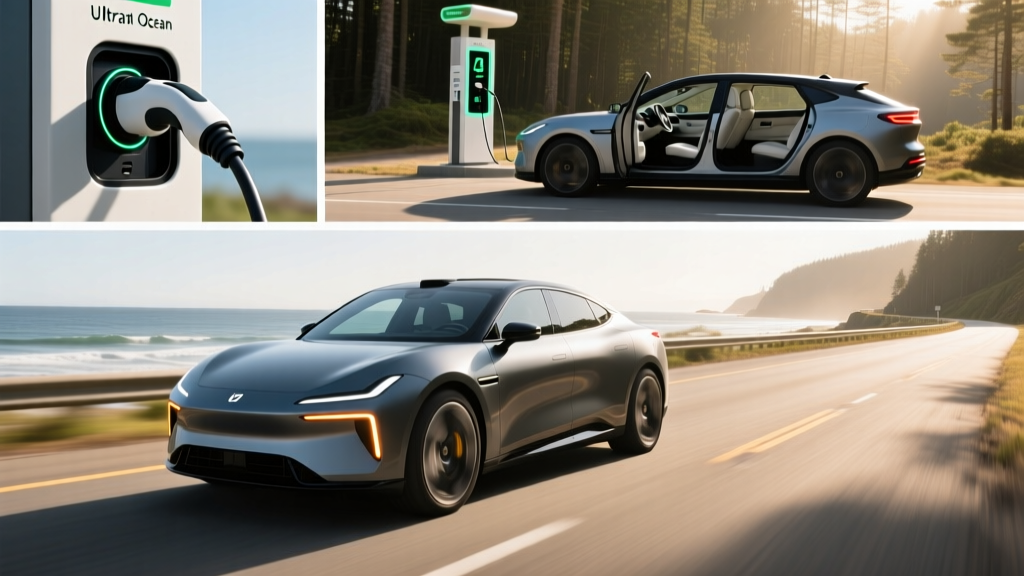
Fisker Ocean at a Glance: Quick Verdict
The Fisker Ocean is an all-electric midsize SUV that tried to punch above its weight with class-leading EPA range, a solar roof, and dual-motor performance rivaling a Porsche Cayenne Turbo — at a fraction of the price. Launched for the 2023 model year, it remains a compelling used-EV option in 2026 for buyers willing to accept the reality of owning a vehicle from a startup that filed for Chapter 11 bankruptcy in June 2024. The Ocean's 0-60 mph times — 3.6 seconds for the dual-motor Extreme and 6.9 seconds for the single-motor Sport — remain impressive, but the buying calculus now hinges on parts availability, service network access, and battery warranty continuity under the bankruptcy restructuring.
| Spec | Sport / Ultra (FWD) | Extreme / One (AWD) |
|---|---|---|
| EPA Range | 250 mi (Sport) / 340 mi (Ultra) | 360 mi (Extreme) / 350 mi (One) |
| Battery (usable) | ~80 kWh (Hyper Range, NMC) | ~113 kWh (Hyper Range, NMC) |
| 0-60 mph | 6.9 s (Sport) | 3.6 s (Extreme/One) |
| Horsepower | 275 hp | 550 hp (Hyper mode) |
| Drivetrain | Single-motor FWD | Dual-motor AWD |
| Peak DC Fast Charge | ~175 kW | ~250 kW |
| 10–80% DC Time | ~33 min | ~30 min |
| Level 2 Home Rate | 11 kW (~35 mi/hr) | 11 kW (~35 mi/hr) |
| MPGe (combined) | ~98 MPGe | ~88 MPGe |
| Original Base MSRP | $38,999 (Sport) | $68,999 (Extreme) |
| Battery Warranty | 6 yr / 75,000 mi (originally); status uncertain post-bankruptcy | |
Fisker Ocean 0-60 and Performance Deep Dive
Searches for "Fisker Ocean 0-60" spike for good reason: the dual-motor Extreme and limited-run Ocean One deliver supercar-rivaling acceleration from a family SUV. The 3.6-second 0-60 mph time is achieved in Hyper mode, which temporarily unlocks the full 550 hp and 4,790 lb-ft of torque at the wheels. This puts the Ocean Extreme on par with a Tesla Model Y Performance (3.5s) and ahead of the Ford Mustang Mach-E GT (3.5s advertised, typically 3.7s in independent tests).
The single-motor Sport, with 275 hp and an EPA-estimated 250 miles of range, posts a 6.9-second 0-60 — adequate for commuting and highway merging, but hardly thrilling. The Ultra trim, which pairs the larger 113 kWh battery with the single-motor drivetrain, sits in between at roughly 7.2 seconds due to the added battery mass.
Ride quality drew praise in early reviews for its compliant air suspension (Extreme/One trims), though some testers noted a tendency toward floatiness during aggressive cornering. The steering is light and numb — a clear comfort-over-sport tuning choice. For a vehicle this heavy (the Extreme tips the scales at roughly 5,100 lbs), body control is acceptable but not class-leading compared to a BMW iX or even the Tesla Model Y.
EPA Range vs. Real-World Expectations
Real-World Highway (70 mph, 68°F): Expect ~290–310 miles from the Extreme, ~270–285 from the Ultra, ~200–215 from the Sport.
Cold-Weather (32°F or below, highway): Subtract 20–30%. The Extreme drops to ~220–250 miles. The Ocean lacks a heat pump on early builds, which increases HVAC energy draw in winter.
The Fisker Ocean Extreme's 360-mile EPA figure was, at launch, the longest of any production SUV sold in the U.S. — narrowly edging the Tesla Model X (348 mi) and the Lucid Gravity (projected). But EPA cycles favor moderate-speed mixed driving. Sustained 75–80 mph highway travel, especially in the Aero mode that lowers ride height but doesn't fully offset the Ocean's brick-like frontal area, yields roughly 2.3–2.5 kWh/mile, translating to 290–310 real-world miles from the 113 kWh pack.
Cold weather compounds the loss. Without a standard heat pump on 2023 builds (Fisker announced one as a later addition, but bankruptcy interrupted the supply chain), cabin heating draws resistive power that can cut range by a quarter to a third. Owners in northern climates should plan for ~220–250 highway miles in winter — adequate for most commutes, but requiring mid-trip charging on 300+ mile road trips.
Charging Speed: DC Fast and Level 2
| Level | Power | Miles Added/Hour | Notes |
|---|---|---|---|
| Level 1 (120V) | ~1.4 kW | ~4 mi/hr | Emergency/trickle only |
| Level 2 (240V, 48A) | 11 kW | ~35 mi/hr | Full charge overnight (~10–11 hrs for 113 kWh) |
| DC Fast (Sport/Ultra) | Peak ~175 kW | ~600 mi/hr at peak | 10–80% in ~33 min; tapers hard above 80% |
| DC Fast (Extreme/One) | Peak ~250 kW | ~850 mi/hr at peak | 10–80% in ~30 min; sustained ~175 kW to 50% |
The Ocean's DC fast-charging performance is respectable but not class-leading. The Extreme's ~250 kW peak is only briefly sustained — typically between 15–35% state of charge — before tapering to ~175 kW through 50% and dropping sharply above 80%. A 10–80% session takes roughly 30 minutes at a 350 kW-capable Electrify America or Tesla Supercharger (with NACS adapter) station. That's a few minutes slower than a Hyundai Ioniq 5 (18 minutes at peak) or Porsche Taycan (22 minutes), both of which sustain higher average power across the curve.
For home Level 2 charging, the Ocean accepts up to 11 kW on a 48-amp, 240-volt circuit. That translates to roughly 35 miles of range per hour of charging, meaning a full 113 kWh pack replenishes in about 10–11 hours — fine for overnight top-ups, but plan for a 60-amp circuit installation to future-proof. Installation costs typically run $800–$2,000 depending on panel proximity; consult a licensed electrician for your specific setup.
The Ocean uses a CCS1 connector natively. With the industry's shift to NACS (Tesla's standard), Fisker had committed to a NACS adapter, and third-party CCS-to-NACS adapters (such as the Lectron or A2Z units) work at Superchargers — though reliability varies and should be verified per station.
Pricing, Tax Credits, and Used-EV Economics
As a new vehicle, the Fisker Ocean was priced aggressively. But Fisker's bankruptcy in mid-2024 means no new Oceans are being produced or sold as of 2026. The relevant market is now used and certified-pre-equivalent inventory.
| Trim | Original MSRP | Typical 2026 Used Price | Used-EV Credit (§25E) |
|---|---|---|---|
| Sport | $38,999 | $18,000–$24,000 | Up to $4,000 (30% of sale price, max $4k) |
| Ultra | $52,999 | $24,000–$32,000 | Up to $4,000 |
| Extreme | $68,999 | $32,000–$42,000 | Up to $4,000 |
| Ocean One (launch ed.) | $68,999 | $34,000–$44,000 | Up to $4,000 |
The federal used-EV tax credit (IRS §25E) is the relevant incentive for 2026 buyers. It offers 30% of the sale price, capped at $4,000, for qualifying used EVs purchased from a dealer for $25,000 or less. The Sport trim frequently falls within this threshold; Ultra and Extreme trims often exceed it, though negotiation and market softening (driven by bankruptcy-related uncertainty) have pushed some Ultra examples below $25,000.
Eligibility requirements per the IRS §25E rules include buyer income caps ($75,000 single / $150,000 joint AGI), a minimum 2-year vehicle age, and purchase through a licensed dealer. Private-party sales do not qualify. Always verify eligibility with a tax professional, as rules are subject to legislative change.
The original §30D new-vehicle credit is no longer applicable since production has ceased. However, buyers who took delivery in 2023–2024 may have claimed it; that history doesn't transfer to subsequent used buyers.
Interior, Cargo, and Technology
The Ocean's cabin was designed to feel airy and sustainable, with recycled materials, vegan upholstery, and the signature California Mode — which simultaneously lowers all windows (including the rear hatch glass) for an open-air experience unique among SUVs. The available SolarSky roof on Extreme/One trims adds a small trickle charge (Fisker claimed up to ~1,500 miles of range per year under ideal conditions), though real-world contribution is marginal — think of it as a battery-maintenance feature rather than a meaningful range extender.
Cargo space measures approximately 32.7 cubic feet behind the second row and ~65 cubic feet with seats folded. Rear legroom is generous at ~39 inches. There is no front trunk (frunk), a missed opportunity given the platform's packaging potential.
The 17.1-inch rotating center touchscreen (Revolve display on Extreme/One) toggles between a full "Control" mode and a simplified "Hollywood" mode for passenger entertainment. Software was a known pain point at launch — slow response times, buggy navigation, and inconsistent over-the-air updates. Fisker had been working on software improvements, but the bankruptcy complicates ongoing OTA support. Apple CarPlay and Android Auto are wired, not wireless.
Driver assistance is bundled under the Fisker Intelligent Pilot suite, featuring adaptive cruise control, lane-keeping assist, and automatic emergency braking. This is an SAE Level 2 system — the driver must remain fully engaged at all times. It is not autonomous driving. The system is competent but unremarkable compared to Tesla Autopilot, GM Super Cruise, or Ford BlueCruise, and it lacks hands-free highway capability.
Warranty, Service, and Ownership Risk
This is the most critical section for any 2026 Fisker Ocean buyer. Fisker's original warranty covered the battery and powertrain for 6 years / 75,000 miles (with a capacity retention threshold of 70%), and the vehicle for 4 years / 50,000 miles. However, the company's Chapter 11 filing disrupted warranty administration, parts supply, and authorized service centers.
As of early 2026, the situation is:
- Battery warranty continuity depends on the bankruptcy restructuring outcome and whether a successor entity or third-party administrator assumes obligations. Some states' lemon-law and warranty-bond provisions may offer limited protection.
- Parts availability is constrained. Body panels, proprietary trim pieces, and certain electronic modules have long lead times or are unavailable new. The aftermarket and salvage network is still nascent.
- Service network has contracted. Fisker had partnered with third-party shops, but many have since dropped the brand. Independent EV-savvy mechanics are the most reliable option.
- Insurance premiums tend to be elevated due to parts scarcity and repair uncertainty. Get a quote before purchasing — expect 15–30% higher premiums than a comparable Model Y.
Who Should Buy the Fisker Ocean in 2026?
- You want 300+ miles of real-world range at a used-EV price point under $35,000.
- The California Mode open-air experience and SolarSky roof appeal to your lifestyle.
- You have access to a trusted independent EV mechanic and can tolerate parts delays.
- Dual-motor AWD performance (3.6s 0-60) at this price is a priority.
- You need guaranteed warranty coverage and a robust dealer/service network.
- You live in a cold climate and need a heat pump for winter efficiency.
- Resale value predictability matters — the Ocean's depreciation curve remains volatile.
- You want hands-free highway driving assist (Super Cruise or BlueCruise territory).
Best use cases: warm-climate commuters and families who value range and open-air versatility, and who approach the purchase with eyes open about startup-ownership risk. It is not the right choice for buyers who need a worry-free, dealer-supported experience.
Pros
- Class-leading EPA range (360 mi Extreme)
- 3.6s 0-60 mph dual-motor performance
- Unique California Mode + SolarSky roof
- Attractive used pricing post-bankruptcy
- Sustainable interior materials
- Spacious rear seat and cargo area
Cons
- Bankruptcy creates warranty and parts risk
- Software remains buggy; OTA future uncertain
- No heat pump on early builds
- No frunk
- DC charging speed trails Hyundai/Kia/Porsche
- Elevated insurance costs
- Resale value highly uncertain
Frequently Asked Questions
What is the Fisker Ocean's real-world range?
The EPA rates the Extreme at 360 miles, the Ultra at 340, and the Sport at 250. In real-world highway driving at 70 mph, expect roughly 290–310 miles (Extreme), 270–285 (Ultra), and 200–215 (Sport). Cold weather below freezing can reduce these figures by 20–30%.
How fast does the Fisker Ocean charge?
The Extreme/One peaks at ~250 kW on DC fast chargers, achieving 10–80% in roughly 30 minutes. The Sport/Ultra peaks at ~175 kW with a 10–80% time of ~33 minutes. Home Level 2 charging at 11 kW adds about 35 miles per hour.
Does the Fisker Ocean qualify for any federal tax credit?
As a used vehicle, it may qualify for the §25E used-EV credit of up to $4,000 (30% of sale price) if purchased from a dealer for $25,000 or less, and if the buyer meets income caps ($75k single / $150k joint). The Sport trim most commonly qualifies. Verify current rules at irs.gov and consult a tax professional.
Is the Fisker Ocean worth buying vs. a Tesla Model Y or Ford Mach-E?
On specs alone — range, 0-60, interior space — the Ocean competes favorably, especially at depressed used prices. But the Tesla Model Y offers a vastly superior Supercharger network, reliable OTA updates, and established service infrastructure. The Ford Mach-E provides dealer-backed warranty security. The Ocean is a higher-risk, higher-reward proposition best suited for buyers comfortable with startup ownership uncertainty.
What are the biggest risks of buying a Fisker Ocean in 2026?
The primary risks are warranty enforcement uncertainty following Fisker's bankruptcy, limited parts availability (especially body panels and proprietary electronics), a shrinking service network, and elevated insurance premiums. Software support via OTA updates may also be discontinued.
Does the Fisker Ocean have a heat pump?
Early 2023 production models did not include a heat pump. Fisker announced plans to add one, but the bankruptcy disrupted the supply chain. Verify on a per-vehicle basis by checking the build sheet or consulting the selling dealer.
What is the Fisker Ocean's towing capacity?
The Ocean is rated to tow up to 4,035 lbs (Extreme/One AWD) and 1,800 lbs (Sport FWD) when properly equipped. Towing significantly reduces range — expect a 30–40% reduction at highway speeds with a loaded trailer.
Sources: EPA fuel-economy data via fueleconomy.gov; IRS tax credit guidance via irs.gov; Fisker bankruptcy reporting via Reuters.