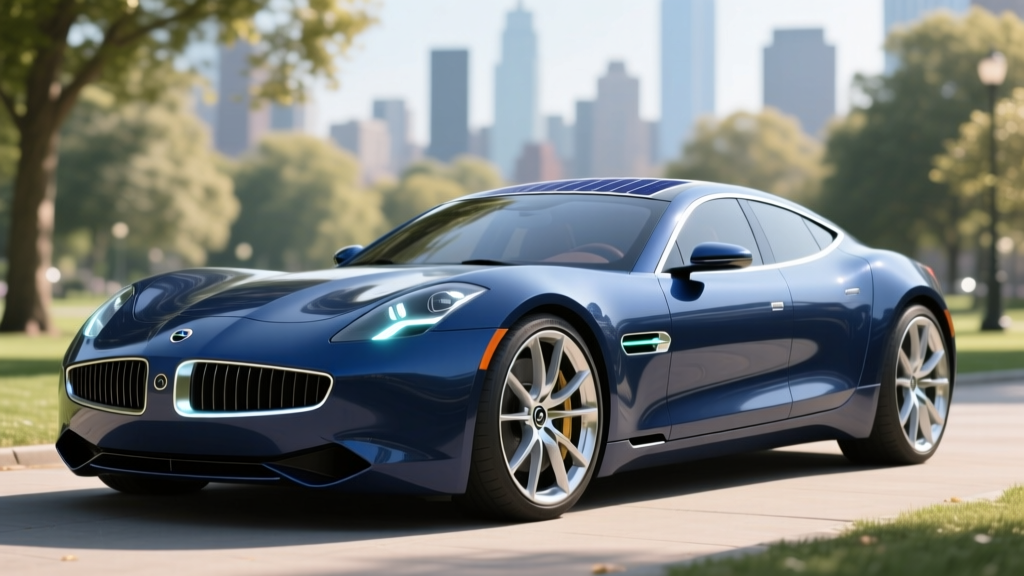
When buyers search for Fisker Karma specs, they're usually investigating one of two things: the original 2011–2012 extended-range electric vehicle (EREV) that became a cult classic, or the Series 2 model produced under Karma Automotive from 2016 onward. This profile focuses on the Karma Revero and Revero GT (Series 2) — the production vehicles you can actually find on the used market today — while clarifying how specs evolved from Henrik Fisker's original design. The Karma occupies a unique niche: a luxury plug-in hybrid grand tourer that prioritizes design and electric-priority driving over raw efficiency.
Fisker Karma at a Glance: Core Specifications
| Specification | Original Karma (2012) | Revero GT (2020–2023) |
|---|---|---|
| Powertrain Type | EREV (Series Hybrid) | EREV (Series Hybrid) |
| Battery Capacity | 20.1 kWh (NMC) | 28.0 kWh (NMC) |
| EPA Electric Range | 32 miles | 61 miles |
| Total Range (Electric + Gas) | ~230 miles | ~360 miles |
| Combined Horsepower | 403 HP | 536 HP |
| 0–60 mph | 6.3 seconds | 4.5 seconds |
| Drivetrain | RWD (Dual rear motors) | RWD (Dual rear motors) |
| MPGe (Electric Mode) | 54 MPGe | 70 MPGe |
| MPG (Gas Generator) | 20 MPG | 26 MPG |
| DC Fast Charge | Not Supported | Not Supported |
| Level 2 Charge Rate | 3.3 kW | 6.6 kW |
| 10–100% L2 Time | ~6 hours | ~4.5 hours |
| Cargo Volume | 6.9 cu ft | 7.2 cu ft |
| Original Base MSRP | $102,000 | $135,000 |
Sources: EPA Fueleconomy.gov — 2012 Fisker Karma; EPA Fueleconomy.gov — 2020 Karma Revero GT
Electric Range: EPA Sticker vs. Real-World Driving
Real-World Expectation: 24–28 miles (2012) / 45–55 miles (Revero GT) under mixed driving. Highway speeds above 70 mph reduce electric range by ~20–25%. Cold weather (below 40°F) can cut electric-only range by 30–40% due to battery chemistry limitations and cabin heating demand.
The Karma's EREV architecture means the gasoline engine never directly drives the wheels — it functions solely as a generator to recharge the battery. In Sport mode, the 2.0L turbocharged GM Ecotec engine (original) or BMW-sourced 1.5L three-cylinder (Revero GT) activates to maintain charge, extending total range significantly. The original Karma's 32-mile EPA electric figure was modest even for 2012, and real-world testing by owners consistently yielded 24–28 miles before the generator engaged.
Karma Automotive's Series 2 Revero GT addressed this with a larger 28.0 kWh battery pack, pushing EPA electric range to 61 miles — enough for most daily commutes without burning fuel. However, the NMC (nickel-manganese-cobalt) chemistry is temperature-sensitive. Owners in colder climates report 40–45 miles of electric range in winter, with the generator kicking in sooner to maintain cabin heat and battery temperature.
Charging: What the Karma Can — and Cannot — Do
| Charging Level | Power | Charge Time (0–100%) | Availability |
|---|---|---|---|
| Level 1 (120V) | 1.4 kW | ~14–20 hours | Standard household outlet |
| Level 2 (240V) | 3.3 kW (2012) / 6.6 kW (Revero GT) | ~6 hours / ~4.5 hours | Home wallbox, public Level 2 stations |
| DC Fast Charge | N/A | N/A | Not supported on any Karma variant |
The Karma's most significant charging limitation is the absence of DC fast-charging capability. Neither the original 2012 model nor the Revero GT supports CCS, CHAdeMO, or NACS connectors for rapid charging. This means road-trip charging relies entirely on Level 2 infrastructure — adding roughly 15–20 miles of electric range per hour of charging on the Revero GT, or 8–10 miles per hour on the original.
For daily use, this is manageable if you have home Level 2 charging. A full overnight charge restores the battery. But on long highway trips, the Karma operates primarily as a hybrid, with the generator running continuously once the battery depletes. The gasoline engine's efficiency drops under sustained high-speed driving, yielding 20–26 MPG depending on the model year — respectable for a 5,000+ lb luxury sedan, but far from the efficiency of modern BEVs or smaller PHEVs.
Performance: The Karma's Strong Suit
Where the Karma delivers is straight-line performance. The dual rear electric motors produce instant torque, and the combined system output of 403 HP (2012) or 536 HP (Revero GT) provides sports-sedan acceleration. The 0–60 mph time of 4.5 seconds in the Revero GT puts it in the company of the Tesla Model S Long Range and Porsche Taycan, though the Karma's 5,300-pound curb weight is evident in cornering and braking.
The drivetrain is rear-wheel drive via the twin electric motors — no mechanical connection to the front wheels. This setup provides smooth, linear acceleration without the complexity of a traditional transmission. Regenerative braking is adjustable, but the Karma does not offer true one-pedal driving like most modern BEVs. You'll still use the friction brakes regularly, and owners report higher-than-average brake wear due to the vehicle's mass.
Pricing, Tax Credits, and Ownership Economics
| Model Year / Trim | Original MSRP | Current Used Market (2026) | Federal Tax Credit |
|---|---|---|---|
| 2012 Fisker Karma (Base) | $102,000 | $25,000–$40,000 | Expired; used-EV credit up to $4,000 (income + price caps apply) |
| 2020 Karma Revero GT | $135,000 | $65,000–$85,000 | Not eligible for new §30D credit (manufacturer ceased operations) |
The original Fisker Karma qualified for the full $7,500 federal tax credit when new, but that benefit has long since expired. Today's buyers are shopping the used market, where the IRS §25E used clean vehicle credit may apply. To qualify, the used Karma must sell for $25,000 or less (a challenge given current market prices), and the buyer must meet income caps ($75,000 single / $150,000 joint). The credit equals 30% of the sale price, up to $4,000.
Insurance costs are elevated due to the Karma's low production volume, expensive body panels, and limited parts availability. Expect annual premiums of $3,500–$5,500 depending on your state and driving record — significantly higher than a Tesla Model S or Porsche Taycan. Depreciation has been steep; early Karmas that sold for $102,000 now trade for $25,000–$40,000, a loss of 60–75% over 12 years.
Interior, Cargo, and Daily Practicality
The Karma's cabin is undeniably striking, with sustainable materials like reclaimed wood trim and recycled-content fabrics. But practicality is compromised. Rear seat legroom measures just 29.6 inches — tight for adults on long trips. The transmission tunnel (housing wiring and cooling lines) creates a massive hump, making the rear center seat essentially unusable.
Cargo volume is limited to 6.9–7.2 cubic feet, smaller than a Mazda MX-5 Miata's trunk. The battery pack's location behind the rear seats eliminates any pass-through or folding capability. For a grand tourer, this is a significant limitation — you can fit two carry-on bags and a garment bag, but not much more.
Infotainment in the original Karma used a proprietary touchscreen system that was slow and buggy even by 2012 standards. The Revero GT upgraded to a more modern interface with Apple CarPlay and Android Auto, but the system still feels dated compared to current luxury sedans. Driver assistance features are minimal: forward collision warning and lane departure alert are present, but adaptive cruise control, blind-spot monitoring, and automatic emergency braking are not available on most model years.
Battery Longevity and Warranty Realities
The Karma's 20.1 kWh (2012) or 28.0 kWh (Revero GT) NMC battery pack is air-cooled, which has proven problematic for long-term health. NMC chemistry degrades faster when exposed to high temperatures, and the passive cooling system struggles in hot climates. Owners report 15–25% capacity loss after 8–10 years, meaning a 2012 Karma may now deliver only 24–27 miles of electric range when new it offered 32.
The original Fisker warranty covered the battery for 5 years / 60,000 miles — far shorter than the 8-year / 100,000-mile standard that became industry norm. With Fisker's 2013 bankruptcy and Karma Automotive's subsequent financial struggles, warranty support has been inconsistent. Battery replacement costs range from $12,000–$18,000 for a refurbished pack, with limited availability. Prospective buyers should request a battery health report and budget for eventual replacement.
Pros and Cons: The Karma Trade-Off
Pros
- Head-turning design that still looks exotic in 2026
- Strong electric-only acceleration (instant torque, no turbo lag)
- Series hybrid architecture eliminates range anxiety on long trips
- Rare and exclusive — fewer than 2,500 original Karmas built
- Revero GT's 61-mile EV range covers most daily driving
Cons
- No DC fast charging — road trips rely on gas generator
- Tiny trunk (7 cu ft) and cramped rear seats
- High insurance premiums and limited parts availability
- Battery degradation concerns; replacement cost $12K–$18K
- Outdated infotainment and minimal driver-assist features
- Poor fuel economy (20–26 MPG) once battery depletes
Who Should Consider a Fisker Karma in 2026?
The Karma suits a very specific buyer: someone who values design exclusivity over practicality, has access to home Level 2 charging, and primarily drives under 50 miles per day. It's a weekend car or a secondary vehicle, not a daily driver for families or long-distance commuters. If you need cargo space, rear-seat comfort, or fast-charging capability for road trips, the Karma will frustrate you.
For collectors and design enthusiasts, the Karma represents an important (if flawed) chapter in EV history. Its EREV concept was sound, but execution and financial instability undermined its potential. If you're shopping in the $30,000–$50,000 range and want a plug-in hybrid with better practicality, consider a used BMW i3 REx, Chevrolet Volt, or Toyota RAV4 Prime — all offer more space, better efficiency, and stronger dealer support.
Frequently Asked Questions
Is the Fisker Karma a fully electric vehicle?
No. The Karma is an extended-range electric vehicle (EREV), also called a series hybrid. It drives exclusively on electric power, but a gasoline engine acts as a generator to recharge the battery when it depletes. You must plug it in to access the full electric range; otherwise, it operates as a hybrid burning gasoline.
Can I fast-charge a Fisker Karma on a road trip?
No. The Karma does not support DC fast charging of any kind. You're limited to Level 2 (240V) charging, which takes 4.5–6 hours for a full charge. On road trips, the gasoline generator extends range, but you cannot rapidly replenish the battery at Tesla Superchargers, Electrify America, or other DC networks.
Does the Fisker Karma qualify for any federal tax credits in 2026?
The original $7,500 new-vehicle credit is no longer available. However, if you purchase a used Karma for $25,000 or less and meet IRS income requirements ($75K single / $150K joint), you may qualify for the §25E used clean vehicle credit of up to $4,000. Verify eligibility at IRS.gov before purchasing.
What's the biggest reliability concern with the Karma?
Battery degradation and cooling system issues top the list. The air-cooled NMC pack loses capacity faster than liquid-cooled systems, especially in hot climates. Electrical gremlins, sensor failures, and limited parts availability (due to Fisker's bankruptcy and Karma Automotive's small scale) make repairs expensive and time-consuming.
How does the Karma compare to a Tesla Model S or Porsche Taycan?
It doesn't, in practical terms. The Model S and Taycan are fully electric with 300+ miles of range, DC fast charging, modern infotainment, and extensive service networks. The Karma is a collector's item — slower to charge, shorter-ranged, and far less practical. Choose the Karma for design and exclusivity; choose Tesla or Porsche for daily usability.