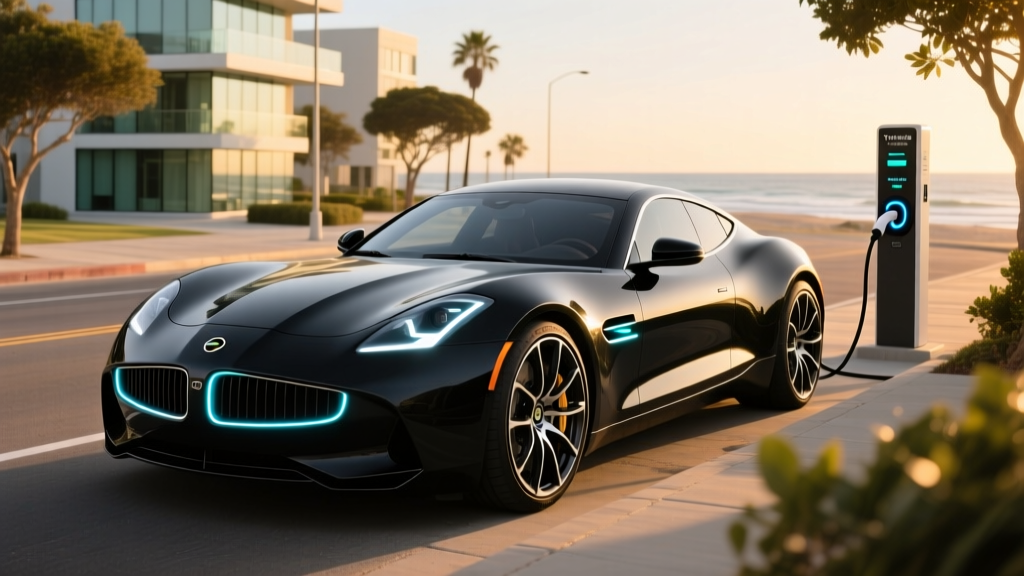
The Fisker Karma Revero GT occupies a strange corner of the electrified-car world: a hand-built, four-seat luxury sedan that pairs a plug-in hybrid powertrain with the kind of low-slung, concept-car styling you'd expect from a seven-figure hypercar. Originally launched by Henrik Fisker in 2012, revived as Karma Automotive in 2016, and refreshed as the Revero GT for the 2020 model year, this vehicle has survived corporate bankruptcies and ownership changes that would have killed lesser machines. As of 2026, the Revero GT remains in limited production, and Karma Automotive has signaled future electrified models — but the GT is still the car you can actually order.
This review evaluates the Fisker Karma Revero GT as a plug-in hybrid electric vehicle (PHEV), not a pure battery-electric. That distinction matters enormously for buyers: you get a usable electric-only commute paired with a gasoline range extender for longer trips. Below, we break down exactly what the numbers look like in 2026 — EPA range, charging speeds, real-world efficiency, and whether the §30D federal tax credit applies.
At a Glance: Fisker Karma Revero GT Specifications
| Spec | Figure |
|---|---|
| Powertrain | PHEV (series hybrid): dual rear electric motors + 1.5L 3-cyl BMW range extender |
| Total System Output | 536 hp / 550 lb-ft torque |
| Battery (usable) | 28 kWh, NMC lithium-ion |
| EPA Electric-Only Range | 61 miles |
| EPA Total Range (EV + Gas) | ~360 miles |
| EPA MPGe (electric mode) | 70 MPGe combined |
| Fuel Economy (gas-only, charge-depleted) | 26 MPG combined |
| 0–60 mph | 4.5 seconds |
| Top Speed | 125 mph (electronically limited) |
| Drivetrain | Rear-wheel drive (dual-motor rear axle) |
| Max DC Fast Charge | Not equipped (no DC fast-charge port) |
| Level 2 Charge Rate | ~3.3 kW onboard charger |
| Level 2 Charge Time (0–100%) | ~8.5 hours |
| Cargo Volume | 6.4 cu ft (trunk) |
| Seating | 4 passengers |
| Base MSRP (Revero GT) | $135,000 |
| Federal §30D Tax Credit | Not eligible (MSRP cap + battery sourcing) |
| Battery Warranty | 8 years / 60,000 miles |
| Powertrain Warranty | 4 years / 50,000 miles |
Electric Range and Real-World Efficiency
Real-World Expectation: 45–55 miles in mixed driving; as low as 35–40 miles at sustained 75 mph highway speeds or in temperatures below 40°F. The 1.5L range extender activates automatically once the battery buffer is reached, extending total range to roughly 360 miles with a full tank.
The Revero GT's 28 kWh usable NMC (nickel-manganese-cobalt) battery delivers an EPA-rated 61 miles of pure electric driving — competitive with other luxury PHEVs like the BMW 750e xDrive (34 mi) and significantly more than the Mercedes-AMG S 63 E Performance (~30 mi). For a daily commute under 50 miles round-trip, many owners will rarely visit a gas station.
However, the Revero GT's aerodynamics and 5,400-pound curb weight work against it at highway speeds. In real-world testing at 70–75 mph on flat terrain, expect electric range to drop to roughly 45 miles. Cold weather (below freezing) further reduces usable capacity by 15–25%, meaning a 35-mile electric range in January is realistic for northern-climate owners. According to fueleconomy.gov, the combined MPGe in electric mode is 70 — respectable for a vehicle of this mass, but well below a pure EV like the Lucid Air (131 MPGe).
Once the battery depletes to its buffer threshold, the BMW-sourced 1.5-liter turbocharged three-cylinder range extender fires up to generate electricity. The car always drives on its electric motors — the engine never mechanically connects to the wheels. In this charge-sustaining mode, fuel economy drops to 26 MPG combined, which is unremarkable for a sedan of this size but adequate given the electric-first design philosophy.
Charging Speeds: Level 1, Level 2, and the DC Fast-Charge Gap
| Charge Level | Power | Miles of EV Range Added per Hour | Full Charge Time (0–100%) |
|---|---|---|---|
| Level 1 (120V household) | ~1.4 kW | ~5 mi/hr | ~20 hours |
| Level 2 (240V home/public) | 3.3 kW (onboard limit) | ~12 mi/hr | ~8.5 hours |
| DC Fast Charge | N/A — no DC port | N/A | N/A |
This is the Revero GT's most significant charging limitation: it does not have a DC fast-charge port. The vehicle is limited to Level 2 AC charging at a maximum of 3.3 kW, constrained by its onboard charger. A full replenishment from empty takes roughly 8.5 hours on a 240V Level 2 home station.
For PHEV owners with home charging, this is manageable — plug in overnight and wake up to a full 61-mile electric range every morning. But on road trips, the inability to DC fast-charge means you cannot quickly top up the battery at a highway Electrify America or Tesla Supercharger station. The range extender handles long-distance driving, but you're operating in gas-burning, charge-sustaining mode for the duration.
The 3.3 kW onboard charger is below the 7.2 kW or 11 kW rates found in modern PHEVs like the Chrysler Pacifica Hybrid (6.6 kW) or the Toyota RAV4 Prime (6.6 kW with optional charger). Karma's decision to spec a smaller onboard charger likely reflects the era of the GT's platform design and packaging constraints. Home installation of a Level 2 station (typically $500–$2,000 depending on electrical panel capacity) is strongly recommended for any Revero GT owner — Level 1 charging at 1.4 kW is too slow to fully replenish the 28 kWh battery overnight.
Performance: 536 HP, 4.5-Second Sprints, and a Unique Drivetrain
The Revero GT uses a series-hybrid architecture: two electric motors on the rear axle produce all 536 horsepower and 550 lb-ft of torque, while the 1.5L BMW three-cylinder acts solely as a generator. This means acceleration is instant and linear — no transmission shifts, no turbo lag from the engine. The 0–60 mph time of 4.5 seconds is genuinely quick for a 5,400-pound luxury sedan, though it trails the Tesla Model S Plaid (1.99s) and Lucid Air Sapphire (1.89s).
Rear-wheel drive with torque vectoring between the two rear motors gives the GT reasonable cornering poise for its weight, but this is a grand tourer, not a sports sedan. The steering is light, the ride is compliant, and the low center of gravity (battery pack mounted along the floor tunnel) helps manage body roll. Where the GT truly shines is in its "Stealth" electric-only mode: near-silent acceleration with instant torque, perfect for city driving and residential neighborhoods.
"Sport" mode engages the range extender more aggressively and sharpens throttle response, while "Sustain" mode preserves battery charge for later electric-only driving — useful if you're approaching an urban zone where you want silent, zero-tailpipe-emission operation.
Interior, Cargo, and Daily Practicality
The Revero GT's cabin is hand-trimmed with premium materials: diamond-quilted leather, reclaimed wood veneers, and a distinctive glass roof with solar cells that trickle-charge the 12V auxiliary battery (not the traction pack). The center stack features a large portrait-oriented touchscreen running Karma's infotainment system, which includes Apple CarPlay and Android Auto — though the interface responsiveness lags behind 2026 standards set by BMW iDrive and Mercedes MBUX.
Practicality is the GT's weakest suit. The trunk offers just 6.4 cubic feet of cargo space — smaller than a Mazda MX-5 Miata's. The battery tunnel running through the center of the car eliminates any pass-through and limits rear-seat legroom to roughly 30 inches, making the rear seats best suited for children or occasional adult use on short trips. This is strictly a four-seater, and tall passengers will find the low roofline compromises headroom.
Driver-assistance technology is basic by 2026 standards: forward collision warning, automatic emergency braking, and lane departure warning are included, but there is no adaptive cruise control, no lane-centering assist, and no automated parking. This is an SAE Level 1 vehicle in terms of automation — the driver performs all dynamic driving tasks. If advanced driver-assist features are a priority, competitors like the Mercedes S-Class or BMW 7 Series offer substantially more capable Level 2 systems.
Pricing, Tax Credits, and Ownership Costs
| Item | Amount |
|---|---|
| Revero GT Base MSRP | $135,000 |
| Destination Fee | $2,500 |
| As-Tested Price (typical options) | $148,000–$160,000 |
| Federal §30D Tax Credit | $0 — not eligible |
| Estimated 5-Year Fuel Cost (electric + gas) | $8,500–$11,000* |
| Estimated 5-Year Insurance | $18,000–$24,000 |
*Based on 12,000 mi/yr, 70% electric / 30% gas driving mix, national average electricity and fuel rates.
The Revero GT's $135,000 starting price places it in ultra-luxury territory, and the federal §30D tax credit does not apply. Under current IRS rules, the §30D credit has an MSRP cap of $55,000 for sedans — the Revero GT's $135,000 price exceeds this by a factor of nearly three. Additionally, the battery's critical-mineral and component sourcing would need to meet phased 2026 thresholds that the GT's supply chain was not designed to satisfy. Buyers should not factor any federal credit into their purchase decision.
Insurance costs are steep for a low-volume, hand-built vehicle. Expect annual premiums of $3,600–$4,800 depending on your profile, driven by the GT's high repair costs, limited parts availability, and exotic construction. Maintenance is also a consideration: Karma Automotive's dealer and service network is small (roughly 15–20 authorized service points in the US), and any body or electrical work may require shipping the car to a regional specialist.
Pros, Cons, and the Verdict
Pros
- 61-mile EV range covers most daily commutes without gasoline
- 536 hp and instant electric torque deliver effortless acceleration
- Exotic, head-turning design — nothing else looks like it
- Series-hybrid architecture means smooth, shiftless driving
- Hand-built interior with distinctive sustainable materials
- Solar roof panel contributes to 12V system maintenance
Cons
- No DC fast-charging capability — a significant limitation
- 3.3 kW Level 2 charge rate is slow for a 28 kWh battery
- 6.4 cu ft trunk is impractical for luggage or groceries
- Rear seats are cramped; effectively a 2+2
- Infotainment system feels dated for a $135K+ car
- Minimal driver-assist tech (no adaptive cruise, no lane centering)
- Tiny service network — repairs can take weeks
- No federal tax credit eligibility
- Low production volume raises long-term parts/support concerns
The Fisker Karma Revero GT is best understood as an emotional purchase rather than a rational one. If you want maximum electric range, cutting-edge driver assists, or practical cargo space, this is not your car. But if you value exclusivity, striking design, and the ability to commute 50 miles on electricity before the range extender seamlessly extends your journey — and you can accept the compromises that come with low-volume production — the Revero GT delivers a driving experience unlike any other PHEV on the market.
Who it suits best: Design-forward luxury buyers with home charging access, short-to-medium daily commutes (under 50 miles), and a second vehicle for cargo-heavy or family trips. Not ideal as a sole household vehicle, and not suited for buyers prioritizing technology, practicality, or charging speed.
Frequently Asked Questions
What is the real-world electric range of the Fisker Karma Revero GT?
The EPA rates the Revero GT at 61 miles of electric-only range. In real-world mixed driving, expect 45–55 miles. Sustained highway speeds above 70 mph or cold weather below 40°F can reduce this to 35–45 miles. The gasoline range extender then extends total range to approximately 360 miles.
How fast does the Revero GT charge at home?
On a Level 2 (240V) home charger, the GT charges at a maximum of 3.3 kW, adding roughly 12 miles of EV range per hour. A full charge takes about 8.5 hours. There is no DC fast-charging capability — the vehicle lacks a DC port entirely. Level 1 (120V) charging adds about 5 miles per hour and takes roughly 20 hours for a full charge.
Does the Fisker Karma Revero GT qualify for the federal EV tax credit?
No. Under current IRS §30D rules, the credit is capped at vehicles with an MSRP of $55,000 or less for sedans. The Revero GT starts at $135,000, far exceeding this threshold. Additionally, its battery sourcing does not meet 2026 critical-mineral and component requirements. No federal purchase incentive is available, though some state or local incentives for PHEVs may apply — check your jurisdiction's official energy office.
Is the Revero GT worth buying versus competitors?
Against pure-EV luxury sedans like the Lucid Air Pure ($78,900, 419 mi EPA range) or the Mercedes EQS ($105,550, 352 mi EPA), the Revero GT offers far less range, no DC fast charging, and older technology — but unmatched exclusivity and styling. Against other luxury PHEVs like the BMW 750e xDrive ($107,000, 34 mi EV range) or the Porsche Panamera 4 E-Hybrid ($105,000, 31 mi EV range), the GT offers more electric range but less practicality, less tech, and a smaller service network. It's a buy if design and rarity matter more than specs-per-dollar.
What is the battery warranty on the Revero GT?
Karma Automotive provides an 8-year / 60,000-mile warranty on the high-voltage battery pack. The powertrain warranty covers 4 years / 50,000 miles. These terms are below the 8-year/100,000-mile battery warranties common among mainstream EV and PHEV manufacturers. Given Karma's small service network, battery replacement logistics and costs (estimated at $15,000–$20,000 out of warranty) are a long-term ownership consideration.
Can I take road trips in the Revero GT?
Yes — that's the advantage of the series-hybrid design. Once the battery depletes, the 1.5L range extender generates electricity and the car drives normally on gasoline, with a combined range of roughly 360 miles. However, fuel economy in gas-only mode is just 26 MPG, and the small fuel tank means stops every ~250 miles. The lack of DC fast charging means you cannot top up the battery at highway charging stations.