Understanding the Fisker Karma Motor and EREV Powertrain
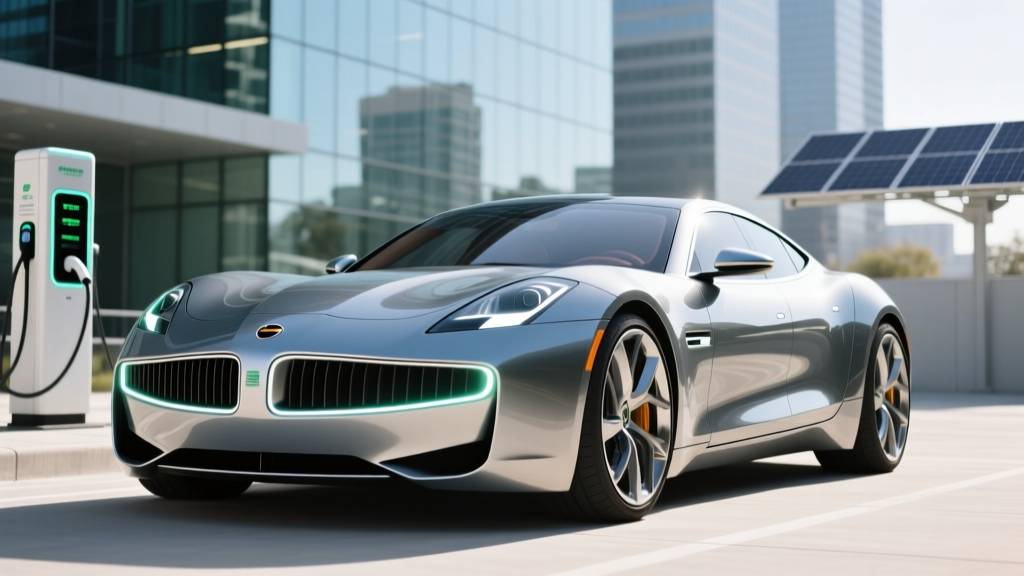
The Fisker Karma remains one of the most talked-about nameplates in electrified automotive history. When buyers and enthusiasts search for the Fisker Karma motor, they're usually digging into a powertrain that was genuinely unconventional for its time: a series-hybrid extended-range electric vehicle (EREV) architecture that paired twin rear-mounted electric motors with a turbocharged gasoline generator. It wasn't a pure battery electric vehicle (BEV), and it wasn't a conventional parallel hybrid like the Toyota Prius. It was something else entirely — and understanding its motor configuration is essential before evaluating any surviving Karma on the used market or comparing its DNA to today's EVs.
Produced from 2011 to 2012 by Fisker Automotive (the original company, not to be confused with Henrik Fisker's later venture, Fisker Inc., which produced the Fisker Ocean before filing for bankruptcy in 2024), the Karma was a luxury plug-in hybrid sedan with aspirations of competing against the Porsche Panamera and Tesla Model S. Only around 2,450 units were built before the company's 2012 bankruptcy, making it a rare collector-grade vehicle today.
Fisker Karma Motor Specs: Twin Electric Rear Drive
The Karma's electric drive system centers on a twin-motor rear-axle configuration. Two electric motors are mounted on the rear axle, each driving one rear wheel. This setup provided direct torque to the rear wheels without a traditional multi-speed transmission.
| Specification | Detail |
|---|---|
| Electric Motor Type | Twin AC induction motors (rear axle) |
| Combined Electric Output | 300 kW (403 hp) |
| Combined Torque | 959 lb-ft (wheel torque) |
| Drivetrain | Rear-wheel drive (RWD) |
| Transmission | Single-speed direct drive (no gearbox) |
| Gasoline Generator Engine | 2.0L turbocharged inline-4 (GM Ecotec LNF) |
| Generator Output | ~175 kW (235 hp) to sustain battery |
| 0–60 mph (Sport Mode) | 5.8 seconds |
| Top Speed | 125 mph |
| Drive Modes | Stealth (EV-only), Sport (EREV with full power) |
The dual-motor layout was significant. By placing one motor per rear wheel, the Karma achieved a form of torque vectoring, improving cornering stability and traction — a concept that has since become mainstream in vehicles like the Rivian R1T and Rivian R1S. The 959 lb-ft of wheel torque figure sounds enormous, but it's important to note this is wheel torque after gear reduction, not motor shaft torque. The effective feel is strong but comparable to a 300–350 lb-ft motor-shaft figure, which is brisk but not supercar territory.
The gasoline engine — a 2.0-liter turbocharged four-cylinder sourced from General Motors (the same Ecotec LNF found in the Pontiac Solstice GXP and Chevrolet Cobalt SS) — did not drive the wheels directly. Instead, it acted solely as a generator, producing electricity to sustain the 20.1 kWh battery pack when it depleted. This series-hybrid architecture is the same fundamental concept used in the BMW i3 REx and, more recently, in some configurations of range-extended EVs from Chinese automakers.
Battery, Range, and Efficiency: Then vs. Now
The Fisker Karma's battery was a 20.1 kWh lithium-ion pack using NMC (nickel manganese cobalt) chemistry, supplied by A123 Systems. Of that total capacity, approximately 17.8 kWh was usable, with the remainder reserved as a buffer to protect battery health.
EPA EV-only range: 32 miles
EPA combined fuel economy (charge-sustaining): 20 MPG (gasoline generator running)
Real-world EV-only range: Expect 22–28 miles in mixed driving; as low as 18–20 miles in cold weather (below 40°F) or sustained highway speeds above 70 mph. The Karma's heavy 5,300-lb curb weight and wide tires penalize efficiency significantly.
Real-world gas mode: Owners report 18–22 MPG in Sport/charge-sustaining mode.
By 2026 standards, 32 miles of electric range is modest — most modern PHEVs like the Toyota RAV4 Prime deliver 42 miles, and the Chrysler Pacifica Hybrid manages 32 miles in a much larger minivan. But in 2011, this was competitive with the Chevrolet Volt's 35-mile EV range.
According to fueleconomy.gov, the Karma earned a combined 52 MPGe when operating in EV mode and 20 MPG when the gasoline generator was sustaining the battery. The MPGe figure is relevant only if you charge regularly and drive within the EV-only envelope; once the generator kicks in, you're burning premium gasoline at the rate of a heavy luxury sedan.
Charging: What to Expect from a 2011–2012 EREV
The Karma was designed before the modern DC fast-charging ecosystem existed. It supports only Level 1 and Level 2 AC charging via a J1772 connector. There is no DC fast-charging capability whatsoever.
| Charging Level | Power (kW) | Time (Empty to Full) | Notes |
|---|---|---|---|
| Level 1 (120V / 12A) | ~1.4 kW | ~14 hours | Standard household outlet; overnight only |
| Level 2 (240V / 32A) | ~3.3 kW (onboard charger limit) | ~6 hours | Requires J1772 home charger or public L2 station |
| DC Fast Charge | Not supported | N/A | No CCS, CHAdeMO, or NACS DC capability |
The 3.3 kW onboard charger is the bottleneck. Even if you plug into a 7.2 kW or 11.5 kW Level 2 station, the Karma can only accept 3.3 kW. This means a full recharge takes roughly six hours regardless of the station's capability. For a vehicle with only 32 miles of EV range, this is manageable if you charge overnight at home, but it makes opportunistic top-ups at public chargers impractical.
For any prospective buyer in 2026, installing a dedicated 240V Level 2 home charger is essentially mandatory. A basic 32A Level 2 unit costs $300–$600 for the equipment, with professional installation running $500–$2,000 depending on your electrical panel's capacity and the run length from panel to garage. Consult a licensed electrician to assess whether your home's 100A or 200A panel can accommodate the additional load.
Interior, Cargo, and Practicality
The Karma's exterior dimensions are striking — at 196.7 inches long and 78.1 inches wide, it's larger than a Mercedes-Benz S-Class of its era. But that dramatic design comes at a severe interior cost. The battery tunnel running through the center of the cabin eliminates any possibility of a third rear seat and severely compromises rear legroom.
| Dimension | Measurement |
|---|---|
| Front Legroom | 42.8 inches |
| Rear Legroom | 29.2 inches |
| Front Headroom | 38.2 inches |
| Rear Headroom | 35.7 inches |
| Trunk Volume | 6.9 cu ft |
| Seating Capacity | 4 passengers (strictly) |
| Curb Weight | 5,300 lbs |
At 6.9 cubic feet, the trunk is smaller than a Mazda MX-5 Miata's. The rear seats are best suited for children or very short trips — adults over 5'8" will find their knees pressed into the front seatbacks. This is a grand-touring coupe in a sedan's body, not a family vehicle.
The interior materials were high-end for 2011, with available diamond-dust paint, reclaimed wood trim, and eco-suede headliners. The infotainment system, however, has aged poorly: a resistive-touch touchscreen that's sluggish by modern standards, with no Apple CarPlay, Android Auto, or over-the-air update capability. Aftermarket solutions exist but require custom integration.
Warranty, Reliability, and the A123 Systems Battery Recall
No discussion of the Fisker Karma is complete without addressing its reliability history. The original factory warranty was 4 years / 50,000 miles for the vehicle and 5 years / 60,000 miles for the battery and powertrain. However, Fisker Automotive's 2012 bankruptcy voided all factory warranty support, leaving owners without recourse through official channels.
The most significant issue was the A123 Systems battery recall in 2012. Manufacturing defects in the battery cells led to short circuits, and several Karmas caught fire — some while parked and not charging. A123 Systems (the battery supplier) filed for bankruptcy in October 2012, compounding the crisis. Fisker Automotive followed into bankruptcy in November 2013.
For 2026 buyers evaluating a used Karma:
- Battery replacement: Extremely difficult and expensive. Refurbished or replacement battery packs cost $8,000–$15,000 when available, and sourcing is limited to specialist third-party shops. No OEM supply chain exists.
- Parts availability: Body panels, interior trim, and proprietary electronics are scarce. The Karma community is small but active, and some parts are shared with GM's Ecotec engine family.
- Specialist service: Only a handful of independent shops in the US have the diagnostic tools and expertise to service the Karma's high-voltage system. Do not expect a standard mechanic to work on it safely.
- Insurance: Specialty collector-car insurance is typically required. Standard insurers may decline coverage or quote extremely high premiums given the repair-cost risk.
Fisker Karma vs. Modern EVs: How Does It Compare?
To put the Karma's Fisker Karma motor and powertrain into perspective for a 2026 buyer, here's how it stacks up against modern vehicles that occupy similar luxury/performance space:
| Spec | Fisker Karma (2012) | Tesla Model S (2026) | BMW i5 M60 (2026) | Porsche Taycan 4S (2026) |
|---|---|---|---|---|
| Powertrain | EREV (series hybrid) | BEV (dual motor AWD) | BEV (dual motor AWD) | BEV (dual motor AWD) |
| EV Range | 32 mi (EPA) | 402 mi (EPA) | 295 mi (EPA) | 283 mi (EPA) |
| Battery | 20.1 kWh NMC | ~100 kWh | 84.3 kWh NMC | 105 kWh NMC |
| 0–60 mph | 5.8 sec | 3.1 sec (Plaid: 1.99) | 3.7 sec | 3.8 sec |
| DC Fast Charge | None | 250 kW | 205 kW | 320 kW |
| Starting Price (New) | $102,000 (2012) | ~$79,990 | ~$84,100 | ~$103,800 |
| Federal Tax Credit | Expired / ineligible | Eligible (if income/MSRP rules met) | Eligible (if sourcing rules met) | Eligible (if sourcing rules met) |
The comparison makes clear that the Karma exists in a completely different category from modern EVs. It's not a rational alternative to a Model S or Taycan for daily transportation — it's a collector piece with historical significance.
Pricing, Tax Credits, and Used Market Reality
The Fisker Karma's original MSRP was $102,000 to $110,000 depending on trim and options (Standard, EcoStandard, EcoSport, and EcoChic). Today, used Karma prices vary widely based on condition, mileage, and battery health:
- Project/needs-work examples: $15,000–$25,000
- Driver-quality, functional examples: $25,000–$40,000
- Low-mileage collector-grade: $40,000–$65,000
No. The Fisker Karma does not qualify for the IRS §30D federal EV tax credit for several reasons:
• The §30D credit applies to new qualifying vehicles purchased from a licensed dealer; the Karma has not been produced since 2012.
• The used-EV credit (§25E, up to $4,000) requires the vehicle to be a BEV or qualifying PHEV purchased from a dealer for under $25,000. The Karma's plug-in hybrid architecture may technically qualify if purchased under $25,000 from a dealer, but its original MSRP exceeded $80,000 and buyer income caps ($75,000 single / $150,000 joint) apply. Verify current eligibility on irs.gov.
• Battery-sourcing and critical-mineral requirements under the Inflation Reduction Act further restrict eligibility for most pre-2023 vehicles.
Always consult a tax professional before claiming any EV credit.
Who Should (and Shouldn't) Buy a Fisker Karma
The Karma is not a daily driver for most people. Here's the decision framework:
- You're an EV history enthusiast who wants a rare, design-forward collector car
- You have access to a specialist mechanic familiar with the Karma's high-voltage system
- You plan to drive it sparingly (weekend/show car, not commuter)
- You appreciate Henrik Fisker's design language and want an automotive conversation piece
- You can budget $5,000–$10,000/year for maintenance and potential battery work
- You need a reliable daily commuter or family vehicle
- You want modern infotainment, CarPlay, or driver-assist features
- You require DC fast-charging for road trips
- You need practical cargo space or rear-seat room for adults
- You want factory warranty support or easy parts sourcing
Frequently Asked Questions
What is the real-world electric range of the Fisker Karma?
The EPA rated the Karma at 32 miles of EV-only range. In real-world driving, expect 22–28 miles in moderate conditions, dropping to 18–20 miles in cold weather or at sustained highway speeds. The vehicle's 5,300-lb weight and wide 22-inch tires significantly reduce efficiency compared to lighter EVs.
How fast does the Fisker Karma charge?
The Karma supports only Level 1 (120V, ~1.4 kW) and Level 2 (240V, ~3.3 kW) AC charging via a J1772 connector. There is no DC fast-charging capability. A full Level 2 charge takes approximately six hours. The 3.3 kW onboard charger is the limiting factor — connecting to a higher-power Level 2 station will not reduce charge time.
Does the Fisker Karma qualify for any federal EV tax credit?
Not for new purchases, as the vehicle hasn't been produced since 2012. Under the used-EV credit (§25E), a Karma purchased from a dealer for under $25,000 could theoretically qualify for up to $4,000, but buyer income caps and battery-sourcing rules make eligibility unlikely. Consult irs.gov and a tax professional for your specific situation.
Is the Fisker Karma worth buying vs. a modern EV?
As a daily driver, no — a 2026 Tesla Model 3, Hyundai Ioniq 5, or BMW i4 offers vastly more range, faster charging, modern safety tech, and full warranty coverage at a lower effective cost. As a collector car with historical significance in EV development, the Karma has niche appeal. Its Fisker Karma motor architecture was genuinely innovative for 2011, but the ecosystem to support it has largely evaporated.
What happened to the Karma after Fisker's bankruptcy?
The Karma's tooling and intellectual property were acquired by Wanxiang Group (which also bought A123 Systems). The vehicle was briefly rebranded as the Karma Revero by Karma Automotive (a separate entity from Fisker Inc.), with updated powertrains and styling. The Revero GT and GS variants used a BMW-sourced 1.5L three-cylinder range extender instead of the original GM Ecotec. Karma Automotive has faced its own financial difficulties, and production has been intermittent.
How long will the Fisker Karma's battery last?
The original A123 Systems NMC battery is now 13–15 years old. Lithium-ion batteries degrade with time and use, and most surviving Karmas have experienced significant capacity loss — real-world EV range of 15–22 miles is common for unrefurbished packs. A full battery replacement costs $8,000–$15,000 from specialist suppliers, assuming cells are available. There is no official OEM replacement program.