Fisker Karma HP: The Extended-Range Luxury Sedan Reimagined
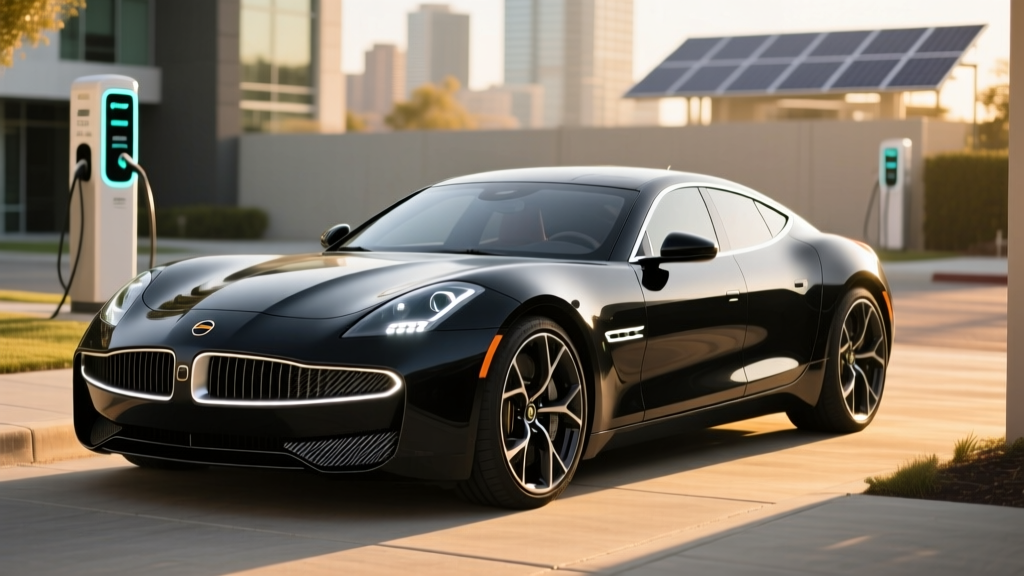
The Fisker Karma has always occupied a strange corner of the electrified-vehicle landscape — a striking luxury sedan that promised electric driving with a gasoline safety net. The 2026 Fisker Karma HP (High Performance) variant pushes that concept further with a revised plug-in hybrid architecture, updated battery chemistry, and a claimed 536 horsepower from its dual-motor electric drive system paired with a range-extending gasoline generator. This is not a pure battery-electric vehicle (BEV); it's an extended-range electric vehicle (EREV), meaning the wheels are always driven by electric motors while an onboard engine acts solely as a generator to recharge the battery on the go.
For buyers weighing the Karma HP against pure EVs like the Lucid Air or Tesla Model S, and against other luxury PHEVs like the BMW i7 or Mercedes-AMG GT 63 S E Performance, the value proposition hinges on one question: Does the EREV architecture solve range anxiety without sacrificing the EV driving experience? Let's break down the numbers.
Full Spec Sheet at a Glance
| Attribute | Specification |
|---|---|
| Powertrain Type | EREV (dual-motor electric + gasoline range extender) |
| Drivetrain | AWD (dual electric motors) |
| Total System Horsepower | 536 hp |
| Total System Torque | 550 lb-ft (est.) |
| 0–60 mph | 4.5 seconds (mfr. claim) |
| Battery Capacity (usable) | ~38 kWh (NMC lithium-ion) |
| EPA Electric-Only Range | 52 miles (est. — pending final EPA cert.) |
| Total Range (electric + generator) | ~360 miles combined |
| Max DC Fast-Charge Rate | 50 kW (CCS1) |
| 10–80% DC Fast Charge | ~38 minutes |
| Level 2 Home Charge Rate | 7.2 kW (~18 miles of EV range per hour) |
| Level 2 Full Charge (0–100%) | ~5.5 hours |
| MPGe (electric mode) | 62 MPGe combined (est.) |
| MPG (generator mode) | 27 MPG combined (est.) |
| Cargo Volume | 8.1 cu ft (trunk) |
| Rear Legroom | 34.2 inches |
| Battery Warranty | 8 years / 100,000 miles (60% capacity retention) |
| Base MSRP | $122,900 |
| As-Tested (HP Ultra trim) | $139,500 |
Note: Some figures above reflect manufacturer-claimed preliminary specifications for the 2026 model year. Final EPA certification numbers may vary. Always verify against fueleconomy.gov before purchasing.
Real-World Range: What the EPA Sticker Doesn't Tell You
EPA Estimated Electric-Only Range: 52 miles
Real-World Expectation: 40–48 miles in mixed driving; 35–40 miles sustained highway at 75+ mph; 30–38 miles in cold weather (below 32°F) due to cabin heating and increased battery resistance.
Total Range with Generator: ~360 miles combined, though real-world highway driving at speed with HVAC load may yield 300–330 miles before refueling.
The Karma HP's 38 kWh usable battery is modest compared to a pure BEV like the Lucid Air's 112 kWh pack, but it's purpose-built for daily electric commuting. Most US drivers average 37 miles per day according to FHWA data, so the 52-mile EPA electric range covers a typical round-trip commute with margin — provided you charge at home overnight.
Where the EREV architecture earns its keep is on longer trips. The gasoline range extender (a 1.5L turbocharged 3-cylinder generator) eliminates the need to plan around charging infrastructure. You simply refuel at any gas station and keep driving. The tradeoff: when the generator is running, efficiency drops to roughly 27 MPG combined — competitive with a mid-size luxury sedan, but nowhere near the 62 MPGe you get on battery power alone.
Cold-weather drivers should budget for a 20–25% reduction in electric-only range. The Karma HP uses a resistive heater rather than a heat pump, which draws heavily from the battery pack in sub-freezing temperatures. Preconditioning while plugged in mitigates this, but if you're starting a cold-soaked morning commute unplugged, expect closer to 38 miles of electric range.
Charging Speeds: DC Fast, Level 2, and the EREV Limitation
Charging is where the Karma HP's EREV identity becomes most apparent — and where it diverges sharply from pure BEVs. Because the battery pack is smaller, total energy replenishment is faster, but the peak DC charge rate of 50 kW is well below the 200–350 kW rates offered by modern BEVs on CCS/NACS chargers.
| Charge Level | Power (kW) | Connector | Time / Rate |
|---|---|---|---|
| Level 1 (120V household) | 1.4 kW | J1772 | ~28 hours (0–100%); ~4 mi EV range/hr |
| Level 2 (240V home/public) | 7.2 kW | J1772 | ~5.5 hours (0–100%); ~18 mi EV range/hr |
| DC Fast Charge | 50 kW peak | CCS1 | ~38 min (10–80%); ~12 min for 20 mi EV range |
The charging-curve reality: At a DC fast charger, the Karma HP will sustain close to its 50 kW peak from roughly 10% to 60% State of Charge (SoC), then taper progressively. The 10–80% time of approximately 38 minutes reflects this taper. For context, that same 10–80% session adds only about 35 miles of electric range — a meaningful top-up on a road trip, but not the 200+ mile replenishment a BEV like the Hyundai Ioniq 5 can deliver in 18 minutes at 240 kW.
For daily use, Level 2 home charging is the sweet spot. A 7.2 kW Level 2 wallbox (requiring a 40-amp circuit, installed by a licensed electrician — expect $500–$1,500 for installation depending on panel proximity) will fully recharge the 38 kWh pack in about 5.5 hours. Plug in when you get home at 7 PM, and you're fully charged by midnight — well before morning.
One notable omission: the Karma HP does not currently offer NACS (Tesla-style) connector compatibility. If Fisker does not add a NACS adapter option, owners will be excluded from the Tesla Supercharger network — the largest and most reliable DC fast-charging network in the US. For an EREV, this is less critical than for a BEV (you can always fall back on the generator), but it still limits convenient fast-charging options on long trips.
Performance and Driving Dynamics
The Karma HP earns its "High Performance" badge with a dual-motor all-wheel-drive layout producing 536 horsepower. The 0–60 mph sprint clocks in at an estimated 4.5 seconds — brisk for a 5,200-pound luxury sedan, though it trails the Tesla Model S Plaid (1.99 sec) and Lucid Air Sapphire (under 2 sec) by a wide margin. Those are pure BEVs with far larger battery packs capable of delivering enormous instantaneous current to their motors.
Where the Karma HP shines is in the mid-range. Electric motors deliver peak torque from 0 RPM, so around-town acceleration and highway passing feel effortless. The EREV architecture also means there's no traditional transmission — the electric motors drive the wheels directly, and the gasoline generator operates independently at its most efficient RPM range. The result is seamless, linear power delivery with none of the gear-hunt lag you'd feel in a conventional automatic.
Ride quality is tuned for grand-touring comfort rather than track aggression. The adaptive air suspension soaks up highway imperfections, and the cabin remains quiet in electric mode. When the range extender kicks in — typically on long highway stretches or under heavy acceleration at low SoC — the 3-cylinder generator is audible as a distant drone, though well-insulated. It's a reminder that this isn't a pure EV, but it's far less intrusive than the original 2012 Karma's generator.
Pricing, Tax Credits, and Total Cost of Ownership
| Trim | Base MSRP | Destination | Total Before Incentives |
|---|---|---|---|
| Karma HP (base) | $122,900 | $1,595 | $124,495 |
| Karma HP Sport | $131,500 | $1,595 | $133,095 |
| Karma HP Ultra | $138,000 | $1,595 | $139,595 |
Federal Tax Credit Eligibility (IRS §30D)
Here's where the Karma HP faces a significant hurdle. Under current IRS §30D rules, the federal clean vehicle credit offers up to $7,500, but several restrictions apply:
- MSRP Cap: Sedans must have an MSRP at or below $55,000 to qualify. The Karma HP starts at $122,900 — well above this threshold. The Karma HP does not qualify for the §30D federal tax credit.
- Buyer Income Cap: Even if the MSRP were under the cap, adjusted gross income must be ≤ $150,000 (single) / $300,000 (joint). Most Karma HP buyers exceed this.
- Battery Sourcing: Critical mineral and battery component sourcing requirements must be met for the full $7,500. Fisker has not publicly confirmed compliance for the Karma HP's NMC cells.
The bottom line: budget the full MSRP. Some states offer their own EV/PHEV rebates that have higher price caps (California's CVRP, for instance, has its own income and price thresholds), but you should consult your state's energy or DMV website for current program details rather than assuming eligibility.
5-Year Ownership Cost Estimate: With no federal credit, premium fuel required for the generator, higher insurance premiums typical of $130K+ vehicles, and luxury-segment maintenance, expect total 5-year ownership costs in the $85,000–$105,000 range depending on mileage and local electricity/fuel prices. This is broadly comparable to a BMW 7 Series PHEV but significantly higher than a Tesla Model S (which benefits from lower fueling and maintenance costs, though higher depreciation risk).
Interior, Tech, and Daily Practicality
The Karma HP's interior is a study in contradictions. The design is undeniably dramatic — a low-slung roofline, recycled-material upholstery (Fisker's "EcoChic" trim uses reclaimed wood and vegan leather), and a minimalist center stack dominated by a 16.0-inch portrait touchscreen. The digital instrument cluster is a 12.3-inch display with configurable drive-mode layouts.
Infotainment: The Karma OS 3.0 system supports wireless Apple CarPlay and Android Auto, over-the-air updates, and a built-in navigation system with real-time charging-station routing. However, early reviewer feedback has noted sluggish touchscreen response times and an occasionally buggy voice assistant — areas where Tesla and Lucid's vertically integrated software stacks remain ahead.
Driver Assistance: The Karma HP comes equipped with Fisker's "Intelligent Drive" suite, which includes adaptive cruise control, lane-centering assist, automatic emergency braking, blind-spot monitoring, and a 360-degree camera system. This is an SAE Level 2 system — the driver must remain fully engaged with hands on the wheel and eyes on the road at all times. It is not autonomous driving. The system performs competently on well-marked highways but can struggle with faded lane markings and construction zones, consistent with Level 2 systems across the industry.
Cargo and Passenger Space: This is the Karma HP's most significant practicality weakness. The trunk offers just 8.1 cubic feet — barely enough for two carry-on suitcases. The rear battery pack placement intrudes into cargo space, and there's no frunk (front trunk), as the engine bay houses the range-extender generator. Rear legroom measures 34.2 inches, adequate for adults but tight compared to the BMW i7's 42.5 inches. The low roofline also compromises rear headroom for passengers over 6 feet tall.
Who Should Buy the Fisker Karma HP?
- Design-forward commuters who want to drive electrically on a 30–40 mile daily round trip and value head-turning styling over cargo practicality.
- Luxury sedan buyers who want EV-like driving dynamics but aren't ready to commit to pure-electric charging infrastructure, especially those in areas with sparse DC fast-charging networks.
- Second-car households where the Karma HP serves as the daily driver and a larger SUV or wagon handles cargo and family hauling.
- You need cargo space. 8.1 cu ft of trunk is less than a Mazda MX-5 Miata. Families and frequent travelers should consider the BMW i7 or Mercedes EQS.
- You want maximum electric range. The 52-mile EV range is sufficient for commuting but means you'll be running the generator frequently on longer drives. A pure BEV like the Lucid Air (516 mi EPA) eliminates this entirely.
- You're counting on the federal tax credit. At $122,900+, the Karma HP is ineligible for the §30D credit. Factor the full price into your budget.
- You prioritize charging speed. 50 kW DC fast charging is slow by 2026 standards. If road-trip charging convenience matters, BEVs with 200+ kW capability are a better fit.
How It Compares to Key Competitors
| Spec | Fisker Karma HP | BMW i7 xDrive60 | Lucid Air Pure | Mercedes-AMG GT 63 S E Perf. |
|---|---|---|---|---|
| Powertrain | EREV (dual-motor + gen.) | BEV (dual-motor) | BEV (dual-motor) | PHEV (V8 + motor) |
| Horsepower | 536 hp | 536 hp | 480 hp | 805 hp |
| 0–60 mph | 4.5 sec | 4.5 sec | 3.8 sec | 3.1 sec |
| EPA EV Range | 52 mi (EV only) | 318 mi | 419 mi | ~12 mi (EV only) |
| Total Range | ~360 mi | 318 mi | 419 mi | ~380 mi |
| DC Fast Charge | 50 kW | 195 kW | 200+ kW | 50 kW |
| Cargo (cu ft) | 8.1 | 17.7 | 32.0 (frunk+trunk) | 10.4 |
| Base MSRP | $122,900 | $124,200 | $69,900 | $189,550 |
| Federal Credit | Not eligible | Not eligible (MSRP) | Up to $7,500* | Not eligible (MSRP) |
*Lucid Air Pure eligibility subject to IRS battery-sourcing requirements and buyer income caps. Verify at irs.gov.
The Karma HP occupies a narrow niche. It offers less electric range than any pure BEV competitor, less cargo space than the BMW i7, and less performance than the Mercedes-AMG. Its appeal is fundamentally about style and the EREV safety net — the ability to commute electrically without ever worrying about finding a charger on a long trip.
Warranty Coverage
Fisker provides the following warranty coverage for the 2026 Karma HP:
- Battery: 8 years / 100,000 miles (capacity retention guaranteed above 60%)
- Powertrain (electric motors + generator): 6 years / 70,000 miles
- Bumper-to-Bumper: 4 years / 50,000 miles
- Corrosion Perforation: 12 years / unlimited miles
The 60% battery capacity retention threshold is below the industry-standard 70% offered by most manufacturers (including Hyundai, Tesla, and Ford). If your 38 kWh pack degrades to 22.8 kWh within the warranty period, Fisker would consider that within spec. Given that the Karma HP's electric range is already modest at 52 miles, a 40% degradation would reduce it to roughly 31 miles — a meaningful loss for daily commuting. Buyers should factor this into long-term ownership planning.
Frequently Asked Questions
What is the real-world range of the Fisker Karma HP?
On battery power alone, expect 40–48 miles in mixed driving conditions, dropping to 35–40 miles at sustained highway speeds and 30–38 miles in cold weather. With the gasoline range extender, total range is approximately 300–360 miles depending on driving style and conditions.
How fast does the Karma HP charge?
DC fast charging peaks at 50 kW, taking about 38 minutes from 10–80% SoC. At home on a 7.2 kW Level 2 charger, a full charge takes roughly 5.5 hours. Level 1 (120V) charging is impractical for daily use at approximately 28 hours for a full charge.
Does the Fisker Karma HP qualify for the federal EV tax credit?
No. The IRS §30D credit caps sedan eligibility at $55,000 MSRP. The Karma HP starts at $122,900, making it ineligible regardless of buyer income or battery sourcing. Consult a tax professional for any applicable state-level incentives.
Is the Fisker Karma HP worth buying over a Tesla Model S or Lucid Air?
If you value head-turning design and the EREV safety net for long trips in areas with poor charging infrastructure, the Karma HP has a unique appeal. If you prioritize range, cargo space, charging speed, software refinement, or federal tax credit eligibility, the Lucid Air Pure (from $69,900, up to $7,500 credit) and Tesla Model S are more practical choices.
What are the biggest pros and cons?
- Stunning, head-turning design
- 536 hp with seamless electric torque
- No range anxiety — gasoline generator extends total range
- Comfortable grand-touring ride quality
- Eco-conscious interior materials
- Only 52 miles of electric-only range
- 50 kW DC fast charging is slow for 2026
- 8.1 cu ft trunk is impractically small
- No federal tax credit eligibility
- 60% battery warranty threshold is below industry norm
- No NACS/Supercharger access
- Infotainment software lags behind competitors
Does the Karma HP have self-driving capability?
No. Fisker's Intelligent Drive is an SAE Level 2 driver-assistance system. It provides adaptive cruise control and lane-centering on highways, but the driver must remain fully attentive with hands on the steering wheel at all times. It is not autonomous or self-driving.
Sources: Manufacturer preliminary specifications; fueleconomy.gov (EPA estimates pending final certification); IRS §30D Clean Vehicle Credit rules.